The Chilling Betrayal and the Dismemberment on Dadu Mountain
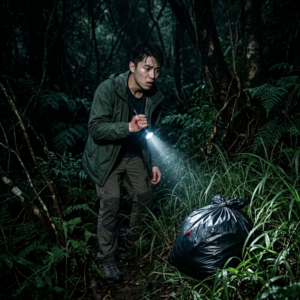
The humid, oppressive air of a Taiwanese summer carries a certain weight, a stifling heat that seems to slow down time itself. In the year 2004, beneath the neon lights and bustling night markets of Taichung and Taipei, a darkness was brewing—a darkness so profound it would shatter the foundational trust of an entire community. Usually, the anatomy of a murder investigation begins with the grim discovery of a body. The sirens wail, the yellow tape is drawn, and the police work backward to find the killer. But occasionally, the universe operates in reverse. Sometimes, a murder case begins with a trembling man, a guilty conscience, and a horrific confession about heavy garbage bags abandoned in the mountains.
This is the story of a hero who became a victim, a devoted lover who became a pawn, and a petite, unassuming woman who orchestrated a symphony of manipulation, deceit, and unspeakable violence. It is a narrative that forces us to look closely at the people we trust, reminding us that the most terrifying monsters do not hide in the shadows; they sit across from us at the dinner table, hiding behind a mask of perfect, fragile innocence.
Chapter I: A Trembling Confession Under the Fluorescent Lights
It was 7:00 PM on the evening of July 15, 2004. Inside the Criminal Investigation Department on Zhongxiao East Road in Taipei, the fluorescent lights hummed a monotonous, sterile tune. Wang Chi-Cheng, the head of the First Investigation Squad, was on duty, navigating the typical evening paperwork. The sliding doors of the precinct parted, and two men walked in. The atmosphere in the room shifted instantly. One of the men, Lin Chun-Cheng, possessed a face etched with a terror so deep it seemed to age him by decades.
Lin, a mild-mannered, honest-looking computer engineer, approached the desk. His hands were shaking violently as he rested them on the counter. He took a ragged breath and stated that he wanted to report a crime—a crime he feared he had unwittingly become a part of.
With a voice that cracked under the weight of his anxiety, Lin transported the detectives back to the early, pre-dawn hours of July 10. At 5:00 AM, the sky still inked in black, his girlfriend, Huang Li-Yen, affectionately known as Xiao Yan, had asked him for a favor. She needed help disposing of some items from her rented apartment in Taichung, directing him to the remote, rugged terrain of the Dadu Mountain area.
Lin recalled the sheer, physical exertion required to lift the two bags—one large, one small—out of a cardboard box. “They were incredibly heavy,” he told the detectives, his eyes widening as the memory replayed in his mind. When he questioned his girlfriend about the staggering weight, she offered a bizarre, nonchalant explanation. It was, she claimed, a high-end, life-sized Japanese inflatable doll given to her by a friend. She no longer wanted it, and it had to be thrown away.
In the dim light of the mountain road, tragedy brushed against Lin’s fingertips. As he hoisted the bags to toss them away, his hand slipped, brushing against the exterior of the plastic. When he pulled his hand back, the beam of a streetlamp caught a dark, viscous smear on his skin. It was blood.
Panic surged in Lin’s chest. He turned to Xiao Yan, demanding an explanation. Without missing a beat, her face completely unreadable, she replied that this new type of doll contained artificial blood to make it feel more realistic. When Lin, increasingly bewildered, asked why they couldn’t just throw it in a regular garbage truck, her voice sharpened with irritation. “If I could just throw it away normally, I wouldn’t have bothered coming all the way out here,” she snapped.
Driven by a blinding, tragic devotion to the woman he loved, Lin swallowed his mounting dread. He helped her throw the bags into the brush. But the nightmare did not end there. She handed him two more items: a large, heavy kitchen chopper and a mobile phone. He recognized the knife immediately; he had accompanied her to the store to buy it a year prior. But the phone was completely foreign.
The following night, gripped by paranoia, Xiao Yan insisted they return to Dadu Mountain on a motorcycle to move the “doll” deeper into the ravine, terrified it would be discovered. Lin complied, staying over at her rented apartment afterward.
It was within the suffocating silence of her apartment that Lin’s denial finally shattered. While searching the room, his eyes fell upon a handwritten note. He recognized Xiao Yan’s meticulous handwriting instantly, but the words were dripping with a toxic, poetic venom:
“The deeper the love, the heavier the hurt. The more you love, the harder it is to let go. My body is soaked in the word ‘love,’ like a knife slashing at a fool.”
Reading those words, a chilling realization crawled up Lin’s spine. Their relationship had been entirely normal; there was no reason for such dramatic, agonizing prose. Was she writing about another love? Another man? A profound, terrifying unease settled over him. Connecting the heavy, blood-stained bags, the mysterious phone, the kitchen knife, and this sinister note, Lin packed up the items and fled to the police.
Chapter II: The Harvest of Dadu Mountain
Captain Wang Chi-Cheng knew immediately that they were not looking for an inflatable doll. He secured the kitchen chopper, sending it directly to the forensic laboratory for urgent DNA analysis. Time was of the essence. The squad, accompanied by a deeply traumatized Lin, immediately boarded a southbound train to Taichung. The primary, agonizing objective was to locate those bags. Only then could Lin’s terrifying narrative be officially classified as a murder investigation.
Wang Gao Lao, situated on the Dadu Plateau in Taichung, is a scenic park popular among couples for its sweeping, romantic night views of the city. But as one ventures deeper into the terrain, the city lights fade, replaced by dense, unforgiving wilderness. The investigative team was forced to spend the night in the area, their sleep troubled by the gruesome task that awaited them at dawn.
On the morning of July 16, 2004, the search commenced. Starting from a monitoring station and passing a military camp, they descended into a ravine choked with thick, overgrown weeds. The physical labor was grueling. Detectives had to manually cut and clear the dense vegetation, spreading out in a meticulous grid pattern. The summer heat beat down upon them, mixing with the scent of damp earth and rotting foliage.
Finally, a voice called out through the brush. They had found the first bag.
It was the smaller of the two. With gloved hands, detectives carefully peeled back the layers—three thick, black plastic garbage bags. When they breached the final layer, a collective gasp echoed through the ravine. Inside, wrapped tightly in heavy adhesive tape, was a severed human head.
Lin Chun-Cheng collapsed to his knees, utterly paralyzed by shock. “Why? How could this happen?” he murmured repeatedly, the illusion of the woman he loved shattering into millions of jagged, bloody pieces. The discovery of the head confirmed their darkest fears: this was a savage, calculated dismemberment.
But where was the rest of the body? Lin pointed toward a steep, ninety-degree drop-off near a cemetery, estimating he had thrown the larger bag down the ravine. The team mobilized, navigating the treacherous slope. Two hundred meters away, guided by the grim swarm of flies buzzing in the suffocating heat, they located the massive, heavy bag resting in the tall grass.
They hauled it up the steep incline, their muscles burning. Inside, wrapped in six layers of black plastic, was a headless, completely naked male torso. Every piece of clothing, every identifying mark, and every piece of jewelry had been meticulously stripped away. The killer had operated with a cold, desperate intention to erase the victim’s identity from the earth.
But destiny has a strange way of intervening. As the forensic team processed the severed head, Huang Bing-Hui, an assistant detective from the Wuri Investigation Squad, stepped forward. He stared at the lifeless features, his heart dropping into his stomach. He knew this face.
The victim was Zhao Yan-Xiang.
The revelation sent shockwaves through the Taichung police force. Zhao was not an unknown transient; he was a highly respected local figure. He was the first and youngest president of the local Lions Club, operating an electronics store on Xinxing Road. But his legacy went far beyond his business. Just seven months prior, in December 2003, the horrific murder and dismemberment of a female student named Shi Jin-Chi by a man named Chen Jin-Huo had terrorized the community. It was Zhao Yan-Xiang who had provided the crucial breakthrough in that case, unlocking a laptop that led to the killer’s conviction.
Zhao was a local hero, a man who had helped bring a monster to justice. Now, in a twist of cruel, devastating irony, the hero had been butchered and discarded in the wilderness, subjected to the very same fate as the victim he had helped avenge.
Zhao’s father, a heartbroken sixty-seven-year-old man, had reported his son missing on July 13. The timeline was closing in.
Chapter III: The Phantom in the Green Shirt
As the police secured the crime scene, Lin’s mobile phone suddenly vibrated. The caller ID flashed a name that made the blood freeze in his veins: Xiao Yan.
Captain Wang immediately instructed Lin to answer the phone, urging him to keep his voice entirely steady. “Do not let her suspect anything,” Wang whispered urgently.
Lin answered, his voice remarkably composed given the horrors he had just witnessed. He asked where she was, suggesting they meet for dinner. Xiao Yan, completely unaware of the net closing around her, stated she was currently in Taipei. Captain Wang seized the opportunity, instructing Lin to arrange a meeting at a specific hotel on Zhongxiao East Road at 6:00 PM.
The trap was set. The team raced back north to Taipei.
As the clock struck six, the streets around the hotel were a chaotic blur of rush-hour commuters. Undercover detectives blended seamlessly into the crowd, their eyes scanning the pavement. They had secured photographs of Huang Li-Yen from Lin, creating a mental profile of the woman who could orchestrate such barbarity.
Eventually, they spotted her. Standing quietly on a street corner, waiting patiently like any ordinary woman meeting her boyfriend, was Huang Li-Yen. The visual disconnect was staggering. She was thirty-eight years old, standing merely 1.5 meters tall, and weighing a fragile 45 kilograms. She wore glasses, a bright green shirt, red pants, and a simple backpack. She looked physically weak, unassuming, and entirely harmless. To the seasoned detectives observing her, it was nearly impossible to reconcile this delicate figure with the heavy, blood-soaked bags on Dadu Mountain.
Captain Wang and his team approached her, their badges flashing in the evening light. They requested she accompany them to the precinct for questioning.
Huang’s eyes widened behind her glasses. She feigned absolute, perfect confusion. “Yes, my surname is Huang,” she replied softly. “But isn’t there some mistake? Why would I need to go to the police station with you?”
Wang, anticipating the performance, stood his ground. “We have an urgent matter requiring your assistance. Come with us, and I will explain everything.”
Chapter IV: The Interrogation Room and the Autopsy of Lies
Inside the cold, windowless interrogation room, the psychological chess match began. Prosecutor Yan Wei-Zhe of the Taichung District took the lead. When asked about her relationship with the deceased, Zhao Yan-Xiang, the seemingly fragile Huang broke down, burying her face in her hands, her shoulders shaking with violent, theatrical sobs.
According to her first, tearful narrative, she had met Zhao two years prior when she took her phone to his shop for repairs. A clandestine, extramarital affair blossomed in the shadows. A year into the relationship, she discovered Zhao was a married family man. Despite this, their illicit romance continued until early 2003, when Huang discovered she was pregnant.
When she revealed the pregnancy to Zhao, she claimed he became violently angry, demanding she abort the child and threatening to sever ties. She underwent the abortion, sinking into a deep depression, alleging that Zhao frequently physically abused her during this period.
The story culminated a week prior, on the morning of July 10. She claimed Zhao arrived at her rented apartment heavily intoxicated. An argument erupted, escalating into a physical struggle. She alleged that Zhao grabbed the large kitchen knife. In the ensuing scuffle, she managed to wrest the weapon from him, placing it on the ground and begging him to calm down. But Zhao, blinded by drunken rage, lunged at her. In a desperate act of self-defense, she raised the knife. The sheer force of his forward momentum drove his neck directly onto the blade, causing a fatal, massive hemorrhage.
She presented herself as a victim of circumstance, a woman who killed accidentally while fighting for her life. When Prosecutor Yan, his eyes narrowing in disbelief, asked why the head was completely severed if it was a mere accident, Huang’s answer sent a chill through the room.
“The cut on his neck looked very ugly,” she whispered, her voice devoid of emotion. “So I separated it from the body. I thought it would look better that way.”
It was a chilling statement, but the physical evidence simply refused to align with her story. The forensic report on the kitchen knife confirmed the presence of Zhao’s DNA. However, Prosecutor Yan stared at the tiny woman before him. She was 1.5 meters tall and 45 kilograms. Zhao was a robust, healthy man standing 1.78 meters. The physics of her overpowering him, wresting a knife from his grip, and executing a flawless, accidental decapitation were entirely absurd.
Furthermore, forensic teams had scoured her rented apartment. If a violent, bloody struggle and a subsequent dismemberment had occurred there, blood would have seeped into the floorboards, the plumbing, and the walls. Yet, the apartment was clinically, flawlessly clean. There was not a single trace of human tissue, blood, or hair.
The final nail in the coffin of her first lie came from the autopsy report two weeks later.
The medical examiner found absolutely no defensive wounds on Zhao’s body. There were no hesitation marks or jagged cuts on his neck consistent with a frantic struggle. The decapitation was executed with clean, decisive, and terrifying precision.
But the most damning evidence was found within his toxicology report. The autopsy revealed the presence of two distinct types of sleeping pills—one highly potent, the other a moderate sedative designed to induce immediate relaxation followed by rapid unconsciousness. Furthermore, traces of red wine were found in his system.
Zhao’s family and friends confirmed a vital fact: Zhao Yan-Xiang had never drank alcohol in his entire life, nor did he possess any prescriptions for sleeping pills or suffer from insomnia.
He was not killed in a drunken, accidental brawl. He had been meticulously, intentionally poisoned, incapacitated, and then slaughtered.
Chapter V: The Human Shield
Confronted with the irrefutable forensic evidence, Prosecutor Yan marched back into the interrogation room. He threw the toxicology report onto the metal table, his voice carrying the thunder of undeniable truth. “Your story is a lie. Tell me what really happened.”
Huang Li-Yen did not flush. She did not hyperventilate. Her heart rate seemingly did not alter. With the terrifying calm of a true psychopath, she simply discarded her first narrative and fabricated an entirely new one, seamlessly throwing the man who loved her under the bus.
“I lied before,” she stated coolly. “The person who actually killed Zhao was Lin.”
Her new story painted Lin Chun-Cheng as a jealous, murderous monster. She claimed Lin had come to look for her, accidentally running into Zhao at her apartment. Consumed by jealous rage, Lin beat Zhao, smothered him with a pillow, and then meticulously dismembered the body while she cowered in terror. She claimed Lin forced her to participate in the disposal and threatened her life if she went to the police.
Prosecutor Yan, fighting a rising tide of disgust, pressed her on the glaring plot hole. “If Lin smothered him, how did the sleeping pills get into Zhao’s system?”
Without missing a beat, Huang replied, “After Lin smothered him, he forced Zhao to swallow the pills.”
“How do you force a dead man to swallow pills?” Yan countered, his voice sharp.
She quickly pivoted. “Well, Zhao usually took sleeping pills. He brought them from the hospital that day.”
She sat there, her face placid, her breathing steady, spinning lies with an audacity that defied human nature. But the police had already secured Lin Chun-Cheng’s alibi, and it was impenetrable.
On the night of July 9, Huang had called Lin, claiming she was suffering from severe stomach pains. She emotionally manipulated him, threatening to end their relationship forever if he did not travel from Taipei to Taichung immediately. Terrified of losing her, Lin boarded a night bus from Taipei at 3:45 AM on July 10, arriving at a supermarket in Taichung at 5:00 AM, where Huang finally picked him up.
The medical examiner had established Zhao’s time of death at approximately 2:00 AM. At the exact moment Zhao’s life was being extinguished, Lin was hundreds of kilometers away, sitting on a bus, worried sick about the woman who was currently butchering a man.
Lin had not killed anyone. He was a perfectly orchestrated alibi, a human shield constructed by Huang to bear the weight of her sins.
Chapter VI: The Final Verdict and the Absence of a Soul
The investigation stripped away the facade of the quiet, weak woman, revealing a deeply disturbed, volatile, and violent history. A year prior, as her affair with Zhao deteriorated, she had repeatedly harassed him, vandalized his car with paint, and even stolen his vehicle, leading the police on a high-speed chase exceeding 100 km/h before crashing into a patrol car.
During the trial in November 2004, confronted with a mountain of evidence, Huang executed her final, most desperate lie. She stood before the judge and claimed that a mysterious “third person”—a benefactor she refused to name out of gratitude—had committed the murder.
The prosecutors had already analyzed her five separate mobile phones. The call logs revealed only two recurring numbers: Zhao Yan-Xiang and Lin Chun-Cheng. There was no secret benefactor. There was no third man. There was only her.
The terrifying, unvarnished truth of that night was finally assembled. On the evening of July 9, Huang texted Zhao, luring him to her apartment with the promise of a final intimate encounter. When he arrived, she served him red wine laced with a lethal cocktail of crushed sleeping pills. As the potent sedatives dragged him into unconsciousness, she took the heavy kitchen chopper and ended his life, subsequently dismembering his body to erase his identity. She cleaned the apartment with chemical precision, then summoned her devoted, unsuspecting boyfriend, Lin, to carry the heavy bags she could not lift herself.
In August 2005, the Taichung District Court delivered its verdict. Lin Chun-Cheng, the man whose only crime was loving a monster, was sentenced to eight months in prison for being an unwitting accomplice to the disposal of a body.
Huang Li-Yen was spared the death penalty, the judge citing the psychological trauma of her previous abortion, and was sentenced to life in prison, stripped of her civil rights forever. The family of Zhao Yan-Xiang, whose young sons were waiting at home to celebrate a birthday with a father who would never return, were devastated and outraged by the leniency.
When the court ordered Huang to pay 60 million NTD in compensation to the grieving family, her reaction cemented her legacy as a creature entirely devoid of human empathy. She sneered at the judge, her voice dripping with contempt. “Why should I raise his children? What about the abortion I had for him? Is 40 million too little? Do you want 80 million?”
Deep Reflection: The Monsters in the Daylight
The Dadu Mountain dismemberment case remains a chilling testament to the terrifying capabilities of the human mind. Huang Li-Yen was not a hulking, imposing figure; she was petite, soft-spoken, and unassuming. Yet, she orchestrated a murder of breathtaking brutality, manipulating the men in her life with the cold, calculated precision of a chess master playing with lives.
Zhao Yan-Xiang, a man who had helped bring a dismembering killer to justice, fell victim to the very darkness he fought against. His fatal flaw was underestimating the volatility of a toxic, secret life. Lin Chun-Cheng’s life was irrevocably shattered, his pure, innocent devotion weaponized to carry the bloody harvest of a murder he knew nothing about.
This story forces us to gaze into the abyss of human jealousy and toxic entitlement. Huang Li-Yen repeatedly claimed the world was unfair to her, using her perceived victimhood as a shield to justify unspeakable atrocities. She believed her pain granted her the right to destroy.
But true evil does not always announce itself with a roar. Sometimes, it approaches with a soft voice, a weak stature, and a plea for help. It reminds us that the greatest dangers we face are often the ones we invite into our homes, our hearts, and our lives.
How does this chilling narrative change your perception of trust and manipulation? Do you believe the justice system failed the victim’s family by granting the killer life in prison instead of the death penalty? Share your deepest thoughts, your empathy for the victims, and your reflections on this terrifying true story in the comments below. Let us remember the hero who was stolen too soon.
Disclaimer : This content may be created by AI for entertainment purposes. Any resemblance to real persons, events, or places is coincidental.






