How a Shattered Heart Painted a Masterpiece of Redemption
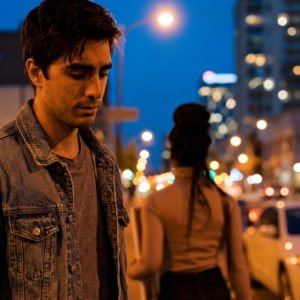
There is a fragile, almost dangerous innocence that belongs to those who love with an entirely open heart. A few years ago, I was one of those people. I was a girl who walked through the world with a quiet, unwavering conviction that love was the ultimate remedy for the human condition. I believed, with every fiber of my being, that love could fix absolutely everything. I trusted far too easily, extending the benefit of the doubt to those who had not earned it. I forgave too quickly, eager to wash away the transgressions of others to keep the peace. I harbored a deep, unspoken philosophy that if your heart was pure, if your intentions were rooted in genuine kindness, life would inevitably mirror that kindness back to you.
But I was wrong. It is a harsh, jagged truth to swallow, but love can heal you, and yet, sometimes, it is the exact reason you break. It is the very instrument of your undoing.
That is how I met Ryan Cooper, the man who would systematically dismantle my understanding of the world, only to unknowingly hand me the tools to rebuild it into something infinitely more beautiful.
The Architect and the Dreamer
We met in the sprawling, hopeful corridors of college. It was a time when the world felt deceptively simple, and our grandest dreams felt so close you could almost reach out and touch them. Ryan was a force of nature. He was confident, possessing an effortless charm that drew people toward him like moths to a porch light. He walked into every room as if he already owned it, his mind constantly turning with grandiose plans for the future. He wanted success, the kind that demands attention and applause.
I was the quiet counterweight to his booming energy. I was shy, content to stand in the shadows so long as the spotlight caught him just right. I was the supportive pillar, always cheering him on from the sidelines. My aspirations were profoundly simple in comparison to his: I just wanted to see him happy. I believed that his success would be our success.
When he stumbled, when the weight of his own ambitions caused him to fail, I was the one who remained awake through the darkest hours of the night. I can still vividly recall the soft, yellow glow of the desk lamp illuminating our shared notes, the smell of stale coffee, and the heavy exhaustion behind my own eyes as I helped him prepare to try again. When the crushing weight of reality made him feel lost, I was the steady voice in the quiet of his despair, repeatedly reminding him that he was capable of doing absolutely anything. I poured my own emotional reserves into his foundation. I thought that was the true definition of love: being an unwavering presence, an immovable anchor, no matter the circumstances, the hour, or the cost.
The Silence Before the Shattering
But the seasons of a relationship can change with a brutal suddenness. One day, the vibrant, constant hum of our shared life began to quiet. The shift was subtle at first. He started talking less. The deep, meaningful conversations that used to stretch deep into the night were replaced by heavy, impenetrable silences. The messages on my phone, once filled with warmth and future plans, grew painfully short, stripped of all affection. The phone calls became a rare occurrence, replaced by an agonizing distance that I could feel settling in my chest like a physical weight.
And then, on an afternoon that seemed entirely too ordinary for a heartbreak, he called me. He asked to meet at our favorite cafe. It was a place woven with our shared history, filled with the rich aroma of roasted espresso beans and the warm chatter of familiar patrons.
I arrived with a knot of anxiety twisting in my stomach, but when I saw him sitting at our usual wooden table, the stark reality of the moment paralyzed me. I still remember the exact way he looked. He was perfectly calm. He was flawlessly confident. There was no tremor in his hands, no hesitation in his posture. He looked exactly like a man who had rehearsed this moment, a man who already knew precisely how this scene would end.
“Emily,” he said, his voice entirely devoid of the tenderness I had relied upon for years, “we need to talk.“
My heart did not just drop; it plummeted, crashing against the floor of my ribcage. The ambient noise of the cafe—the clinking of ceramic cups, the murmur of strangers—faded into a high-pitched ringing in my ears.
He looked directly into my eyes, his gaze remarkably steady, and delivered the words that would haunt me for months. “You’re amazing,” he began, offering the customary, hollow praise that always precedes a devastating blow, “but we’re not growing together anymore. I need someone who matches my energy. Someone more like me.“
I sat there, utterly frozen. I was completely immobilized, trapped in a breathless void, trying desperately to process the sheer audacity of his words. Matches my energy. I had spent years fueling his energy, sacrificing my own peace to ensure he never felt the sting of failure, and now, my quiet steadiness was being weaponized against me as a flaw. I stared at him, trying to comprehend how a love I had nurtured so fiercely could disappear so easily, vanishing like vapor in the cold air.
He did not offer an apology. He did not offer comfort. He reached into his pocket, retrieved some money, and placed it on the table to cover his coffee. The crisp paper bills sliding against the wood was the loudest sound in the world. He stood up, adjusted his jacket, and walked away. There was no hug. There was no final, lingering goodbye. There was just the agonizing, echoing silence left in his wake.
The Canvas of Grief
For days that bled into weeks, my existence was reduced to a hollow survival. The fundamental functions of life became insurmountable tasks. I couldn’t eat; the mere thought of food turned to ash in my mouth. I couldn’t sleep; my mind was a relentless projector, playing the memory of that cafe encounter on an endless, torturous loop. Every single corner of my bedroom—every book on the shelf, every shadow on the wall—felt like a monument to his memory. I lay in the dark, my face stained with tears, obsessively agonizing over what I had done wrong. I analyzed every conversation, every choice, desperately searching for the flaw within myself that had caused him to walk away.
Then, one day, the modern world delivered its unique brand of cruelty. I was scrolling aimlessly when a photograph appeared on my screen. Ryan had moved on. The evidence was glaring and immediate. Beside him stood a new girl. She was stunningly beautiful, impeccably stylish, and radiated the exact kind of loud, vibrant confidence he had claimed to be seeking. In the digital square of that photograph, they looked absolutely flawless. They looked perfect together.
He looked so incredibly happy, and looking at that screen, I felt microscopic. I felt entirely erased.
I cried with a violent, chest-heaving sorrow that night. I let the grief wash over me, completely unbarred. But when the morning light finally broke through the curtains, illuminating my tear-stained face, a shift occurred within my soul. I looked at my reflection in the mirror, looking at the tired, depleted version of the girl who had once believed love could fix everything, and I made a solemn, unbreakable vow to myself.
If he could move on, so could I.
And so, the quiet, painstaking work of resurrection began. I started going to the gym, forcing my body into motion, trading emotional agony for the physical burn of lifting weights and running miles. I reclaimed the passions I had shelved to make room for his ambitions. I started painting again. I felt the familiar, grounding texture of a wooden brush in my hand. I smelled the sharp, chemical tang of acrylics and oils. I joined an art class, immersing myself in a community of creators. I stopped isolating myself and spent long, comforting evenings with my small, loyal group of friends, letting their laughter slowly thaw the ice in my chest.
Slowly, carefully, brushstroke by brushstroke, I found myself again. The pain did not magically vanish overnight. Healing is rarely a sudden epiphany; it is a gradual, grueling process. But with every passing day, the memory of his departure hurt just a fraction of a percent less.
The Illusion of Perfection and the Arrival of Karma
While I was quietly rebuilding my foundation in the shadows, Ryan’s life was playing out as a spectacular, public exhibition of success. His social media feeds were a curated gallery of perfection. There were endless photos of exotic vacations, dimly lit, exclusive restaurants, and gleaming luxury cars. The comment sections beneath his posts were flooded with validation from strangers and friends alike, typing “Couple goals” and praising the cinematic quality of his new romance.
But I had learned a difficult lesson about the surface of things. I knew how social media functioned. It is a masterful illusion. It displays the brilliant smiles, the filtered lighting, and the manufactured joy, but it never shows the underlying truth.
Months passed, and the universe, in its infinite, balancing wisdom, decided that the scales had tipped too far. Karma decided it was time to arrive.
Ryan had meticulously planned a romantic dinner for his stylish, confident new girlfriend. He had orchestrated the perfect evening, reserving a private table at a highly exclusive, expensive restaurant. The ambiance was flawless—rich red flowers serving as a centerpiece, the finest wine breathing in crystal glasses, the soft glow of candlelight flickering against their faces. He had built a monument to his new, energetic life.
Halfway through the decadent meal, the atmosphere fractured. Her phone, resting on the white linen tablecloth, buzzed with a notification. She glanced at the illuminated screen, a sudden, secretive smile curving her lips. She politely excused herself, sliding her chair back and disappearing toward the restroom.
Ryan, blinded by his own narrative of perfection, didn’t think much of it. But the energy at the table had undeniably shifted. When she returned and took her seat, she was physically present but emotionally entirely absent. She seemed distant, her eyes darting away from his, her mind clearly occupied by something—or someone—else.
Then, her phone lit up once more. The bright screen pierced the dim romantic lighting of the restaurant. Ryan’s eyes darted to the device, and his heart ceased its rhythm.
A message blared on the screen from a man named Dylan, accompanied by a bright, mocking red heart emoji.
Ryan’s confident, successful smile completely vanished, replaced by a sudden, sickening dread.
Later that evening, when she left her phone unattended for a second time to return to the restroom, the paranoia consuming him overrode his restraint. With trembling fingers, he picked up her device and unlocked the screen.
What he saw in those digital threads broke him with the exact same precision with which he had broken me.
There were dozens of messages. Hundreds of late-night exchanges. But the true devastation lay in the content of the texts. Dylan was speaking to her using the exact same sweet, devoted, promising words that Ryan had once so effortlessly used with me. The hollow promises, the manufactured affection—he was reading the script of his own past betrayals, now weaponized against him.
When she returned to the table, adjusting her elegant dress, Ryan confronted her. The air between them turned to ice. He demanded an explanation, his voice thick with the agony of a betrayed heart.
She did not apologize. She did not beg for forgiveness or attempt to soothe his fractured ego. She looked at him, her beautiful features twisting into a cold, condescending expression, and she laughed. It was a sharp, piercing sound that cut through the refined hum of the restaurant.
“You really thought you were the only one?” she asked, her tone dripping with genuine amusement. “You’re fun, Ryan, but I like attention.“
Without another word, without a shred of remorse or a backward glance, she stood up from the lavish table and walked away. He called her name, a desperate, echoing plea in the crowded room, but she never looked back. She vanished into the night, leaving him entirely alone with the wreckage of his pride.
That night, unable to return to his empty apartment, Ryan wandered the city streets until he found himself pushing open the glass door of a very familiar establishment. He sat completely alone at a wooden table in the exact same cafe where he had coldly informed me that I was no longer enough. The ambient noise of the cafe—the clinking of ceramic cups, the murmur of strangers—continued around him, utterly indifferent to his suffering.
This time, he was the one crying.
Karma is a silent force. It doesn’t knock on the front door to announce its arrival. It doesn’t send a warning. It just shows up, stepping out of the shadows exactly when you least expect it, holding up a mirror that forces you to look at the reflection of your own choices.
The Ghost in the Faded Jacket
Weeks after the universe balanced its ledger, the autumn air had turned crisp. I was walking home from my day job, my arms laden with fresh art supplies—new canvases, tubes of vibrant paints, the physical weight of my reclaimed joy. The evening sky was painted in strokes of bruised purple and deep orange.
As I walked down the pavement, I heard a voice call out. It was a sound that once had the power to stop my heart. I turned, and there, standing on the sidewalk, was Ryan.
But he looked entirely different. The man who had once owned every room he entered was gone, replaced by a ghost. His eyes were deeply tired, surrounded by dark, heavy circles. His face was unshaven, bearing the rugged texture of sleepless nights. He was wearing a faded jacket, his shoulders slumped inward, carrying the heavy, invisible burden of defeat.
For a single second, the surprise of the encounter left me entirely speechless. I didn’t know what to say to this stranger who wore the face of my past.
He offered a weak, fractured smile. “Hey, Em,” he said, his voice lacking all of its former resonance. “You look happy.“
I looked at him, feeling the truth of my own spirit radiating from within. I nodded slowly. “I am.“
He looked down at his scuffed shoes, unable to meet my gaze. The silence stretched between us, thick with the unsaid history of our lives. “I lost my job,” he admitted, his voice barely above a whisper. “Things have been… rough lately.“
In the past, hearing of his suffering would have sent me into a frantic panic. I would have dropped my canvases, rushed to his side, and immediately begun formulating a plan to save him from his own despair. But standing there on the sidewalk, I felt something profound. I searched my heart for a trace of anger, for a spark of vindictive triumph, but I found absolutely nothing. I didn’t feel anger anymore. I felt only a quiet, vast sense of peace.
He looked up at the supplies in my arms and asked softly, almost timidly, “Still painting?“
I smiled, a genuine, warm expression that reached my eyes. “Every day.“
He nodded, a tragic understanding washing over his tired features. He looked at me, really looked at me, and spoke a truth that had taken him years to realize. “You always built things,” he said, his voice breaking slightly. “I was only good at breaking them.“
For a fleeting moment, as the streetlights began to flicker on above us, he looked exactly like the same young, unsure boy I had once loved so deeply in college. He looked profoundly lost. He looked unsure of his place in the world. He looked, above all else, human.
Suddenly, the harsh, electronic ringing of his mobile phone shattered the quiet intimacy of the street. He pulled the device from his pocket, looked down at the glowing screen, and a heavy sigh escaped his lips. This time, unlike the man who was always chasing the next distraction, he didn’t answer it. He just stared at the screen, trapped in the consequences of his life.
I didn’t wait for him to finish. I adjusted the weight of my canvases, turned my back, and walked away down the illuminated street. As the distance between us grew, and the sound of his ringing phone faded into the ambient noise of the city traffic, I took a deep breath of the cold air.
That was the exact moment, the very first time, I felt truly, completely free.
Pain That Became Purpose
A few weeks after our encounter on the street, my phone chimed with a text message. It was from him.
I just wanted to say sorry. You didn’t deserve what I did to you. I sat on the edge of my bed, reading the black text on the bright screen. I read it twice, absorbing the finality of the apology I had once spent agonizing nights praying for. I took a deep, centering breath, my fingers moving steadily across the keyboard.
I hope you find peace. I pressed send. There was no lingering anger in my heart, no lingering hate, no desire to drag him back into the mud of our shared past. There was just pure, unadulterated forgiveness.
As the months rolled forward, the momentum of my rebuilt life accelerated. My art, born from the depths of my sorrow and painted with the colors of my resilience, began to gain significant attention. One of my largest paintings, a swirling, emotional piece depicting the beauty of a shattered storm, was selected to be featured in a prominent local art gallery.
On opening night, the gallery was alive with the hum of sophisticated conversation and the clinking of glasses. People approached me, their faces illuminated by the warm, directional lights showcasing my work. They asked me about the inspiration behind the deep, striking brushstrokes.
I looked at the canvas, smiling softly. “Pain that became purpose,” I told them.
That night, as the ambient glow of the exhibition lights bathed my face in warmth, a monumental realization settled into my bones. The very event that had utterly destroyed me, the rejection that had brought me to my knees, was the exact architect of my current triumph. What hurt me once had actually, meticulously, built me. Every single tear that had fallen in the dark of my bedroom had watered the soil of my spirit, shaping me into the fierce, independent person I was always meant to become.
Later, through the grapevine of mutual acquaintances, I heard the final chapter of Ryan’s story. Stripped of his grand illusions and the high-energy life he had chased so recklessly, he had moved back to his quiet hometown. Someone told me he had started working a simple job at a small local store.
He was no longer the arrogant, confident man who owned every room. The people who knew him said he was quieter now. He was deeply humble. And sometimes, in moments of quiet reflection, he spoke to his friends about a girl from his past—the girl who had stayed up late to help him study, the girl who had believed in him, the girl who had never given up on him until he forced her to.
I never hated him. Looking back at the tapestry of my life, I realized that if it wasn’t for his cruelty, if he hadn’t forced me out into the cold, I would have spent my entire life standing in his shadow, maintaining his foundation while neglecting my own. I would have never found myself.
The Universal Truth of the Turning Wheel
Sometimes, karma does not arrive wearing the robes of an executioner. It doesn’t arrive merely to punish. It arrives as a stern, unforgiving teacher. It systematically strips away the illusions we build, showing us exactly what we have lost, and in the quiet devastation of that loss, it reminds us of the immense value of what we once held in our hands.
If you are reading this from somewhere across the globe, sitting in the glow of a screen, perhaps you have walked through a similar fire. Maybe someone looked you in the eyes and decided to leave you. Maybe someone’s departure, someone’s cruel words, made you feel incredibly small, making you believe the devastating lie that you simply weren’t enough.
But please, believe me when I tell you this: You are enough. You always were enough. Your quiet support, your fierce loyalty, your pure heart—none of that was a flaw.
The profound truth of human connection is that the right people do not make you beg for their affection. They do not demand that you twist yourself into a different shape to “match their energy.” They do not place money on a table and abandon you when the seasons of life turn difficult. The right people stay.
And until you find the heart that is brave enough to stay, your only job is to keep building yourself. Keep picking up the paintbrushes, keep showing up to the gym, keep leaning into your friendships. Keep growing in the sunlight of your own independence. Keep healing. Because I promise you, there will come a day when you will look back at the cafe where your heart was broken, and you will smile. You won’t smile because they realized their mistake and came crawling back; you will smile because you realized you could survive, and thrive, entirely without them.
Karma has an impeccable memory. It doesn’t forget the tears, and it doesn’t rush its arrival. It waits patiently in the wings for the absolute perfect moment to tap someone on the shoulder and remind them of the diamond they carelessly threw away. And when that monumental moment finally comes, you will find that the desire for revenge has completely evaporated from your spirit.
Your own unshakable peace will be the greatest victory you could ever claim.
I learned the hard way that love built on a foundation of ego and pride will always, inevitably, end with the bitter taste of regret. But a love built on the quiet, steady ground of mutual respect will last forever.
So, to anyone out there who is still nursing a broken heart, still trying to sleep through the pain, remember this: the agony you feel today is actively forging the unyielding strength you will carry tomorrow. Karma isn’t a cruel monster; it is a fair judge. It just takes its time. And when it finally balances the scales, you won’t feel the heat of anger; you will feel the cool, refreshing breeze of closure.
That is what real karma is. It is not punishment. It is, ultimately, the delivery of peace.
Have you ever experienced a heartbreak that completely changed the trajectory of your life? Have you ever watched the universe balance the scales in a way you never expected? I invite you to share your stories, your pain, and your triumphs in the comments below. Let us build a community of healing together, knowing that our greatest purposes are often born from our deepest pains.
Disclaimer : This content may be created by AI for entertainment purposes. Any resemblance to real persons, events, or places is coincidental.






