Part One: The Widow
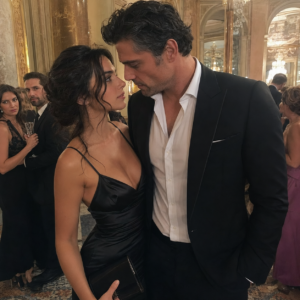
The roses were white.
Valentina Ki stood at the edge of the grave and thought Marco would have hated that.
He had always preferred red.
Red for power. Red for blood. Red for the things he owned.
And he had owned many things. Vineyards in Tuscany, restaurants across the capital, a fleet of black cars that moved through Rome like a slow military procession.
He had owned her, too, though he’d had the elegance never to say so aloud.
The priest was speaking Latin. The old kind. The kind Marco had specifically requested in the handwritten funeral directive he’d kept in his desk safe beside a Beretta and three passports.
She had read every word of that directive in the 48 hours after they’d brought his body home. Sitting at the kitchen table in the villa while his mother wept in the next room and his lieutenants stood in the hallways like stone statues waiting to be assigned new positions.
She had not wept.
She had read the directive, organized the flowers—white, because she refused the red, refused to give even his corpse that satisfaction.
And she had stood here in her black Valentino dress and her black Chanel sunglasses. Every hair in place. Her hands folded in front of her like a woman who had rehearsed this moment.
Because she had.
For six years, she had rehearsed this moment.
The wind came off the Tiber carrying that particular Roman smell—stone and exhaust and ancient dust—and lifted the veil from her hat.
She pressed it back down.
Around her, the Ki family assembled in its full dark glory. Brothers-in-law who watched her with calculation behind their condolences. Sisters-in-law who had always considered her a beautiful ornament their brother had installed and could theoretically be uninstalled.
Marco’s mother, Donna Lucia, stood directly behind Valentina’s left shoulder. Like a shadow with pearls.
Her grief enormous and genuine and completely suffocating.
Forty-three men stood in a loose perimeter at the cemetery’s edge. Not mourners.
Guards.
Even in death, Marco Ki required a security detail.
The priest concluded. Dirt was thrown.
Someone gripped Valentina’s arm. Giani, her brother-in-law, second eldest. The one who smelled of cigarettes and ambition.
She allowed herself to be steered away from the grave, through the white roses, past the weeping women and the stone-faced men, toward the waiting cars.
“The family will need you present at the house,” Giani said quietly, his mouth close to her ear. “There are things to discuss.”
“There always are,” she said.
He stopped walking.
So did she.
They looked at each other in the pale October light.
“You understand what your position is now?”
He said it as a question. But she answered it anyway.
“I am the widow,” she said. “I understand perfectly.”
She got into the car. The door closed.
As Rome blurred past the tinted windows—the basilicas, the piazzas, the thousand-year-old streets that had witnessed every species of grief and power—Valentina pressed her fingers together in her lap and let herself feel for just one moment the exact shape of the cage she now inhabited.
She was thirty-one years old.
She had been married at twenty-five.
In the six years between those two facts, she had learned the rules of the world she’d married into.
And the most important rule—the rule carved into the Ki family code like scripture—was this:
The widow does not remarry.
She was property of a dead man.
And property did not get to choose.
Part Two: The Rival
The house was full by the time they arrived.
The Villa Conti on the Appia Antica. Twenty rooms of marble and history and heavy curtains that kept the outside world at a respectful distance.
Valentina moved through it like a ghost through its own haunting. Accepting embraces and condolences. Accepting small glasses of things she didn’t drink. Accepting the weight of every gaze that tracked her across every room.
She was being assessed.
She knew this.
Marco had been dead for seventy-two hours, and the machinery of succession was already in motion. She was a variable in that machinery. A widow with no children, no blood claim to the Ki name, and a beauty that had always made the other men in her husband’s world uncomfortable in ways they’d never fully resolved.
She found a quiet corner near the library doors.
She stood there breathing.
“You’re very good at this,” said a voice.
She turned.
He was standing three feet away. She had not heard him approach. Which was unusual, because Valentina had developed over six years of surviving in careful proximity to dangerous men a very precise awareness of her surroundings.
That she had not heard him was itself a message.
She knew who he was.
Of course she did. You did not survive in this world without knowing exactly who Luca Ferrante was.
He was Marco’s age—thirty-eight—though he wore it differently. Where Marco had been classically handsome in the way of men who know they are handsome and wield it accordingly, Luca Ferrante was something harder to categorize.
Tall. Dark-suited. Black hair that showed the first threads of silver at the temples.
A face that had been structured by genetics into something striking and then complicated by experience into something dangerous.
His eyes were very dark. Nearly black.
They were watching her with an attention that was entirely too direct for a funeral.
He was the head of the Ferrante organization. Marco’s greatest rival. The man whose operations overlapped with Ki territory in eleven neighborhoods across Rome and three in Naples. A fact that had generated decades of tension, two wars, and a ceasefire that was widely understood to be temporary.
He was also, technically, the last person who should be in this house today.
“You shouldn’t be here,” she said.
“I came to pay my respects,” he said. “To the man you spent fifteen years trying to destroy.”
Something moved in his expression. Not quite amusement. Not quite offense.
Something more precise.
“We were rivals,” he said. “We respected each other.”
A pause.
“In our way.”
“Does Giani know you’re here?”
“Giani invited me.”
She absorbed this. The implications assembled themselves quickly in her mind. Giani already maneuvering. Already sending signals. Using Marco’s funeral as a diplomatic opportunity.
Which meant either Giani intended to pursue peace with the Ferrantes, or he intended to use the appearance of peace to buy time for something else entirely.
“Condolences for your loss,” Luca Ferrante said.
His voice was low. Unhurried. Italian with the particular Roman inflection of someone who had grown up in the old city south of the Tiber.
“Sincerely.”
She looked at him.
“Are they sincere?”
“Yes.”
“Why?”
He was quiet for a moment.
Then: “Because I know what it is to be trapped in something that looks from the outside like a life.”
The words landed with a precision she hadn’t expected.
She held his gaze for three full seconds. Which, in the social mathematics of the world they occupied, was already longer than it should have been.
Then she turned away.
“Thank you for coming,” she said, in the tone of a woman ending a conversation.
She walked away from him.
She did not look back.
But she felt his gaze the entire length of the room.
Part Three: The Invitation
Three weeks after the funeral, Donna Lucia came to the apartment.
Valentina had moved out of the villa seven days after Marco’s burial. A fact that had generated considerable discussion among the family, though no one had quite had the nerve to stop her.
She had taken only what was hers. Clothes. Books. A few pieces of jewelry Marco had given her that she’d chosen to keep—not out of sentiment, but because they were beautiful, and she had earned them.
She had left the villa’s suffocating grandeur without a backward glance and taken a penthouse in Parioli. The eighth floor of a building with a terrace that looked south across the city toward the dome of St. Peter’s.
It was hers.
She had bought it two years into the marriage with money from her own work.
She designed interiors. High-end residential and commercial. And she had kept that work as carefully as she’d kept everything that was only hers. A professional identity. A bank account Marco hadn’t known the full extent of. A life that existed in the margins of the one she’d been required to perform.
Donna Lucia sat on the white sofa in the white living room and accepted the coffee Valentina brought her.
For a few minutes, they observed the ritual of two women who had never entirely trusted each other but had navigated that distrust with the careful courtesy of the long acquainted.
Then Donna Lucia set down her cup.
“We need to discuss your future,” she said.
Valentina sat across from her.
“Do we?”
“You are thirty-one.”
A pause.
“You are young, and you are very beautiful. These are facts that will create complications.”
“For whom?”
Donna Lucia’s eyes—Marco’s eyes, dark and deliberate—studied her with frank appraisal.
“For everyone. The family’s position is delicate. Marco’s death has created uncertainties. The other families are watching. There are men who will see an available widow as an opportunity for alliance. For leverage.”
“I’m not available,” Valentina said pleasantly.
“You are by definition. A widow is a woman whose husband has died.”
“That’s all the definition I need.”
Donna Lucia folded her hands. She was sixty-one years old. She had buried a husband and a son, and she wore her grief like a second skin—impenetrable, organizing everything behind it into iron categories of duty and expectation.
“The family code is clear,” she said. “The widow of a Ki does not remarry. You carry the family’s honor. To give yourself to another man would be a dishonor.”
Valentina’s voice was very even.
“Yes, I know the code, Donna Lucia. Marco explained it to me on our wedding night.”
A brief pause.
“In fact.”
Something flickered in the older woman’s expression.
“I’m not planning to remarry,” Valentina continued. “I’m planning to continue my work, to maintain the dignity of my position, and to live quietly. Is there anything else?”
There was a silence.
“There are those in the family,” Donna Lucia said carefully, “who believe a formal arrangement should be made to protect you. A caretaker. Someone to manage the assets Marco left in your name.”
“To ensure I don’t do anything inconvenient with them,” Valentina said.
“To ensure your security.”
“I appreciate the concern.”
She stood.
“I’ll manage my own security. Thank you.”
She showed Donna Lucia to the door with perfect courtesy. Accepted the older woman’s cool embrace. Watched the elevator close on her mother-in-law’s composed and implacable face.
Then she stood in her white apartment and breathed slowly and thought about the precise dimensions of the trap she was in.
No remarriage. No independent alliance. No freedom to choose.
She was the Ki Widow. Decorative and contained. A living symbol of Marco’s legacy and the family’s permanence.
She would age in this role. She would be watched, managed, assessed. Every relationship scrutinized. Every friendship inventoried.
She went to the terrace.
Rome spread out below her in the autumn afternoon. Golden and ancient and completely indifferent to her problem.
She put her hands on the railing and looked at it. The city she’d come to as a young woman of twenty-three from Milan with a portfolio and a dream of designing the interiors of places that mattered.
She had not anticipated becoming an interior herself.
Her phone rang.
She checked the screen. The number was not saved, but she recognized the Roman prefix. And beneath that recognition, something else. An instinct she didn’t entirely trust.
She let it ring twice more.
Then she answered.
“Signora Ki,” said Luca Ferrante’s voice.
She turned from the railing and leaned against it, facing the apartment, the Roman sky behind her.
“How did you get this number?”
“I have resources.”
“That’s not a comforting answer.”
“It wasn’t meant to be comforting. It was meant to be honest.”
A pause. She could hear the particular quality of his attention through the phone line. That absolute still focus she’d noticed at the funeral.
“I’m calling to apologize.”
She blinked.
“For what?”
“For coming to the funeral without warning you. It was inconsiderate. You had enough to manage.”
She waited. Because there was more. There was always more with a man like this.
And he continued: “And because I’d like to meet with you professionally. I have an interior project in development that I believe you’d be well suited for.”
The silence stretched.
“You want to hire me?”
“I’m considering it. I’d need to see your portfolio first.”
“My portfolio is on my website.”
“I’ve seen your website. I’d prefer to discuss it in person.”
She looked out at Rome and measured the distance between his request and everything it implied. The family politics. The scrutiny. The message it would send if anyone knew she had taken a meeting with Luca Ferrante four weeks after Marco’s funeral.
“That would be noticed,” she said.
“Yes,” he agreed, with no inflection that suggested this concerned him. “The Ki family would—”
“I’m aware of the politics involved.”
A pause. Not hesitation. He didn’t strike her as a man who hesitated. More like a deliberate spacing of words.
“And I’m asking anyway,” he said.
She said nothing.
“Think about it,” he said. “My office is on the Via Veneto. The building is called the Palazzo Ferrante—though that’s a bit pretentious, I’ll admit. Come see it if you’d like. I’ll have my assistant send the details.”
He ended the call before she could respond.
She stood on her terrace for a long time after that. Holding the phone. Watching the sun begin its descent over the city.
Below her, Rome moved in its ancient rhythms. Traffic and bells and the ten-thousand-year argument of a civilization that had survived everything it had ever tried to destroy itself with.
She thought about the white roses she’d chosen for Marco’s funeral.
She thought about the word property.
She went inside, opened her laptop, and sent a message to her assistant confirming her availability the following Tuesday.
Part Four: The Palazzo
The Palazzo Ferrante was not pretentious.
It was, in fact, extraordinary.
It occupied the upper four floors of a nineteenth-century building on the Via Veneto. That wide, curved boulevard that had once been the throbbing artery of Rome’s Dolce Vita and had since evolved into something quieter and more expensive. The kind of street where wealth didn’t announce itself because it didn’t need to.
The building’s facade was pale travertine. Its windows arched in the Baroque style. The lobby had been renovated recently—good marble, clean lines, none of the fussy historicism that afflicted similar spaces nearby.
Valentina noted all of this as she passed through it.
She noted things. It was what she did.
The elevator opened onto a private reception area on the twenty-second floor. A young woman—immaculate, bilingual, carrying a tablet—led her through a corridor lined with artwork that she recognized as genuinely expensive and genuinely chosen. Not assembled by an adviser. Selected by someone with actual taste.
A Kefir. A small De Chirico. Photographs she didn’t recognize but should investigate.
The corridor opened into a large room. An office, technically, though that word seemed inadequate.
Floor-to-ceiling windows on three sides gave a panoramic view of the city that caught her breath in the way a view could only do when it was both unexpected and somehow exactly right.
Below: the curve of the Via Veneto, the canopy of umbrella pines, the distant glitter of the Tiber.
Above: the pale blue of an October sky stretched across Rome’s ragged skyline.
Luca Ferrante stood at the window with his back to her.
He was in a dark suit—navy, she thought, not black, though the light made the distinction subtle. He held no phone, no tablet, nothing.
He was simply standing and looking at the city in the way that some men look at things they own and other men look at things they intend to take.
He turned when he heard her.
“You came,” he said.
“You sent me an address. People ignore addresses all the time.”
She walked to the center of the room and turned slowly, completing a professional assessment. The ceiling was original plaster; someone had had the wisdom to leave it alone. The floors were oak, dark, old. The furniture was sparse and well-chosen—a long desk low and clean-lined, two chairs that were comfortable without being soft. A bookcase along the north wall, genuinely used.
The space had character without performance.
She respected that.
“The building is good,” she said. “When was the renovation?”
“Fourteen months ago. The architect was adequate. The result is functional. Not what it could be.”
“What would you like it to be?”
He looked at her directly. She had the same experience she’d had at the funeral. The sense that his attention, when fully applied, was an almost physical thing.
“I’d like it to feel like somewhere a serious person lives,” he said. “Not a businessman’s showroom. Not a statement of wealth. Something more specific than that. More personal.”
“Yes.”
She turned again, taking in the room from each angle.
“You’d need to change the lighting entirely. It’s too cold currently. Too uniform. The furniture placement is defensive, not welcoming.”
She paused.
“Though I suspect that may be intentional.”
“It might be.”
“The books are the most interesting thing in the room. I’d work from those.”
He was quiet. She turned to find him watching her with something that might in another man have been warmth, but in him was more like recognition.
The look of someone who had been accurately described.
“Would you like coffee?” he said.
“Please.”
They sat—him behind the desk, her in the chair across from it. She was aware that she had accepted the arrangement that positioned her as the visitor, the one who came to him.
She was also aware that she had made the choice consciously.
And that he probably knew she had.
Men like Luca Ferrante paid attention to the small negotiations.
Coffee came. Excellent coffee. The kind that explained why Italians couldn’t function in other countries’ offices.
“Tell me about the project,” she said.
He leaned back.
“I’m renovating a property on the Aventino. Eight rooms. Original fifteenth-century structure. View of the Circus Maximus and the river. It’s been uninhabited for eleven years. It needs everything—floors, ceilings, restoration, lighting, furnishing, art placement, garden integration.”
He paused.
“I want it to be a residence. Not a museum. Not a renovation showpiece. A place to live.”
“For you, possibly.”
“You don’t know yet.”
“I know I want the space to exist. Whether I inhabit it depends on how it turns out.”
She found this both honest and strange. Most clients wanted a space built around their existing self. He seemed to want the space built first—and then to see what self it called forward.
“Timeline,” she said.
“Eighteen months. No rush if the work requires more time.”
“Budget?”
“Irrelevant.”
She looked at him.
“Budget is never irrelevant.”
“For this, it is. I’d rather it be done correctly than cheaply.”
She considered.
Her schedule was manageable. She had three ongoing projects, none at a critical phase. The Aventino property sounded significant—the kind of work that could be a career landmark if executed well.
And the client, whatever else he was, clearly understood what he wanted.
She also understood—because she was not a fool—that accepting this commission would generate precisely the kind of scrutiny she had declined to worry about when she answered his phone call. And that accepting it would constitute a declaration of independence from the Ki family’s expectations.
She understood that she was choosing that declaration.
“Send me the full specifications,” she said. “And arrange access to the property. I’ll want to spend time there before I commit.”
“Of course.”
He picked up his pen. An old one, she noticed. A Montblanc with the kind of wear that suggested actual use.
“I’ll send you a contract for review.”
“My own contract,” she said. “My standard terms.”
He paused.
Then, almost imperceptibly, something eased in his expression.
“Naturally.”
She stood to leave. He stood as well—a courtesy she noted, because not all men in his position still bothered.
“Signora Ki,” he said when she’d reached the door.
She turned.
“I was sorry about your husband,” he said.
And the thing in his voice—the thing that made it different from every other condolence she’d received—was that it sounded less like sympathy and more like I know what that situation was, and I’m sorry you were in it.
She held his gaze for a moment.
“Thank you,” she said. “I’ll be in touch.”
She took the elevator down and walked out onto the Via Veneto in the October sun. Stood for a moment on the pavement with the city moving around her.
She had just made a decision.
Several of them, in fact.
She walked to her car and didn’t allow herself to examine how clearly and completely she’d known from the first moment she’d stepped into that room that she would take the job.
Part Five: The House
The house on the Aventino was a ruin.
In the specific way that only very old Italian buildings achieved. A ruin that was also somehow a masterpiece. The kind of place that made architects weep and contractors reach for their calculators with expressions of barely contained horror.
Valentina walked through it alone on a Thursday morning in late October. A property report in one hand and her phone in the other, taking photographs and notes with the methodical attention of a surgeon assessing a patient before opening.
The entrance was a courtyard. Original cobblestones. A dry fountain. A pergola that had lost its vines and now stood as a skeletal suggestion of what it might become again.
The main structure rose three floors. Its walls the ancient Roman mixture of brick and tufa—patched and repatched over centuries into something that was less a single surface than an archaeological record.
The windows were arched on the piano nobile. Shuttered. The shutters painted the particular faded green that Romans called verde antico and that Valentina thought of as the color of beautiful neglect.
Inside: cold stone. The smell of old wood and dust and something beneath that—lime plaster, centuries of it. The building’s own particular atmosphere.
Plaster ceilings cracked but intact. Wood floors in the sala principale that were beyond saving, but the structure beneath them was sound. Original iron hardware on every door. A kitchen that had not been updated since approximately 1960 and which she was already planning to gut entirely.
She stood in the second-floor loggia and looked out at the view.
The Circus Maximus spread below like a long green dream. The ancient chariot track, now just a valley of grass between the Palatine and Aventine hills, but still carrying in its proportions the ghost of its former enormity.
Beyond it, the river caught the morning light.
In the middle distance, the white marble of the city’s monuments broke the skyline.
It was one of the finest views in Rome.
She understood, standing there, why he hadn’t been able to abandon it. Even eleven years of abandonment, and the building had this—had the bones of something extraordinary.
And that was not the kind of thing you walked away from.
She heard a car in the courtyard below.
When she reached the ground floor, Luca Ferrante was crossing the cobblestones in a dark coat. Accompanied by a man she recognized as his head of operations—she had done her research—a compact, watchful individual named Sergio, who stood slightly behind and to the left in the manner of a man whose primary function was the elimination of threats to his employer.
“I thought you were sending an architectural survey team,” she said.
“I did. They came last week.”
He looked up at the building’s facade with a particular expression. Not quite possession. Something more complicated.
“I wanted to see it with you.”
She absorbed this.
“I need to walk the whole structure,” she said. “Room by room, in order. It’ll take most of the day.”
“I have the day.”
“You have nothing more important.”
He looked at her then. The look contained something direct and unambiguous.
“No.”
She turned and led him back inside.
Part Six: The Walkthrough
They moved through the building the way she always worked.
Systematically. From the lowest level to the highest. Noting everything.
She talked as she worked, explaining what she saw, what it suggested, what could be saved and what couldn’t. He listened without interrupting—which was rarer than it should have been in her professional experience.
Most clients, especially powerful ones, interrupted.
He didn’t.
He asked questions at the right moments. Specific, informed questions that revealed he had already done considerable research into the building’s history and structural condition.
In the kitchen, she found the original range. A massive cast-iron affair that should have been removed decades ago and somehow hadn’t been.
She crouched down to examine its condition.
She was surprised to find it intact.
“This is extraordinary,” she said, more to herself than to him.
He crouched beside her.
He was close. The kitchen was not large, and she was suddenly very aware of his proximity. The particular quality of presence that some people had—like a field they generated.
“Can it be restored?” he said.
“It can be made functional again, yes. It’s more work than replacing it.”
She looked at it.
“But it’s the soul of this room. Everything should be built around it.”
“Then we build around it.”
She stood.
He stood.
There was a half-second in which neither of them moved. In which the old kitchen was very quiet, and the October light came through the small window at an angle that turned everything golden.
Then she moved to the next room.
They ate lunch at a small table in the courtyard. Sergio had produced from somewhere a remarkably good spread—supplì, bread, prosciutto, wine.
She ate without self-consciousness. Which she recognized was itself something she rarely did in the presence of men who watched her with that quality of attention.
“The building should breathe,” she said. “That’s the central principle for me. The materials are all organic—stone, wood, plaster, iron. Nothing synthetic. The lighting should track the day, not fight it.”
She paused.
“And the furniture—have you lived with antiques before?”
“Some. Mixed or pure?”
“I’m not sure I understand the question.”
“Some people want every period consistent. All eighteenth century, all twentieth century. Some prefer mixing—different eras in conversation. It creates either richness or chaos, depending on your execution.”
He was quiet for a moment.
“What do you prefer?”
“For myself, or for clients?”
“For yourself.”
She looked at him. The afternoon light was warm, and the question was on its face a professional one.
But it didn’t feel like a professional question.
“Mixing,” she said. “Things that have survived different centuries together feel more alive. More honest.”
“Mixing,” he said.
She looked back at her notes.
They sat for a moment in a silence that was not uncomfortable. Below the hill, Rome moved in its ancient patterns.
“Why did you buy this property?” she asked.
He refilled his glass before answering.
“I came here once when I was nineteen. Someone brought me—I don’t remember who. We climbed the wall because the gate was locked. I stood in the loggia and looked at the Circus Maximus and thought—”
He paused.
“What?”
“I thought a person could be different in a place like this.”
He looked at the building’s facade.
“I couldn’t afford it then. By the time I could, it had been on the market for eight years. Everything about it was wrong except the fundamental thing.”
“Which was still right.”
She looked at him for a long moment.
“The fundamental thing was the view,” she said.
“The fundamental thing was the feeling,” he said. “The view is just what delivers it.”
She returned to her notes.
But something in the afternoon had shifted. Something quiet and precise. Like a key turning in a lock that both of them would pretend for now not to have heard.
Part Seven: The Warning
Giani Ki came to her office.
He didn’t call first, which was itself a statement. He arrived at eleven on a Monday morning, a week after her second visit to the Aventino property, with one of Marco’s former drivers and a manner that had shifted since the funeral from conditional brotherly warmth to something more openly proprietary.
Her studio was on the Via del Croce in a building she’d occupied for four years. An open-plan space with drawing tables, material samples, architectural models, and her desk at the far end near the tall north-facing windows.
She was there when he arrived. She finished the conversation she was having before acknowledging him, which she could see irritated him.
“Giani,” she said when she was ready.
He was forty, with the Ki looks—the dark eyes, the Mediterranean bone structure, the easy authority that came from spending a lifetime being very wealthy and periodically very frightening.
He sat without being invited in the chair across from her desk and crossed his legs and looked around the studio with an expression that made it clear he found it charmingly insufficient.
“You’re taking on the Ferrante commission,” he said.
Not a question.
“I’m finalizing the contract. Yes,” she said.
“I need you to decline it.”
She put down her pen.
“I appreciate your input, Giani. I’ll decline it when I decide to decline it.”
He was quiet for a moment, measuring her. This was, she knew, a calculation: how much pressure to apply, in what form, at what pitch.
“Valentina,” he said. The shift to her given name was itself a move.
“Marco has been dead for five weeks. The family is in a sensitive transition. Our relationship with the Ferrante organization is complicated.”
“Your relationship with the Ferrante organization is not my relationship with the Ferrante organization. I’m not Ki blood. I was Ki by marriage, and Marco is dead.”
“You carry the Ki name.”
“I carry my own name. Valentina Greco. Ki was a courtesy, and you know it.”
He uncrossed his legs and leaned forward.
“You are being naive about what this means. Luca Ferrante is not a man who hires decorators. If he has approached you, it is because you are useful to him in some way that has nothing to do with interior design.”
“Perhaps,” she said evenly, “he simply likes good work.”
“Don’t be deliberately obtuse.”
“Don’t come into my studio and tell me which clients I may accept.”
She held his gaze.
“I understand the family’s position. I have behaved for five years in a manner entirely consistent with this family’s expectations. I have been discreet, loyal, and invisible. In return, Marco gave me a life I did not fully choose and a set of restrictions I did not fully accept.”
She let the silence sit.
“He is dead now. My obligations to the Ki family are those of respect and appropriate distance. Nothing more.”
The silence in the studio was very complete.
Giani stood. He smoothed his jacket. He looked at her with something that was not quite anger—anger would have been easier—but rather the cold, reassessing look of a man recategorizing something from one column to another.
“Be careful,” he said.
“I will be,” she said. “Thank you for coming.”
She watched him leave.
When the door closed, she allowed herself one full breath. In. Out.
Then she turned back to her desk.
Her assistant, Marta, appeared in the doorway from the back room with the careful expression of someone who had heard everything and was professionally pretending otherwise.
“Shall I call Signor Ferrante’s office about the contract?” Marta said.
“Yes,” Valentina said. “Tell them I’m ready to proceed.”
Part Eight: The Call
That evening, she was sitting on her terrace with a glass of wine and an architectural journal when her phone rang again.
The same unknown number.
“You had a visitor,” Luca said without preamble.
She didn’t ask how he knew.
“Yes.”
“Are you reconsidering the commission?”
“No.”
A pause.
“They’ll apply more pressure.”
“Probably.”
She looked out at the city.
“I’m not interested in their pressure.”
“I want to be clear about something,” he said. “I am aware that accepting my commission puts you in a difficult position with the family. I’m not unaware of that. If you decide the cost is too high—”
“Luca.”
It was the first time she’d used his name. She felt the slight change in the quality of his attention through the line.
“I’m thirty-one years old. I have been managed and monitored and contained for six years. If I allow myself to be managed out of a professional decision because it makes a family comfortable, then I have learned nothing.”
A pause.
“So no. I’m not reconsidering.”
The silence that followed had a texture to it. Something she couldn’t precisely categorize.
Then: “All right,” he said.
“Just that?”
“I’ll need access to the property twice a week through December,” she said, returning to business.
“The keys are already at your studio.”
“When did you send them?”
“This morning.”
She looked down at her wine glass.
“You assumed I’d proceed.”
“I had confidence you’d proceed,” he corrected quietly.
She ended the call before she could respond to that in any of the ways she briefly considered responding to it.
She sat on her terrace for a long time after, watching Rome’s lights come on, thinking about the distinction between confidence and assumption, and why—from his voice—it had not sounded like arrogance.
It had sounded like something else entirely.
Something that felt dangerously close to being seen.
Part Nine: The Dinners
November arrived with cold wind and brilliant light.
The kind of Roman autumn that reminded you why the ancients had considered this the world’s center. The city turned gold and amber. The morning air had a bite to it that made even the oldest streets feel briefly new.
Valentina went to the Aventino property on Tuesday and Thursday mornings. She brought Marta on some visits, a structural engineer named Paolo on others. She measured and photographed and documented.
Gradually—the way a painting emerges from beneath its overpainting, layer by careful layer—she began to see the house not as it was, but as it would be.
Luca appeared twice in November.
Not announced. Not requested. He simply arrived in his dark coat with Sergio at a distance and walked through whatever she was working on with the attentive silence she had come to recognize as his particular mode of engagement.
He asked good questions. He never tried to override her decisions once they’d been discussed and agreed. When he disagreed with something, he said so directly and explained why.
Then he listened to her counterargument with genuine attention.
She found herself looking forward to the days he appeared.
She also found herself extremely irritated by this.
The Friday after his second November visit, she had dinner with her friend Sophia. Another Milan expatriate, a journalist who had come to Rome eight years ago to cover Italian politics and had never left.
They ate at a small place in Trastevere that Sophia considered her second kitchen. They drank the house red and were entirely honest with each other in the way only women who have known each other for fifteen years can be.
“Tell me about the commission,” Sophia said.
Valentina told her. The building. The view. The project’s scope.
“And the client,” Sophia said with the expression of a woman who had already inferred the answer from everything Valentina had not said.
“He’s interesting,” Valentina said.
Which was the most accurate description she could produce.
“Interesting how?”
“He pays attention. Most people in his world—most people, full stop—don’t pay attention. They wait to speak. He actually listens.”
Sophia was quiet for a moment, turning her glass.
“Valentina. He’s Luca Ferrante.”
“I know who he is.”
“He runs the largest criminal organization in central Italy.”
“I’m aware.”
“The Ki family will—”
“I’ve had that conversation already. Multiple times.”
Sophia looked at her with the direct, affectionate assessment of someone who loved her and also worried about her.
“I’m not asking about the Ki family. I’m asking about you. Because you have a very specific look on your face right now. And the last time you had that look was nine years ago in Milan, when you met Marco.”
A pause.
“And we both know how that went.”
Valentina set down her glass.
“It’s professional.”
“Of course it is,” Sophia said agreeably. “What does he look like?”
A pause.
“That’s irrelevant.”
“It really isn’t.”
“Sophia—”
“Just describe him factually. No editorial.”
Valentina looked at her friend for a moment.
“Tall. Dark. Somewhere between handsome and something harder than that. The kind of face that—”
She stopped.
“The kind of face that what?”
“That looks like it has a private interior,” Valentina said finally. “Like there’s more happening behind it than is visible.”
Sophia picked up her glass.
“Oh,” she said pleasantly, “we’re in trouble.”
Part Ten: The Chandelier
In December, the first significant snow of the season fell on Rome.
Unusual. The city always slightly bewildered by its own weather.
Valentina arrived at the Aventino property to find a delivery truck in the courtyard and three workers unloading what turned out to be a collection of antique lighting fixtures she had located through a dealer in Milan and not yet informed Luca she’d ordered.
She found him inside, standing in the sala principale, looking at the boxes.
“I was going to present these to you first,” she said. “Before ordering.”
He turned.
“I trust your judgment.”
“That’s very generous, but I prefer the process.”
“The process being selection, presentation, discussion, decision—in that order. It’s how you avoid mistakes.”
He looked at her with what she had begun to recognize as his particular form of amusement. Nothing as uncomplicated as a smile, but something in his expression shifted slightly in a direction that wasn’t entirely stern.
“Apologies,” she said. “I moved ahead. It won’t happen again.”
“I’m not angry.”
“I know. But it was my error.”
She moved to the nearest box, opened the packing, and lifted out a fixture. A wrought-iron chandelier, nineteenth-century. The patina of the metal absolutely genuine in the way that only time produced.
“This is for the sala. I want to hang it lower than convention would suggest. So it creates an intimate zone in the center of the room rather than illuminating it from above.”
He came to stand beside her.
She held up the chandelier so the light from the windows caught it. She was watching the fixture.
He was watching her.
The moment had a quality of perfect stillness to it. Like a sentence before its final word.
“Do it,” he said.
She lowered the chandelier.
Their hands were briefly, incidentally, close. Neither of them moved away immediately.
Then she set the fixture down carefully on its packing blanket.
“I’ll need to discuss the sourcing for the bedroom floors,” she said.
The moment resolved itself back into professionalism. Like water returning to level.
But something had changed.
She knew it.
She suspected he knew it, too.
The question was what precisely either of them intended to do about it.
Part Eleven: The Gala
The party was on a Saturday in mid-December.
A fundraising gala at the Palazzo Farnese. The kind of Roman event that assembled under one magnificently frescoed ceiling representatives of politics, finance, culture, and the criminal underworld in their respective finery. All pretending not to know exactly what each other was.
Valentina attended because she had a client whose living room was being unveiled that evening. It would have been poor form to be absent.
She wore black. She was still technically in mourning, though the color also suited her, and she was honest enough to know that.
Her hair was up.
She was standing near the bar speaking with an architect she’d known for years when she felt the shift in the room’s atmosphere that preceded someone significant entering it.
She didn’t turn immediately. She had learned in six years with Marco that turning immediately gave too much away.
She finished her sentence.
Then she turned.
Luca Ferrante was across the room, thirty feet away. In a black dinner jacket that fit the way expensive tailoring fit when the man wearing it was also built correctly.
He was speaking with two other men she recognized—one a senator, one a banker—with the measured authority of someone who occupied every space he entered as if he’d been there before.
He saw her immediately.
The same moment. The same zero-delay recognition she’d noticed at the funeral. As if she registered on some frequency he was perpetually attuned to.
She turned back to her conversation.
Twenty minutes later, someone touched her arm lightly from behind.
“Signora Ki.”
She turned.
He was close. Closer than the distance the room’s social geometry would have suggested as appropriate. Not inappropriately close. Just close enough to speak without being overheard.
“Signor Ferrante,” she said.
“You look exceptional,” he said.
His voice had the even, unperformed quality of someone making a factual observation rather than a compliment.
“Thank you.”
She glanced around the room, noting the eyes that had already found them. The social radar of this world was extraordinarily sensitive.
“You’re creating a scene.”
“Am I?”
“You know you are.”
He looked around the room with an expression of complete indifference.
“My concern about scenes is limited.”
“How convenient for you.”
Something moved in his eyes.
“I’d like to take you to dinner,” he said.
The sentence fell into the air between them like a stone into still water.
“That,” she said carefully, “would be a scene considerably larger than the current one.”
“Yes. The family.”
He paused.
“I know there would be consequences. I understand that.”
She studied him. The stillness of his expression. The absolute lack of apology in it.
He was not asking casually. He was asking with the full awareness of what he was asking and what it would cost.
And the fact that he was asking anyway was either an act of profound confidence or profound recklessness.
She wasn’t yet sure which.
“Why,” she said.
He was quiet for a moment. Around them, the gala churned and sparkled and pretended.
“Because I have been in the same room as you five times now,” he said. “And each time, I’ve had to manufacture a reason that makes sense to other people. I’d prefer a reason that only makes sense to us.”
She held his gaze for a long time.
“Give me two weeks,” she said.
He nodded once.
“Two weeks.”
She turned away from him and moved back into the party. She did not look back. She kept her expression composed.
And inside her chest, something was moving very quickly in a way that she had not felt for a long time.
Possibly ever.
Later—much later, after midnight—she was in the car home when her phone produced a message from a number she now recognized.
The chandelier position. You were right. Lower is better.
She looked at it for a long time.
Then she wrote back.
I usually am.
Three seconds.
I’m beginning to understand that.
She put the phone in her bag and watched the city pass the window and told herself with perfect conviction that she was being careful, that this was manageable, that she was a grown woman who understood consequences and was navigating them intelligently.
She almost believed it.
Part Twelve: The Escalation
The second warning came not from Giani, but from Marco’s youngest brother.
Aldo. Twenty-eight. Impulsive, with the emotional control of someone who had been told yes his entire life and found nos genuinely mystifying.
He arrived at her studio on a Tuesday morning. The difference from Giani’s visit was that Aldo arrived at volume.
“Do you know what people are saying?” he said before he was fully through the door.
Valentina set down her pencil. Marta made herself invisible with the skill of long practice.
“Sit down, Aldo.”
“I don’t want to sit down. I want to know if you understand what you’re doing. People saw you with him at the Farnese gala. People are talking.”
“People,” she said evenly, “are always talking.”
“My mother is—”
“Your mother is not my mother.”
“She has been for six years.”
“By courtesy.”
She stood, which changed the architecture of the room. She was taller than Aldo when she stood straight.
“I was Marco’s wife. Marco is dead. I am his widow, which is a specific thing, and I understand the family’s feelings about what that implies. But I am not a prisoner, Aldo. I am not bound to live invisible in a corner because Marco died.”
“No one is saying you have to be invisible. We’re saying—”
“You’re saying I can’t have professional relationships with anyone your family considers an adversary. You’re saying my circle of acceptable human contact is defined by Ki politics.”
She kept her voice level.
“That is not a negotiation I’m willing to have.”
He looked at her with the frustrated fury of a young man who couldn’t understand why charm and volume weren’t working.
“He is using you, Valentina. Luca Ferrante doesn’t hire decorators. He’s doing this to get to us.”
“Perhaps,” she met his eyes.
“Or perhaps I am an excellent designer who he wants to work with, and the politics are secondary. Both things can be true simultaneously.”
“You’re naive.”
“No.”
She said it very quietly.
“I am not naive. I am aware of every possible interpretation of this situation. I have assessed it from every angle, and I have decided to proceed.”
She held his gaze.
“Tell your mother I send my love. Tell Giani I appreciate his concern. And please don’t come here again without calling first.”
He left, slamming the door in a way that rattled the window frames.
She sat back down and looked at her drawing table and breathed.
Then she picked up her pencil and returned to the floor plan of the Aventino loggia and worked for two hours without stopping.
That evening, she called Luca.
He answered on the second ring.
“I’ve been thinking about your dinner invitation,” she said.
“The two weeks aren’t up.”
“I know.”
A pause.
“Are you free Thursday?”
A brief silence that contained, she suspected, something he was choosing not to say.
Then: “Yes. There’s a place in the Ghetto. Small, not fashionable, good food. Nobody important goes there.”
“That sounds like a statement.”
“It’s a practical choice. I’ll take it either way.”
A pause.
“Seven-thirty.”
“Seven-thirty,” she said.
She ended the call and sat in her apartment in the early evening light and thought about the word reckless and whether it applied.
She concluded that what she was doing was not reckless.
It was, rather, the specific opposite of reckless. It was the first entirely deliberate, unmanaged, genuinely chosen thing she had done in six years.
And if the world she inhabited chose to call deliberate choice reckless, that was, she decided, the world’s problem.
Part Thirteen: The Truth
The restaurant was called Osteria del Ghetto.
It had sixteen tables and the kind of Roman Jewish cooking that was a city within the city. Artichokes fried in the old manner. Oxtail that took hours. Lamb in every form that lamb could be coaxed into.
She arrived first, which she had intended. She wanted to be in place, grounded, settled before he walked through the door.
He arrived exactly at seven-thirty.
Which also told her something.
He had changed from whatever he’d been wearing earlier. This suit was charcoal gray—deliberately less formal than his usual, she thought. A small gesture of adaptation to the setting.
He’d also come without Sergio.
She noticed all of these things with the involuntary attention she paid to everything about him.
He sat down across from her. The waiter appeared. They ordered wine without discussing it, which was itself a negotiation completed successfully.
Then he settled back in the way that people settled when they were genuinely comfortable rather than performing comfort.
“No security,” she said.
“Sergio objects to small restaurants. He can’t secure a place with this many exits.”
“And you’re unconcerned by exits?”
He picked up his wine.
“I spent my twenties in rooms with no exits. I’ve come to prefer the ones with options.”
She looked at him over her glass.
“Where did you grow up?”
“Testaccio. The old neighborhood, before it gentrified into something it isn’t. My father ran a scrap metal business.”
A brief pause.
“Which was occasionally a scrap metal business. And the other occasions—”
He looked at her. Direct and unapologetic.
“You know what my family is.”
“I know what your organization is. That’s not the same as knowing your family.”
He was quiet for a moment, seeming to find this distinction genuinely interesting.
“My mother was from Napoli. She made Sunday sauce on Saturdays so the smell would last through mass. She died when I was sixteen.”
He said this without performance. Flatly. As established fact.
“My father followed three years later. I had two older brothers. One is retired in Sardinia with a wife and four daughters.”
He paused.
“One is dead.”
“I’m sorry.”
“It was a long time ago.”
He looked at his glass.
“I was twenty-two when I took over the organization. I was in no way ready.”
“What made you ready?”
“About five years of nearly catastrophic errors.”
Something in his expression—not quite amusement. Something more honest than that.
“And the understanding that there was no alternative. The organization either had me as its head, or it had someone worse. That turned out to be sufficient motivation.”
She considered this.
“You’re very frank.”
“I’m talking to a woman who was married to Marco Ki for six years. There is no version of yourself you could present to me that I would find naive.”
He looked at her directly.
“I find pretense wasteful.”
She met his eyes.
“How did you know about the marriage? About what it was.”
The question landed where she’d intended it. At the heart of it.
“Marco talked about you,” he said. “In the ways men talk about things when they know they’re in over their head and won’t admit it.”
A pause.
“He talked about your intelligence most. It frustrated him. He said you always understood exactly what you were doing, and he could never tell whether that made you easier or harder to manage.”
“Harder,” she said. “I assumed.”
She looked at her plate.
The artichoke was extraordinary. The evening was extraordinary. And she needed to pay attention to that rather than to the way he was watching her—which was with the specific, concentrated attention of someone who had been waiting a long time and was not yet sure if the waiting was over.
“The family is going to escalate,” she said. “After this.”
“Yes.”
“It concerns me less than it should.”
“Why less than it should?”
“Because,” she paused, choosing words with care. “Because for a long time, I have let concern about consequences determine my actions. And I find I’m very tired of that.”
He was quiet for a moment.
Then, very slowly, he reached across the table and touched the back of her hand.
Not a grip. Not a claim. Just a contact. Three fingers. Brief.
“Then don’t,” he said.
She looked at their hands.
Then she turned hers over, palm up, and let the contact rest there for a moment.
Mutual. Chosen. Unmistakable.
Then the waiter arrived with the next course, and they separated naturally, and she reached for her wine, and he asked about the Aventino kitchen timeline.
They had dinner like two people who had just agreed, without words, to something important.
Part Fourteen: The Kiss
January came in cold and brilliant.
Rome recalibrated itself after the holidays into its working self. Busier. Less forgiving. The tourists gone, the Romans restored to their rightful ownership of their own streets.
The story of Valentina Ki’s dinner with Luca Ferrante reached Giani before the week was out.
She had expected this. The restaurant had been quiet but not invisible. In the closed world of Rome’s famiglie, a widow having dinner with her late husband’s rival was the kind of thing that traveled.
She was ready when Giani called.
She let it go to voicemail. Listened to his measured and ominous message. Did not return the call.
She sent a brief text: I received your message and will consider it carefully.
Which meant: I will do as I like.
The work on the Aventino continued through January with an intensity that pleased her. The floors on the piano nobile were salvaged and refinished. The plaster ceiling in the sala had been restored by a craftsman she’d found after two months of searching—a man in his seventies from Umbria who had spent his life maintaining the surfaces of the old world.
She spent two full days watching him work. Learning the technique in the way she learned everything: by observation, by asking specific questions, by being genuinely interested.
The chandelier hung in the sala now. Lower than any electrician had been comfortable with. Precisely where she had known it needed to be.
She stood beneath it on a January afternoon when the light came through the windows at the particular slant of winter and turned the restored plaster golden. She felt the rare, complete satisfaction of a thing done right.
“You’re pleased,” said Luca’s voice behind her.
She didn’t startle. She had begun by January to expect him on Thursdays.
“The plaster work is finished,” she said. “Come look.”
He came to stand beside her.
They both looked up at the ceiling. At the restored medallions, the repaired cornices, the surface that was once again the surface this room had been built to have.
“Guido did this?”
“Yes. He worked three days. Completely by feel in some sections—the original surface was gone, and he had to reconstruct it based on surviving fragments.”
She looked at the ceiling.
“He’s remarkable.”
“You found him.”
“I spent a long time finding him. That’s why the work is right.”
He said this with a simplicity that was not a compliment exactly. Or rather, it was a compliment that had been refined past the need to sound like one.
She turned to look at him.
They were standing in the golden room with the afternoon light doing extraordinary things. He was looking at the ceiling still.
She thought: He’s beautiful.
Not in the uncomplicated way. In the way that things are beautiful when they have survived and bear the marks of it.
“I’m coming to a decision,” she said.
He turned from the ceiling to look at her.
“About what,” he said. Though she thought he knew.
“About us.”
The words settled between them with a weight that was neither comfortable nor uncomfortable. Simply real.
“About what we are or might be. And about what it costs.”
He was very still.
“I’ve spent six years,” she continued, “living in a world that treated its women as either property or ornament. I am not ready to step directly into another arrangement that replicates those conditions.”
She met his eyes.
“Even with someone I want to step into it with.”
A pause.
He didn’t look away.
“I’m not Marco,” he said.
“I know that. But you are Luca Ferrante. Which comes with its own version of the same architecture.”
“What do you need?”
Not what do you want. Not what are you asking for.
What do you need?
The distinction was precise, and she caught it.
“Time,” she said. “To finish this project. To see who you are when you’re not trying to make an impression.”
“I haven’t been trying to make an impression,” he said, with something in his voice that was close to a defense.
“I know,” she said. “That’s why I’m still here.”
They looked at each other for a moment in the golden room.
Then she said: “The kitchen fittings arrive next week. I need you to look at the hardware samples. There are three options, and I want your preference.”
“Tuesday?”
“Tuesday.”
She walked past him toward the doorway. As she did, she let her hand brush against his forearm.
Minimal contact. Nearly accidental.
Entirely deliberate.
Neither of them acknowledged it.
But she felt it for the rest of the afternoon.
Part Fifteen: The Documents
The escalation came in February.
It was delivered through a lawyer—an elderly man in a good suit who arrived at her studio with paperwork and the expression of someone whose job it was to communicate unpleasant things with maximum deniability.
The documents were from the Ki family trust. A formal notification that the apartment Marco had gifted her on the Via del Croce—her studio, her professional address for four years—was technically held in a trust instrument that was now being reviewed. And that during that review, her tenancy was subject to reassessment.
She read the documents twice.
Then she set them down.
“Thank you,” she told the lawyer. “I’ll have my attorney review these and respond.”
She called her attorney from the studio before the lawyer had reached the street.
Then she called Sophia.
“They’re threatening the studio,” she said.
Sophia swore with the creativity of a woman who covered Italian politics.
“Giani,” Valentina said. “It has his fingerprints. The legal structure is more sophisticated than Aldo, but the motivation is the same. They want to remind me that I live in their margins.”
“Do you legally?”
“My attorney thinks there’s a strong counterargument. The gifting was absolute. Marco was specific about it in the documentation. It’ll take six months and legal fees, but I should prevail.”
“Six months is a long time.”
“Yes.”
She looked out the window at the January street.
“They’re not trying to win, Sophia. They’re trying to exhaust me.”
“Will they?”
A pause.
“No.”
She called Luca from the terrace of her apartment that evening. She told him what had happened, concisely, without requesting anything.
When she finished, there was a silence.
“I’ll make calls,” he said.
“I don’t want you to make calls.”
“Valentina—”
“I mean it. This is mine to handle. If you intervene, it becomes about the two of us and the family politics. It stops being about what I’m entitled to as a person.”
She paused.
“I appreciate the impulse. But no.”
Another silence. She could feel through it the specific quality of a man who was powerful enough to solve things with a phone call and was being asked to sit with his hands in his lap.
And was doing so.
“All right,” he said.
“There’s something you can do.”
“What?”
“The Aventino property. I want to move the primary timeline forward by three months. I’ll need additional budget for accelerated sourcing. And I’ll need to be at the property more often. Three or four days a week rather than two.”
“The keys are yours.”
She looked out at the city.
“Thank you.”
“This isn’t charity,” he said, and his voice had shifted slightly. “The work is worth accelerating. And I—”
He paused.
“I want you in the building.”
She closed her eyes briefly.
“That’s a very simple statement.”
“It’s a simple feeling.”
“Nothing about this is simple.”
“No,” he agreed. “But the feeling is.”
She was quiet for a long time.
“I’ll be there Monday morning,” she said finally.
Part Sixteen: The House Wakes
March arrived.
The Aventino house began to look like itself.
The phrase sounded vague, but it wasn’t. There was a specific moment in every renovation when the space ceased to be a construction site and became the thing it had always been trying to become.
Valentina had been present for that moment in many spaces. It was never less than extraordinary.
Like watching someone wake up.
It happened in the house on the second Friday in March. On a morning when the light was particularly fine and the loggia floor had just been completed—old terracotta tiles that had taken her three months to source from a reclamation yard in Umbria.
She walked through the piano nobile with the particular silence of someone who had just understood something.
The house was waking up.
She stood in the loggia and looked at the Circus Maximus below and felt a rightness that was professional and personal and impossible to fully separate.
She thought: This is why I do this. This specific moment. All the rest of it—the politics, the complications—is in service of this.
She was still standing there when Luca arrived.
He came through the loggia door from behind her. She heard his step on the restored terracotta. He stopped when he reached the threshold and looked at the room.
She watched him see it.
The expression on his face was one she had not seen before. Not the controlled attention she was accustomed to. Not the careful assessment.
Something more private.
The expression of a person encountering something that had lived until this moment only in expectation.
“This is it,” he said quietly.
“Yes,” she said.
He came to stand beside her.
They looked at the view together. The same view he’d climbed a wall to see at nineteen. When he’d been a boy in Testaccio with no money and a specific hunger for something he couldn’t yet name.
“You understood what I meant,” he said. “When I said a person could be different here.”
“I understood because I felt it,” she said. “In other rooms, other renovations. There are spaces that invite a different version of you.”
“What version does this one invite?”
She looked at the view.
“A quieter one,” she said. “One that doesn’t need the armor as much.”
He was quiet for a moment.
Then: “What armor do you wear?”
She turned to look at him directly.
It was a question no one had asked her. Not Marco. Not Sophia. Not any of the people who had known her in the years since Marco’s death.
He asked it as if the answer were information he needed. Practical and important.
“The same ones everyone wears,” she said. “Performance of strength. Deliberate control of information. The decision about what to let people see.”
A pause.
“I’ve been very good at it for a long time.”
“I know,” he said. “I’ve watched you be very good at it.”
“Does it bother you?”
“No,” he said. “It’s necessary. I do the same.”
A pause.
“I’m asking because—”
He stopped.
He turned from the view to look at her. The look was direct and unguarded in a way that she realized with a small shock she had never seen on his face before. The stillness was there, but the armor behind it—the controlled, measuring quality—was different.
Thinner.
Like glass instead of stone.
“Because I’d like you to put some of it down,” he said. “With me. Eventually.”
The words fell into the quiet of the loggia with the weight of something genuinely meant.
She looked at him for a long time. At the face that was complicated by experience. At the eyes that were dark and direct and asking for something specific.
She thought about the six years of performance and the specific exhaustion of it and the terrifying possibility that this man was asking for something she might actually be capable of giving.
“Eventually,” she said.
“I can wait.”
“You’ve been waiting since the funeral,” she said. “I noticed.”
He looked at her for a moment.
“Before the funeral,” he said.
She held his gaze.
“How long before?”
“Long enough that I was relieved when he died,” he said very quietly. “And ashamed of that relief. And then relieved again that I felt the shame. Because it meant I hadn’t stopped being the kind of man who could.”
She said nothing.
“I didn’t harm him,” he said. “I want you to know that. Whatever else you might wonder about.”
“I know,” she said.
And she did know. She had investigated carefully and thoroughly, because she was a woman who operated on information rather than faith.
She turned back to the view.
After a moment, she felt his hand open, palm upward, beside hers on the loggia railing.
She looked down at it. At the deliberate openness of the gesture.
Not grasping. Not claiming.
She placed her hand in his.
Part Seventeen: The Leverage
The night it broke open was a Wednesday in late May.
She was at the studio working late. Drawings spread across the table, her third cup of coffee going cold beside her.
Her phone rang.
An unknown number. Usually she didn’t answer at this hour.
Something made her pick up.
“Valentina Greco.”
The voice was male. Cautious.
“My name doesn’t matter. I have information about Giani Ki. I believe you have reason to want it.”
A pause.
“He knows about the documents your attorney has. He believes you received them from Ferrante. He’s decided that removing you from the situation is simpler than continued management.”
Her blood went very cold.
“Removing?” she said.
“I want to be clear.”
“I don’t know the specific plan. What I know is that the conversation happened last night in the villa. And the word used was elimination. I thought you should know.”
The call ended.
She sat very still for exactly thirty seconds.
Then she called Luca.
He answered on the first ring.
“Someone just called me,” she said. “Anonymous. They said Giani is planning—”
She stopped.
The word sat badly in her mouth.
“To eliminate the situation. Me.”
There was a silence.
When Luca spoke again, his voice had changed. Not louder. Not alarmed. But compacted. Concentrated.
The specific quality of a man switching modes.
“Where are you?” he said.
“The studio.”
“Stay there. Lock the door. Don’t leave for any reason. I’ll call you back in five minutes.”
“Luca—”
“Five minutes.”
She locked the studio door. She stood in the middle of the room with her heart beating very fast and her hands completely still. Because this was the kind of moment where hands needed to be still.
He called back in four minutes.
“Sergio is four minutes from you,” he said. “He’ll park outside. Don’t leave until he’s there and you’ve confirmed it’s him.”
“You’re asking me to trust your security team.”
“I’m asking you to be alive tomorrow.”
His voice had the quiet, total quality of something beyond argument.
“Valentina. Please.”
She looked at the locked door. At the drawings on her table. At the coffee gone cold.
“All right,” she said.
Sergio arrived. She confirmed it was him through the window before unlocking the door.
He took her to a car. The car drove her not to her apartment, but to the Ferrante building on the Via Veneto.
Luca was waiting in the lobby.
He looked at her—a specific, comprehensive look. The look of someone checking that all the important things are intact.
Then he put his hands on her arms. Studying rather than embracing.
“Are you all right?”
“I’m all right.”
“I’m taking care of this tonight.”
“Taking care of it how?”
“Giani’s made his last move.”
“Luca.”
She gripped his wrist.
He looked at her.
“Tell me what you’re going to do. What needs to be done. Tell me specifically.”
He looked at her for a moment. The specific, assessing look of a man who wasn’t used to accounting for his decisions and was choosing to do so.
“I’m going to have a conversation with Don Carmine tonight. The information your lawyer has—about the funds Giani moved to Naples—that information implicates Don Carmine’s family in a liability they won’t want to carry. Don Carmine will see to it that Giani does not proceed.”
She absorbed this.
“You’re going to use the leverage I told you not to use.”
“I’m going to use the leverage to keep you alive.”
“Yes.”
She looked at him. At the dark, steady eyes. At the absolute conviction in his expression. At the man who was standing in a lobby at eleven at night because she had called him.
“All right,” she said very quietly.
“You’re not going to argue.”
“You said this was your line,” she said. “I said I understood.”
He held her gaze for another second.
Then he nodded once.
“I need an hour. Sergio will stay with you. There’s an apartment on the fourth floor. Use it. There’s food.”
He took her hand briefly. A grip, firm and present.
Then he left.
Part Eighteen: The Morning After
Luca returned in seventy minutes.
She heard the door and turned.
He looked tired. Not physically—the specific tiredness of men who carry weight and set it down and find the muscles still remember the effort.
“Done?” she said.
“Done. Giani will step back from his position in the family leadership. Don Carmine has made that clear to him. The threat is resolved.”
“Permanently?”
“As permanently as these things are.”
He looked at her.
“You’re safe.”
She crossed the room. She put her hand on his chest, above his heart.
She could feel it beat. Even, steady. The heart of a man who knew how to contain his own storms.
“Thank you,” she said.
He put his hand over hers.
“Don’t thank me. This is the minimum.”
She looked up at him.
“What’s the maximum?”
He looked at her for a long moment. The thing in his eyes was not hunger. Not possession.
Something more precise and more difficult.
The specific look of a person who has been very careful for a very long time and is deciding in this specific moment to put down the care.
He kissed her.
It was different from the first kiss. Less a statement and more a question and its answer simultaneously.
She held on to him in the Ferrante apartment on the Via Veneto. While Rome continued outside. While the night continued. While the vast, complicated machine of the world they lived in turned on its ancient axes, indifferent to the two of them, as it always had been and always would be.
But they were not indifferent to each other.
That, in the end, was the only thing that mattered.
Part Nineteen: The Choice
She woke in the Ferrante apartment in a bed with linen sheets and Roman morning light coming through the curtains.
She lay there for a moment in the specific stillness of a morning that comes after a threshold has been crossed. Listened to Rome wake up.
He was in the kitchen.
The sound of coffee. The specific sound of a proper Italian coffee being made—not a machine, but a stovetop moka. The hissing build and release of it. Beneath it, movement. The small sounds of a large person occupying a space with care.
She lay there and listened to it.
She had not, in the years of her marriage and the year following it, woken to the sound of someone making her coffee without it being a performance of domestic harmony. Without it meaning something political about how they were being seen.
This was different.
This was just a man in a kitchen.
She got up. Found a robe on the hook behind the door—left there by design or by coincidence; she didn’t ask—and went to the kitchen.
He was at the stove in a shirt and trousers. Jacket off. Sleeves rolled to the forearm.
The kitchen was, as she’d observed on her single previous visit, a serious cook’s kitchen. Organized without being obsessive about it. The kind of kitchen that got used.
“Coffee is almost ready,” he said without turning.
She sat at the kitchen table.
Outside the window, the Via Veneto was coming awake.
He brought two cups. He sat across from her.
They drank coffee in the morning quiet of a city that was very old and had seen everything. Neither of them felt the need to speak, which was itself its own form of communication.
“I need to go back to my apartment,” she said eventually.
“I know. And to the studio.”
“Yes.”
He turned his cup.
“The locks on your studio need to be changed. New system. I have someone who can do it today.”
She looked at him.
“Luca.”
“Not negotiable,” he said with the specific gentleness of someone applying pressure carefully. “The commission is independent. The locks are not.”
She considered.
“Fine.”
“And I’d like you to carry something.”
He reached into his jacket—which was over the back of the adjacent chair—and produced a small phone. One of the secondary phones she recognized from Marco’s world. The encrypted kind.
“That’s a very specific piece of hardware,” she said.
“It’s a direct line. No routing. No record. If anything happens—anything feels wrong—you use it.”
He slid it across the table.
“That’s all it is.”
She looked at the phone.
Then she picked it up and put it in the pocket of the robe.
“I’m not disappearing into your protection,” she said.
“I know.”
“I’m not becoming something you manage.”
“I know.”
He met her eyes.
“I am also not going to pretend that you being targeted doesn’t affect me. Or that my response to it is going to be calm and measured. I’m telling you that in advance because I believe in honest information.”
She looked at him.
“What does not calm and measured look like in practical terms?”
“It looks like I will be attentive. Possibly more attentive than you find comfortable. I’ll ask you to be patient with it while I—”
He paused.
“While I adjust to the fact that someone I care about was threatened.”
She held his gaze.
Something in the phrase someone I care about—not you, not this, but the specific identification of her as a person he cared about—settled into her with a precision that she recognized as importance.
“I’ll be patient,” she said. “With reasonable limits.”
“Defined by you.”
“Defined by me,” she agreed.
He picked up his cup.
“All right.”
They finished their coffee in the morning quiet.
Then she went to dress, and he called Sergio about the studio locks, and the day started in the ordinary way that extraordinary days often start: with coffee and logistics and the small, serious business of two people agreeing to proceed.
Part Twenty: The House Completed
June arrived.
With it, the end of the restoration.
The Aventino house was completed on a Tuesday in the second week of June. The last of the work finished by the Umbrian craftsman. The last fixtures hung. The garden planted with the specific selection of Mediterranean species she had spent months choosing.
She walked through it that morning alone. Before Luca arrived. Before the documentation photographer appeared. Before any of it became official.
She walked through it as herself, privately, the way she always finished a project.
The entrance courtyard had been replanted. The fountain restored and running. The pergola recovering its vines. The cobblestones reset and leveled.
In the morning light, it had the quality of something from another century that had been made continuous with this one.
The kitchen: the ancient range restored and functional, surrounded by modern elements that deferred to it without disappearing. Umbrian ceramic tiles in the old blue. Open shelving. A long table in seasoned oak.
The south window looked out at the garden. The garden looked back.
The sala: the plaster ceiling returned to its original magnificence. The chandelier hanging at its exact right height. The floors dark and old and real. Furniture in three periods talking to each other across the centuries with the ease of good conversation.
The loggia: terracotta underfoot. The Circus Maximus below. The Tiber in the distance. Rome’s skyline in every direction.
A table for two.
She stood in the loggia and let herself feel all of it.
This was, she thought, possibly the finest thing she had made. Not because it was technically the most complex—she had worked on more complex projects. But because it was honest. Because every decision in it had been made for the right reason rather than the expedient one.
That was rarer than it should have been. When it happened, it was unmistakable.
She heard the courtyard gate.
Luca came through the loggia door and stopped.
He stood in the loggia in the June morning light and looked at the view. Then turned slowly and looked at the room. Then looked at her.
The expression on his face was the most unguarded thing she had seen from him. Full and direct and entirely unmanaged.
“Valentina,” he said.
“Yes,” she said.
He crossed the loggia and took her face in his hands and kissed her in a way that was different from all the previous ways.
Not a statement. Not a question. Not a threshold.
Just the specific weight of someone saying: This. Here. Now.
She held on to him and thought: Yes. Exactly.
They pulled back and looked at each other in the morning light.
“It’s extraordinary,” he said, meaning the house.
Meaning other things, too.
She understood.
“It is,” she agreed, meaning both.
He looked around the loggia. At the terracotta. At the view. At the table for two.
“I’m going to live here,” he said.
“I know.”
“I’d like you to come here often.”
“I know that, too.”
He looked at her.
“Is that—”
“Yes,” she said. “It is.”
He took her hand.
They stood in the loggia together and looked at Rome below them and the sky above and the particular perfection of a June morning in the oldest city in the world.
“What happens next?” he said.
“We figure it out,” she said. “Carefully. In order. With full information and honest conversation and appropriate patience.”
She paused.
“Which is going to be very difficult for both of us, I suspect.”
He looked at her with something that resolved finally, completely, into warmth.
“I suspect,” he said.
Part Twenty-One: The End
That evening, they had dinner at the table in the loggia.
He had at some point during the afternoon arranged for food to arrive. Someone had stocked the kitchen—which she noted with the mild exasperation and considerable warmth of someone learning the specific character of the person she was dealing with.
The food was good. The wine was from Lazio. The evening came in warm and blue over the Circus Maximus. The city lit itself in the way Rome lit itself: gradually, as if not quite convinced that darkness was a good idea.
“I have a question,” she said.
“Ask it.”
“The phone call. The anonymous warning. The night of the threat. It wasn’t someone of mine who made it. Was it one of yours?”
He picked up his wine and turned it.
“Does it matter?”
“Probably not,” she said. “But I’d like to know.”
He looked at her directly.
“Someone on my staff monitors communications that involve your name. He flagged it and called you.”
A pause.
“I should have told you.”
She considered this for a long moment.
“How long has someone been monitoring communications involving my name?”
He met her eyes.
“Since the funeral.”
The admission fell between them. Clear and serious.
She could have been angry.
She assessed whether she was. Did the honest inventory.
She wasn’t.
She was something more complicated and more honest than that.
“You were worried,” she said.
“Yes.”
“From the funeral.”
“Before the funeral,” he said.
Which she already knew.
She looked out at Rome.
“This is the kind of thing that could turn into a very serious problem if we’re not careful about it.”
“I know.”
“I need to be able to exist in the world without a monitoring apparatus around me.”
“I know.”
His voice was even. Acknowledging.
“I can reduce it. I won’t eliminate it—I don’t trust the world that much. But I can reduce it to emergency thresholds only.”
“And you’ll tell me when it flags something.”
“Yes.”
She looked at him.
“Even when you think I’ll say no.”
The ghost of something moved in his expression. The memory of the conversation they’d had months ago in another context about the same principle.
“Especially then,” he said.
She looked at him for a moment longer.
Then she reached across the table and covered his hand with hers.
“Thank you for telling me,” she said.
He turned his hand over and held hers.
Below them, Rome moved in its eternal, indifferent, magnificent way.
The evening continued.
They continued in it.
In October, a full year after Marco’s funeral—almost to the week—Donna Lucia came to the Aventino house.
Valentina hadn’t invited her. She arrived at the gate on a Wednesday morning with no call ahead. The gate attendant—hired by Luca, professional and discreet—had called Valentina before letting her in.
She came in.
She stood in the entrance courtyard with the fountain running and the late October light on the old walls. She looked at all of it with the specific expression of a woman encountering something that had superseded her objections.
Valentina met her in the courtyard.
They stood for a moment.
“It’s beautiful,” Donna Lucia said, meaning the house.
“It took a year,” Valentina said.
The older woman looked at the facade. At the restored windows. At the green of the recovering pergola vines.
Valentina thought: She is genuinely seeing it. Not performing reconciliation. Actually looking.
“Marco would never have done this,” Donna Lucia said quietly.
Not an accusation. A fact.
“No,” Valentina agreed. “He preferred the villa. He preferred grandeur.”
A pause.
“You prefer this.”
“I prefer things that are honest about what they are.”
Donna Lucia looked at her. The dark eyes—Marco’s eyes, which would always and only be Marco’s eyes—were complicated and old and genuinely sorrowful. Beneath the sorrow, something harder.
“I can’t give you my blessing,” the older woman said. “For this. For him. I can’t make myself do that.”
“I know,” Valentina said.
“But I can—”
A pause.
“I can say that I understand your life was not what it should have been during Marco’s time. I saw it. And I chose not to see it. That was a failure.”
She said this with the specific difficulty of a proud woman admitting a thing she had carried for a long time.
“I’m sorry for it.”
Valentina looked at her. At the woman who had been her mother-in-law and her warden and her grief companion and her adversary. Who stood now in a courtyard in October and offered not resolution but truth.
“Thank you,” she said.
They didn’t embrace.
But they stood in the courtyard for a while longer. Two women in the Italian October, in a conversation that didn’t require any more words.
When Donna Lucia left, Valentina stood at the gate and watched the car go.
She thought about the word forgiveness. Whether it required completion. Or whether it could be like a restoration—an ongoing process, the work of returning something to what it was always meant to be.
One careful layer at a time.
She was in the loggia with coffee and a stack of architectural photographs she was reviewing for a new commission—a project in Palermo, a hotel renovation that was going to be significant, the kind of work that came to people who had survived the smaller work with their integrity intact.
She heard the gate below.
Then his step on the stairs.
He came through the loggia door in his dark coat, already unwinding his scarf. The gesture so familiar now that she barely registered it as an entrance. Just the continuation of something continuous.
He sat down across from her.
“Coffee is from this morning,” she said.
“I’ll make more,” he said.
He went to the kitchen. She heard the moka’s ritual sounds: the filling, the assembly, the blue flame, the building pressure.
She looked at her photographs and thought about Palermo and the particular challenge of a building that had to carry the weight of its history lightly.
He came back with two cups.
He sat.
He looked at her photographs. He asked a question about the Palermo building’s structural period.
They talked about architecture for twenty minutes. In the comfortable and specific way of people who have had many conversations and don’t need to perform interest because the interest is genuine.
Then she put down her photographs.
“I want to tell you something,” she said.
He looked at her.
“When I stood at Marco’s funeral, I knew exactly what my life was going to look like. I had mapped it out. The widowhood. The constraints. The managed invisibility.”
She paused.
“I had accepted it. The way you accept something inevitable.”
She looked at her hands.
“I thought acceptance was wisdom.”
“And now?” he said.
“Now I think acceptance was exhaustion. And the difference matters.”
He was quiet, watching her.
“I’m not the widow anymore,” she said. “I’m not Marco’s widow or the Ki widow or any of those definitions. I’m—”
She paused.
“I’m Valentina Greco. And I design spaces. And I’m thirty-two years old. And I’ve made a series of decisions in the past year that have cost me things and given me other things.”
She looked at him.
“On balance, I am not complaining.”
He looked at her for a long time.
“Good,” he said very quietly.
She held his gaze.
“I’m also not finished making decisions.”
“I’m aware.”
“Some of those decisions will probably frustrate you.”
“Likely.”
“And some of yours will frustrate me.”
“I have no doubt.”
“But the fundamental—”
She stopped. Tried again.
“The fundamental situation for me is that I trust you.”
She let the word be as simple and as large as it was.
“I don’t say that easily. You know I don’t say it easily.”
He put down his coffee cup. He reached across the table and took both her hands in both of his. A complete grip. Deliberate. The kind that contained without constraining.
“I know,” he said.
“So,” she looked at their hands. “I’m saying it.”
He looked at her across the table in the November loggia. With Rome below them and the sky above and the restored house surrounding them.
His expression was the expression of a man who had been careful for a very long time and had decided finally to put the carefulness in service of something rather than in service of nothing.
“I’m saying it back,” he said.
She looked at him.
“You haven’t said anything yet.”
He smiled.
A real one. The kind she’d worked hard to produce and still considered a particular prize because it was rare and genuine and complicated—like everything about him.
“Valentina Greco,” he said. “I have been in love with you since I watched you choose white roses for a man who would have wanted red. And I understood that you had spent six years being precisely who you needed to be to survive.”
He paused.
“And I thought: she is extraordinary. And every conversation since then has confirmed it.”
She looked at him.
“That’s a very specific declaration,” she said.
“I am a specific person.”
“Yes,” she said. “You are.”
She stood up. Not pulling away, but drawing him with her.
They stood in the loggia together with the November wind off the Tiber and Rome extending in every direction below them. Ancient and permanent. Entirely indifferent to the fact that something in this loggia was becoming quietly and irrevocably new.
He put his arms around her.
She put her head against his chest. Against the heartbeat she had felt through his shirt on the night he’d stood in a lobby and said this is the minimum.
She listened to it. Even, steady. The heart of a man who had survived everything his world had given him and arrived here.
“What do we do with all of it?” she said. “The family. The politics. The world they inhabit. The complications.”
“We continue,” he said. “Carefully. Honestly. In order.”
He pressed his lips to the top of her head.
“The way you do anything worth doing.”
She was quiet for a long time.
“The Palermo hotel,” she said eventually.
“Yes.”
“It’s going to take eighteen months minimum. I’ll be traveling.”
“I know.”
“I need you to not monitor me in Palermo.”
He was quiet for a moment.
“Define monitoring.”
She lifted her head and looked at him.
The ghost of his smile was there. The real one. The rare one.
“Define it yourself,” she said honestly.
“Emergency thresholds. Nothing proactive. Nothing that reduces your sense of freedom.”
“And you tell me when something flags.”
“Always.”
He held her eyes.
“Always.”
She held his gaze for a moment. Then she nodded.
“All right,” she said. “Eighteen months in Palermo. Then we see.”
“Then we see,” he agreed.
She turned back toward the view.
He stood beside her. His hand found hers on the loggia railing.
They looked at Rome together. At the basilicas and the piazzas and the ten-thousand-year argument of the oldest city in the world. Which had witnessed every species of love and power and grief and survival.
And would witness this, too.
This specific, ordinary, extraordinary thing. Without judgment. Without ceremony.
Just Rome and the view.
And two people choosing.
That was enough.
That was, she thought—standing in the November wind in the house she had made from something that had been forgotten and returned it to itself—more than enough.
It was, in the precise and important sense, everything.
She had been a widow for one year.
She had been herself for considerably longer.
And she intended to continue.
Disclaimer : This content may be created by AI for entertainment purposes. Any resemblance to real persons, events, or places is coincidental.






