The Hostage of the Holy of Holies: How the Sacred Threads of Heaven Were Locked in the Hands of a Roman Tyrant
The air of the ancient world was thick with the scent of burning incense, the metallic tang of spilled blood, and the heavy, crushing weight of imperial ambition. To understand the profound tragedy and the simmering, dangerous tension that defined Jerusalem during the Roman occupation, one must first understand that power is rarely a matter of mere swords and shields. True power, the kind that suffocates a nation and bends the spirit of a proud people until it nearly snaps, is psychological. It is the ability to take that which is most sacred, most deeply revered, and hold it hostage behind a locked door of cold, pagan iron. This is not a story of a battlefield. It is the story of a quiet, beautifully decorated, fiercely guarded room where the cosmic connection between the Creator of the universe and His chosen people was reduced to a terrifying game of political leverage.
Before we enter the shadowed, marble-lined halls of Roman authority, we must first cast our gaze backward into the swirling, holy mists of antiquity. We must understand the profound, terrifying exactitude of the divine. “It shall be square.” These were not the casual suggestions of an earthly architect; these were the unyielding, magnificent mandates of the Almighty Himself. “You shall mount on it four rows of stones.”
Every syllable of these instructions vibrated with the overwhelming power of heaven. God had not left the methodology of His worship to the fragile, flawed imaginations of mortal men. He literally, painstakingly spelled out exactly how He should be worshipped. This was a comprehensive, all-encompassing architectural and spiritual plan that stretched from the massive, awe-inspiring physical dimensions of the temple complex down to the microscopic, visceral details of the types of sacrifices and rituals required to cleanse a nation of its sins.
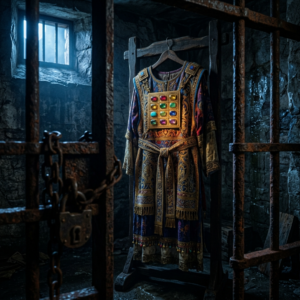
But perhaps the most intimate, the most dangerously potent aspect of this divine blueprint was the intricate design and the absolute, unyielding purpose of the High Priest’s garments. Imagine the sheer, physical weight of those robes. Woven of fine twined linen, blazing with threads of pure gold, vibrant blue, rich purple, and deep scarlet. The breastplate, gleaming with the four rows of precious stones, each gem bearing the deeply engraved name of one of the twelve tribes of Israel. These heavy, magnificent robes were not just about the priest putting on his Sunday best to impress a congregation. To view them as mere ceremonial attire is to profoundly misunderstand the terrifying holiness of the ancient world.
These garments were a fundamental, non-negotiable key to his sacred duty. They were the spiritual armor required to step into the presence of the divine fire without being consumed. Without the exact threads, without the precise stones, without the meticulous design ordained by God, the connection was severed. Without them, no worship could be offered. The daily sacrifices would cease to have meaning. The annual atonement would fail. The forgiveness of a nation hung desperately on the weave of that fabric. If those robes were compromised, if they were lost, the spiritual heartbeat of the entire Jewish people would flatline.
And then came the heavy, rhythmic, world-shattering thud of Roman boots. [Slam].
The transition from the holy exactitude of the temple to the brutal, calculating reality of the Roman Empire is a psychological whiplash. Rome was a machine. It was a vast, sprawling, unimaginably powerful engine of conquest that had swallowed nations, devoured cultures, and painted the maps of the known world with the blood of those who dared to resist. Rome had conquered a lot of places. They were masters of assimilation, skilled at folding defeated gods into their own sprawling pantheon, and turning conquered kings into compliant bureaucrats.
But when this massive, unstoppable imperial machine ground its way into the dry, dusty, deeply sacred hills of Jerusalem, it hit an impenetrable wall. The Roman strategists, men who had broken the backs of savage empires, quickly realized a deeply frustrating truth: they could not force the Jewish people to fully embrace Roman culture. It was simply an impossibility. It just wasn’t going to work. The children of Israel were bound by a covenant that predated the foundations of Rome itself. And especially, most dangerously, that whole part about bowing down to pagan gods? Yeah, not gonna happen. The Jews would bare their necks to the sword before they would burn a pinch of incense to Caesar or kneel before a marble statue of Jupiter.
The Romans were violent, but they were not foolish. Above all else, they were pragmatic businessmen of empire. The last thing that the Romans wanted in this volatile, fiercely religious province was a massive, bloody uprising. War required legions; legions required gold; dead taxpayers filled no coffers. An uprising is simply bad for business.
So, to keep the fragile, razor-thin peace, the Romans adopted a policy of reluctant tolerance. They let the Jewish people do their thing. They allowed the temple to stand. They allowed the smoke of the sacrifices to rise into the Judean sky. They allowed the people to worship their one true God however they wanted, to observe their ancient laws, and to hold their massive, chaotic, emotionally charged feasts. The empire would look the other way, swallowing its pride, as long as one absolute, terrifying condition was met: as long as they weren’t causing problems. No riots. No rebellions. No disruption to the flow of imperial commerce. And, of course, they must pay their heavy, suffocating taxes to the emperor.
Into this explosive, culturally fractured environment stepped a man whose very name would echo through the corridors of history as a symbol of calculating, cowardly power. There was one Roman governor who was just a little too ambitious for his own good. What is it with power-hungry men? They look at a delicate, simmering peace and see only an opportunity for personal leverage. His name? Yeah, you guessed it, Pontius Pilate.
Imagine his physical space. This is his very “modest” office space—a term dripping with the irony of a man who surrounds himself with the imposing, intimidating architecture of imperial might. The stone floors are polished to a mirror shine, reflecting the flickering flames of bronze braziers. The banners of the Roman eagle hang heavy and red against the walls. The air is cold, clinical, and smells faintly of metallic polish and imported wine. Pilate was a man constantly at odds with the Jews. He despised their stubbornness, he loathed their complex, unbending religious laws, and he viewed their singular devotion to an unseen God as a primitive annoyance.
But Pilate was a smart guy. More than that, he was insanely, terrifyingly gifted at one specific, dark art: manipulation.
He sat in his heavily guarded quarters and calculated the mathematics of control. He looked at the vast, teeming crowds of Jewish worshippers flooding into the city for the holy festivals, their eyes burning with religious fervor, their voices raised in ancient chants. A lesser man would have demanded more legions, more swords to hold back the tide. But Pilate figured out pretty quickly that he didn’t need to control every single Jew in the city. The sheer logistical nightmare of that would break the empire’s bank. No, he just had to control one. He needed to find the singular pressure point, the absolute center of the religious wheel. He needed the High Priest of the Sanhedrin.
The meeting between these two men—the pagan bureaucrat and the holy patriarch—is a masterclass in silent tension and psychological violence. Imagine the heavy, suffocating atmosphere as Joseph Ben Caiaphas, the High Priest, is escorted into Pilate’s chamber. Caiaphas is a man who carries the spiritual weight of a nation on his shoulders. He is deeply educated, fiercely devout, and accustomed to profound reverence.
Pilate lounges in his chair, a smirk playing across his lips, his eyes cold and calculating. “Joseph Ben Caiaphas,” Pilate begins, the Latin syllables rolling off his tongue with deliberate laziness. And then, the verbal dagger: “Do you mind if I call you Joe?”
The sheer, breathtaking disrespect of the question hangs in the air like poison. To reduce the High Priest, the earthly representative of the Almighty, to a casual, diminutive nickname is a calculated act of humiliation. It is Pilate establishing dominance before the conversation even begins.
Caiaphas’s jaw tightens. His dark eyes flash with a suppressed, simmering rage. “You ask that every time,” he replies, his voice tight, attempting to maintain his dignity in a room designed to strip it away. “You know, we have this lovely appointment three times a year.” Three times a year. Three major festivals where hundreds of thousands of Jews pour into Jerusalem. Three times a year where the Roman garrison goes on high alert, terrifyingly aware that a single spark could ignite a massive, unstoppable rebellion.
Pilate’s smirk deepens. “And yet your disposition never strikes me as grateful.” Grateful. Pilate demands gratitude from the man whose people are occupied, taxed, and humiliated on a daily basis.
Caiaphas fires back, his pride flaring against the Roman arrogance. “Pardon me for saying, Governor, but you should be washing my feet for ensuring an orderly festival.” It is a bold statement, a desperate reminder to the Roman governor that without the High Priest’s calming influence, without his management of the religious fervor, Pilate’s precious peace would shatter into a million bloody pieces.
But Pilate is completely unmoved. He looks at the High Priest with the bored, clinical detachment of a man studying an insect. “You know, in the Empire, we tolerate other religions because we see them all as variations on the same thing.” It is the ultimate insult to a monotheistic faith. Pilate dismisses the burning bush, the parting of the Red Sea, and the terrifying voice on Mount Sinai as just another localized myth, no different than the marble statues in Rome.
But Pilate does not rely merely on insults to maintain his iron grip. He relies on leverage. “To the victor belong the spoils,” he declares, the chilling mantra of the conqueror.
And what is the spoil? What is the prize that Pilate holds to ensure the absolute compliance of the Jewish people? It is not gold. It is not weapons. It is the sacred garments.
“So because these are ours,” Pilate says, his voice dropping into a deadly, serious tone, “your right to borrow them is given provided you keep your people under control. No riots.”
Understand the catastrophic, mind-bending reality of this moment. The Jewish High Priest wasn’t just your local pastor organizing a Sunday potluck. He was the only person in the whole world—the only breathing human being on the entire planet—that was permitted by divine law to push aside the heavy veil and enter the Holy of Holies. This was the dark, terrifying, secret place deep within the temple where God Himself dwelled on earth, where the presence of the Almighty rested upon the Ark, and where the ultimate sacrifice for the sins of the nation was received.
And Caiaphas could not cross that threshold, could not perform his sacred duties, could not intercede for the millions of souls depending on him, without his sacred robes. The square breastplate. The four rows of stones. The exact, divine blueprint.
And what does Pilate do with those desperately needed, utterly irreplaceable robes? He locks them up. Inside the Roman fortress. Behind heavy iron grates and armed, pagan guards. It is a serious snake move. It is a masterpiece of political extortion. Pilate holds the spiritual oxygen of the Jewish nation in his hands, and he squeezes.
So Caiaphas, the powerful, proud leader of the Sanhedrin, does what he has to do. The silence in the room is deafening as the High Priest calculates the horrifying cost of defiance. He looks at Pilate’s cold eyes. He imagines the temple doors remaining shut. He imagines the wrath of God and the wrath of Rome descending simultaneously. He swallows his pride. He swallows his rage. He plays nice, and he bends the knee to the pagan governor. The alternatives were being replaced by a more compliant puppet, or far worse—the slaughter of his people and the destruction of the holy site.
This is the agonizing, deeply painful paradox of Jerusalem under Roman rule. So the robes that were literally, meticulously crafted according to the direct, spoken instructions of God Almighty now hang limp and lifeless, locked away in the dark quarters of a power-hungry Roman governor. The sacred hijacked by the profane.
But even in the face of this profound, humiliating psychological warfare, there is a glimmer of an unyielding truth. The children of Israel were no newcomers to dealing with oppression. They had survived the whips of Egypt, the chariots of Pharaoh, and the fires of Babylon. They carried within their collective memory the knowledge that empires rise and fall, that bronze rusts and marble crumbles. And even these terrifying conditions—the sight of their holiest garments held hostage by an arrogant Roman—could not entirely shake their deep, ancestral faith. For they knew, deep in their bones, that while a Roman might lock away the threads, no man, no matter how ambitious, could ever truly lock away the God who commanded them to be woven.
Disclaimer : This content may be created by AI for entertainment purposes. Any resemblance to real persons, events, or places is coincidental.






