The Echoes of Erasure: When the Family That Banished You Demands You Be Their Savior
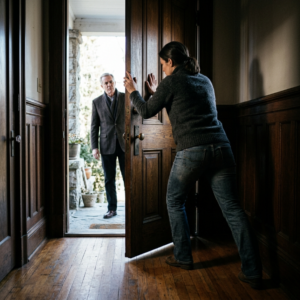
The evening had settled into the kind of profound, undisturbed quiet that can only be earned through years of intentional boundary-setting. Outside the windows, the fading daylight painted the living room in soft, muted hues of indigo and charcoal. The air in the house was thick with a tranquil security, a sanctuary built brick by emotional brick over a grueling decade. For twelve years, I had navigated the world as a ghost to the people who had brought me into it. My parents had not simply drifted away; they had executed a surgical, deliberate erasure of my existence from their lives. Their verdict had been swift and unforgiving: my marriage to a man of a different ethnicity, a man I loved with a fierce and unyielding devotion, was deemed an unforgivable shame. In their eyes, I had shattered the immaculate reflection they demanded from their children.
They had chosen to pour all their affection, all their approval, and all their conditional love into my sister. She was the golden child, the obedient reflection, the one who married the man they handpicked, seamlessly stepping into the flawless life they had curated for her. I was the blemish. No wedding invitations arrived in my mailbox. No obligatory holiday phone calls interrupted my Decembers. No sudden check-ins to see if I was surviving. I was excised. Cut out. Left to bleed in the emotional wilderness. But the miraculous thing about the wilderness is that, eventually, you learn to cultivate your own garden within it. My husband and I had woven a beautiful tapestry of a life together, prosperous and utterly untethered from their suffocating, outmoded prejudices. The resentment that had once burned like a raging fire in my chest had long since cooled into a smooth, hardened stone of indifference. They were strangers who happened to share my bloodline. I had not given them a passing thought in nearly a decade.
Then, the sudden, violent vibration of a phone shattered the sanctuary of that tranquil evening.
The screen illuminated the dim room with a harsh, clinical glare. The caller ID displayed a name I had not seen illuminated in a dozen years: my mother. A heavy, suffocating pause hung in the air. The physical reaction was immediate—a tightening in the chest, a cold rush of adrenaline flooding my veins. For a fleeting second, the instinct to press ignore warred with an insidious, burning curiosity. The curiosity won. I swiped the screen, lifting the cool glass to my ear, instantly regretting the motion as the silence on the line stretched taut.
There were no tentative greetings. There was no awkward clearing of the throat, no hesitant “How have you been?” to bridge the chasm of a decade. Instead, a frantic, breathless voice barreled through the speaker, stripping away any illusion of maternal warmth. The tone was sharp, jagged with an urgent terror that I had never heard from her before. She needed my assistance. She demanded it. For a suspended moment, a harsh, incredulous laugh bubbled in my throat. The sheer, staggering audacity of this woman—who had casually discarded me like a piece of defective machinery—now speaking to me as if I had merely stepped out to the grocery store. I pulled the phone away, my thumb hovering over the red button to terminate the call, to banish her back to the void.
But a tremor in her voice, a raw, undeniable panic, made me pause. I pressed the phone back to my ear and asked, my voice devoid of emotion, why she was calling. The words spilled out of her in a chaotic rush. The perfect, pristine world she had built around my sister was violently unraveling. My sister’s handpicked, heavily approved spouse was facing legal issues. These were not minor infractions or quiet disputes; these were catastrophic, life-devastating charges. The kind of charges that bleed onto the front pages of newspapers, the kind that permanently stain a family’s immaculate reputation. And in this moment of utter ruination, they suddenly remembered my existence. More specifically, they remembered the man they had despised. They wanted my husband—a highly accomplished, deeply respected lawyer—to swoop in and defend the golden child’s monster.
The weight of her request hit me with the force of a physical blow. I sank back against the couch cushions, gripping the phone so tightly my knuckles turned white. This was the singular, agonizing truth: she had not reached out because the years of silence had gnawed at her conscience. She had not called because she longed to see my face or repair the shattered bonds of our lineage. She had reached out because the shimmering facade of her favored daughter’s life was collapsing into dust. In the currency of their desperation, I was suddenly valuable again. I remained silent, the heavy quiet stretching between us, allowing her to ramble in desperate, chaotic circles. She pleaded that it was a grave misunderstanding, that he desperately needed an aggressive defense, and that everyone knew my husband was the finest in the city.
When she finally paused to draw breath, waiting for my eager compliance, I delivered a single, unyielding word. “No.”
The dead silence that followed was deafening. I could hear the cognitive dissonance short-circuiting her brain. She sputtered, the air knocked from her lungs, genuinely taken off guard. How could I say no? Did I possess no care for my family? Did I not grasp the cataclysmic gravity of the situation? My voice, when I spoke, was as cold and hard as glacial ice. I reminded her, enunciating every syllable, that according to their own decree twelve years prior, I was not a member of the family. I had been excised. Discarded. Erased. I reminded her that they had one daughter, the perfect one. It was time for their only daughter to navigate the wreckage of her own choices.
Her desperation instantly curdled into viciousness. Her voice rose to a shrill, aggressive pitch, a familiar echo of the past. She hurled accusations like daggers, calling me selfish, vindictive, clinging pathologically to ancient history, completely devoid of a human heart. I let the venom wash over me, untouched by it. I told her softly, definitively, that she had meticulously made her bed, and it was now time to lie in it. I severed the connection, plunging the room back into silence. My heart hammered wildly against my ribs, but the emotion flooding my system was not grief or despair. It was a pure, searing rage. The hypocrisy was a rot that ran deep. They had spent over four thousand days pretending I was a ghost, and the moment the shadows threatened their doorstep, they demanded I become their savior.
I assumed that decisive severance would be the end of it. It was a foolish, naive assumption. The universe, it seemed, was determined to force this reckoning into the harsh light of day. Less than two hours later, the phone vibrated across the wooden table again. Another familiar string of digits. My sister.
The temptation to let it ring out into the darkness was profound, but a fierce, protective instinct flared within me. I wanted to deliver the rejection directly to the source. I swiped the screen. Unlike our mother’s frantic ambush, my sister opened the conversation with a sickeningly sweet, entirely counterfeit warmth. Her voice possessed a delicate, trembling softness, as if she had not spent the last decade comfortably thriving in my absence. She inquired about my well-being, the cadence of her voice dripping with artificial concern, asking if I was happy. I sat perfectly still, allowing her to perform this grotesque pantomime of sisterhood for a full minute.
Then, I sliced through the act. I commanded her to get to the point.
The fake warmth shattered, replaced instantly by theatrical, gulping sobs. She confessed she was terrified, drowning in a nightmare she couldn’t control. Her ideal, meticulously curated life was disintegrating before her eyes. Through the tears, the true demand surfaced: she pleaded with me to command my husband to handle the situation, to wield his influence and wipe the slate clean. I leaned forward, the phone pressed hard against my ear, and asked her precisely why she believed I would ever do such a thing. She sniffled, her voice small and pathetic. “Because I’m your sister.”
A dry, hollow laugh escaped my lips. Sister. The word tasted like ash. She had never been a sister when the title carried weight. She had remained perfectly, comfortably silent when our parents stood in the living room and tore my life apart. She had never defended me, never reached out a trembling hand, never once attempted to bridge the divide. She had cocooned herself in the warm, approving glow of our parents’ favor, utterly unbothered while I was branded the family disgrace. And now, peering over the edge of the abyss, she dared to invoke the sacred bond of blood.
She quickly shifted tactics, weaponizing a twisted form of empathy. She attempted a guilt trip, her voice shaking as she claimed that I, of all people, should understand the agonizing pain of abandonment. She dared to draw a parallel between her current crisis and the trauma I had endured. That comparison ignited a spark in the dark. I stopped her, my voice dropping an octave, radiating a quiet, dangerous intensity. I informed her, unequivocally, that she had no right to hold her anguish up to the light of mine. I was discarded simply because I dared to exist and love freely. She was facing abandonment because she had willingly tethered her life to a man who had chosen to become a monster.
She wailed, a desperate, keening sound, claiming profound ignorance. She swore she had no idea what her husband was involved in, positioning herself as the ultimate, tragic victim. I stared at the blank wall opposite me, feeling absolutely nothing for her tears. I told her I did not care. She begged me to reconsider, to find mercy. I felt the profound weight of my own autonomy as I told her my decision was carved in stone. Just before I ended the call, I offered her one final, lingering thought. I whispered into the receiver that perhaps, after a lifetime of unearned rewards, this was the arrival of her karma.
I set the phone down. The room felt different now. A strange, heavy satisfaction settled over me. It was not joy—the circumstances were far too grotesque for joy—but it was the profound satisfaction of watching the architects of your destruction finally forced to reside in the ruins of their own making.
I awoke the next morning to the muted gray light of dawn filtering through the blinds, and the sight of my husband sitting on the edge of the mattress, his silhouette tense and rigid. The soft glow of his phone screen illuminated a deeply irritated expression. I sat up, pulling the heavy duvet around my shoulders. He didn’t speak immediately; he just shook his head, scrolling through an endless cascade of notifications.
My family, fueled by an intoxicating blend of panic and entitlement, had bypassed me entirely. In the dead of night, my mother, my sister, and a sprawling network of extended relatives had bombarded his personal number. They had inundated his inbox with frantic voicemails and desperate, demanding text messages, pleading with him to take the case. He read a few aloud, his voice steady and detached, reciting the frantic, disjointed prose of my mother and the weeping texts from my sister. An aunt—a woman who had crossed the street to avoid me eight years ago—had sent a deeply manipulative paragraph about how “family must always stick together in the darkest storms.”
I let out a heavy, exhausted groan, pressing the heels of my hands against my throbbing temples. The absolute, unmitigated hypocrisy was staggering. For over a decade, they had treated this man like a contagion. He was the catalyst for my expulsion, the outsider they viewed with undisguised contempt. Yet now, facing the total annihilation of their social standing, they possessed zero shame in begging for his intellect, his reputation, and his protection.
My husband turned his phone face down on the nightstand, looking at me with eyes that held only unwavering support. He asked, gently, if I wanted him to handle the responses. I shook my head, throwing off the covers. I preferred to sever the heads of these hydras myself.
I marched into the living room, dialing my mother’s number. She answered on the first ring, her voice breathless, anticipating capitulation. She bypassed any greeting, plunging straight into a lecture designed to mimic a reasonable discussion. She adopted the tone of a disappointed but patient matriarch, insisting that she understood my emotional turmoil, but that it was time to put “petty grievances” aside. She declared, with sweeping authority, that despite everything, I was still family, and family protects its own.
A bitter, incredulous chuckle ripped through the quiet morning air of my living room. I asked her, my voice eerily calm, to pinpoint the exact moment I stopped being family. Was it the day she refused to attend my wedding? Or was it during the four thousand days she spent actively pretending I was dead? She fell silent, the line humming with static, before she let out a loud, long-suffering sigh, as if I were a petulant toddler refusing to share a toy. She stated, her voice tight, that she was not proud of the past, but today was about my sister’s future.
I paced the length of the hardwood floor, the cold wood grounding me as the rage spiked again. I informed her that my sister’s future was the exact future they had meticulously engineered. They had chosen the perfect, respectable man. My sister had followed their precise, demanding choreography. And now that the stage was burning down, they expected the exiled understudy to sprint into the flames and drag her out.
My mother’s voice hardened, accusing me of profound cruelty. She conceded I had the right to be angry, but insisted that holding onto the past was, in her exact words, “petty.”
Petty. The word hung in the air, a grotesque minimization of a decade of profound psychological abuse. I stopped pacing. I spoke slowly, ensuring every syllable landed with the weight of an anvil. I reminded her of the agonizing, lonely nights. I reminded her of building a life entirely from scratch, learning to breathe, to exist, to find joy while carrying the agonizing knowledge that my own mother considered me a shameful stain. And now, because the golden child’s husband was facing ruin, I was suddenly restored to the family tree.
Then, she deployed a tactic so callous it made the blood freeze in my veins. She lowered her voice, attempting to sound pragmatic, explaining that if her son-in-law went to prison, my sister’s life would be ruined. She admitted the allegations were severe, horrifying even, but insisted that with my husband’s aggressive defense, the man could secure a reduced sentence, or perhaps evade justice entirely.
I stood frozen in the center of the room. I asked her, my voice barely a whisper, if she even cared whether the man was guilty of the horrific acts he was accused of. She fumbled, stammering about serious allegations and human error, desperately insisting that he deserved a second chance. I scoffed, the sound harsh and ugly. I asked her, point-blank, if she would be marshaling this army of support if it were my husband facing these charges.
The silence on the line was profound, absolute, and utterly damning.
I didn’t wait for her to formulate a lie. I pressed the attack, my voice echoing off the walls. I told her that if my husband were in that position, she wouldn’t be dialing lawyers. She would be standing on a soapbox, broadcasting to the entire world that this was the definitive proof of my moral failure. She would use my tragedy as a vindication of her prejudice. She would celebrate the destruction of my life.
She snapped. The mask of the concerned mother violently tore away. She snarled that if I was going to abandon them, the absolute least I could do was drop the overwhelming arrogance.
Disgust rose in my throat, thick and choking. Arrogance? I told her I wasn’t being arrogant; I was experiencing a profound, sickening disgust. She launched into a final, desperate guilt trip, painting a pathetic portrait of my sister crying alone in the dark. I cut her off, my voice a steel blade. I reminded her that my sister had agency. She had made a sequence of deliberate, conscious choices. She chose the silence. She chose the cowardice. She chose the man. Now, she was chained to the consequences of those choices.
My mother began to weep loudly, a harsh, jagged sound, wailing that she never imagined a child of hers could be so brutally callous. I squeezed my eyes shut, rubbing my temples. “I am not heartless,” I told her softly. “I am simply finished. You are not my family. You mean absolutely nothing to me.”
I pressed end. The phone slipped from my fingers onto the soft duvet of the bed. My husband stood in the doorway, watching me with quiet intensity. He asked if I was alright. I looked at him, the man who had been my true family, my anchor in the storm. I took a deep, shuddering breath, feeling an incredible, unexpected lightness expand in my chest. I realized, in that profound moment, that the tiny, hidden fraction of my soul that had spent a decade wondering if they ever regretted losing me finally had its answer. They didn’t miss me. They only missed the utility they thought they could extract from me. The ghost was finally laid to rest.
I truly believed that the brutality of that final conversation would serve as a permanent barricade. I had laid the reality bare. I was not a pawn on their chessboard anymore. But I had fundamentally underestimated the terrifying, blind persistence of their delusion.
Three days later, the digital onslaught resumed. My sister, realizing the emotional manipulation had failed, pivoted to pure, unadulterated entitlement. A message materialized on my screen, demanding I cease my “selfishness.” I read the word over and over. Selfish. The golden daughter, who had luxuriated in the warmth of our parents’ absolute approval while I was thrown to the wolves, was now branding me selfish for refusing to sanitize a crime scene she had willfully walked into. I left the message unread. Let her scream into the void.
But the desperation was mutating. The next day, my mother escalated her campaign. She did not call me; she dialed my husband directly. This time, she abandoned the weeping and the guilt. She arrived armed with aggressive, commanding entitlement. I was sitting beside him at his mahogany desk when the phone rang. He answered, placing it on speakerphone, his face a mask of absolute, unbothered serenity.
Through the tiny speaker, my mother’s voice boomed, demanding to know why he was sitting idle. She began lecturing him on the ethical duties of his profession, stating that as a lawyer, he was morally obligated to defend the desperate. She had the astonishing gall to declare that because he had married into her family, he bore the responsibility of acting as their shield.
My husband leaned back in his leather chair, steepling his fingers. He let her rant, let her exhaust her oxygen, his patience so immense it bordered on the terrifying. When she finally paused, panting, he leaned forward and asked a single, devastatingly calm question.
“Are you under the impression that I work for free?”
The line went dead silent. The shock of his sheer, pragmatic coldness seemed to short-circuit her outrage. She began to fumble, her arrogance instantly evaporating, stammering that they didn’t expect charity, but surely, considering the circumstances…
He didn’t let her finish. With a voice stripped of any emotion, a voice utilized in courtrooms to dismantle hostile witnesses, he laid out the undeniable facts. First, he stated flatly, he was a corporate litigator, not a criminal defense attorney. Her son-in-law’s legal peril was entirely outside his jurisdiction. Second, and more importantly, he stated that even if he possessed the exact expertise required, even if he were the only attorney left on earth, he would never, under any conceivable circumstance, represent the man. He told her, firmly, that no amount of screaming, begging, or familial manipulation would alter the reality of the situation.
“The answer is no,” he concluded.
My mother exploded. The veneer of civilization was gone. She hissed that she had always known he was never truly a part of the family, but she had mistakenly hoped he might possess the basic human decency to swallow his pride for his wife’s sister. My husband didn’t flinch. He didn’t engage in the mudslinging. He simply advised her to spend her energy securing competent counsel, and he hung up the phone.
I was trembling, vibrating with a rage so pure it felt like electricity. It wasn’t the manipulation; I expected that. It was the breathtaking arrogance. For ten years, she had treated this brilliant, compassionate man as dirt beneath her shoes. Yet, the moment she faced the abyss, she demanded he act as her indentured servant.
I snatched my phone and dialed her number. When she answered, I didn’t give her a fraction of a second to breathe. I unleashed a decade of silenced fury. I demanded to know if she had suffered a total psychological break. I asked her how she possessed the sheer, unmitigated audacity to insult my husband for a decade, erase our marriage, and then demand his salvation.
She immediately fell back into the familiar rhythm of the victim, whining that she was only trying to protect her child.
“I don’t care!” I shouted, the sound echoing off the walls. I reminded her, ruthlessly, that this nightmare was the direct, undeniable result of her own machinations. She had engineered this reality. She had drawn the boundaries. She had built the bed of nails. “You made this bed! Stop crying because it hurts to sleep in it!”
And then, something extraordinary happened. The line went silent, followed by a sound I had never, in my entire life, heard from my mother. She began to cry. Not the calculated, theatrical sobs designed to manipulate. Not the angry, frustrated tears of a thwarted dictator. It was a hollow, terrified weeping. For the first time, the formidable, controlling matriarch sounded small and profoundly afraid.
Through the ragged sobs, she kept repeating that this wasn’t how the story was supposed to go. She wailed that my sister had followed all the rules, married the right man, built the right house, lived the correct life. She couldn’t understand how the architecture of her perfect world had collapsed into such horrifying ruin.
In that fleeting, crystalline moment, the truth illuminated the darkness. My mother’s entire existence was predicated on the absolute delusion of control. She believed that if she manipulated the pieces flawlessly, tragedy could not touch them. Now, the illusion was shattered. She was staring into the terrifying chaos of reality, experiencing the exact, paralyzing loss of control she had forced upon me twelve years ago when she excised me from the family.
The difference was stark. I had been thrown into the dark and learned to navigate by the stars. I had built a fortress of resilience. She was standing in the ruins of her control, completely bereft of coping mechanisms.
I let out a long, slow breath, the anger suddenly draining away, leaving behind a cold, clinical pity. I spoke softly into the receiver, telling her that perhaps this horrific catastrophe was the universe’s brutal curriculum. I told her that life cannot be micromanaged into submission. I clarified that while I felt a detached sorrow for the nightmare my sister was facing, I would not step in to halt the consequences.
She asked, her voice cracking, if I was truly going to stand by and watch them suffer.
“I am not the author of your suffering,” I replied quietly. “You are.”
I disconnected the call. I sat in the silent room, staring at the blank screen, feeling a bizarre, complex cocktail of emotions. It wasn’t triumph. It wasn’t joy. It was the heavy, solemn peace of surviving a storm that was currently drowning the people who had cast you out to sea.
I should have known the desperation of the drowning knows no bounds. When a narcissist’s primary avenues of control are blocked, they recruit foot soldiers. The flying monkeys were unleashed.
It started as a trickle—missed calls from unfamiliar area codes, sudden text messages from distant cousins and old family friends I hadn’t spoken to since I was in my early twenties. I ignored them, letting them pile up in the digital void. But then, a message arrived from my aunt. She was the singular relative who had maintained a cautious neutrality during my banishment. She had never actively participated in the cruelty, though her silence was its own form of complicity.
Her message was a jarring window into the alternate reality my mother was constructing. She wrote that my mother was frantically calling the extended family, weeping hysterically, painting a narrative where I was a vindictive, malicious monster. My mother was telling anyone who would listen that I was holding a sociopathic grudge, sadistically watching my sister suffer, purposefully withholding the magical legal power that could instantly absolve her golden child. The sheer scale of the distortion was breathtaking. She was weaponizing her own tragedy to continue my vilification.
I sat down at the kitchen table and typed a response to my aunt. I didn’t defend myself; I simply illuminated the darkness. I detailed the reality of my banishment. I explained the monstrous nature of the crimes my sister’s husband was accused of. I explicitly stated that my mother was not seeking legal advice; she was seeking an unethical cover-up to protect her social standing. The response from my aunt took hours. When it arrived, it was a short, somber apology, admitting she had been entirely blind to the severity of the rot within my parents’ house.
I thought the smear campaign would be the climax. I was wrong. The climax arrived a week later, accompanied by the heavy, insistent pounding on my front door.
I walked to the entryway, glancing through the peephole. The breath caught in my throat. Standing on my porch, trembling like a leaf caught in a gale, was my sister. I had no idea how she had circumvented the privacy of my address. Her face was haggard, her eyes red, swollen, and darting frantically around the neighborhood.
I didn’t want to turn the lock. The sanctuary of my home felt compromised. But I knew the stubbornness of her desperation; she would sit on the concrete steps until the authorities were called. I unlocked the deadbolt and pulled the door open, blocking the threshold with my body. I told her, my voice hard and flat, that she was not welcome, and she needed to speak her piece quickly and vanish.
She didn’t fight back. She slumped, moving past me like a phantom, collapsing into a chair at the kitchen table. Her hands were clamped together, the knuckles stark white against her pale skin. The facade was entirely gone. She looked up at me, tears spilling over her lashes, and confessed she had been a coward. She admitted, for the first time in her life, that she had hidden behind our parents’ skirts, terrified of losing their approval, perfectly willing to watch me burn so she could remain in the light. She whispered that she never, in her darkest nightmares, imagined she would be the one begging for salvation while her perfect life dissolved into ash.
I stood leaning against the granite counter, arms crossed tightly over my chest, a physical barrier against her emotional bleed. I waited. I knew the confession was just the appetizer.
Finally, she choked out the true purpose of her pilgrimage. She looked me in the eyes and asked, her voice trembling, if my husband could use his connections to secretly secure a reduced sentence. She wasn’t asking for representation. She was asking for corruption.
I stared at her, the silence stretching taut until it hummed. After twelve years of being treated like a pariah, after the lies, the erasure, the absolute cowardice, she had the breath-taking audacity to cross my threshold and ask me to leverage my husband’s integrity to shield a predator.
I pushed off the counter, leaning over the table, my voice a low, dangerous whisper. I asked her if she comprehended the horrific nature of the words leaving her mouth. I reminded her that she was asking me to become an accomplice in protecting a monster.
Her face crumpled. She sobbed, burying her face in her hands, wailing that she knew how it looked, but she was terrified. She kept repeating, over and over like a broken record, that she wasn’t strong enough to face the darkness alone.
I slammed my open palm down on the wooden table. The loud crack made her violently flinch. The dam finally broke.
“You do not know the first thing about being alone!” I roared, the decade of suppressed grief finally tearing its way out of my throat. I stood over her, my shadow falling across her trembling form. I forced her to listen as I detailed the excruciating agony of being excised. I painted the picture of standing in the wreckage of my family, building a foundation from dust, learning to walk without a safety net. I reminded her that while she was playing house, bathing in the warmth of conditional love, I was fighting for my psychological survival.
She shook her head blindly, crying that it wasn’t fair, that I didn’t understand the terror of her reality.
“Fair?” I spat the word out. I told her she forfeited the right to use that word the day she stood mute while I was banished. Fairness would have been standing beside me. Fairness would have been a united front. The only reason she was sitting at my table crying was that she had exhausted every other option. I was not her sister; I was her emergency exit.
I stepped back, the fiery rage cooling instantly into a solid block of ice. I looked down at the weeping, broken woman who shared my DNA. I told her, with absolute, unwavering finality, that if she wanted to survive this, she had to stop running. She had to stand up, face the blinding spotlight of reality, and carry the weight of her choices. Her husband had committed atrocities. No lawyer, and certainly not mine, was going to make the consequences evaporate.
“You have to learn to stand on your own,” I whispered. “Just like I did.”
She slowly raised her head, looking at me with eyes completely devoid of hope. She saw the absolute immovability in my posture. The realization washed over her, chilling and final. She slowly pushed herself up from the chair, wiping her ruined face with the back of her trembling hand. She turned and walked out the front door, stepping into the glaring sunlight, not uttering a single word.
I stood in the kitchen for a long time, staring at the empty wooden chair. She had come seeking a miracle, fundamentally misunderstanding that miracles do not manifest for those who only remember your name when the sky is falling. I was nobody’s backup plan.
The final act of this tragic, pathetic play unfolded with a grim predictability. The mother had begged and manipulated. The sister had wept and confessed. It was only a matter of time before the heavy artillery was deployed.
A few days later, a sharp, authoritative knock hammered against the front door. I walked to the entryway, the familiar dread curling in my stomach. I leaned into the peephole. The breath hissed outward through my teeth. Standing on my porch, radiating a suffocating aura of arrogant authority, was my father.
I had not laid eyes on this man in over a decade. The lines on his face had deepened, his hair had turned to ash, but the hard, uncompromising set of his jaw remained identical to the day he coldly informed me that I was no longer his daughter. This was the man who had looked at the love of my life and dismissed him as a grotesque mistake. This was the patriarch who had orchestrated my erasure with the chilling efficiency of a military general.
I stood in the quiet hallway, my hand resting on the cool metal of the doorknob, debating whether to simply walk away and let him pound on the wood until his knuckles bled. But a fierce, unyielding defiance rose within me. I was not a frightened child hiding in her room. This was my sanctuary, built on the foundation of my own resilience. I unlocked the door and pulled it open.
When his eyes met mine, a flicker of irritation—a shadow of the profound disdain he had always harbored for my independence—crossed his features. I kept my face an impenetrable mask of stone. I anchored my feet to the floorboards, preparing for the self-righteous monologue, the thunderous demands of a man accustomed to absolute obedience.
But he didn’t even acknowledge my humanity. He looked past me, his eyes scanning the interior of my home, adjusting his expensive jacket and squaring his shoulders. He cleared his throat and declared, his voice booming with unearned authority, that he was here to speak with my husband. “A man-to-man talk,” he proclaimed.
The sheer, breathtaking disrespect of the statement hung suspended in the air between us. He spoke as if I were a piece of furniture obstructing his path. He spoke as if I had not built this life, as if I had not survived his cruelty, as if he possessed the inherent right to bypass me entirely to negotiate with the man he had previously deemed unworthy of his presence.
My hands tightened into fists at my sides, the nails biting sharply into my palms. I saw the strategy with absolute clarity. This wasn’t just a desperate plea for legal salvation. This was a brutal assertion of dominance. It was a calculated reminder that, in his rigid, archaic worldview, I was still the rebellious, powerless daughter, unworthy of direct engagement. It was the same condescending, patriarchal arrogance that had suffocated my childhood.
The old rage, the familiar burn of injustice, roared to life in my chest, hot and blinding. I wanted to scream. I wanted to unleash twelve years of venom, to tear down his arrogance with the sharpest words I could weaponize. But as I looked at his expectant, hardened face, I realized that engaging with him—giving him the fiery reaction, the dramatic confrontation—was exactly the currency he desired. It would validate his presence. It would acknowledge his power.
So, I suffocated the fire. I drew a slow, deliberate breath, drawing the cold air deep into my lungs. I relaxed my fists. I looked him dead in the eye, my gaze devoid of anger, devoid of hurt, devoid of any emotional tether to him whatsoever.
“I am going to contact security,” I said.
My voice was not a shout. It was a calm, chillingly flat statement of fact. There was no theatricality, no argument, no invitation to debate. It was the absolute, impenetrable wall of a boundary fully realized.
His arrogant posture faltered. A profound shock registered in his eyes as the reality of his total impotence finally pierced his armor. His lips parted, formulating a command, a threat, a demand—but I did not give him the oxygen to speak.
Without breaking eye contact, without a single flicker of hesitation, I pushed the heavy wooden door shut, the latch clicking with a loud, absolute finality right in his face.
I stepped back, my chest heaving, the adrenaline flooding my system. I stood motionless in the hallway, listening. I could hear his heavy boots shifting on the concrete porch. I could sense the vibrating fury of a man denied his kingdom. He lingered for a long, tense minute, perhaps waiting for the door to reopen, perhaps paralyzed by the incomprehensible reality that he had been dismissed like a nuisance salesman.
And then, the sound of defeat. Heavy, slow footsteps retreating down the driveway, fading into the ambient noise of the neighborhood. He was too proud to scream through the wood, too arrogant to pound on the door again. He was simply, finally, gone.
A profound, staggering wave of victory washed over me, buckling my knees. I leaned back against the solid oak of the door, staring up at the ceiling. The victory wasn’t born of malice. It wasn’t the satisfaction of inflicting pain. It was the absolute, transcendental triumph of realizing I was completely free. I had not played his game. I had not begged for his recognition. I had treated the terrifying monster of my past like an absolute stranger. That indifference was the most lethal weapon I possessed, and it had severed the final chain.
Later that night, as the shadows lengthened in the living room, I sat on the couch with my husband, the quiet sanctuary restored. He looked at me, seeing the subtle shift in my posture, the lightness in my eyes. I recounted the brief, silent war on the porch. I told him everything. And as the words left my mouth, the lingering ghosts of the past dissolved into the air. The story was finally, truly, over.
Disclaimer : This content may be created by AI for entertainment purposes. Any resemblance to real persons, events, or places is coincidental.






