“I’ll Come Back Rich And Marry You” Said Little Boy The Young Girl Fed—Years Later, He Actually Did
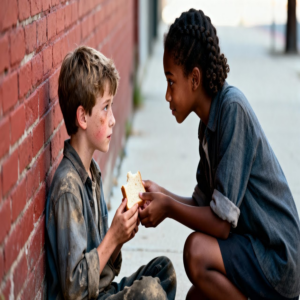
I’ll come back rich and marry you, said the little boy the young girl fed. Years later, he actually did. A little runaway boy makes a promise no one expects him to keep. Not even the girl who fed him when he had nothing. But years later, when a rich and powerful man returns to her small town, everything changes.
Because he’s not just here for success, he’s here for her. What no one knows is that the town she’s fighting to protect is seconds away from being destroyed by a ruthless plan. And the man who once depended on her kindness is now the only one who can save everything she loves.
The late afternoon sun cast long shadows across the weathered wooden planks of Brookside Junction’s train platform. 12-year-old Rosie Barlo sat with her back straight against a peeling white post, her neatly packed lunchbox placed carefully beside her.
The familiar sounds of train whistles echoed in the distance as she waited for her mother, who always finished her shift at the general store just after the school day ended. Rosie smoothed her plain cotton dress, carefully arranging the fabric over her knees, the way her mother had taught her.
The warm breeze carried the scent of cold smoke and summer dust, ruffling the ribbon, holding back her dark curls. She hummed softly to herself, watching the way the sunlight danced through the gaps between the platform boards. That’s when she noticed him. A small shadowy figure darting between the station’s support beams. At first glance, he looked like a living smudge, his face and clothes so covered in grime that he nearly blended into the shadows.
But as he crept closer, Rosie could make out more details. He couldn’t have been more than 10 years old, with sharp, hungry eyes that kept darting between her face and her lunchbox. His clothes hung in tatters on his thin frame, and his bare feet made no sound as he inched forward. Everything about him reminded Rosie of a stray cat, weary, wild, and desperately hungry.
She pretended not to notice him, keeping her eyes fixed on the distant tracks while her heart thumped with concern. The boy Finn Callahan, though Rosie wouldn’t learn his name until years later, moved with the careful precision of someone used to staying invisible. His fingers, dark with dirt and calloused despite his youth, reached tentatively toward her lunchbox.
Just as his hand was about to close around it, Rosie turned to face him directly. Their eyes met. His were a startling blue, standing out against the dirt on his face, like forget me knots growing through cracks in the pavement. For a moment, neither of them moved. Then, without breaking eye contact, Rosie reached into the her lunchbox and pulled out her sandwich, still wrapped neatly in wax paper.
“Here,” she said softly, holding it out to him. “You can have it.” Finn froze, his hand still outstretched, confusion clear on his face. He looked from the sandwich to her face and back again, as if trying to spot the trick. Go on, Rosie encouraged, her voice gentle as she spoke to him the way she might to a frightened animal.
“I already ate half my lunch earlier.” Slowly, so slowly, it seemed like he expected her to snatch it back at any moment. Finn’s dirty fingers closed around the sandwich. Once he had it in his grip, he quickly backed away several steps, clutching his prize to his chest. Rosie kept her movements slow and deliberate as she settled back against the post.
“My mama always puts extra butter on the bread,” she said conversationally, as if sharing sandwiches with strange boys was an everyday occurrence. She says, “Growing children need the energy.” Finn had already torn into the sandwich, eating with the desperate speed of someone who didn’t know when their next meal would come.
Crumbs clung to his lips as he devoured it in huge bites. “Where do you live?” Rosie asked carefully, keeping her tone light and curious. Finn’s chewing slowed and his eyes darted toward the maze of railroad tracks spreading out behind the station. He swallowed hard but didn’t answer. I live just three streets over.
Rosie continued, filling the silence. In the blue house with the crooked front step. My daddy’s going to fix it soon, he says. But he’s been saying that since spring. She watched as Finn finished the last bite, his tongue darting out to catch any remaining crumbs on his fingers. His shoulders had relaxed slightly, though he still looked ready to bolt at any sudden movement.
“Do you?” Rosie began, but the sharp ring of the school bell cut through the air, signaling the end of the day. Finn tensed immediately, taking another step back. Wait, Rosie said quickly, reaching into her lunchbox one more time. She pulled out an apple and a slightly squashed biscuit wrapped in a napkin. For later, she explained, holding them out to him.
This time, Finn moved forward more quickly to take the offered food, though he still kept well out of arms reach. His fingers closed around the items, and for just a moment Rosie caught a glimpse of something other than weariness in his eyes. Gratitude mixed with a deep, aching wonder. The sound of voices and footsteps grew louder as children began spilling out of the schoolhouse.
Rosie spotted her mother’s familiar figure walking briskly from the direction of the general store, her work apron still tied around her waist. I have to go now. Rosie said, gathering her lunchbox and standing up. She brushed off her dress and gave Finn one last smile. I hope you enjoy the apple. As she walked away with her mother, who greeted her with a warm hug and questions about her day, Rosie resisted the urge to look back, but Finn stood rooted to her, his spot on the platform, watching her disappear down the dusty street. His fingers still clutched the
apple and biscuit, and his mind struggled to process what had just happened. No one had ever just given him food before. No one had ever smiled at him like that, talked to him like he was worth talking to. He looked down at the napkin wrapped biscuit in his hand, then back up at Rosy’s retreating figure.
The simple act of kindness had cracked something open inside his chest, something he hadn’t even known was there to crack. The platform gradually emptied as parents collected their children, and workers headed home for the evening. Finn remained, holding his gifted food like precious treasure, watching until Rosie and her mother turned the corner and disappeared from sight.
The warm afternoon light painted everything gold, and for the first time in longer than he could remember, Finn felt something that might have been hope. The morning sun cast long shadows across Brookside Junction’s rail yard as Finn crouched behind a stack of wooden crates. His stomach growled, reminding him it had been nearly a day since he’d eaten anything substantial.
The memory of yesterday’s sandwich, with its thick slices of bread and generous butter, made his mouth water. He peered around the corner of the crates, watching the platform where Rosie had sat. Would she come back? The kindness she’d shown him seemed almost like a dream now in the harsh light of morning. His experiences had taught him that good things rarely lasted.
Yet something kept him rooted to that spot, hoping. The morning crawled by. Finn dozed fitfully in the warm sun, startling awake at every passing train whistle. When the afternoon school bell rang, his heart began to race. He pressed himself further behind the crates, making sure he was well hidden while maintaining a clear view of the platform.
Minutes ticked by until finally he spotted her familiar blue dress. Rosie settled on to the same spot as yesterday, her lunchbox beside her, but this time she also carried something else, a small bundle wrapped in checked cloth. Finn watched as she carefully arranged herself, noting how she seemed to be looking around expectantly.
She was looking for him. He realized with a jolt of surprise. After several minutes of internal debate, Finn emerged from his hiding spot. He approached cautiously, ready to run at the first sign of trouble, but Ros’s face simply lit up with a warm smile when she saw him. “I was hoping you’d come back,” she said softly, untying the cloth bundle.
“Mama always packs too much food anyway.” Inside the bundle were two thick sandwiches, an apple, and what looked like a slice of yesterday’s cornbread. Finn’s eyes widened at the sight of so much food. “Here,” Rosie said, holding out half the bundle. “I wrapped it up special, so you could save some for later if you want.” Finn’s hands trembled slightly as he accepted the food.
“Thank you,” he whispered, his voice rough from disuse. This became their routine over the next week. Each afternoon, Rosie would arrive with her regular lunch and extra food wrapped carefully in cloth. Finn would emerge from whatever hiding spot he’d chosen that day, and they would sit together on the platform. Rosie chattering about her day at school while Finn listened quietly, savoring every bite of food.
She never pushed him to talk about himself, but sometimes little details would slip out, like how he preferred the empty box cars near the back of the railard because they stayed drier when it rained, or how he’d learned to tell which trains were passing through just by the sound of their whistles. “Don’t you have a home to go to?” Rosie asked once, her voice gentle with concern.
Finn had just shaken his head, focusing intently on the apple he was eating. Rosie hadn’t asked about family again after that. On the seventh day, dark clouds rolled in during the afternoon, bringing with them the first drops of what promised to be a heavy rain. Rosie waited under the platform’s small overhang, her extra bundle of food clutched protectively against her chest to keep it dry.
When Finn appeared, his clothes were already damp from the drizzle. Rosie quickly handed him the bundle, which he tucked inside his threadbear jacket. Rosie. Her mother’s voice carried from the road, barely audible over the growing storm. Hurry now before it really starts coming down.
For the first time since they’d begun their daily meetings, Finn spoke without being spoken to first. Thank you, he said softly, his eyes meeting Rosy’s for a brief moment. Then he turned and disappeared into the gathering gloom, leaving Rosie to rush to her mother’s side. The rain began in earnest as Finn made his way through the railyard, carefully picking his path between puddles and slick rails.
Thunder rolled overhead, the sound echoing off empty box cars and steel containers. He clutched Rosy’s food bundle tightly under his jacket, protecting it from the rain as he searched for shelter. His usual sleeping spot in the back box car wouldn’t do tonight. It had developed a leak in the roof during the last storm.
He needed to find somewhere dry. The rain was coming down harder now, running in rivullets down his face and soaking through his thin clothes. Another crack of thunder shook the air as Finn ducked under a loading dock, temporarily escaping the downpour. He carefully unwrapped the bundle Rosie had given him, making sure not to get the food wet.
Inside was a sandwich, two biscuits, and an apple, enough to keep his hunger at bay through the stormy night ahead. Lightning flashed across the sky, illuminating the rail yard in stark white for a brief moment. Finn huddled closer to the wall, pulling his knees up to his chest. The food bundle rested safely in his lap as he watched the rain pour down, turning the world into a gray curtain of water.
Thunder rolled again, but this time wrapped in Ros’s simple kindness, it didn’t seem quite so threatening. The late afternoon sun cast long shadows across the train platform as Rosie sat alone, her extra lunch bundle untouched beside her. For the second day in a row, Finn hadn’t appeared at their usual meeting spot.
She twisted the edge of her dress nervously, scanning the railyard for any sign of movement. Something felt wrong. Finn had never missed their daily meetings before, not even during the big storm. The thought of him going hungry made her stomach twist into knots. “Where are you?” she whispered to herself, standing up.
She knew she shouldn’t leave the platform. Her mother would be arriving soon to pick her up. But the worry gnawing at her chest wouldn’t let her sit still any longer. Gathering her courage, Rosie picked up her food bundle and walked toward the back of the railard. Rusted freight cars loomed over her like sleeping giants.
their shadows growing longer as the sun dipped lower. Her footsteps crunched on the gravel as she weaved between the tracks, peering around corners and into dark spaces. Finn, she called softly. Are you out here? A faint sound caught her attention, something between a whimper and a groan. Following the noise, she rounded the corner of an old coal car and gasped.
Finn lay curled on his side in the gravel, his arms wrapped protectively around his middle. Even in the fading light, she could see the dark bruises on his face and the dried blood around his nose. His clothes were more torn than usual, and dirt caked his hair. “Oh no!” Rosie breathed, rushing to kneel beside him. “Finn, what happened?” He flinched at her approach, but relaxed slightly when he recognized her voice.
His eyes, one swollen nearly shut, struggled to focus on her face. “I’m okay,” he mumbled, trying to push himself up, but falling back with a grimace. “You’re not okay,” Rosie said firmly. She opened her school bag and pulled out her notebook, tearing several pages into careful strips. “Who did this to you?” Finn stayed quiet, but his good eye darted nervously toward the main yard. Rosie understood.
She’d heard stories about older boys who prayed on the railroad kids, stealing what little they had. Dipping one of the paper strips in a puddle of clean rainwater, she gently began dabbing at the dried blood on his forehead. Finn went completely still under her touch, as if no one had ever tended to his wounds before. You don’t deserve this,” Rosie said softly, cleaning another cut near his temple.
“Nobody deserves to be hurt like this.” Finn’s breath hitched, and she realized he was trembling, not from pain or cold, but from something deeper. The simple act of being cared for seemed to shake him to his core. Here, let me help you sit up,” Rosie offered, carefully supporting his shoulders. She could feel how thin he was through his ragged shirt as she helped him lean against the coal car’s wheel.
“Rosie,” a panicked voice called from the direction of the platform. “Rosie, where are you?” “That’s Mama,” Rosie said, quickly pressing the food bundle into Finn’s hands. “She sounds worried. I have to go, but please eat something. You need to keep up your strength. As she stood to leave, Finn’s hand caught the edge of her dress.
“Wait,” he whispered, his voice. “I I want to pay you back someday for everything.” Rosie smiled gently. “Just get better, okay? That’s all I want.” She hurried back through the railard, finding her mother near frantic with worry on the platform. “Where have you been? I’ve been calling and calling. I’m sorry, Mama, Rosie said, letting herself be pulled into a tight hug.
I thought I saw something interesting and wandered off. It won’t happen again. That night, rain drumed against the roof of Rosy’s house as she lay in bed, unable to sleep. The storm had rolled in quickly after sunset, bringing heavy winds and sheets of rain. She thought of Finn, hoping he’d found somewhere dry to wait out the weather.
Miles away in the railyard, Finn huddled under a torn tarp he’d scred from behind the maintenance shed. Every movement sent sparks of pain through his bruised body, but he’d managed to eat half the food Rosie had brought him. The rest he’d carefully wrapped and hidden away for tomorrow. Lightning flashed overhead, followed by a deep rumble of thunder.
Finn pulled the tarp tighter around his shoulders, wincing as it pressed against his injuries. In the darkness, he whispered Rosy’s words to himself over and over. You don’t deserve this. The words felt foreign in his mouth, like a language he’d never learned to speak. But something about them took root in his heart, a tiny seed of determination beginning to grow.
Maybe she was right. Maybe he did deserve better than this. Rain continued to pour outside his makeshift shelter, but for the first time in years, Finn felt something besides cold and hunger. He felt hope, small and fragile as a sparrow’s egg, but hope nonetheless. The tarp flapped in the wind as another flash of lightning illuminated the railyard.
Finn lay awake, holding on to that seed of hope, letting Ros’s words echo in his mind until they began to feel like truth. The morning sun cast long shadows across the railroad platform as Rosie walked to her usual spot after school. Her heart skipped when she saw Finn already waiting there, partially hidden behind a stack of crates.
Something was different about him today. He stood straighter despite his bruises, and his eyes held an intensity she hadn’t seen before. “You’re early,” Rosie said softly, setting down her school bag. She pulled out the carefully wrapped sandwich she’d prepared that morning, but Finn didn’t reach for it immediately like he usually did.
“I heard something,” he said, his voice low and urgent. “The engineers, they were talking this morning. There’s a freight train heading west tonight all the way to Chicago. His words tumbled out in a rush, hands gesturing as he spoke. It’s going slow through the junction because of track work. Slow enough that I could.
Ros’s stomach dropped as she realized what he was saying. No, she whispered, reaching for his arm. Finn, you can’t. People die trying to hop trains. They fall under the wheels or I won’t fall. Finn interrupted, [music] his chin lifting with determination. I’ve watched them do it hundreds of times.
I know exactly when to jump, how to grab the handles. His eyes softened as he looked at her worried face. I can’t stay here forever, Rosie. Those boys who beat me up, they’ll do worse next time. And there’s nothing for me here except He trailed off, looking down at his worn shoes. except you,” he finished quietly. Rosie felt tears pricking at her corners of her eyes.
“But where will you go? What will you do?” “I’ll work,” Finn said with fierce conviction. “In Chicago, there are factories everywhere, machine shops, places where I can learn to build things.” He stepped closer, taking her hands in his. His palms were rough from life on the streets, but his touch was gentle.
I promise you, Rosie Barlow, I’m going to come back someday. And when I do, I’ll be rich enough to give you anything you want. A blush crept across Rosy’s cheeks as she looked into his earnest face. “You don’t have to.” “Yes, I do,” he insisted. “You saved my [music] life. You’re the only person who’s ever.
” He swallowed hard, struggling to find the words. “When I marry someday, it’ll be you, because you saw me when I was nothing, and you helped me anyway.” Rose’s heart fluttered at his declaration. Part of her wanted to dismiss it as childish fantasy. They were both so young, and the world was so big.
But there was something in his eyes, a determination that made her believe he meant every word. The afternoon light was beginning to fade, casting orange and purple streaks across the sky. In the distance, they could hear the low rumble of an approaching freight train. Finn’s body tensed like a coiled spring. That’s it, he whispered. The Chicago bound freight.
He looked at Rosie one last time, memorizing her face. I won’t forget. I promise. Before she could respond, he darted away from the platform, moving with the silent grace of someone used to staying unseen. Rosie watched as he crept along the edge of the yard, timing his movements with the practiced eye of a street survivor.
The freight train was slowing now, its wheels screeching against the rails as it approached the construction zone. Ros’s heart pounded as she saw Finn emerge from behind a signal box, running parallel to the train. Please be careful,” she whispered, though he was too far away to hear. “Please don’t fall.” For one terrifying moment, Finn’s small figure disappeared completely from view.
Then she caught a glimpse of him swinging up onto a box car, his movements quick and sure. A second later, he vanished into the shadows of the moving train. Rosie stood frozen on the platform until the last car had passed, straining for any final glimpse of her friend. But Finn was gone, carried away into the gathering dusk by the rhythmic clatter of steel wheels on rails.
Looking down, she realized she was still clutching the sandwich she’d brought for him. Tears began falling freely now, soaking into the cloth wrapping as she held it to her chest. Each soft sobb was lost in the fading sound of the train, carrying away the boy who’d promised to return. She stayed there until her mother’s voice called her home, watching the empty tracks where Finn had disappeared.
The sandwich remained clutched in her hands, a final offering of kindness that would go undelivered. As darkness settled over Brookside Junction, Rosie walked slowly home, her tears gradually subsiding into quiet sniffles. The cloth wrapped sandwich was still in her hands, the last one she’d ever make for the brave, desperate boy who’d changed her life with a promise made in the fading light of day.
The years after Finn’s departure flowed like the endless trains through Brookside Junction, each season bringing subtle changes to both the town and young Rosie Barlow. At 13, she started volunteering at the First Methodist Church’s soup kitchen, ladling out steaming bowls with the same gentle care she’d once shown a hungry boy on the platform.
“You’ve got a gift with people, Rosie,” Mrs. Henderson, the church secretary often said, especially the little ones. Indeed, by 14, Rosie had become the neighborhood’s favorite babysitter. Parents trusted her completely, knowing she’d treat their children with the same kindness that made her pack extra sandwiches years ago.
She’d sit for hours reading stories to toddlers, helping older kids with homework, always ensuring they felt safe and valued. Meanwhile, hundreds of miles away, 15-year-old Finn Callahan was learning the language of locomotives. In Chicago’s sprawling rail yards, he’d found work as a shop boy, cleaning tools and running errands for the mechanics.
Every spare moment was spent watching the engineers work, absorbing their knowledge like a sponge. Kids got an eye for engines, old Tom McCarthy would say, noting how Finn could diagnose problems just by listening to a motors rhythm. Never seen anything like it. Back in Brookside Junction, the signs of decline were becoming harder to ignore.
The paint peeled from once proud storefronts, and fewer trains stopped at the station each month. But 16-year-old Rosie remained determined to help however she could. She organized summer reading programs at the library and tutored struggling students after school. You should be a teacher, her mother suggested one evening, watching Rosie prepare lesson plans for her young charges. You’ve got the heart for it.
The idea took root, growing stronger as Rosie entered her final years of high school. She threw herself into her studies, earning scholarships to the state teachers college while still finding time to volunteer. That same year, 17-year-old Finn was making his own academic strides. His practical knowledge of engines had caught the attention of a senior engineer who sponsored his night school education.
During days, Finn worked on increasingly complex repairs. At night, he studied mathematics and engineering, often falling asleep over his textbooks. “You’re pushing yourself too hard,” his mentor warned. Finn would just shake his head, remembering a promise made on a dusty platform. “I’ve got someone to prove something to,” he’d say.
As Rosie entered college at 18, Brookside Junction’s decline accelerated. The lumberm mill closed, sending dozens of families looking for work elsewhere. But Rosie stayed, commuting to classes while continuing her community work. She student taught at her old elementary school, bringing fresh energy to tired classrooms. Finn’s rise through the railroad ranks was meteoric.
By 20, his innovative repair techniques had caught the attention of industry leaders. He earned a full engineering scholarship, balancing advanced studies with practical work. His designs for more efficient engines began appearing in trade journals. Mark my words, veteran railman would say, “That Callahan boy is going places.” At 23, Rosie accepted her first teaching position at Brookside Elementary.
The school building was showing its age, but she transformed her classroom into a haven of warmth and creativity. Her students adored her, especially those from struggling families. She always kept extra snacks in her desk, remembering how a simple sandwich could change a life. By 25, Finn had earned the nickname the captain of the rails for his uncanny ability to solve complex engineering problems.
His innovations saved failing rail lines and revitalized outdated systems. But he never forgot where he came from, often ensuring his projects included provisions for homeless youth. The years continued their steady march. Rosie turned 30, still teaching in Brookside Junction despite offers from larger districts. She watched her town continue to shrink, but refused to abandon the children who needed her.
The elementary school building was now officially condemned, forced to operate on borrowed time, while the town council debated costly repairs. Finn, at 28, [music] had become one of the most respected names in American railroad engineering. His designs were revolutionizing the industry, earning him both fortune and acclaim.
But he never stopped scanning project lists for a particular town name. Then one autumn morning, as leaves skittered across Brookside Junction’s empty streets, Finn found what he’d been waiting for. A feasibility study was needed for potential rail line expansion, right through his old hometown. His hands trembled slightly as he signed the paperwork to take the assignment personally.
The town’s practically dead. His colleague, Paul Latimer, warned, “Waste of time. But Finn just smiled, remembering a promise made long ago. He packed his briefcase with blueprints and proposals, knowing that after all these years he was finally heading back to the platform where his life had changed.
Back to the girl who’d seen worth in a starving child. The morning sun caught the silver threading in his expensive suit as he boarded the train to Brookside Junction. In his pocket was a newspaper clipping about a dedicated local teacher fighting to save her condemned school. A woman named Rosie Barlow.
The rental car’s tires crunched over scattered gravel as Finn Callahan guided the vehicle through Brookside Junction’s silent streets. Dawn painted the sky in gentle strokes of pink and gold, casting long shadows across the town he’d left behind so many years ago. The steering wheel felt cool beneath his fingers as he drove slowly, taking in every detail of his former home.
The companyisssued SUV seemed almost offensive in its newness, gleaming between buildings weathered by decades of neglect. Finn’s throat tightened as he passed the old general store, its windows now boarded over with plywood. The faded lettering still read Morton’s Goods, though Mr. Morton had likely been gone for years. My God,” he whispered, pulling to the curb near what had once been the town square.
The bronze statue of the town’s founder stood tarnished and forgotten, surrounded by weeds pushing through cracked concrete. Empty storefronts lined the square like hollow eyes, their display windows dusty and dark. Finn stepped out of the car, his polished dress shoes clicking against the sidewalk. The morning air carried the same crisp sweetness he remembered, tinged with the everpresent hint of cold dust that seemed embedded in the town’s very foundations.
A few early risers hurried past, heads down, shoulders hunched against the morning chill. No one gave him a second glance, just another suit passing through their dying town. He walked slowly, memories flooding back with each step. the old ice cream parlor where he’d pressed his face against the window, watching other children enjoy treats he couldn’t afford.
The alley where he’d hidden from older boys who saw homeless kids as easy targets. Each landmark held a story, most of them painful, but one place drew him like a magnetic pull. The trestle bridge loomed ahead, its steel framework reaching across the ravine like ancient bones against the brightening sky. Finn’s footsteps echoed as he walked onto the pedestrian pathway that ran alongside the tracks.
Halfway across, he stopped, placing his hand on the cold metal railing. “I made it,” he said softly to his younger self, the frightened boy who’d stood in this exact spot and sworn to return triumphant. “The bridge had been his escape route, the path to his future. Now it stood as a testament to both his promise kept and the town’s steady decay.
Below the creek still flowed, its waters reflecting the morning light. Finn loosened his tie slightly, allowing himself a moment to just breathe it all in. Had achieved everything he dreamed of that day, wealth, respect, success. But standing here now, seeing how far Brookside Junction had fallen, those achievements felt hollow.
A bell rang in the distance, pulling him from his revery. School would be starting soon. Finn checked his watch. His first official meeting wasn’t until afternoon. There was time. The elementary school building stood like a wounded soldier, its red brick facade marred by patches of crumbling mortar. Yellow caution tape blocked off one entrance, and temporary supports braced a section of wall that appeared to be separating from the foundation.
Yet somehow, impossibly, the sound of children’s laughter spilled from the open windows. Finn slipped inside through the main entrance, nodding to a drowsy security guard who barely glanced up from his newspaper. The hallways were exactly as he remembered. The same worn lenolum floors, the same cork bulletin boards covered in creative projects, the same smell of chalk dust and floor wax.
He followed the sound of young voices until he reached a classroom near the end of the hall. The door stood open and he pressed himself against the wall beside it, heart thundering in his chest as he peered inside. And there she was. Rosie stood at the front of the classroom, her hair swept back in a neat bun, gesturing animatedly as she led her students through a lesson.
She’d grown into her features beautifully, the round-faced girl, now a striking woman whose every movement spoke of quiet confidence and genuine warmth. “Now, who can tell me what happens when we multiply by zero?” she asked, and a forest of eager hands shot up. Finn watched transfixed as she guided her students through the problem with patience and humor.
When one boy struggled with the concept, she knelt beside his desk, speaking softly until understanding dawned on his face. The same kindness that had once saved a starving child now nurtured a whole new generation. A sudden wave of emotion forced Finn to step back from the doorway. He retreated silently down the hall, not trusting himself to maintain composure if she happened to look up and recognize him.
The time wasn’t right. He needed to approach this carefully, professionally. There would be questions about why he’d returned, about his true intentions. The day passed in a blur of preliminary surveys and phone calls. As evening settled over Brookside Junction, Finn checked into the Railside Motel, its neon sign flickering weakly against the darkening sky.
The room was clean but dated with faded floral wallpaper and a television that might have been new when he’d left town. Spreading his documents across the small desk, Finn began reviewing the official paperwork for his assignment. The proposed rail line expansion seemed straightforward enough at first glance. Standard surveys, environmental impact studies, property assessments, but as he dug deeper into the fine print, something caught his eye.
Hidden in the appendices was a reference to a land acquisition strategy that made his instincts prickle with suspicion. The language was deliberately vague, mentioning aggressive development zones and expedited property transfers. Finn had seen enough corporate documentation to recognize when someone was trying to hide something.
He pulled out his laptop, cross-referencing the property maps with local tax records. A pattern began to emerge, one that made his stomach turn. Several key properties, including the elementary school, had been systematically undervalued over the past 5 years. Someone was laying the groundwork for a massive land grab, using the town’s economic desperation against itself.
Finn leaned back in his chair, running a hand through his hair as he stared at the evidence before him. The sun had long since set, leaving him alone with his troubled thoughts and the soft hum of the ancient heating unit. Tomorrow he would have to begin his official assessment of the town’s railroad infrastructure.
But tonight he had to decide how to handle this discovery and how to protect the town that had given him his first taste of kindness. Outside his window a freight train rumbled past, its whistle echoing through the night like a lonely reminder of promises made and kept and new promises yet to come. Morning sunlight streamed through the school windows, casting long rectangles of warmth across the hallway floor.
Finn adjusted his tie and smoothed down his jacket, trying to calm his racing heart. He’d rehearsed this moment countless times during the night. But now that it was here, his carefully prepared words felt inadequate. The school secretary pointed him toward Rose’s classroom. Miss Barlow usually arrives early to prepare for the day, she explained with a friendly smile.
You’ll find her in room 112. Finn walked down the corridor, his polished shoes clicking against the lenolium. Through the open door, he could see Rosie writing the day’s schedule on the chalkboard, her movements precise and purposeful. He knocked softly on the door frame. Miss Barlow, I’m Finn Callahan from the railroad company.
His voice came out steadier than he expected. I’m serving as community liaison for the upcoming infrastructure assessment. Rosie turned, greeting him with a professional smile that showed no hint of recognition. Of course, Mr. Callahan, the principal mentioned we’d be having a railroad representative visit. She set down her chalk and wiped her hands on a cloth.
How can I help you? The moment struck him like a physical blow. She truly didn’t remember him. But why would she? To her, he’d been just one of countless children she’d shown kindness to over the years. The memory that had shaped his entire life was, to her, just another small act of compassion in a lifetime full of them.
Before he could respond, a commotion erupted in the hallway. A group of students had dropped their art supplies, sending papers, markers, and paint tubes skittering across the floor. Without hesitation, Finn knelt to help them gather their materials. “Careful with those paints,” he said softly to a worried looking boy who was frantically trying to collect everything at once. “Let’s do this step by step.
Okay. He showed the children how to stack the papers neatly and organize the supplies in their containers. From the corner of his eye, he noticed Rosie watching him intently. Her expression had softened and something flickered in her eyes. Not recognition exactly, but a kind of appreciation. “That was very kind of you, Mr.
Callahan,” she said when he stood up. “Most visitors wouldn’t bother. Sometimes the smallest gestures matter most, he replied, the words carrying a weight she couldn’t understand. I learned that lesson early in life. They fell into easy conversation about the school and the town. Rosie spoke passionately about her students and their needs, while Finn asked careful questions about the building’s condition and the community’s concerns.
The structural issues are getting worse. she admitted, gesturing toward the visible cracks in the walls. But we make do. These children deserve a chance at education no matter what. Before they could delve deeper, a chorus of young voices called from the hallway. Miss Barlo, Miss Barlo. Several students crowded the doorway, eager to show her their latest art projects.
I should let you get back to your class, Finn said, stepping toward the door. Thank you for your time, Miss Barlow. Please call me Rosie,” she offered with a warm smile. “And thank you again for helping with the art supplies. It’s nice to meet someone from the railroad who actually cares about our community.
” That afternoon, Finn walked the perimeter of Brookside Junction, his engineer’s eye taking in details that others might miss. The signs of deliberate neglect were everywhere. Condemned buildings that could have been saved with minimal repairs, infrastructure left to rust beyond salvage, vacant lots where proud homes once stood.
He stopped in front of a house marked with bright orange condemnation notices. Through the window, he could see family photos still hanging on the walls, as if the residents had been forced to leave in a hurry. The support beams looked suspiciously damaged, almost as if they’d been intentionally weakened. The pattern repeated block after block.
Properties strategically positioned along the proposed rail expansion route had been systematically marked for removal. It was too precise to be coincidence, too calculated to be natural decay. As darkness fell, Finn returned to his motel room, his mind heavy with what he’d seen. He spread his documents across the bed, focusing on a sealed section of his assignment folder he’d noticed earlier, but hadn’t opened.
The label read, “Executive overview, confidential.” With careful fingers, he broke the seal. Inside he found detailed timelines and internal memos that made his blood run cold. Gordon Hail, the railroad tycoon known for his aggressive expansion tactics, had been orchestrating a campaign of deliberate sabotage in Brookside Junction for years.
Property assessments had been manipulated. Building inspectors had been bribed. Maintenance requests had been systematically denied. all to drive down property values and force residents out, making way for Hail’s grand vision of a modernized rail hub. One memo particularly stood out. A handwritten note from Hail himself.
Ensure the school closure by end of quarter. Structural issues to be emphasized. No repairs authorized. Finn sat back, his hands shaking slightly as he processed the implications. The same school where Rosie now taught, where she poured her heart into giving children a chance at a better future, was next on Hail’s list for destruction.
The place where she had once shown kindness to a starving boy was being deliberately undermined by a man who saw people as obstacles to be removed. The steady rhythm of passing trains echoed through the thin motel walls as Finn carefully replaced the documents. In the morning, he would have to continue his assessment as if he knew nothing, all while figuring out how to expose Hail’s schemes without putting Rosie or her students at risk.
The town hall’s meeting room felt smaller than Finn remembered from his childhood. Sunlight streamed through dusty windows, illuminating the worn wooden tables where local officials gathered, their expressions a mix of hope and worry. Finn took his seat quietly, arranging his documents with careful precision. The door burst open at exactly 9:00, and Gordon Hail swept in like a stormfront.
His silver hair caught the morning light, and his tailored suit made everyone else’s clothing look shabby by comparison. Three assistants trailed behind him, carrying leather briefcases and tablets. Gentlemen and lady,” Hail nodded to the lone female council member, his smile not quite reaching his eyes, let’s not waste time.
Brookside Junction is dying, but railroad expansion could make it the heartbeat of regional commerce again. Finn watched as Hail commanded the room, moving with the confidence of someone used to getting his way. The tycoon’s presentation was flawless. Projected images of gleaming new facilities, promises of jobs, hints of prosperity returning to tired streets.
We’re talking about 300 new positions, Hail announced, his voice carrying to every corner. Modern infrastructure, a future for your children and grandchildren. He paused for effect. All we need is your cooperation in clearing certain obstacles. Finn’s pen scratched quietly across his notepad as he documented the meeting.
He noticed how Hail never quite specified which properties would need to be cleared, how the promised jobs had no guaranteed timeline, how the development plans were oddly vague about preserving existing community structures. When asked about environmental impact studies, Hail waved his hand dismissively. All the proper paperwork is being processed.
My team handles these details with utmost care. His eyes flickered briefly to Finn, who kept his face carefully neutral. After the meeting, Finn drove his company truck to the school. The playground was empty during class hours, and the broken swing set stood as a sad testament to better days. One chain hung loose, while another had snapped completely.
Rust had eaten through the metal in places. He retrieved his toolbox from the truck and set to work. The repairs weren’t complicated. New chains, some rust treatment, tightening of loose bolts. The physical labor helped clear his mind, letting him process what he’d observed at the meeting. The school door creaked open, and children’s voices spilled out into the afternoon air.
Recess had begun. Finn looked up to see Rosie leading her class outside, her face brightening with surprise when she spotted him. “Mr. Callahan, what are you doing out here?” Just some basic maintenance, he replied, wiping sweat from his forehead. Notice the swings needed attention. The children gathered around, watching with fascination as he demonstrated the repairs.
A small boy named Jonah asked thoughtful questions about the tools and processes, reminding Finn of himself at that age, curious about how things worked, eager to learn. There,” Finn said, stepping back. “Good as new. Who wants to test them out?” The kids cheered and rushed forward. Soon the air was filled with laughter and the rhythmic squeak of swing chains.
Rosie stood beside him, watching her students play. “This is incredibly kind of you,” she said softly. “The maintenance budget? Well, there hasn’t been one for a while. It’s nothing.” Finn assured her, though his heart achd at how such a small gesture could mean so much. Just paying forward some kindness I received once.
Ros’s eyes lit up. “Oh, would you like to join us tomorrow for community reading hour? The children would love to hear stories from someone who works with trains.” “I’d be honored,” Finn replied carefully packing away his tools. That evening, in his motel room, Finn spread out the engineering files he’d requested from the railroads archives.
Hours ticked by as he cross-referenced inspection reports, looking for patterns in the documentation, or rather in what was missing from it. The gaps were subtle but telling. Key safety inspections had been marked as completed, but lacked proper documentation. Weight load calculations for bridges appeared to have been altered.
Most disturbing were the notations about potential stress points along existing track sections, points that coincided perfectly with properties Hail wanted to acquire. Finn’s hands trembled slightly as he connected the dots. The accidents waiting to happen weren’t random at all. They were carefully planned pressure points designed to force evacuations and property seizures under the guise of public safety.
The school sat at the intersection of three such points. His eye caught a detailed property map, and his heart sank further. The expansion project’s true scope became clear. It wasn’t just about adding new track. The plan would effectively cut off access to the school, making it impossible for most students to attend safely.
The building itself would be sandwiched between heavy freight lines, exposed to noise and vibration that would make teaching impossible. Finn stared at the documents spread across his bed, the weight of realization settling heavily on his shoulders. Hail wasn’t just planning to push Rosie and her students off their land.
He was systematically destroying the heart of the community she’d devoted her life to serving. The distant whistle of a passing train echoed through the night, a sound that had once meant hope to a hungry boy. Now it carried a different meaning, a warning of what was to come if Hail’s plans succeeded. The morning sun cast long shadows through the classroom windows as Finn arrived for community reading hour.
The children sat cross-legged on a worn carpet, their faces turned expectantly toward him. Rosie stood near her desk, her welcoming smile warming the room more than any sunlight could. “Class, please welcome Mr. Callahan,” she announced. “He’s going to share some stories about working on the railroad.” 20 pairs of bright eyes focused on him.
Finn settled into the reading chair, trying to remember the last time he’d had such an attentive audience. Has anyone ever heard a train whistle late at night? he asked. Hands shot up everywhere. Jonah, the quiet boy from yesterday, spoke up. Sometimes it sounds lonely. Finn nodded. That’s called a mournful whistle.
But did you know each whistle pattern means something different? It’s like a secret language trains used to talk to each other. He spent the next hour weaving tales about steam engines and signal lights, midnight runs through mountain passes, and the Brotherhood of Engineers who kept America’s steel wheels turning. The children leaned forward, completely absorbed.
Even Rosie found herself drawn in, pausing her lesson preparations to listen. When he described how engineers used the stars to navigate on moonless nights, one little girl gasped, “Like sailors.” Exactly like sailors. Finn agreed. “The railroad is like an ocean of iron, and every engineer is a captain of their own ship.
” After the story hour ended, the children peppered him with questions during their lunch break. Jonah stayed closest, asking about engine mechanics with surprising technical understanding for his age. As the afternoon wore on, Finn noticed the shadows under Ros’s eyes, the way she stifled yawns between lessons.
During a quiet moment while the children worked on assignments, she confided in him. “The town council meets again next week,” she said softly, shuffling papers on her desk. Hail’s representatives keep pushing for structural assessments. They claim the building isn’t safe, but we know it’s just an excuse. Finn frowned.
How long has this been going on? Months now. Rosie sighed, running a hand through her hair. I’ve been taking extra tutoring jobs to hire an independent inspector, but good ones are expensive. And between grading papers, preparing lessons, and trying to keep the parents updated, she trailed off, looking exhausted. You’re fighting this battle alone.
Finn observed quietly. She gave a weak smile. Someone has to. These kids deserve better than being pushed out of their school because some railroad tycoon wants the land. When the final bell rang, Finn helped gather scattered supplies and straightened desks. “Let me walk you home,” he offered.
“It’s getting dark earlier these days.” Rosie hesitated, then nodded. They walked slowly through the autumn afternoon, fallen leaves crunching beneath their feet. The town looked different at ground level, more personal than the property maps in Finn’s motel room. I used to love this walk, Rosie said suddenly years ago when I was still a student here myself.
There was this boy, she paused, lost in memory. He was so hungry, so alone. I shared my lunch with him for a week. Finn’s heart pounded, but he kept his voice steady. What happened to him? He disappeared one night, hopped a freight train west, he said. I’ve always wondered if he made it, if he found what he was looking for. She hugged her jacket closer.
Silly, isn’t it? Worrying about a stranger from so long ago. No, Finn said softly. It’s not silly at all. They reached her modest house, its paint peeling, but window boxes still bright with autumn flowers. Thank you for today, she said. The children loved your stories. Thank you for trusting me with them. After saying goodbye, Finn walked to the old trestle bridge spanning the railyard.
The setting sun painted the steel girders in shades of copper and gold. Below a freight train rumbled past, the same line he’d jumped that desperate night so many years ago. I’m still that boy, Rosie, he whispered into the gathering dusk. and I won’t let anyone hurt you or your kids. Not this time.” The wind carried his words away, but the promise remained as solid as the steel beneath his feet.
He watched until the last light faded from the western sky, then turned back toward town, his resolve hardening with each step. The next morning dawned crisp and clear with autumn sunlight streaming through the school’s tall windows. Finn arrived early, finding Rosie already arranging tables in the main hallway for the student showcase.
Colorful art projects and science displays waited in neat stacks ready to be arranged. “Need a hand?” he asked, setting down his briefcase. Rosie smiled gratefully. These tables are heavier than they look. Could you help me move them against the wall? Together, they worked in comfortable silence, positioning tables and hanging artwork at just the right height for parents to admire.
Finn noticed how Rosie took extra care with each child’s creation, adjusting them until they caught the light perfectly. Every piece deserves its moment to shine, she explained, straightening a watercolor painting of the old train station. Some of these kids don’t get much recognition at home. When Jonah arrived early with his mother, they helped him set up his detailed model of a steam engine.
Finn marveled at the boy’s attention to detail. Every valve and piston carefully crafted from household items. You’ve got a real engineer’s eye,” Finn told him. Jonah beamed at the praise. As the morning progressed, more students filtered in with their families. The hallway hummed with excited chatter as children proudly showed off their work.
Finn found himself drawn into conversations with parents, answering questions about trains and transportation history. When lunchtime approached, Rosie pulled sandwiches from her bag. I always pack extra these days, she said, offering one to Finn. Old habit, I suppose. They sat together on a bench in the quiet courtyard.
Before taking a bite, Finn automatically folded his hands and bowed his head, a quick, almost unconscious gesture of gratitude. Rosie froze, her own sandwich halfway to her mouth. That movement, those work roughened hands clasped in exactly that way, triggered a cascade of memories. She’d seen it hundreds of times, watching a hungry boy bless the food she shared.
She studied his face with new intensity, the set of his jaw, the arch of his eyebrows, the way his eyes crinkled at the corners when he smiled. How had she not seen it before? The scrappy child was there in every line of the man’s face. Finn,” she whispered. “Little Finn.” He met her gaze steadily, no longer hiding. “Hello, Rosie.” She set down her sandwich with trembling hands.
“All this time, you’ve been here all week, and I didn’t I wanted to tell you,” he said softly. “Every time I saw you, the words were right there. But I was afraid.” Afraid of what? that you wouldn’t remember or worse that you’d be disappointed in what became of that boy you helped. Tears welled in Rosy’s eyes. Disappointed? Finn, look at you.
You survived. You thrived. How could I be anything but proud? She reached out hesitantly, touching his cheek as if to make sure he was real. I worried about you for so long. That night you left. Do you know how scared I was? a 10-year-old boy alone on a freight train. “I’m sorry,” he said, covering her hand with his own.
“I should have said goodbye properly. But if I’d seen you cry, I might have lost my nerve. And I had to go. Had to make something of myself to be worthy of coming back.” “You were always worthy,” she insisted. “That’s what I tried to tell you back then.” They sat in emotional silence, years of unspoken words hanging between them.
Finally, Rosie asked, “Why didn’t you say something when you first came back?” “I needed to understand what was happening here first. The corruption, the pressure on the school, it’s worse than anyone realizes. And when I saw how much you’d given to this place, these children,” he shook his head.
I couldn’t just walk in and disrupt your life without a plan to help. The afternoon passed in a blur of stolen conversations between showcase activities. As families began heading home, Finn and Rosie found moments to share their stories. His years of study and determination, her choice to return to teach in their struggling hometown.
“I never married,” she admitted as they cleaned up. Everyone said I was crazy to stay here, but these kids needed someone to believe in them. Just like [music] you did. I never married either, Finn said quietly. How could I? I made a promise to a girl with a lunchbox. Rosie blushed, remembering his childhood declaration.
We were just kids then. Maybe, but that promise kept me going through some dark times. As evening settled over the town, they walked together through streets painted golden by the setting sun. Their steps slowed, neither wanting the day to end. Near the corner where they usually parted, Finn stopped.
“Rosie,” he said, turning to face her. “I need you to know something. What Hail’s planning, it’s not just about the school. He’s deliberately destroying this town to force people out. I have proof, but confronting him will be dangerous. Then don’t, she pleaded. We’ll find another way. There isn’t one. But this time, I’m not running away.
I’m staying to fight. The street lights flickered on, casting soft halos in the gathering dusk. Rosie looked up at him, seeing both the determined boy she’d known and the strong man he’d become. I should have done this 20 years ago,” Finn murmured, then leaned down and kissed her gently. It was a kiss built on decades of hope and memory, sweet with the flavor of long delayed dreams.
When they finally parted, Ros’s eyes shone with tears. “I will stop him,” Finn promised. “Whatever it takes, I’ll protect what you’ve built here.” He squeezed her hand once more, then turned and walked away. Rosie watched his figure recede under the line of street lights, her heart torn between soaring joy at finding him again, and growing fear of what his fight against hail might cost them both.
The autumn wind whispered through dying leaves, carrying echoes of an old promise finally fulfilled, and the threat of battles yet to come. The morning sun barely touched the weathered buildings of Brookside Junction as Finn gathered his evidence into a worn leather briefcase. His fingers lingered on the photographs and documents, proof of deliberately weakened support beams, falsified safety reports, and manipulated land assessments.
Each piece told a story of calculated destruction. The town hall’s meeting room filled slowly with council members and concerned citizens. Rosie slipped in quietly, taking a seat near the back. Their eyes met briefly, sharing a warm glance that carried the echo of last night’s kiss. Gordon Hail arrived last, commanding attention in his tailored suit.
He nodded to various council members with practiced familiarity, his silver hair catching the light from dusty windows. Ladies and gentlemen, Council President Martha Whitaker began. We are here to discuss serious allegations regarding the railroad expansion project. Mr. Callahan, you have the floor. Finn stood, his voice steady despite his racing heart.
Thank you. Over the past week, I’ve uncovered evidence of intentional sabotage within our community. He began laying out photographs on the council table. These support beams in the warehouse district deliberately compromised [music] these safety inspection reports falsified to create artificial hazard zones.
Murmurs rippled through the room as Finn continued, pointing out specific instances of tampering and manipulation. The goal appears to be forcing property values down to enable mass acquisition at reduced prices. Before the whispers could grow, Hail raised his hand with a sad smile. If I may respond. At the council president’s nod, he stood smoothly.
It pains me to address these accusations, especially from someone I once considered promising, but Mr. Callahan’s imagination has unfortunately been colored by professional disappointment. Hail produced a thick folder. Last month, Mr. Callahan was passed over for the position of regional director. His immediate supervisor noted increasing signs of instability and paranoid behavior.
He began distributing documents bearing what appeared to be Finn’s signature, including, I’m afraid, his own approval of the very demolition plans he now protests. Finn’s blood ran cold as he examined the forged signature. It was masterfully done, close enough to fool anyone who didn’t know, to look for subtle differences in pressure points and line endings.
That’s not my signature, he stated firmly. But Hail continued as if he hadn’t spoken. We’ve invested millions in revitalization plans for Brookside Junction. Why would we sabotage our own project? Hail’s voice carried just the right note of reasonable confusion. Unless someone else had motivation to discredit the company, Rosie stood suddenly.
I’ve known Finn since we were children. He would never fabricate evidence or act out of spite. Hail turned to her with manufactured sympathy. Ah, yes, Miss Barlow. Your personal connection to Mr. Callahan is well known. It must be difficult maintaining objectivity when emotions are involved. The subtle emphasis he placed on personal connection made several council members shift uncomfortably.
Hail continued, his tone carefully measured. Perhaps your judgment in this matter has been compromised by other factors. The racial undertone was slight but unmistakable. Rose’s cheeks flushed as she felt judgmental glances from some of the older council members. This isn’t about me, she said firmly. It’s about protecting our community from corporate greed.
Protecting, Hail raised an eyebrow. Or preserving decay out of misplaced sentimentality, change can be difficult for some communities [music] to accept. Martha Whitaker cleared her throat. Given the serious nature of these competing claims, I move that we suspend any decisions pending a full investigation. She turned to Finn. Mr.
Callahan, you understand we’ll need to inform your superiors about these allegations. They’ve already been notified. Hail interjected smoothly. Corporate policy requires immediate suspension in cases of suspected document falsification. The meeting dissolved into heated discussions as people took sides. Some remembered Finn as the scrappy kid who’d pulled himself up from nothing.
Others saw him as an outsider threatening promised prosperity. Through it all, Hail maintained his mask of regretful professionalism. By late afternoon, Finn’s corporate access had been revoked. He stood in the school parking lot as classes dismissed, waiting for Rosie. When she emerged, her face showed the strain of the day.
“I need time,” she said softly before he could speak. “This is all happening so fast. The council members are splitting into factions. Parents are arguing about whether I should even be teaching their children.” She wrapped her arms around herself. “I just need space to think.” Finn wanted to reach for her to promise everything would be all right, but he held back.
I understand, he said instead, but please know every word I said was true. I know, she whispered. That’s what makes this so hard. She turned away quickly, but not before he saw tears in her eyes. The motel room felt especially empty that night. Finn spread the forged documents across the bed, studying Hail’s handiwork.
The man hadn’t just attacked his credibility. He’d laid groundwork to destroy both professional and personal relationships. The message was clear. Back off or lose everything. Finn stared at his own signature, perfectly forged on papers that would condemn Rosy’s school to destruction. The lamplight cast harsh shadows across the damning evidence, while outside, autumn wind rattled his window with the promise of coming storms.
Dawn crept over Brookside Junction with a heavy gray mist that matched the mood hanging over the town. Finn stood at his motel window, watching early workers trudge past with heads down and shoulders hunched. The morning papers headline screamed about railroad safety concerns near school, making his stomach clench. At the school, empty spaces dotted the classroom where familiar faces should have been.
Rosie tried to maintain her usual warm smile, but it didn’t quite reach her eyes, as she counted only 15 students present out of her normal 23. She deliberately avoided looking toward the hallway where Finn usually stood. Miss Barlow. Little Sarah Jenkins raised her hand. My mama says there might be a big accident with the trains.
Is that true? Rose’s hands trembled slightly as she arranged books on her desk. The railroad has always been part of our town, Sarah. We just need to be careful and smart like always. But Tommy’s dad says, “Let’s focus on our reading lesson.” Rosie interrupted gently, unable to bear another repetition of Hail’s carefully planted fears.
Outside the school windows, Finn watched from a distance, his heart aching at the sight of empty swings where children should have been playing. He’d fixed that swing set with his own hands just days ago. Now parents hurried past with their children, some crossing to the other side of the street to avoid the school grounds entirely.
By midday, Main Street showed signs of surrender. Going out of business signs appeared in windows that had displayed proud family names for generations. The hardware store owner, Mr. Peterson, was boarding up his display window when Finn walked past. “Shame about all this,” Mr. Peterson said, hammering another nail. My grandfather opened this store in 1928.
Survived the depression, two world wars, and 40 years of changing times. He paused, wiping his brow. But can’t fight the railroad. They’re offering half what the building’s worth, but what choice do we have? Finn helped him lift the next board. You could fight back. join others who like you did. Mr. Peterson shook his head sadly.
Look where that got you, son. Sometimes you just have to know when you’re beat. The afternoon sun cast long shadows as Finn finally gathered his courage to visit the school again. Classes were dismissing, and he caught glimpses of Rosie through the windows, straightening desks and gathering papers with mechanical movements that spoke of bone deep weariness.
She looked up when he knocked softly on the doorframe. For a moment, her face softened with something like longing before she caught herself and stepped back. Finn, I She wrapped her arms around herself, a defensive gesture that broke his heart. I can’t do this right now. Just let me explain. Explain what? Her voice cracked slightly.
How you’ll prove Hail forged those documents? how you’ll convince the council to believe you over him. How you’ll stop parents from pulling their children out of my class because they’re terrified of train derailments? Finn stepped forward, but she held up a hand to stop him. These children are my responsibility, Finn.
Their safety, their education, their futures. I can’t risk all that on uncertain claims and gut feelings, no matter how much I want to believe you. Rosie, please. I need clarity, she said firmly, though tears shimmerred in her eyes. And right now, you’re making everything cloudy. I can’t think straight when you’re near.
I can’t separate what my heart wants from what my head knows is right. The silence stretched between them, heavy with unspoken words and might have been. Finally, Finn nodded once and turned away. I understand, he said softly. I’m sorry I brought this trouble to your door. He walked slowly through the emptying streets as dusk settled over the town.
His feet carried him automatically to the trestle bridge, the place where his childhood dreams had taken root. The metal rails hummed faintly with distant vibrations, a sound that had once meant hope and possibility. Now it seemed to mock him with memories of promises he couldn’t keep. Back in his motel room, Finn mechanically began packing his meager belongings.
His suspension meant he no longer had reason to stay in Brookside Junction officially. Unofficially, he was only causing more pain to the person he’d wanted most to protect. Better to leave now before Hail could use his presence to hurt Rosie further. He folded his clothes carefully, trying not to think about the way Rose’s face had lit up when she first recognized him, or how her smile felt against his lips during their one precious kiss.
The town could survive without him. It had before. Maybe Hail would be less aggressive if his main opponent disappeared. The knock on his door was so soft he almost missed it. When he opened it, he found himself looking down at Jonah, one of Ros’s quietest students. The boy’s eyes were wide with urgency, and his hands clutched what appeared to be a torn and crumpled blueprint.
“Mr. Callahan,” Jonah whispered, glancing nervously over his shoulder at the empty parking lot. “I found something you need to see.” Jonah’s small hands trembled as he held out the crumpled paper. I was collecting rocks behind the school. Miss Barlow lets us paint them for art projects, he explained quietly.
These men in suits were there with measuring tools. They dropped some papers when they left, but they only came back for most of them. Finn ushered the boy inside, checking the parking lot one last time before closing the door. Under the harsh motel lighting, he carefully smoothed the blueprint across the desk. The paper was dirty and torn, but the technical drawings were still clear enough to read.
Where exactly did you find this, Jonah? Finn asked, his heart racing as he studied the detailed schematics. By the big oak tree near where they marked the ground with orange paint. Jonah pointed to specific areas on the blueprint. Those X marks are where they were measuring. I heard them talking about weight and speed, but I didn’t understand most of it.
Finn’s hands grew cold as he traced the rail lines on the document. The calculations in the margins told a horrifying story. Precise measurements for track stress points, loadbearing limits, and speed variations. But it was the handwritten notes that made his blood run cold. Maximum impact at 45 miles per hour and optimal timing early morning commuter service.
This isn’t a construction plan, Finn muttered more to himself than to Jonah. It’s a sabotage blueprint. They’re planning to weaken the tracks just enough to He couldn’t finish the sentence with the boy present. Looking at Jonah’s worried face, Finn made a quick decision. Thank you for bringing this to me. You did exactly the right thing.
Now I need you to go straight home. It’s not safe to be out this late. But I want to help. You already have. Finn assured him, grabbing his coat. More than you know. Please go home to your parents. And Jonah. The boy paused at the door. Don’t tell anyone else what you found. It could be dangerous. After making sure Jonah headed safely toward the residential streets, Finn broke into a run.
The night air was sharp and cold in his lungs as he sprinted through the sleeping town. Rose’s small house sat on a quiet street lined with maple trees, their bare branches stretching like dark fingers against the star-l sky. He pounded on her door, not caring about the late hour. After what felt like hours, but was probably only minutes, a light flickered on inside.
Rosie appeared in the doorway, wrapped in a faded robe, her hair loose around her shoulders. Finn, what’s wrong? The alarm in her voice grew as she saw his expression. What’s happened? I need you to look at this. He spread the blueprint on her kitchen table, explaining quickly how Jonah had found it.
As Rosie studied the technical drawings, her face grew pale. These measurements, she whispered. They’re for our crossing, the one the morning train uses. The one my students, her hand flew to her mouth as the full implications hit her. Hail isn’t just trying to force people out through legal pressure. Finn said grimly. He’s planning to stage an accident, create enough panic that everyone demands immediate evacuation.
The property values would plummet, and he’d buy everything for a fraction of its worth.” Rosie sank into a chair, her earlier doubts forgotten in the face of such calculated evil. “All those children who take the early bus, they cross those tracks every morning.” She looked up at Finn, tears spilling down her cheeks.
I’m so sorry I didn’t believe you. I was so scared of losing the school that I couldn’t see. Hey. Finn knelt beside her chair, taking her trembling hands in his. You were protecting your students. That’s what you do. But right now, we need to protect them in a different way. Rosie squeezed his hands and stood up with determination.
I’ll call Reverend Matthews. He’s on the town council and he never trusted Hail and Mary Chen at the diner. Her husband works the signal station at the crossing. Good thinking. We need people we can trust and we need them fast. Finn checked his watch. It’s just past midnight. The morning train comes through at 5:45.
The next few hours passed in a blur of quiet phone calls and hushed meetings. Reverend Matthews arrived first, then the Chens, followed by Mr. Peterson from the hardware store, and two retired rail workers who still had connections at the station. They gathered around Ros’s kitchen table, studying the blueprint and forming a plan.
The track maintenance shed still has some emergency equipment. Old Joe Murphy offered, “I’ve got a key from my working days. Never turned it in.” He gave a sly wink. We’ll need lights, Mr. Chen added. And someone should alert the state troopers, but not until we have proof. If we cry wolf and find nothing, then hail wins anyway.
Finn finished. We have to catch them in the act. By 4:30 in the morning, their small resistance group headed toward the tracks. The stars were beginning to fade, but dawn was still a promise away. They moved quietly through the shadows, carrying flashlights and Mr. Peterson’s toolboxes.
Rosie walked close to Finn, their shoulders occasionally brushing. “Whatever happens,” she whispered. “I’m glad you came back.” Before Finn could respond, a distant whistle pierced the night. Everyone froze. “That can’t be right,” Mr. Chen said, checking his watch. The morning train isn’t due for another hour. But the sound grew louder, accompanied by the unmistakable rumble of an approaching locomotive, moving much faster than any train should on these tracks.
Finn’s mind raced as the train whistle pierced the night again, closer this time. He grabbed Rose’s hand and squeezed it once before turning to address the small group of volunteers. Listen up. We’ve got maybe 15 minutes before that train hits this section. We need to work fast and smart. His voice carried the authority of years of railroad experience.
Mr. Chen, take your wife and Reverend Matthews to the north crossing. Use your car’s emergency lights to warn the engineer. Flash them in a pattern of three. Pause. Then three again. That’s universal railroad code for danger ahead. The Chens and the Reverend nodded, hurrying toward their parked car. Joe, you and Mr. Peterson, come with me.
We’ll need those tools. Finn turned to Rosie. Can you drive south about half a mile? We need warning signals from both directions. Of course. Rosie started toward her car, then stopped. Finn. Her voice wavered slightly. Be careful. He managed a quick smile. Always am. The group split up as planned.
Finn led the two men to the section of track where the blueprint had indicated sabotage would occur. The beam of his flashlight revealed subtle but deadly alterations to the rail fixings. Just as I thought, Finn muttered, kneeling to examine the damage. They’ve loosened the gauge rods and compromised the rail anchors.
At high speed, this whole section would shift under the train’s weight. Murderous. Old Joe spat. In all my 40 years on the railroad, I never saw anything this coldblooded. Mr. Peterson opened his toolboxes. What do you need, son? Everything you’ve got. We’re basically rebuilding this section from scratch in minutes. Finn’s hands moved with practiced efficiency.
Joe, start checking the spikes on the north end. Mr. Peterson, south end. I’ll handle the center section and the gauge rods. They worked frantically in the beam of their flashlights. Sweat dripped down their faces despite the cold night air. The sound of the approaching train grew steadily louder.
In the distance, Finn could see the flash of headlights. Three bursts, pause, three bursts from both directions where Rosie and the Chens were stationed. His heart swelled with pride at their coordinated effort. Spike secure on this end,” Joe called out. “South end tight,” Peterson echoed moments later. Finn tightened the last gauge rod with hands that remained steady despite his racing heart.
The ground beneath them began to vibrate with the approaching train. “Clear the tracks!” he shouted. “Everyone back!” They scrambled away from the rails just as the train’s headlight appeared around the bend, its bright beam cutting through the pre-dawn darkness. The warning signals from both cars continued their urgent pattern. The train’s brakes squealled, a sound that set Finn’s teeth on edge.
As the engineer responded to the warning signals, sparks flew from the wheels as the massive freight train slowed, fighting momentum and physics. More cars appeared on the surrounding streets as the commotion drew curious residents from their beds. Flashlights bobbed in the darkness as people emerged from their homes, drawn by the unusual sound of a train breaking hard in their quiet town.
The freight train finally ground to a complete stop, its engine well past the repaired section of track. The engineer climbed down, flashlight in hand, his face a mask of concern. What’s the emergency?” he called out, walking back along his train. Finn stepped forward, introducing himself and quickly explaining the situation.
The engineer’s face darkened as he examined the recently repaired track section. “Someone wanted my train to jump the rails,” he said grimly. “You folks just saved a lot of lives.” Headlights appeared from the direction of town. Several vehicles approaching fast. The first was Sheriff Marlo’s cruiser, its light bar flashing.
Behind it came two expensive black SUVs that Finn recognized as belonging to Hail’s security detail. Right on time, Finn muttered. Gordon Hail burst from the second SUV before it fully stopped, his face contorted with rage. What is the meaning of this? He bellowed. Who authorized you to interfere with railroad property? I think we’d all like to know what’s going on here, Sheriff Marlo said, his calm voice, a sharp contrast to Hail’s fury.
His flashlight beam played over the gathered crowd, the stopped train, and the section of track where Finn and the others had been working. “Sheriff,” Finn said, stepping forward with the blueprint Jonah had found. “I have evidence of planned sabotage. This blueprint shows detailed instructions for weakening this section of track.
We found it exactly as described and just finished repairs before the train arrived. The sheriff studied the blueprint carefully while Hail’s face grew redder. That’s company property. Hail sputtered. He stole proprietary documents. Documents showing how to cause a train derailment. Ros’s voice rang out as she joined the group.
She’d left her car and walked back once the train stopped. Documents that would have led to a disaster right where our school buses cross. More towns people were arriving now, drawn by the commotion. They gathered in small groups, whispering and pointing as they began to understand what had nearly happened in their town. Sheriff Finn continued, “If you check the dating on that blueprint, you’ll find it matches other documents in Mr.
Hail’s expansion proposal, the one where he conveniently predicted infrastructure failures would force evacuation of this neighborhood. Sheriff Marlo’s expression hardened as he connected the dots. He turned to Hail, who had started edging toward his vehicle. Mr. Hail, I’m going to need you to come down to the station to answer some questions.
The sheriff’s hand rested meaningfully on his belt. “And I’ll be calling the state police and railroad authorities to assist with this investigation.” “This is absurd,” Hail protested, but his usual confidence had cracked. “I’ll have your badge for this. I’ll You’ll come quietly,” the sheriff interrupted.
“Or you’ll go in handcuffs. Your choice.” Two deputies stepped forward, making it clear which option they preferred. Hail’s shoulders sagged as he realized his carefully constructed plan had unraveled completely. As the sheriff led Hail away, the gathered crowd began to disperse. The train’s engineer coordinated with dispatch to inspect the repaired track section before proceeding.
Dawn was breaking over the eastern hills, painting the sky in soft pink and gold. Rosie found Finn leaning against a wooden electrical pole, exhaustion finally catching up with him. She took his hand, her fingers warm despite the morning chill. “You did it,” she whispered. “You saved the town.” Finn squeezed her hand.
“We did it, all of us.” He looked at her tired face in the growing light. You know, this isn’t exactly how I planned to prove myself worthy of that childhood promise. Saving an entire town from a corrupt railroad tycoon. Rosie smiled. I’d say that more than qualifies. The morning sun climbed higher as Brookside Junction awakened to extraordinary news.
Word spread quickly through the streets about the night’s events. Neighbors calling neighbors, parents discussing it at bus stops and storekeepers sharing details with early customers. By 9:00, a crowd had gathered outside the town hall. Television news vans from the nearest city lined the street, their satellite dishes reaching skyward.
Inside, Finn stood before the town council, his voice steady as he presented the evidence that would clear his name. This blueprint, he said, holding up the wrinkled paper Jonah had found, details a deliberate plan to sabotage the rail line. The metadata and watermarks prove it came directly from Mr. Hail’s office. The council members leaned forward, examining copies of the document.
Mayor Thompson adjusted his glasses, his face growing grimmer with each page he turned. And there’s more,” Finn continued. “Three former employees of Mr. Hail have come forward.” On Q, Hail’s former secretary entered the chamber, followed by two engineers who had worked under him. They took turns describing years of suspicious activities, forged documents, and threats that had kept them silent.
He made us falsify inspection reports. One engineer testified, his hands shaking slightly. Said he’d make sure we never worked again if we didn’t cooperate. Outside the crowd grew larger. Rosie stood among her students who watched through the hall’s large windows. Jonah, the boy who had found the blueprint, held tight to her hand, pride shining in his eyes.
By 11:00, state police led Gordon Hail from the county jail to a waiting patrol car. His perfectly pressed suit looked rumpled now, his commanding presence diminished. As cameras flashed, he ducked his head and said nothing. Shortly afternoon, a representative from the railroad company’s corporate office arrived by helicopter.
She met with the town council and emerged an hour later to make a statement to the waiting press. The railroad completely disavows Mr. Hail’s actions. she announced. We are cooperating fully with authorities and wish to restore trust with this community. She turned to where Finn stood. Mr. Callahan, the company would like to officially reinstate you to your position with our sincere apologies.
A cheer went up from the crowd, but Finn stepped forward, shaking his head. I appreciate the offer, he said clearly, but I must decline. Murmurss rippled through the gathering. Rosie felt her heart skip. Why would he turn down such an opportunity. Finn reached into his jacket and withdrew a thick envelope. I’d like to share something with all of you, he said, his voice carrying across the square.
Last week, when I first discovered Hail’s plans, I made a decision. I liquidated my savings and investments, everything I’ve earned over the years. He opened the envelope and pulled out a document. This is the deed to the school property and surrounding 10 acres. I purchased it through a blind trust to prevent any corporate takeover attempts.
Gasps arose from the crowd. Rose’s hand flew to her mouth, tears welling in her eyes. This land now belongs to the Brookside Junction Education Trust. Finn continued, “It can never be sold or developed for any purpose other than education. The school and Miss Barlow’s students will always have a home here.
” The crowd erupted in cheers and applause. Parents hugged their children, and several of Ros’s students jumped up and down with excitement. Through her tears, Rosie watched as Finn made his way through the crowd towards her. He stopped a few feet away, his eyes soft with emotion. 20 years ago, he said, his voice meant only for her now.
A little girl shared her lunch with a starving boy. She showed him kindness when no one else would. She told him he deserved better. Understanding dawned on several faces in the crowd as they began to piece together the story. Ros’s students pressed closer, hanging on every word. That boy promised he’d come back rich enough to give her anything she wanted.
Finn continued, his voice thick with emotion. He promised because she saved him, not just from hunger, but from believing he was nothing. Finn knelt before her, holding out the deed with trembling hands. “I never forgot that boy, Rosie. I never forgot my promise. Everything I am today started with your kindness.
The square fell silent as Rosie reached for the document with shaking fingers. Tears streamed down her face as she looked at the proof of Finn’s sacrifice. Every penny he’d earned given to protect her dream of teaching and the futures of countless children. You didn’t have to do this, she whispered. Yes, I did. Finn replied softly.
because that boy still loves the girl with the lunchbox. He always will. The morning sun streamed down on the gathered crowd, on the children watching with wide eyes, on the deed that represented both an end and a beginning, and on Finn, still kneeling, still offering everything he had to the woman who had once saved him with a simple act of kindness.
Ros’s knees buckled, and she sank down beside Finn on the sunw wararmed pavement of the town square. Her tears fell freely now as she wrapped her arms around him, pulling him close. The deed crinkled softly between them. “Oh, Finn,” she whispered against his shoulder, her voice thick with emotion. “You didn’t just come back rich. You came back good.
So very good.” The crowd around them had grown quiet, watching this intimate moment with misty eyes and tender smiles. Ros’s students huddled together, some wiping away their own tears, while others bounced excitedly on their toes. Finn pulled back slightly, reaching into his pocket.
His hands trembled as he withdrew a small velvet box worn around the edges as though he’d carried it for a long time. 20 years ago, he said, his voice carrying clearly across the hushed square. I made two promises. One was to come back rich enough to give you anything you wanted. He opened the box, revealing a modest but beautiful ring with a single diamond catching the morning light.
The other was that if I ever married, it would be you because you saved me when I was nothing. A collective gasp rose from the crowd. Jonah, standing closest to them, clutched his hands together in anticipation. I came back rich, Finn continued, his eyes never leaving Rosy’s face. And I came back to marry you, Rosie Barlow.
Will you have me? Yes, Rosie breathed, then louder. Yes. She laughed through her tears as Finn slipped the ring onto her finger with shaking hands. The square erupted in cheers and applause. Ros’s students broke ranks and rushed forward, surrounding the couple with excited hugs and questions. Parents wiped away tears, and even the normally stoic town council members were seen dabbing at their eyes.
The weeks that followed were a whirlwind of activity. The town seemed to come alive again, shaking off the shadow of Hail’s threats. The school buzzed with renewed energy as Rosie and her students planned endofear activities without fear of displacement. Their wedding day dawned clear and bright 6 weeks after Finn’s proposal.
The ceremony was held in the school’s courtyard, where Finn had first repaired the children’s swing set. Simple white chairs faced an arch woven with wild flowers gathered by Ros’s students. The guest list grew organically to include nearly the entire town. Former railroad colleagues who had stood by Finn during the investigation sat alongside local shopkeepers.
Ros’s students, dressed in their Sunday best, lined the aisle with paper flowers they’d made themselves. Jonah, beaming with pride, carried the rings on a small pillow he clutched carefully to his chest. The whole town had insisted on contributing something, from Mrs. Henderson’s famous pound cake to Mr. Martinez’s handcrafted wooden centerpieces for the reception tables.
When Rosie appeared at the end of the aisle, a collective sigh rose from the gathered crowd. She wore a simple white dress that caught the early summer breeze. Her bouquet made from the same wild flowers that decorated the arch, but it was her smile, radiant and true, that captured everyone’s attention. Finn stood waiting, his eyes glistening as he watched her approach.
He wore a new suit, but his tie was slightly crooked, just enough to make Rose’s heart swell with love for this man who had never lost his humble nature despite all his success. Their vows were simple but profound, echoing the promises made so long ago on a railroad platform. When the minister pronounced them husband and wife, the children led the cheering, their pure joy infectious.
The reception felt more like a town festival than a formal event. Tables groaned under the weight of potluck dishes, and music drifted through the warm afternoon air. Stories were shared from Ros’s current students to Finn’s former colleagues, weaving together the tapestry of their separate journeys that had led them back to each other.
As the sun began to set, Finn took Rose’s hand. Come with me,” he whispered. Together they slipped away from the celebration and walked the familiar path to the trestle bridge. The old iron structure stood silhouetted against the orange and pink sky, a testament to endurance and time. Their footsteps echoed softly on the wooden planks as they walked hand in hand to the middle of the bridge.
Below them, the same tracks that had carried Finn away 20 years ago now gleamed in the fading light. But they no longer represented escape or separation. Instead, they had become part of their story of return and reunion. Rosie leaned her head against Finn’s shoulder, feeling the solid warmth of him beside her.
“Did you really carry that ring all these years?” she asked softly. I bought it with my first real paycheck,” Finn admitted, his thumb brushing over her wedding band. “It reminded me of why I was working so hard, why I had to become someone worthy of you.” “You were always worthy,” Rosie said, turning to face him. “That little boy with nothing but hunger and hope.
He was worthy of love then, just as you are now.” The last rays of sunlight painted the sky in deepening shades of purple and gold, casting long shadows across the bridge where they stood. Below them, the town of Brookside Junction was coming alive with evening lights, no longer dimmed by fear and uncertainty. In his office downtown, Finn’s new consulting firm’s sign was being installed.
Ethical rail solutions written in clear, honest letters. The school, visible in the distance, stood proud and secure, its windows reflecting the sunset’s glow, ready to welcome generations of children to come. But here on the bridge, in this moment, it was just the two of them. The girl with the lunchbox and the boy she had saved, their love story coming full circle beneath the endless sky.
The morning after their wedding, Finn and Rosie began their new routine together. Hand in hand they walked through Brookside Junction as the sun painted the sky in soft pinks and golds. Already signs of renewal were visible throughout town. Fresh paint on storefronts, repairs underway on aging buildings, and neighbors greeting each other with genuine smiles.
Finn threw himself into his rail restoration project, carefully selecting local workers who needed the opportunity. He taught them everything he knew about railroad engineering, sharing the skills that had lifted him from poverty. His team grew confident under his patient guidance, taking pride in making the tracks safe and reliable once again.
Meanwhile, Ros’s classroom buzzed with activity. 25 new students had enrolled, the biggest class in over a decade. She arranged desks, hung colorful artwork, and prepared lesson plans with renewed enthusiasm, knowing her school’s future was secure. That afternoon, laughter echoed across the schoolyard as children tested the playground Finn had built.
Rosie watched her students take turns on the gleaming new swings and carefully balanced across sturdy wooden beams. From his spot near the fence, Finn observed quietly, marveling at how his life had transformed from that desperate boy stealing lunches to the man he’d become. As evening approached, Evelyn welcomed them into her cafe, where tables had been pushed together for an impromptu community dinner.
The warm aroma of fresh coffee mixed with the sounds of conversation and clinking plates. Elder Towns people shared stories of Brookside Junction’s glory days, now seeing that spirit returning through Finn and Ros’s dedication. Later that night, they sat together on their porch eye lantern casting a gentle glow around them.
The sound of crickets filled the air as they reflected on their journey, how one simple act of sharing lunch had grown into something neither could have imagined. That childhood kindness had planted seeds of love that had flourished across decades, proving that compassion, once given, could transform not just two lives, but an entire community. Thank you for being here.
Disclaimer : This content may be created by AI for entertainment purposes. Any resemblance to real persons, events, or places is coincidental.






