PART ONE: THE MAN WHO HAD EVERYTHING BUT NOTHING
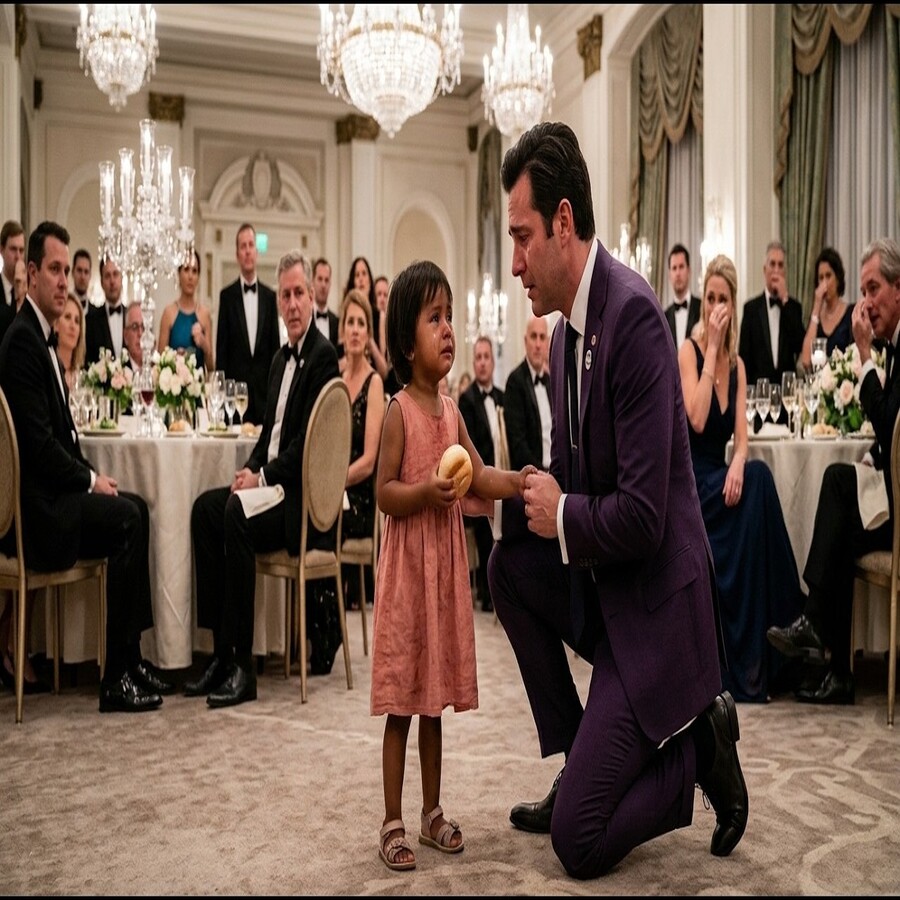
The Life That Looked Perfect From The Outside
Daniel Hargrove had never once in his adult life looked at a clock and worried about money. Not when he was twenty-two and building his first tech startup out of a rented garage in Austin, Texas. Not when he was twenty-nine and signing the papers that made him his first hundred million. And certainly not now at thirty-eight, standing at the floor-to-ceiling windows of his forty-second-floor penthouse in Manhattan, watching the city below him wake up like a machine that existed solely for his benefit.
The skyline was his. At least that’s what it felt like. He had four homes—the penthouse in Manhattan, a beach house in the Hamptons, a ski chalet in Aspen, and a villa in Lake Como, Italy. He had two private planes and a yacht he used maybe three weeks out of the year. He had a driver, a personal chef, a nutritionist, a personal trainer, a stylist, and a team of twelve assistants who managed every detail of his life so efficiently that Daniel rarely had to think about anything as mundane as scheduling or grocery shopping.
His company, Hargrove Technologies, had just been valued at $6.2 billion. The press called him a visionary. Magazines put his face on covers with headlines like “The Man Who Thinks 10 Years Ahead” and “How Daniel Hargrove Rewired the Future.” He had given a TED Talk that had been watched forty million times. He had shaken hands with presidents and sat at dinner tables with kings.
And yet, if you had asked anyone who truly knew Daniel Hargrove—not his business partners, not his investors, not the journalists who wrote flattering profiles, but anyone who really, truly knew him—they would have told you the same thing quietly, almost sadly: Daniel Hargrove was lonely in a way that money had never been able to fix.
His marriage had ended three years ago. No dramatic betrayal, no screaming fight, no villain in the story. Just two people who had slowly, quietly grown into strangers who shared a bed and a last name and very little else. His ex-wife, Claire, had taken their dog, a golden retriever named Biscuit, and moved to Portland. She sent him a Christmas card every year. He sent one back. That was the entirety of their relationship now.
He had no children. That was the part that sat in his chest sometimes like a stone he couldn’t move. Not because anyone had said it was his fault, and not because he had made a deliberate choice against it, but just because life had moved the way life sometimes moves—forward without asking your permission, without caring what you thought you’d have by now.
The Morning That Started Like Any Other
On this particular Tuesday morning in October, Daniel stood at his window with a cup of black coffee, made by his chef, who arrived at six a.m. every day, and stared at the city below. He had a nine o’clock board meeting, a twelve-thirty lunch with a senator, and a four o’clock call with investors in Singapore. His assistant, Marcus, had already sent him a twelve-point briefing document. He hadn’t read it yet.
He was thinking instead about the dream he’d had last night. He couldn’t remember the details anymore. Dreams slipped away from him like that, like water through his hands. But he remembered the feeling it had left behind—something warm, something that felt like belonging, something that was gone the moment he opened his eyes and remembered where he was and who he was and what his day looked like.
He finished his coffee. He set the cup down. He went to get ready for his meeting.
It was in almost every way a completely ordinary morning in the life of Daniel Hargrove.
That was about to change.
The cleaning staff arrived at 7:30 every Tuesday and Friday. There were three of them—a rotating team from a professional service his building management company hired and managed. Daniel barely interacted with them. Not out of cruelty or arrogance, or at least he told himself it wasn’t that. It was just that his schedule was packed, and he was usually deep in calls or emails by the time they arrived. And it seemed simpler for everyone if they just did their work and he did his and they existed in the same space without bothering each other.
He knew one of their names. Maria. He knew it because Marcus had mentioned it once when there’d been some scheduling confusion. And it had stuck in his mind for no particular reason. Maria. That was the extent of his knowledge of the people who cleaned his home every week.
On this Tuesday, something was different from the moment the elevator doors opened into his penthouse foyer. He heard a sound he almost didn’t recognize at first because it had been so long since he’d heard it in a personal space—a child’s voice. Small. Quiet. A little hesitant. The kind of voice that belongs to a person who is very young and very unsure whether they are allowed to take up space.
The Little Girl Who Wasn’t Supposed To Be There
Daniel paused in the hallway outside his home office. He frowned slightly, not in anger, just in surprise. He tilted his head the way people do when they’re trying to identify a sound that doesn’t match their expectations. He walked toward the kitchen. And that’s when he saw her.
She was tiny—three years old, though he didn’t know that yet. Sitting very carefully on the edge of the kitchen floor with her little legs folded under her. She had dark curly hair pulled into two uneven pigtails, the kind that a tired mother does in the early morning with shaking hands and no mirror. She was wearing a purple corduroy jacket that was just slightly too small for her, the sleeves ending just above her small brown wrists.
On her feet were sneakers with little cartoon flowers on them. One of them was on the wrong foot. She was holding a small stuffed rabbit against her chest with both arms, the way children hold things they love and are afraid of losing. She wasn’t crying. She wasn’t making a mess. She wasn’t doing anything except sitting very, very still, watching her mother work.
And her mother, Maria—Daniel now confirmed because her name was on the lanyard around her neck—was on the other side of the kitchen cleaning the stove top with her back to her daughter, moving with a quiet and careful efficiency of someone who was trying very hard to do their job well while being terrified of being noticed.
The little girl looked up. She found Daniel’s eyes. And she didn’t look away. For a long moment, neither of them moved. Daniel Hargrove, the man who had addressed boardrooms of two hundred people without flinching, who had done live television interviews without notes, who had once negotiated a two-hundred-million-dollar acquisition deal across a table of twelve hostile lawyers without breaking a sweat, stood completely still in his own kitchen doorway staring at a three-year-old girl who was staring right back at him.
She had enormous dark eyes, the kind that picked up all the light in the room and held it. There was no fear in them, which surprised him. Most adults showed at least some degree of nervousness around Daniel. He had been told more than once that he had an imposing presence—which was a polite way of saying that his height and his silence and the way he occupied space made people want to straighten their backs and choose their words carefully.
But this little girl looked at him the way children sometimes look at things they find genuinely interesting. Like he was a large bird she hadn’t seen before. Curious, but completely without agenda. Then she smiled. It was the smallest, most cautious smile. Just a tiny upturn at the corners of her mouth. Like she was testing whether smiling was allowed in this place.
The Moment Everything Shifted
Daniel didn’t smile back. Not right away. He was too surprised to smile. He just stood there, holding his phone in one hand, feeling something strange and unnameable shifting in his chest. Behind the little girl, Maria turned. The moment she saw Daniel, the color drained from her face.
She was a woman in her early thirties, with the same dark curly hair as her daughter, though hers was pulled tightly back into a bun, practical and no-nonsense. She had kind eyes and a face that looked like it had been through a great deal and had come out the other side still fundamentally decent, still fundamentally warm, though tired in a way that went deeper than just one bad night’s sleep. It was the tiredness of someone who had been carrying something heavy for a long time and had simply gotten used to the weight.
“Mr. Hargrove.” Her voice was steady, but just barely. “I am so sorry. I know she is not supposed to be here. My babysitter canceled this morning at the last minute, and I—I did not have anyone, and I could not miss today because I already had to reschedule last week when she was sick, and I just—”
She was already moving toward her daughter, putting herself slightly between the little girl and Daniel in the instinctive way mothers do. “I will make sure she is quiet. She will not touch anything. I’m so sorry. Please, I—”
“It’s okay,” Daniel said.
Maria stopped talking. She blinked at him.
“It’s okay,” he said again because he could see from her face that she hadn’t quite processed it the first time. “I’m not upset.”
She exhaled, but she still looked unsure. The way people look when they’re waiting for the other shoe to drop. When you have spent enough of your life in situations where kindness arrives and then gets yanked away, you learn not to fully believe in it until it proves itself.
“What’s her name?” Daniel asked.
Maria blinked again. “Sophia.”
Daniel looked down at the little girl. “Sophia.” Who was still watching him with those enormous lamp-lit eyes and that cautious almost smile. “Hi, Sophia,” he said.
“Hi,” she said back. Her voice was the size of a thimble. He almost smiled then. Almost. He looked back at Maria. “She can stay. Just let her sit somewhere comfortable away from any cleaning supplies. Maybe the living room. There’s a couch.”
“Thank you,” Maria whispered. It came out rough, like the words had scraped against something raw on the way up. “Thank you very much.”
Daniel nodded and went back to his office and told himself he had a board meeting to prepare for. He sat down at his desk. He opened the twelve-point briefing document Marcus had sent him. He read the same sentence four times without understanding it. From the living room, he could hear the tiny sound of Sophia talking softly to her stuffed rabbit, holding a whole private conversation with it in the most serious and important tone. The way very small children do when they are absolutely convinced the world they have created is just as real as the one everyone else is living in.
He closed the document. He opened it again. He could not concentrate.
👉 [Tap here for the Next Part ] 👈
Disclaimer : This content may be created by AI for entertainment purposes. Any resemblance to real persons, events, or places is coincidental.