The Digital Ear and the Broken Mind: A Chronicle of the Fresno Massacre
The Prologue: The Mechanics of an Invisible Scream
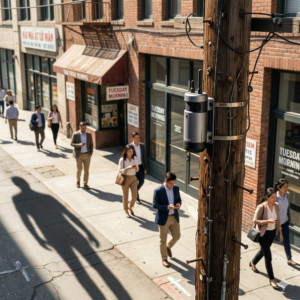
What is the exact acoustic signature of a human life ending on an ordinary Tuesday morning? How does the invisible architecture of a city process the sudden, violent rupture of bone and blood against the backdrop of a sunny California day? The morning of April 8th, 2017, in Fresno, California, did not begin with the scent of tragedy; it began with the mundane aroma of roasted coffee beans, the sharp tang of exhaust fumes from buses groaning to a halt, and the gentle, warming touch of the spring sun on the concrete sidewalks. The city woke up stretching its limbs, oblivious to the metal eyes and ears hidden high above its busy intersections. High on the telephone poles and street lamps, concealed from the pedestrians carrying briefcases and pushing strollers, sat the ShotSpotter microphones. They were silent, metallic sentinels, engineered to ignore the crying of sirens, the barking of dogs, and the backfiring of engines. They were waiting, with cold, algorithmic patience, for a very specific frequency. They were waiting for the crack of a firearm.
When the peace finally shattered at exactly 10:45 a.m., the sound did not just travel through the air; it tore through the fabric of the community. The explosion of the revolver was deafening, a concussive shockwave that smelled immediately of burning cordite and copper. But before the first drop of blood could even touch the sun-baked pavement, before the first scream of a terrified pedestrian could echo against the brick storefronts, the microphones had already heard it. In a fraction of a millisecond, the machine registered the violence, triangulated the coordinates, and beamed a digital scream to the police dispatch. The humans had not yet dialed 911, paralyzed by the primal instinct to flee, but the digital nervous system of Fresno was already violently awake.
The Paradox: The Omniscient Machine and the Invisible Rot
They speak of technology as the ultimate shield against the dark, chaotic impulses of humanity. They speak of smart cities, of algorithms that can map the future, of surveillance networks that can throw a blanket of mathematical safety over our vulnerable neighborhoods. They speak of a modern utopia where crime is eradicated by the sheer, imposing presence of data. But the profound paradox of Fresno on that April morning lies in the violently vast chasm between the perfection of this public, technological power and the absolute, untethered decay of a private, human hell. The city had spent millions wiring its streets, building an invisible fortress of acoustic sensors to catch the reverberations of violence. Yet, beneath this canopy of omniscient silicon, a thirty-nine-year-old man named Cory Ali Muhammad was walking the streets with a loaded revolver and a mind completely consumed by rot.
The tension between the sterile, binary perfection of the ShotSpotter system and the primitive, wet, and bloody reality of Muhammad’s hatred is the defining contradiction of the modern age. The microphones could pinpoint the location of a gunshot to the exact square meter, but they could not hear the agonizing, years-long fracturing of a human psyche. The city’s digital infrastructure was flawlessly calibrated, yet its social infrastructure—the safety nets meant to catch a man falling into the abyss of severe mental illness—was catastrophically broken. Muhammad walked through a city that could monitor his every external movement but was entirely blind to the catastrophic internal collapse that was occurring just behind his eyes.
While the algorithms calculated response times and optimal patrol routes, Muhammad was navigating a reality distorted by racial hatred and untreated psychosis. This is the grand illusion of the modern metropolis: the belief that observing the surface of society is the same thing as curing its underlying disease. We have built cities of glass and fiber optics, boasting of our supreme control over the environment, while entirely ignoring the festering darkness that incubates in the neglected corners of the human condition. The paradox is absolute: the machine was perfectly prepared for the murder, but society was entirely unprepared for the murderer.
The Roots: The Psychological Trap of the Echo Chamber
How does a man reach the point where he views the hunting of strangers as a holy crusade? The vulnerability that leads to this specific brand of nihilistic violence is rarely born overnight; it is forged in the slow, agonizing fires of untreated trauma and systemic alienation. We must analyze the architecture of Cory Ali Muhammad’s psychological trap. Court records and medical histories paint a grim, gray picture of a life punctuated by severe psychiatric hospitalizations. Imagine the sterile, fluorescent-lit corridors of the mental health wards he passed through, the smell of institutional bleach, the heavy, deadening weight of antipsychotic medications that only temporarily masked the symptoms without ever healing the source of the pain.
His vulnerability lay in the fractures of his own mind. When the brain can no longer process the complexities and disappointments of the world, it desperately seeks a grand narrative to explain its suffering. For Muhammad, that narrative was not found in healing, but in the intoxicating, venomous poison of racial hatred. His early years of instability created a vacuum, and that vacuum was eventually filled by the dark corners of the internet. The digital world, ironically powered by the same networks that would eventually triangulate his gunfire, offered him an echo chamber. In his online rants, he found a twisted validation for his internal chaos. He convinced himself that his paranoia was actually a divine vision, and that his untreated illness was a warrior’s calling. He was trapped in a psychological cage of his own making, but the locks had been provided by a society that preferred to sedate him rather than save him.
The Descent: The Sinking Ship of Sanity
The process of his ultimate corruption was not an explosion; it was an erosion. It was the slow, agonizing descent of a sinking ship plunging into the abyssal depths of the ocean, where the pressure eventually crushes the steel hull. The final descent began days before the Fresno massacre, in the flickering, neon-lit parking lot of a cheap Motel 6. The air there smelled of stale cigarette smoke and desperation. It was here that Muhammad committed his first irreversible act, shooting and killing an unarmed security guard. The ballistic evidence—the heavy, brass shell casings left behind—would later match the weapon in his hand, but at that moment, the murder severed his final tether to reality.
After the Motel 6 shooting, Muhammad entered a state of terminal velocity. He was a man drowning in the dark waters of his own psychosis. He gaslit himself into believing he was a soldier behind enemy lines, rather than a fugitive running from a senseless murder. He lived in a glass cage of paranoia, looking out at the world and seeing only targets, convinced that the world was looking back at him with equal malice. The days between the motel shooting and the downtown massacre were marked by a terrifying, silent momentum. The revolver in his pocket was not just a weapon; it was an anchor pulling him deeper into the abyss. Every breath he took was filtered through the lens of racial animosity; every white man he saw was a proxy for his perceived systemic oppression. The corruption of his soul was complete when he no longer saw human beings, but merely physical manifestations of his own internal demons, waiting to be eradicated.
The Collateral Damage: The Visceral Weight of the Taken
We must turn our gaze away from the killer and the technology to focus on the true, devastating center of this tragedy: the victims. The collateral damage of Muhammad’s twisted crusade was inscribed upon the bodies of innocent men whose only crime was walking down a street on a Tuesday morning. They speak of the randomness of violence. They speak of being in the wrong place at the wrong time. They speak of statistics and crime rates and urban planning. But they do not speak of the exact, horrifying moment a heart stops beating on the hot, unforgiving concrete. They do not speak of the briefcases dropped, the coffee cups shattered, the future violently erased in a single heartbeat.
Three men, strangers to the shooter and strangers to each other, were hunted down. Describe their pain with the high emotional weight it demands. It is the pain of a wife waiting for a text message that will never arrive. It is the crushing, suffocating realization of a child who learns that their father was executed simply because of the color of his skin. The victims were swallowed by a nightmare they did not know they were a part of. The bullets tore through flesh and bone, but the shockwaves tore through living rooms, dinner tables, and holiday gatherings for decades to come. The city of Fresno lost its innocence that day, but the families of the victims lost their entire worlds. The collateral damage is the permanent, aching void left in the center of their homes, a silence so profound that it drowns out the noise of the entire city.
The Climax and Decay: The Four Minutes of Chaos
The climax of this tragedy unfolded in a hyper-compressed window of absolute chaos. By 10:49 a.m., merely four minutes after the first shot was fired, the rampage reached its violent zenith and its immediate decay. The ShotSpotter system had done its job with terrifying efficiency, guiding the sirens through the gridlocked streets. Witnesses, paralyzed by the sheer terror of the moment, pointed trembling fingers toward a man with dreadlocks, the heavy revolver still smoking in his grip. The air was thick with the smell of blood and the hysterical screaming of the traumatized crowd.
The moment of total collapse occurred near the brick facade of a Catholic Charities building. The police cruisers skidded to a halt, officers leaping from behind their reinforced doors, their own weapons drawn, their voices tearing through the morning air, screaming for him to drop the gun. In that fractured second, the grand, twisted illusion of Muhammad’s holy war evaporated. Faced with the overwhelming, physical reality of armed police, the psychosis fractured. He did not go out in a blaze of glory. He surrendered. The heavy revolver clattered against the pavement. The hunt was over. The algorithm had caught the killer, but the bodies were already on the ground.
The Silent Aftermath: The Concrete Tomb and the Listening City
How do they live now? The survival in solitude is a heavy, suffocating reality for all involved. Cory Ali Muhammad was stripped of his delusions by a court of law. His defense attorneys attempted to use his shattered mind as a shield, questioning his sanity, but the jury looked past the madness and saw the cold, calculated intent of the hunt. He was convicted of multiple murders and sentenced to life in prison without the possibility of parole. He lives now in a concrete tomb, a 6-by-9-foot cell where the air is stale and the sunlight is rationed through thick, reinforced glass. He is an empty shell of a man, stripped of his weapons, his freedom, and his violent narrative, left alone with the haunting echoes of what he has done.
But the city of Fresno also survives in a strange, altered state. The physical blood was washed from the sidewalks, and the yellow police tape was eventually torn down, but the psychological scars remain deeply etched into the urban landscape. The city became the epicenter of a national debate about the cost of security. The ShotSpotter microphones still hang on the telephone poles, silent, digital sentinels constantly listening to the whispers of the streets. Critics argue about privacy, about the chilling effect of living in a neighborhood where artificial intelligence records every loud noise, every backfire, every shout. The city lives in the silent aftermath of trauma, existing in a perpetual state of hyper-vigilance, forever wondering if the AI protects them, or if it merely catalogs their tragedies in high definition.
Final Reflection: The Limits of the Digital God
In the end, the Fresno massacre forces us to confront a brutal, philosophical lesson about the nature of human violence and the limits of our technological salvation. We have built artificial intelligence to be our modern-day guardian angels. We string microphones across our skies and position cameras on our corners, believing that if we can just gather enough data, if we can just triangulate the coordinates fast enough, we can finally conquer the darkness of human nature.
But the machine can only hear the gunshot; it cannot hear the breaking of a heart. It can calculate the trajectory of a bullet, but it cannot calculate the depths of a man’s despair. The story of Cory Ali Muhammad is a tragic reminder that while technology can map the physical world with terrifying precision, the geography of the human soul remains uncharted, wild, and incredibly fragile. True power does not lie in the ability to listen to the streets after the trigger is pulled. True power—and true love—lies in the painstaking, unglamorous work of reaching into the dark, intervening in the lives of the broken, and healing the mind long before the hand ever reaches for the gun. Until we learn to listen to the silent cries of the vulnerable with the same urgency that our algorithms listen for the blast of a revolver, we will remain a society that is perfectly capable of catching its killers, but tragically incapable of preventing them.
Disclaimer : This content may be created by AI for entertainment purposes. Any resemblance to real persons, events, or places is coincidental.






