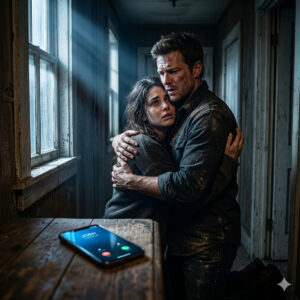
If I had known that a single vibration in my pocket could dismantle the carefully constructed simplicity of my life, I would have let that phone ring until the battery died. I would have stood there in my workshop, the scent of fresh pine shavings filling my lungs, and watched the screen fade to a cold, silent black. I would have gone back to sanding the grain of an oak tabletop, losing myself in the meditative rhythm of the work, convinced that nothing in this world could touch me.
But I didn’t. I answered. Because that is the fundamental architecture of who I am. I pick up the phone. I show up. I fix what is broken. I just never imagined that the thing that would crack first this summer—beyond repair and beyond reason—would be me.
My name is Evan Miller. I’m twenty-seven years old, and I live in a town tucked against the jagged, beautiful shoreline of Lake Erie in Ohio. It’s the kind of place where the air always smells like a mixture of old wood and fresh water, and where neighbors wave from their porches with a sincerity that makes you feel rooted. I’m a freelance carpenter by trade. I spend my days rebuilding weathered decks, patching leaking roofs, and making aging houses feel steady on their foundations again. My dad taught me everything I know before he passed five years ago. When he died, he left me his rusted toolkit and a quiet philosophy for living: Keep your head down, do your work, stay out of trouble.
Drama was never part of the blueprint. I liked my life narrow and predictable. Wood, nails, the honest weight of a hammer, a steady paycheck, and quiet nights spent watching the sunset over the lake with a cold beer in my hand. That plan held firm until early June, when my phone rang and a voice I hadn’t heard in half a decade said my name like she was testing the weight of the syllables.
“Evan? You still fixing houses?”
The voice was warm, like a memory of a July afternoon, but it carried a layer of careful hesitation. It took me a heartbeat to place the cadence. Then it hit me like a heavy door swinging open to a room I had purposely locked and boarded up years ago.
“Maryanne? Maryanne Keller?” I asked, my grip tightening on my phone.
“Yeah,” she answered, and I could practically hear the small, shy smile in her voice. “Josh gave me your number. He said you were the only one in the county who wouldn’t overcharge me or do a half-hearted job.”
Josh Keller had been my best friend since we were old enough to bait a hook. We had spent our childhood fishing off the pier, cutting through overgrown backyards, and sneaking sips of cheap beer behind his dad’s tool shed. He had moved to New York City five years ago, trading the smell of the lake for the frantic hum of a high-stakes finance career. I had stayed here, doing the kind of work my hands understood.
Maryanne had stayed, too, but she had always been the “older sister”—the one who rolled her eyes at our adolescent stupidity, always acting like she had more important places to be. I remembered her with a curtain of dark hair and a sharp tongue.
“The roof’s leaking,” she said, her voice dropping into a more serious register. “And the deck… it’s a mess, Evan. Honestly, it’s dangerous. If you’re free this summer, I could really use your help.”
Work was work, and if I was being honest with myself, my “quiet” months had started feeling a little too much like isolation.
“I’m in,” I said, already mentally checking my schedule. “I’ll swing by tomorrow morning to survey the damage.”
The next morning, I loaded my truck with my dad’s old tools and drove out toward the lake. The drive only took twenty minutes, but as the suburban streets gave way to towering pines and gravel paths, it felt like I was traveling back in time. I kept repeating a mantra to myself: It’s just a job. It’s just Josh’s sister. It’s just a house.
Then I turned down her drive and saw it. The house sat on a secluded stretch of shoreline, shielded by pines that swayed in the breeze like they were whispering secrets to one another. It was beautiful in a tired, neglected way—old cedar siding, a wide deck overlooking the water, and a roof that had clearly seen too many Ohio winters.
Maryanne was waiting on the porch. She wore faded jeans and a loose white linen shirt, her hair tied back in a messy bun that looked like she hadn’t looked in a mirror all morning. She wasn’t the sharp-edged girl I remembered. This Maryanne was steadier. Her face was softer, but her hazel eyes held something deep and guarded, like a story she was afraid to tell out loud.
“Evan Miller,” she said as I stepped out of the truck. “All grown up.”
“Maryanne Keller,” I replied, forcing a smirk. “Still bossing people around, I see.”
She laughed, and the sound caught me off guard. It wasn’t the mocking laugh of a teenager; it was warm, resonant, and it did something strange to the rhythm of my heart. We walked the perimeter of the house as she pointed out the rot and the leaks. I listened, I nodded, and I mapped the job in my head. It was a massive undertaking. At least two months of steady work.
By noon, I was under the blistering sun, prying up rotten deck boards. Sawdust clung to the sweat on my arms. I was in that zone I love—the one where the world disappears and there is only the task at hand. Then the screen door creaked open. Maryanne stepped out with a glass of condensation-beaded iced tea and set it down beside my saw without saying a word. When I looked up to thank her, I caught her eyes on me. It wasn’t a casual glance. It was a look that lingered, heavy with an unspoken curiosity.
“Thanks,” I said, my voice sounding rougher than usual.
She nodded, pausing for a second as if she wanted to say something, but the moment passed. She turned and went back inside.
The rest of the week settled into a rhythmic, dangerous loop. I showed up every morning at dawn. I worked until my muscles screamed. Maryanne drifted in and out of my peripheral vision—gardening, reading on the far end of the lawn, or cooking things that made the lake air smell like cinnamon and rosemary. We talked, but we kept it safe. We talked about Josh, about the town, about the weather. But by the end of that first week, the distance between us felt like it was made of thin glass.
She started standing closer when she brought me water. She watched me work like she was trying to decode the man I had become. One afternoon, while I was sanding a new cedar plank, she leaned against a support post.
“You’re good at this, Evan,” she said softly. “You have a patience for things that most people just want to throw away.”
“It’s just what I do,” I said, not looking up.
“Your dad would have been proud,” she added.
The mention of my father hit me like a physical blow. Nobody in town said his name anymore; they had all moved on. I swallowed hard and looked up. Her eyes were on mine, hazel flecked with gold in the afternoon sun. She didn’t look away. She held my gaze a beat too long, and in that silence, the tectonic plates of my simple life shifted.
That night, driving home, I tried to convince myself it was nothing. Just a job. Just a friendly neighbor. But the truth was a cold realization: I was already looking forward to the next morning before I had even reached my own driveway.
By the second week, I started showing up earlier. I told myself the roof was in worse shape than I thought—that old houses hide their secrets in the rafters. That’s what I said out loud. But in my head, the truth was louder. I liked the quiet moments before she came outside. I liked knowing she was inside, moving through her morning routine, unaware that she was the primary reason I was holding my breath.
That thought felt like a betrayal. Every time I heard the crunch of my tires on the gravel, Josh’s face would flash in my mind. Josh, who had clapped me on the shoulder and told me he trusted me with his family. I would grip the steering wheel until my knuckles turned white and remind myself why I was there. Work. Just work.
But wood and nails are no match for human gravity.
On Tuesday, she brought out a full lunch. A turkey sandwich thick with avocado, wrapped in foil, and a small bag of chips. “The kind of lunch you pack for someone you care about,” she said, then immediately blushed at her own words.
“You didn’t have to do this,” I said, sitting on the steps.
“You work like you forget you’re human,” she replied, sitting a few feet away, her arms folded as she stared at the lake. The silence between us wasn’t empty; it was pressurized.
“Josh doing okay in the city?” I asked, desperate for a safe topic.
Her mouth tightened for a micro-second. “Busy. New York suits him. He likes the noise. He likes the distraction.”
“And you?” I asked before I could censor myself. “You like it quiet out here?”
She glanced at me, her expression raw and honest. “Sometimes. Sometimes it’s so quiet it feels like a weight. Like the house is just waiting for something to happen.”
I felt an overwhelming urge to fix that feeling, just like a loose board, but I knew people weren’t that simple. “It won’t always feel like that,” I said.
She studied me with an intensity that made my skin prickle. “You say that like you’re sure.”
I wasn’t sure of anything anymore.
Wednesday was the day the weather—and the secret—turned. I was on the roof, prying up shingles, when the lake breeze suddenly went heavy and cold. The sky turned a bruised purple. I should have climbed down, but I wanted to finish the row. Then the sky simply opened.
Rain soaked me to the bone in seconds. The roof turned into a slide of wet asphalt. I tried to reach for my tool belt, but my boot slipped. For one terrifying second, I was airborne. The world flipped. I hit the muddy grass beside the house with a thud that knocked every ounce of oxygen from my lungs.
For a moment, all I could hear was the roar of the rain and my own ragged gasping. Then, her voice cut through the storm.
“Evan! Oh my God, Evan!”
I lifted my head to see Maryanne sprinting toward me, barefoot, her dress clinging to her, hair plastered to her face. She dropped to her knees in the mud beside me, her hands hovering as if she was afraid that touching me would break me further.
“Are you okay? Talk to me!”
I forced myself into a sitting position, wincing as a sharp pain flared in my side. “I think I’m just bruised. My pride’s taking a bigger hit than my ribs.”
She stared at me for a second, then let out a shaky, genuine laugh. “You’re impossible. You’re absolutely impossible.”
Her hand touched my arm, her skin warm even in the freezing rain. That simple touch sent an electric shock through me that had nothing to do with the fall.
Inside the house, she shoved a thick towel into my hands and ordered me to sit by the kitchen table. The house smelled of lemon cleaner and herbs. She made tea while I dried off, my wet shirt clinging to me.
“You didn’t have to come out there,” I said, watching her back.
“Maybe I wasn’t worried about you ‘fixing’ it,” she said, turning around.
“Then what were you worried about?”
She hesitated, her eyes searching mine. “Maybe I just didn’t want you to be out there alone. Not today.”
The words landed deep in my chest. I tried to joke it away. “You’re going to make me think you actually care about your carpenter.”
She stepped closer, the room suddenly feeling much smaller, much warmer. “I do care, Evan. I’ve cared since the day you pulled into the drive.”
I looked down at my hands. My knuckles were scarred and stained with work. “You shouldn’t,” I whispered. “You’re not as tough as you pretend to be, and I’m not as steady as I look.”
“I know,” she said, her voice a soft caress. “I’ve been watching you all week. I see the cracks, Evan. I have them, too.”
That night, I drove home in a daze, telling myself it was just adrenaline and closeness. But I knew the truth. After that storm, nothing would ever go back to the way it was in the blueprint.
July settled over the lake like a heavy, golden shroud. The house was looking better every day—the roof was sealed, the siding was repaired, and the deck was nearly finished. It should have made me feel successful. Instead, it made me feel like a man standing on a trapdoor. The closer the job came to an end, the more the thought of leaving—not the house, but her—became unbearable.
Maryanne brought lunch more often. Mason jars of lemonade, fresh corn, sandwiches. We talked about real things now. The fear of being stuck, the beauty of the lake, the regret of things left unsaid.
“Do you ever think about leaving this town?” she asked one afternoon.
“Sometimes,” I said. “But I don’t know where I’d go. My roots are in this soil.”
“It’s easy to stay when everything is familiar,” she said. “But sometimes familiar is just another word for stagnant.”
“And what about you?” I asked. “You want to run?”
She looked at me, her gaze unwavering. “I can breathe when you’re around, Evan. For the first time in years, the house doesn’t feel like it’s waiting for a funeral.”
That night, she asked me to stay for dinner. I knew I should say no. I knew I should get in my truck and drive away from the Keller name as fast as possible. But I stayed.
Later that evening, while a summer thunderstorm rolled over the water, the power flickered and then died. The house was plunged into a thick, velvet darkness. I went to the basement to check the breaker, and when I came back up, she was standing at the end of the narrow hallway, the moonlight through the window silhouetting her.
“I can’t keep doing this, Evan,” she said, her voice trembling but determined.
“Doing what?” I asked, my heart hammering against my ribs.
“Acting like I don’t feel it. Acting like I don’t watch you leave every night and feel like a part of the house is being ripped away.” She stepped closer, into the path of the moonlight. “Stop faking, Evan. Stop pretending you don’t want this as much as I do.”
My phone buzzed in my pocket at that exact second. The vibration felt like a warning from another life. I pulled it out and saw the name on the screen: JOSH KELLER.
I stared at the name. The man who called me brother. The man whose family I was supposed to be protecting, not dismantling.
“I should take this,” I whispered, my voice cracking.
Maryanne nodded, her eyes shining with unshed tears. “You should. You definitely should.”
I stepped into the living room and answered. Josh’s voice came through, loud and cheerful, oblivious to the fact that I was standing in the dark with his sister’s heart in my hands.
“Evan! Hey, man. Listen, I’m thinking about coming home for a long weekend. Maybe next week. I miss the lake, man. And I’m worried about Maryanne. She sounds… different on the phone lately. You keeping an eye on her for me?”
Every word was a jagged nail being driven into my conscience. I looked through the doorway at Maryanne. She was still standing in the hallway, waiting for my choice.
“She’s fine, Josh,” I said, my voice sounding like it belonged to a stranger. “The house is coming together. Everything is… solid.”
“I trust you, Ev. You always were the most solid guy I knew. See you soon, brother.”
The call ended. The silence that followed was suffocating. I turned back to Maryanne. She knew. She didn’t have to hear the words.
“He’s coming back,” she said.
“Yeah. Next week.”
“Then you should go,” she said, her voice steady now, though I could hear the immense cost of her composure. “You should leave before we do something we can’t take back.”
I didn’t want to go. I wanted to stay in that dark hallway forever. But the weight of five years of friendship and my father’s quiet code of honor was crushing me.
We stood there, inches apart, the air between us vibrating with everything we weren’t saying. Then, I broke. I leaned in and kissed her. It wasn’t a movie kiss; it was desperate, hungry, and filled with the grief of a looming goodbye. Her hands gripped my shirt like I was the only thing keeping her from drowning.
When we pulled apart, she rested her forehead against mine. “We can’t do this, Evan. We really can’t.”
“I know,” I whispered. “But that doesn’t stop me from wanting it more than my next breath.”
She told me to leave. I did. But before I reached the door, she pressed a folded piece of paper into my hand. “Don’t read it until you’re home,” she said.
I drove home with the windows down, the cold night air whipping through the cab, my heart feeling like it was being squeezed by a giant hand. When I finally sat on my porch and opened the note, it felt like a promise and a threat all at once.
Come back in October, she had written. I will still be here. And by then, I won’t be anyone’s responsibility but my own.
Josh came home the next week.
Seeing him was like stepping into a parallel universe where the summer hadn’t happened. We hugged, we laughed, we drank beer on the very deck I had rebuilt with the sweat of my forbidden thoughts. He talked about his big city life, his promotions, his plans. I talked about the technical aspects of the roof.
We didn’t talk about Maryanne. Not really.
She was a master of the mask. She played the older sister perfectly, rolling her eyes at our stories, keeping a safe, chilly distance from me. But every time our eyes met across the dinner table, the air would ignite. Every silence between us was heavy with the memory of that hallway kiss.
One night, after Josh had finally passed out on the couch, Maryanne found me on the deck. We didn’t touch. We didn’t even stand within five feet of each other.
“This is hard,” she whispered, looking out at the dark water.
“Yeah,” I said. “But you’re still here.”
“So are you.”
We stood there, choosing to stay in the silence, knowing that every second we didn’t confess was a choice we were making for our future.
When Josh finally left to go back to New York, the house felt more desolate than it had before I started. I finished the last few repairs—the trim, the paint, the final seal on the cedar. The job was officially done. On my final day, Maryanne hugged me goodbye in the driveway. It was just a hug, but it lasted too long. It was too close.
“October isn’t that far away,” she whispered into my ear.
I nodded, got into my truck, and drove away. I told myself that the distance would fix it. I told myself that once I was busy with other jobs, once my nights were filled with the noise of the town instead of the quiet of her lakefront, the pull would fade. That is what sensible people believe.
I was never as sensible as I pretended to be.
The weeks after I left were hollow. I took on jobs I didn’t need just to keep my hands busy. I stayed late at work sites, sanding and measuring until it was too dark to see, just so I wouldn’t have to go home to an empty house. At night, I sat by my own stretch of the lake and tried to enjoy the peace I used to love.
It didn’t work. The water felt colder. The quiet felt like an indictment.
Maryanne didn’t call. I didn’t call her. That was the unwritten rule. Josh texted occasionally—pictures of his office view, jokes about missing “real” beer. He thanked me again for helping his sister. Every message felt like a reminder of the line I had crossed and the one I was still standing on.
By late August, the leaves began to change at the edges. Green gave way to a sharp, defiant yellow. The world was exhaling. I carried Maryanne’s note in my wallet every single day. I didn’t need to read it anymore; the words were etched into my retinas. October.
The first time I saw her again wasn’t planned. I was picking up supplies at the local hardware store when I heard my name.
“Evan.”
I turned, and there she was at the end of the aisle, holding a box of light bulbs. Her hair was down, longer than I remembered, and she wore a thick sweater that made her look softer, older, and exactly the same. For a long second, neither of us moved.
Then she smiled—a small, careful smile that asked if the ground was still safe.
“Hey,” she said.
“Hey.”
That was all it took. The space between us filled instantly, as if it had never been empty. We talked in the aisle for an hour, pretending to be casual, talking about the weather and the house. But we were really talking about the fact that the earth hadn’t stopped spinning.
“Josh still in New York?” I asked.
She nodded. “Busy as ever. He’s happy there, Evan. He really is.”
We said goodbye in the parking lot, but it felt unfinished. Like we had both opened a door just wide enough to see the light behind it and then leaned against it. That night, I didn’t even try to sleep.
The next week, she texted me. The deck could use another look before winter. Just to be safe.
I stared at that message for twenty minutes. I knew what it was. An excuse. A bridge. A chance to stop faking.
I can stop by, I typed back.
When I pulled into her driveway, the trees were in full, glorious revolt—red and gold reflecting off the steel-gray lake. The house looked exactly the same, but it felt different. It felt like it was holding its breath.
Maryanne opened the door before I could even knock. “You came,” she said.
“I said I would.”
We walked the deck, pointing out small things that didn’t actually need fixing. Loose screws that weren’t loose. A spot of stain that was perfectly fine. We were both terrible liars.
Inside, she poured coffee. We stood in the kitchen, our shoulders brushing as we reached for the cream. It was an accident we didn’t correct.
“You look tired,” she said.
“You look steadier,” I answered.
She smiled at that. “They say fall is a season for letting go of things that are dead.”
“Or for deciding what is worth holding onto through the winter,” I said.
Her eyes met mine, and the pretense finally evaporated. We didn’t kiss then. We didn’t even touch. And that made the tension a thousand times worse. When I left that day, she walked me to my truck.
“October is here, Evan,” she said quietly.
“I know.”
She hesitated, then reached into her pocket and placed her hand over mine on the door handle. “I’m not pretending anymore. I can’t.”
“Neither am I.”
October didn’t arrive all at once. It crept in, cooling the air and stripping the lake back to its bones. The town felt smaller, like it was giving us the space we had spent all summer craving.
I came back to the lakehouse to seal the deck for the winter. That was the official reason. But when I walked up to the door, and saw the smoke curling from the chimney, and saw her waiting at the window, I knew the repairs were finished. The house was steady.
We worked side by side that day. I used the tools; she handed me the brushes. The lake was a flat, steel gray, and the sky was low and quiet. It felt like the entire world had narrowed down to this one wooden platform and the two of us standing on it.
Josh called while we were eating lunch. Her phone lit up on the table between us. We both looked at it. The name on the screen still felt heavy, but it didn’t have the power to stop us anymore. She answered. She talked. She laughed. When she hung up, the silence was different.
“He’s staying in New York for the holidays,” she said.
“Good.” Relief came first, followed by a dull throb of guilt. “We can’t build this on a foundation of lies, Maryanne.”
She met my eyes with a fierce, beautiful clarity. “Then we build it on the truth. Even if the truth is messy. Even if it’s hard.”
That afternoon, as the first cold drops of an autumn rain hit the cedar, we rushed inside, breathless and laughing. The door closed behind us, shutting out the wind, shutting out the town, shutting out the expectations.
She stopped in the hallway—the same spot where everything had shifted weeks ago.
“We’re really doing this,” she said.
“I think we already are.”
The kiss this time wasn’t careful. It wasn’t a goodbye. It was hungry, honest, and filled with the weight of a summer’s worth of restraint. I felt her hands on my chest, steady and sure. I pulled her close, feeling her breath catch as she pressed into me. We didn’t rush. We didn’t need to. The world outside could wait for the morning.
Later, wrapped in a blanket on the couch with the fire burning low, she looked at the dark lake beyond the glass.
“This doesn’t feel like a mistake, Evan.”
“No,” I said, pulling her closer. “It feels like the only thing I’ve ever gotten right.”
But even in that peace, I knew the story wasn’t over. Love that grows in the shadows eventually has to face the light. And Josh would come home again.
Josh came home in December. The town was dressed in lights, the lake was edged with thin ice, and the air was sharp enough to sting. I knew the moment he pulled into town because my heart did a slow, painful roll in my chest.
“You around tonight? Beer?” he texted.
“Yeah,” I replied. “Always.”
Maryanne knew. She stood in her kitchen while snow tapped softly against the glass. “He’s here.”
“I know.”
“This is the part where we don’t hide, Evan,” she said, her voice steady. That scared me more than the sneaking ever had.
We met Josh at our old spot by the lake. Same bar, same worn stools, same stale jokes. He looked older, more tired. We laughed, we drank, we talked about everything except the elephant sitting at the table. After the second round, Josh leaned back and looked at me the way he used to when we were kids—the look that meant he was about to ask something real.
“You and Maryanne… you’ve been spending a lot of time together this fall,” he said. The air in the bar went stone still.
I didn’t dodge the question. I didn’t make a joke. I didn’t pretend.
“Yeah,” I said, looking him dead in the eye. “We have.”
He watched my face, searching for a lie, searching for a betrayal. Then he looked past me toward the dark lake we had grown up on.
“She deserves to be happy, Evan,” he said quietly. “She’s had a hard road. I was worried about her.”
“So do you,” I said.
He nodded once, a slow, solemn movement. “I trust you, Ev. I always have. Just… don’t break her heart. Because if you do, I’ll have to come back here and use those tools of yours to bury you.”
I smiled, a real one. “I won’t, Josh. I promise.”
That night, I went back to the lakehouse. Maryanne was waiting on the porch. I told her everything—every word, every look. When I finished, she let out a breath she had been holding since June and pulled me into her arms.
“So that’s it,” she whispered.
“That’s it.”
Winter settled in after that, but it didn’t feel cold. Slow mornings, long talks, quiet nights that felt full instead of empty. By spring, I was there more than I was at my own house. By summer, we weren’t pretending anymore.
That secret summer, the one that started with a single phone call and a whispered truth, didn’t break us. It didn’t ruin the friendship. It built something steadier. It built a home on a foundation that was meant to last.
I learned that sometimes the most important thing you can fix isn’t a roof or a deck. Sometimes, it’s the silence between two people who were meant to find each other in the storm.
The story of Evan and Maryanne is a reminder that the most profound changes in our lives often arrive without fanfare. They hide in the mundane moments—a glass of iced tea, a rainy afternoon, or a quiet conversation on a porch. We spend our lives trying to keep things “simple,” only to realize that true depth requires us to embrace the mess. Evan chose to stay when it would have been easier to leave, and in doing so, he found a truth that sanding wood could never reveal.
Have you ever had a moment where you had to choose between a comfortable lie and a difficult truth? Have you ever found love in a place you were strictly told not to look? Drop a 🌊 in the comments if you believe that some connections are worth the risk, and TAG someone who needs to know that it’s never too late to stop faking.
Don’t forget to LIKE and SHARE this story if it moved you, and FOLLOW for more cinematic journeys through the heart and soul!
Disclaimer : This content may be created by AI for entertainment purposes. Any resemblance to real persons, events, or places is coincidental.






