The Billionaire’s Daughter Beat A Scholarship Student Unconscious — Then Her Mother Walked In With An FBI Badge And Destroyed Her Entire Family.
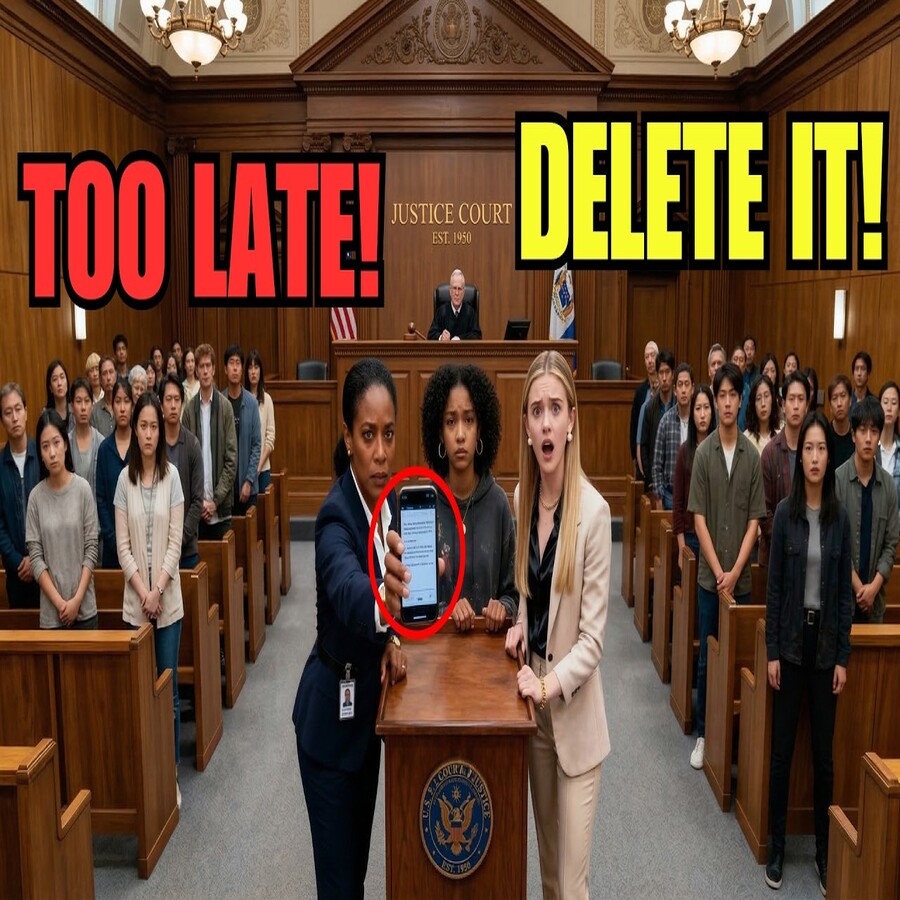
═══════════════════════════════════
Chapter One: The Girl Who Drew
Grace Underwood learned to see before she learned to speak.
Her grandmother Lorraine taught her that. Sit still. Watch. Notice what others miss.
The way light fell across a face. The way hands told stories words couldn’t.
Grace carried a sketchbook everywhere. It was her language. Her shield. Her way of making sense of a world that rarely made sense of her.
She grew up in Richmond Heights. Cracked sidewalks. Corner stores with bulletproof glass. Front porches where old folks watched the world forget them.
Lorraine raised her alone. Seventy-two years old. Retired schoolteacher. A woman who had marched across the Edmund Pettus Bridge with tear gas burning her lungs.
She never talked about it unless you asked. And when you asked, she didn’t brag.
“We did what had to be done.”
That was all she said.
Grace carried that philosophy the way she carried her pencils. Everywhere.
Art was her escape. She could spend four hours drawing a stranger’s hands and forget to eat lunch.
Her high school art teacher once told her she had the kind of talent that made other people uncomfortable.
Grace didn’t understand what that meant.
Not yet.
She graduated top of her class. Full academic scholarship to Westerfield University. A private institution with Gothic buildings and manicured lawns.
The kind of school where last names opened doors. Where legacy mattered more than merit.
Grace was the only Black freshman in the fine arts program.
On move-in day, Lorraine drove her to campus in a fifteen-year-old sedan. It looked out of place between the BMWs and Range Rovers lining the parking lot.
They carried two suitcases and a box of art supplies up three flights of stairs. No one offered to help.
Parents in khakis glanced at them and looked away.
Lorraine set the last box down. Caught her breath. Handed Grace a leather-bound sketchbook.
Inside the cover, she had written:
For the girl who will make the world see.
Grace hugged her so hard the old woman laughed.
“Baby, I need those ribs.”
At the door, Lorraine held Grace’s face in both hands.
“You belong in any room you walk into. Don’t you ever forget that.”
Grace watched her grandmother’s car disappear down the tree-lined drive.
She felt, for the first time in her life, completely alone.
Chapter Two: The Girl Who Inherited Everything
Tiffany Caldwell didn’t earn her place at Westerfield.
She inherited it.
Her father, Russell Caldwell, had just donated twelve million dollars to build a new library. The Caldwell Library of Arts and Sciences.
His name was already etched in limestone above the entrance before the first book hit the shelf.
Tiffany’s admission had nothing to do with grades. Her SAT scores were average. Her essays were ghostwritten.
But her last name was worth more than any transcript.
She arrived on campus in a black Mercedes SUV. A personal assistant carried her Louis Vuitton luggage.
Within the first week, she had established herself as the social center of the freshman class.
Not because people liked her.
Because people feared what happened if they didn’t.
Brooke Dawson was her enforcer. Best friends since prep school. The kind of girl who recorded everything on her phone.
Not for memories. For ammunition.
She laughed the loudest at Tiffany’s jokes and hit the hardest when Tiffany gave the signal.
Then there was Paige Harmon. New to the group. Middle-class family. No legacy. No connections.
She latched onto Tiffany’s circle the way a drowning person grabs a life raft.
Not out of loyalty. Survival.
She laughed when she was supposed to laugh. Looked away when she was supposed to look away.
She told herself every night that she wasn’t really like them.
She was wrong about that, too.
But we’ll get to it.
Chapter Three: The First Collision
Art history. Second week of classes.
Professor Alderman asked the class to analyze Basquiat’s approach to identity and erasure in modern art.
Most students gave surface-level answers.
Grace raised her hand. Delivered a response so precise, so layered, that the professor paused.
“That is exactly right,” he said. “That is graduate-level thinking.”
The room went quiet. Thirty heads turned.
Grace felt their eyes and shrank slightly in her seat.
But one pair of eyes didn’t look impressed.
Tiffany Caldwell sat in the back row. Jaw tight. Arms crossed.
She leaned toward Brooke and whispered, just loud enough for the nearest students to hear.
“Scholarship case. This should be fun.”
Two days later, in the art studio, Tiffany walked past Grace’s workstation.
She knocked her sketchbook off the table.
Pages scattered across the floor. Weeks of work. Loose and vulnerable.
Grace dropped to her knees to gather them.
Tiffany didn’t help. She stood over Grace and spoke to the room.
“Careful everyone. She might think you’re offering charity.”
Brooke laughed. Two other students smiled nervously.
Paige stared at her own hands.
Grace said nothing. She collected every page. Her fingers trembled, but her face betrayed nothing.
The professor overheard. He told Tiffany to apologize.
She delivered a flat, hollow “sorry” without looking at Grace.
Then she turned to Brooke and whispered.
“This isn’t over.”
That night, Tiffany created a group chat. She named it Westerfield Standards.
The first message read: “Time to remind Scholarship Girl where she really stands.”
Grace went to sleep that night believing it was just one bad day. One cruel girl with a loud mouth and too much money.
It would pass.
It wouldn’t pass.
It was just the beginning.
Chapter Four: The Destruction
Two weeks passed.
Grace kept her head down. Went to class. Worked in the studio. Ate meals with Nadia.
Pretended the whispers didn’t follow her through every hallway.
She told herself it would get better. That talent speaks louder than cruelty.
She was wrong.
Tuesday night. Late.
Grace had stayed in the studio until almost ten. Finishing self-portraits for the end-of-semester fine arts showcase.
The collection was called Invisible. What it feels like to exist in a space that refuses to see you.
Each piece took weeks. They were the best work she had ever done.
She walked back to her dorm exhausted but satisfied.
The hallway was quiet. She reached her door and stopped.
It was open. Not unlocked. Open. The latch was broken.
She pushed the door slowly.
The air left her lungs.
Every piece of artwork stored in the room was destroyed.
Canvases slashed. Sketches torn and scattered across the floor. Her leather-bound sketchbook, Lorraine’s gift, lay open on the bed.
Every page defaced in red marker.
The N-word. Go back to the ghetto.
A crude drawing of a monkey pasted over her self-portrait.
Grace stood in the center of the wreckage. She didn’t scream. Didn’t cry.
She just stood there. Hands at her sides. Face blank.
Something behind her eyes had broken.
Nadia found her twenty minutes later. Still standing. Still staring.
“Grace. Look at me.”
Grace turned slowly. Eyes dry. Voice hollow.
Nadia didn’t hesitate.
“We’re reporting this right now.”
Chapter Five: The Note In The File
Next morning. Dean of Students Office.
Dr. Harold Whitfield examined the defaced sketchbook. The torn canvases. The photographs of slurs.
He sighed. Rubbed his temples. Leaned back in his leather chair.
“This is concerning. But the dormitory corridors don’t have cameras on every floor. Without definitive proof of who did this, my hands are tied.”
Nadia leaned forward.
“Are you serious? There are racial slurs all over her work. This is a hate crime.”
Whitfield’s face hardened.
“Let’s not use language like that, Ms. Williams. Westerfield handles disciplinary matters internally. I’ll make a note in the file.”
A note in the file.
Months of artwork destroyed. Racial slurs carved into a student’s life. And the dean offered a note.
And a suggestion.
“I’d recommend you lock your door more carefully going forward.”
He was blaming her. The victim. The girl with a 3.95 GPA who had never caused a single problem.
He looked at Grace and decided she was the inconvenience.
Not the hate. Not the violence. Not the entitled children of his biggest donor.
Because that was the real reason. Russell Caldwell’s twelve-million-dollar check had just cleared.
The Caldwell Library was under construction.
Harold Whitfield had made the same calculation millions of administrators make.
Money matters more than a Black girl’s dignity.
Grace walked out hollowed. Leaned against the hallway wall. Slid to the floor.
Nadia sat beside her. Neither spoke.
Finally, Grace whispered.
“Maybe I should just transfer.”
That night, she called her mother.
Denise Underwood answered from somewhere formal. Serious voices. Clinking glasses.
Someone called out clearly in the background.
“Counselor Underwood, the Attorney General is ready for you.”
Denise whispered. “Baby, I only have a minute. What’s wrong?”
Grace almost told her. The words pressed against her teeth.
She swallowed them.
“Nothing, Mom. Just miss you.”
“Are you sure? I’ll call the university if you need me to say the word.”
“No. I don’t want to be that girl who runs to her mother. I’m eighteen. I should handle this.”
A long pause. Heavy.
“Grace, you are never a burden. Remember that.”
The call ended.
Grace stared at the ceiling in the dark.
She tried to convince herself tomorrow would be different.
It wasn’t.
Chapter Six: The Campaign
The harassment didn’t stop after the dorm room. It evolved. It grew teeth.
Within days, a new Instagram account appeared: Westerfield Truth.
Anonymous. No profile picture. No followers at first.
But within a week, every freshman on campus had seen it.
The first post was Grace’s student ID photo. The one taken on move-in day when she was smiling. Hopeful. Still believing this place might become home.
Someone had edited it with bold white text across the bottom.
Diversity admission of the year. Can she even afford textbooks?
Four hundred likes in twenty-four hours.
The comments were worse. Laughing emojis. Who let her in? Charity case alert.
One anonymous reply read: “Someone needs to teach this girl that Westerfield has standards she can’t meet.”
Grace saw the post during a lecture. She was sitting in the third row of art history.
The class where she’d once been praised for graduate-level thinking.
Her phone buzzed. She glanced down. Read the caption. Scrolled through the comments.
Then slowly, carefully, she closed her phone. Placed it face down on the desk. Stared straight ahead.
She didn’t raise her hand for the rest of the semester.
Nadia screenshotted everything. Every post. Every comment. Every anonymous account that piled on.
She compiled them in a folder on her laptop. Begged Grace to send them to her mother.
Grace refused.
“She just started the biggest job of her career, Nadia. She’s under enormous pressure. I’m not adding to it.”
“Grace, this is harassment. This is targeted. This is racial.”
“I know what it is. But I’m eighteen. I’m supposed to handle my own life.”
Nadia stared at her.
“There’s a difference between handling your life and drowning quietly.”
Grace didn’t answer. She picked up her pencil and went back to drawing.
But her hand wasn’t steady anymore.
Chapter Seven: The Meeting
Two weeks after the Instagram account launched, things moved from digital to institutional.
Russell Caldwell requested a private meeting with Dean Whitfield.
No agenda. No official record. Just two men in a closed office with the blinds drawn.
What Russell said in that room was never recorded.
But what happened next told the whole story.
The following Monday, Grace received an email from the dean’s office.
Subject line: Scholarship Status Review.
She was asked to report to Whitfield’s office at 2:00 PM.
She went alone. Nadia wanted to come. Grace said no.
Whitfield sat behind his desk with his hands folded. He didn’t offer her a seat. She stood.
“Grace, I’ll be direct. Your scholarship is under review. There have been concerns raised about your overall campus engagement and social adjustment.”
Grace blinked.
“My GPA is 3.95. I haven’t missed a single class.”
“Westerfield values the whole student experience. Academics are only part of the equation.”
“What does that mean?”
Whitfield shifted in his chair. He couldn’t meet her eyes.
“It means the committee will evaluate whether your presence here is mutually beneficial.”
Mutually beneficial.
That was the phrase he chose.
As if Grace’s existence on campus was a transaction. As if her scholarship was a favor that could be revoked when the math didn’t work for the people writing the checks.
Grace understood perfectly.
Russell Caldwell had walked into this office and told Whitfield to get rid of her.
And Whitfield, the man tasked with protecting every student on this campus, had said yes.
She walked out without another word.
Made it to the hallway. Took six steps. Then her legs gave out.
She slid down the wall and sat on the cold tile floor.
Her chest heaved. Her eyes burned.
And for the first time since arriving at Westerfield, Grace Underwood cried.
Not because she was weak. Because the last door she believed was open had just been slammed in her face.
By the very people paid to keep it open.
An eighteen-year-old woman with a near-perfect GPA was about to lose her future.
Not because she failed. Because she dared to exist in a space someone else had decided wasn’t meant for her.
Chapter Eight: The Bathroom
Friday evening. The night before the fine arts showcase.
Grace had spent the last three weeks rebuilding her destroyed portfolio from scratch. New canvases. New sketches. Working until two and three in the morning.
The new collection was still called Invisible.
If anything, it was better than the original. Rawer. More honest. Angrier.
She stayed late in the art building to finish the final piece.
The hallways were empty. Most students had already left for the weekend.
The building echoed with silence.
At 8:15 PM, Grace walked into the second-floor bathroom.
Thirty seconds later, the door opened behind her.
Tiffany Caldwell walked in first. Then Brooke Dawson. Then Paige Harmon.
Tiffany reached behind her and locked the door.
The click echoed off the tiles.
Grace saw their faces and knew.
“We gave you chance after chance to leave on your own,” Tiffany said. Her voice was calm. Almost bored.
“But you keep showing up like you actually belong here.”
Grace straightened her back.
“I earned my place. Same as anyone.”
Tiffany tilted her head. Smiled.
“No. You have a handout. And after tonight, you won’t even have that.”
Brooke moved first. She shoved Grace into the wall.
The back of Grace’s head cracked against the tile. Her vision blurred. She stumbled forward.
Tiffany slapped her. Open hand. Hard.
Then again. Harder.
Brooke kicked Grace’s legs out from under her. She hit the floor.
Her elbow cracked against the tile. Pain shot up her arm.
Tiffany looked at Paige.
“Your turn.”
Paige stood frozen. Her face was white. Her hands were shaking.
“You’re either with us,” Tiffany said slowly, “or you’re the next scholarship case we deal with.”
Paige stepped forward. She pushed Grace.
Barely. More like a touch than a shove.
Then she stepped back and looked like she was going to be sick.
But Tiffany and Brooke weren’t finished.
They kicked. They hit. They didn’t stop until Grace was curled on the floor.
Barely conscious. Blood on her lip. Her left eye swelling shut.
Her breathing shallow and ragged.
Tiffany stood over her. Straightened her hair. Took out her phone.
Snapped a selfie with Grace’s broken body in the background.
Typed a caption: “Took out the trash. #WesterfieldStandards”
Then she unlocked the door and walked out.
Like she’d just left a yoga class.
Chapter Nine: The Recording
Here’s what they didn’t know.
Nadia Williams was on the other side of that door.
She had come to the art building to help Grace prepare for the showcase.
She heard shouting through the heavy door. Heard the sounds. The slaps. The impact. The laughter.
She pressed her ear against the wood. Her blood went cold.
She couldn’t break the lock. She couldn’t get in.
But she could do one thing.
She pulled out her phone and hit record.
Three minutes of audio. Tiffany’s voice saying “Your kind.” Brooke laughing. The sound of someone hitting the floor.
Then forty seconds of video shot through the gap under the door. Feet. A body falling.
Tiffany’s white sneakers stepping over Grace like she was garbage.
Nadia’s hands shook so badly she almost dropped the phone.
But she held on. She held on like her best friend’s life depended on it.
When the three girls walked out, Nadia pressed herself against the wall and let them pass.
They didn’t see her. They were too busy laughing.
Nadia called 911 first.
Then she made the second call.
She scrolled to a contact saved as Auntie D.
The profile picture showed a woman in a formal portrait. American flag behind her. Dark blazer.
A nameplate on the desk that read: United States Department of Justice.
The line rang twice.
“Ms. Underwood.”
Nadia’s voice was barely a whisper. Cracked. Shattered.
“They hurt Grace. They hurt her really bad.”
Silence on the other end. Two seconds. Three. Four.
Then a voice came through the speaker.
Not loud. Not panicked. Cold. Controlled.
The kind of calm that makes powerful men nervous.
“Tell me everything. And don’t let anyone leave that building.”
Chapter Ten: The Hospital
Fifteen minutes later, an ambulance screamed into the Westerfield parking lot.
EMTs carried Grace out on a stretcher. Neck brace. Oxygen mask.
Blood still wet on her face.
Students gathered outside froze. Phones came out. Videos started recording.
In Whitfield’s office, Tiffany, Brooke, and Paige sat in chairs while the dean paced and sweated.
He wasn’t worried about Grace. He was worried about liability.
Russell Caldwell was already on the phone with the university’s lawyers.
Whitfield told his staff this was a student altercation. No media. No official statements.
Too late.
A parent’s dash cam had captured the ambulance. The footage was already on Facebook.
Local news had picked it up. It was spreading.
They thought they could bury this the way they’d buried everything.
With money. Silence. The right phone call.
But they had made the worst miscalculation of their lives.
Because Grace Underwood’s mother wasn’t just any parent.
And she was already on her way.
Chapter Eleven: The United States Attorney
The emergency room at St. Michael’s Hospital smelled like disinfectant and dread.
Fluorescent lights hummed above a narrow bed where Grace Underwood lay still.
Her left eye was swollen shut. A dark bruise spread across her fractured cheekbone like spilled ink.
Three cracked ribs made every breath a negotiation with pain.
She was conscious. Barely. Drifting in and out.
Fingers twitching against the white sheet as if reaching for a pencil that wasn’t there.
Lorraine arrived first. She had driven four hours through the night.
Gripping the steering wheel so hard her knuckles would ache for days.
She walked into the room. Saw her granddaughter’s face. Stopped dead in the doorway.
Her hand went to her mouth. A sound escaped. Not a scream. Not a word.
Something older than language.
The sound of a woman who had survived Selma. Who had buried a husband. Who had raised two generations on faith and iron will.
Breaking.
Then she gathered herself the way she always did. She sat beside the bed. Took Grace’s hand.
Began to pray quietly. Steadily.
The way she’d prayed on that bridge sixty years ago when the tear gas came.
When she didn’t know if she’d see the other side.
Forty minutes later, the door opened again.
Denise Underwood walked in like a thunderstorm.
Wearing a blazer. Dark suit. White blouse. Hair pulled back tight.
Her heels clicked once, twice, three times on the linoleum.
Measured. Deliberate. The walk of a woman who had spent years entering rooms where her presence changed the temperature.
Clipped to her belt: a credential badge most people in that hospital had never seen up close.
Gold lettering on blue background. An eagle. A seal.
The words United States Department of Justice in an arc across the top.
She reached the bed. Looked down at her daughter’s face.
The swollen eye. The split lip. The bruises blooming purple and black against brown skin.
The hospital gown that had replaced the paint-stained clothes Grace always wore.
Denise didn’t scream. She didn’t cry.
She leaned down. Kissed Grace’s forehead. Whispered five words.
“I’m here, baby. I’m here.”
Grace’s fingers tightened around her mother’s hand.
A single tear slid from her unswollen eye.
She didn’t speak. She didn’t need to.
Denise held that hand for exactly ninety seconds. She memorized every bruise. Every cut.
Every mark left by girls who thought cruelty had no price tag.
Then she straightened up. Gently released Grace’s fingers. Walked into the hallway.
The door closed behind her with a soft click.
And everything about Denise Underwood changed.
Her jaw set like concrete. Her eyes went flat.
Not empty. Focused.
The way a rifle scope focuses.
Her spine straightened into something that boardrooms feared and courtrooms respected.
She was no longer a mother standing in a hospital hallway.
She was a weapon.
And she had just been aimed.
She took out her phone. Dialed a number from memory.
It rang once.
“This is United States Attorney Denise Underwood. I need the FBI Civil Rights Division on the line immediately.”
She paused. Let that sink in.
“I’m reporting a racially motivated assault on a college campus within my district.”
Let me say that again slowly so it lands.
United States Attorney Denise Underwood. FBI. Civil Rights Division.
Grace’s mother. The woman Tiffany Caldwell dismissed as irrelevant.
The woman Russell Caldwell never bothered to Google.
The woman Dean Whitfield assumed was just another worried parent from the wrong zip code.
She was the chief federal prosecutor for the entire judicial district.
She had jurisdiction over hate crimes. Civil rights violations. Institutional corruption. Obstruction of justice.
She had dismantled drug cartels. Prosecuted corrupt politicians.
Stood in front of federal judges and won cases that made national headlines.
And her eighteen-year-old daughter, her only child, had just been beaten unconscious in a university bathroom.
While a dean deleted security footage to protect a donor’s family.
Tiffany Caldwell’s father had twelve million dollars. Dean Whitfield had a reputation to protect.
Denise Underwood had the full authority of the United States Department of Justice.
This was never going to be a fair fight.
Not anymore.
Chapter Twelve: The Investigation
Within twenty-four hours, everything the Caldwells had built to protect their daughter began to collapse.
Like a house of cards in a hurricane.
FBI agents arrived at Westerfield University at 7:00 AM.
Not campus security. Not local police.
Federal agents in dark suits with badges that made the front desk receptionist’s hands tremble.
They carried warrants. Multiple warrants. Signed by a federal judge before sunrise.
They seized hallway security footage. What remained of it.
They imaged the university’s email servers.
They confiscated Tiffany Caldwell’s phone. Brooke Dawson’s phone.
Every device connected to the Westerfield Truth Instagram account.
They interviewed nineteen students before lunch.
Every single one confirmed the same pattern. Months of targeted harassment directed at Grace Underwood.
The Instagram account was traced in under three hours.
IP address: Brooke Dawson’s laptop.
Every single post liked from Tiffany Caldwell’s personal account.
The group chat, Westerfield Standards, contained four months of messages.
Racial slurs. Coordinated planning. Screenshots of Grace’s social media mocked line by line.
And one message from Tiffany sent the night before the attack.
“Tomorrow we finish this.”
Nadia’s recordings were entered into federal evidence.
Three minutes of crystal-clear audio.
Tiffany’s voice: “Your kind doesn’t belong here.”
The sound of a body hitting tile.
Brooke laughing.
Forty seconds of video through the gap under the door.
Feet shuffling. A girl collapsing.
White sneakers stepping over a Black woman’s crumpled body.
Like it was litter on a sidewalk.
Sergeant Elaine Crawford, the local detective who had been quietly ordered by her captain to keep this one low-profile, felt the weight lift off her chest when the feds walked through the precinct door.
She handed over her suppressed initial report within the hour.
Every detail. Every timestamp. Everything she had been ordered to bury.
That afternoon, Russell Caldwell’s personal attorney called the US Attorney’s Office.
Polite. Professional. Requesting a preliminary conversation about resolution options.
Standard playbook for the wealthy. Make a call. Suggest a number. Make it disappear before dinner.
The deputy chief took the call. Listened for thirty seconds.
Then spoke.
“Sir, I need to inform you that the US Attorney for this district has recused herself from this case due to a personal conflict of interest. The victim is her daughter.”
Silence. Ten seconds. Fifteen. Twenty.
“Her daughter?”
“Yes, sir. Grace Underwood is the daughter of United States Attorney Denise Underwood.”
The lawyer hung up. Called Russell Caldwell.
Said four words that no amount of money in the world could undo.
“We need a completely different strategy.”
There was no strategy. Not for this. Not anymore.
Chapter Thirteen: The Press Conference
Three days after the attack, Denise stood on the granite steps of the federal courthouse.
She had formally recused herself from the prosecution and personally ensured the case was assigned to Assistant US Attorney Carolyn Walsh.
Known in legal circles as the Closer. Eleven years prosecuting hate crimes. Zero losses.
But Denise wasn’t at that podium as a prosecutor.
She was there as a mother.
National media filled the courthouse plaza. CNN. MSNBC. Local affiliates from six states.
Photographers jostled for position. Camera flashes popped like silent lightning.
Behind Denise stood Lorraine. Seventy-two years old. Spine straight as a flagpole.
Hands clasped at her waist. Face carved from six decades of dignity.
No amount of hatred had ever bent it.
Denise stepped to the microphone.
No notes. No teleprompter.
Just a mother and a truth she refused to let anyone look away from.
“Three days ago, my eighteen-year-old daughter was beaten unconscious in a university bathroom by three of her classmates because of the color of her skin.”
Silence. She let it breathe. Let it press against every chest in that plaza.
“The institution that was supposed to protect her knew about months of racial harassment. They knew. And they chose to protect a donor’s twelve-million-dollar check instead of my child’s safety.”
Her voice didn’t waver. Didn’t rise.
It stayed level and devastating. Like a blade drawn slowly across glass.
“I stand before you today not as a federal prosecutor. Today I am simply a mother. And I am telling every parent in this country—Black, white, brown—our children deserve to be safe in the places where they go to learn.”
She looked directly into the center camera. Directly into every living room. Every phone screen. Every pair of eyes watching.
“The federal government will pursue this case with the full force of the law. Not because Grace is my daughter. But because she could be anyone’s daughter.”
Four minutes. That’s how long the speech lasted.
It went viral in two hours.
#JusticeForGrace trended nationally by dinner.
Students on campuses across thirty states posted solidarity photos.
Civil rights organizations issued formal statements.
Legal analysts filled cable news panels.
Explaining that under federal hate crime statutes, the three attackers—all eighteen, all legal adults—faced up to ten years in federal prison.
Not juvenile detention. Not a counseling program. Not a stern letter in a file.
Federal prison.
Chapter Fourteen: The Arrests
The dominoes fell with the weight of inevitability.
Tiffany Caldwell and Brooke Dawson were arrested at their parents’ homes the following morning.
Federal marshals. Handcuffs. A perp walk past news cameras.
Russell Caldwell’s entire legal team couldn’t block it.
Charged under 18 U.S.C. Section 249, the Matthew Shepard and James Byrd Jr. Hate Crimes Prevention Act.
Conspiracy to commit a hate crime. Aggravated assault motivated by racial animus.
Paige Harmon was charged separately with a lesser federal count.
Her visible hesitation during the attack and minimal physical involvement were noted in the complaint.
That distinction mattered.
It would matter even more later.
Russell Caldwell was placed under federal investigation for obstruction of justice.
Phone records revealed three calls to the local police captain within twelve hours of the attack.
Calls pressuring the department to classify the beating as a minor student altercation.
His company’s city contracts were frozen. The Caldwell Library construction was halted.
His name, once carved in limestone, was suddenly carved in shame.
Dean Harold Whitfield was terminated by the Westerfield University Board of Trustees.
FBI forensic analysts recovered the deleted security footage from the hallway outside the bathroom.
Whitfield had erased it personally the night of the attack.
He was charged with federal obstruction of justice and Title IX reporting violations.
Permanently banned from educational administration.
The board issued a public apology. Mandatory anti-racism training for all staff and students.
A new chief diversity officer. A full academic scholarship fund named after Grace Underwood.
In seventy-two hours, every person who believed they were untouchable learned exactly what accountability looks like.
When you cannot write a check to make it disappear.
Chapter Fifteen: Still Here
Grace watched the press conference from her hospital bed.
Lorraine sat beside her. Holding her hand the same way she’d held it since Grace was small enough to fit in her lap.
When Denise said those words—she could be anyone’s daughter—Grace’s eyes filled.
Not with pain. Not with fear.
With something she hadn’t felt in months.
Something she thought Westerfield had beaten out of her.
Being seen.
She turned to her grandmother. Voice quiet. Almost a whisper.
“Grandma, were you scared in Selma?”
Lorraine looked at her. A long, deep look.
Then she smiled. Soft. Ancient. Unbreakable.
“Every single day, baby. But I wasn’t marching for myself. I was marching for you. For this exact moment. So that when someone tried to break you, the whole country would stand up and say, ‘No. Not anymore.'”
Grace was quiet for a long time.
The heart monitor beeped. Lorraine hummed softly.
Outside, the sun was going down.
Then Grace reached for the pencil on the hospital tray.
She hadn’t drawn since the attack. Her right hand was bruised. Her fingers ached when she closed them around the wood.
She drew anyway.
A self-portrait. Bruised face. Swollen eye. Split lip.
But in the drawing, she wasn’t looking down. She wasn’t crying. She wasn’t invisible.
She was staring straight at the viewer.
Steady. Unbroken. Daring anyone to look away.
She wrote the title in small, careful letters at the bottom corner.
Still Here.
Chapter Sixteen: The Testimony
Two weeks after the arrests, Paige Harmon made a phone call no one expected.
She called the office of Assistant US Attorney Carolyn Walsh directly.
No lawyer. No parents. Just Paige alone. Saying she wanted to cooperate.
Walsh agreed to meet. No promises. No deals on the table.
Paige arrived at the federal building looking like she hadn’t slept in two weeks.
Because she hadn’t.
Dark circles. Red-rimmed eyes. Hands clasped so tight her knuckles were bone white.
Walsh placed a recorder on the table.
“Talk.”
Paige talked. She gave them everything.
The group chat. The months of planning. Tiffany’s escalating obsession with driving Grace off campus.
The racial slurs that started as whispers and became a campaign.
Brooke recording the attack on Snapchat. A video the FBI hadn’t yet recovered.
The night before the attack. Tiffany standing in her dorm room.
“Tomorrow we show scholarship trash what happens when you don’t take a hint.”
Paige gave dates. Names. Screenshots saved on a backup drive.
Because some part of her, the part she’d spent months suffocating, always knew this was wrong.
When she finished, Walsh studied her.
“Why now?”
Paige crumbled.
“Because I stood in that bathroom and watched. I heard her head hit the wall. I saw the blood. And I pushed her. I put my hands on a girl who was already on the floor because I was scared of what Tiffany would do to me if I didn’t.”
She wiped her face with the back of her hand.
“That’s not an excuse. I know it’s not. I see Grace’s face every night before I fall asleep. I want to make this right. Whatever it takes.”
Walsh offered a deal.
Charges reduced to a federal misdemeanor. Three hundred hours of community service at a civil rights organization.
A formal public apology. Written. Specific. Read aloud at a university community forum.
In exchange, full testimony against Tiffany and Brooke.
No conditions. Paige accepted without hesitation.
She wrote the apology over three days. Rewrote it eleven times.
The final version was two pages of raw accountability. No excuses. No self-pity.
She read it at the community forum on a Thursday evening.
The auditorium was full. Students. Faculty. Media. Community members.
Her hands shook so badly the paper rattled against the microphone.
“I want to say this directly to Grace Underwood. What I did was wrong. Not complicated. Not nuanced. Wrong. I stood in a room while two people beat you unconscious and I did nothing. I was a coward. My cowardice made me complicit in one of the worst things I have ever witnessed.”
Her voice cracked. Tears fell onto the podium.
“I don’t ask for your forgiveness. I haven’t earned it. But I will spend the rest of my life making sure I never fail someone like this again.”
Grace wasn’t there. She had chosen not to attend.
But Lorraine was. Third row. Center seat. Hands folded. Expression unreadable.
When Paige finished, the room held its breath. No applause. No murmurs.
Three hundred people in absolute silence.
Lorraine looked at the podium. Then she nodded once. Slowly.
Paige saw it and broke down completely.
That nod from a woman who had marched through tear gas and earned the right to withhold grace from anyone carried more weight than any verdict a judge could deliver.
Paige Harmon didn’t deserve forgiveness. Not yet.
But she chose accountability when silence was easier.
She chose truth when lies were safer.
And sometimes that is exactly where redemption begins.
Chapter Seventeen: The Trial
Tiffany Caldwell and Brooke Dawson stood trial in federal court.
Not as juveniles. As adults.
The evidence was overwhelming. Nadia’s recordings. The group chat messages. The Instagram account. Paige’s testimony.
And the recovered Snapchat video that showed Brooke filming the attack while laughing.
The jury deliberated for less than four hours.
Guilty. Both counts. Each defendant.
Tiffany Caldwell, the girl who took a selfie over a bleeding body and called it taking out the trash, was sentenced to five years in federal prison.
Brooke Dawson received the same. Five years. No parole hearings for at least three.
No daddy’s lawyer making it disappear. No check large enough to buy their way out.
The judge looked at both of them before delivering the sentence.
“You believed that wealth and privilege made you untouchable. This court exists to prove that belief wrong.”
Russell Caldwell pleaded guilty to obstruction of justice.
$1.2 million in fines. Permanent forfeiture of every city contract his company held. Five hundred hours of community service.
His name was removed from the Westerfield library. Chiseled off the limestone.
The same way his daughter had tried to chisel Grace Underwood out of existence.
His twelve-million-dollar donation bought him nothing but a legacy of shame.
Dr. Harold Whitfield pleaded guilty to federal obstruction and Title IX violations.
Eighteen months of probation. Permanently banned from working in education.
He now speaks at campus safety conferences. Not as an expert.
As a cautionary tale.
Paige Harmon completed her three hundred hours of community service at a civil rights museum.
She transferred to a different university. Volunteers now as a peer advocate for campus safety.
Talking to freshmen about bystander responsibility. About the cost of silence.
About what happens when you choose fear over conscience.
She and Grace are not friends. They may never be.
But Grace accepted her apology.
And Paige understood that acceptance was not the same as forgiveness.
And that she might spend years earning the difference.
Chapter Eighteen: The Return
One month later, Grace walked back through the gates of Westerfield University.
The campus she returned to was not the campus she had left.
Whitfield’s nameplate was gone. In his place sat Dr. Adrien Cole. New interim dean of students.
A Black woman with twenty years in higher education. Zero tolerance for institutional cowardice.
New murals lined the arts building. Bold. Unapologetic. Celebrations of diversity.
Mandatory anti-racism curriculum implemented across every department.
The words Caldwell Library had been removed from the limestone.
It was now simply the University Library.
Students watched Grace cross campus. Some couldn’t meet her eyes. Others approached with quiet, awkward apologies.
A white student named Colton Moore handed her a handmade card signed by fifty classmates.
We should have spoken up. We’re sorry. We’ll do better.
Grace read it twice. Folded it carefully. Put it in her bag.
That evening, the fine arts showcase finally happened. Three months late.
Grace’s collection, Invisible, hung on the gallery walls.
Six pieces rebuilt from destruction. Each one more powerful than the original.
And in the center, mounted on the main wall.
The piece that stopped every person who entered the room.
Still Here.
Bruised face. Swollen eye.
But those eyes. Steady. Burning. Alive.
Staring directly at you. Daring you to look away.
No one did.
Within a week, a prestigious art institute offered Grace a summer exchange program.
They had seen Still Here online. They said it was the kind of work that changes how people see the world.
Lorraine’s inscription had come true.
For the girl who will make the world see.
Chapter Nineteen: The Front Porch
That night, Grace and Denise sat on Lorraine’s front porch.
Fireflies drifted across the yard.
Grace held a new sketchbook. Another gift from Lorraine.
Inscribed differently this time.
For the girl who refused to disappear.
Grace looked at her mother.
“Why didn’t you step in sooner? When they destroyed my room. When they threatened my scholarship. You could have ended it with one phone call.”
Denise chose her words carefully. The way she chose them in courtrooms.
“Because I wanted you to know that your voice matters on its own. That you shouldn’t need a powerful mother for people to treat you with basic dignity. You’re eighteen. You’re building your own life. I needed you to see how the system breaks. Because when you understand that, you become the person who fixes it.”
She paused.
“And when the system fails completely, that’s when we step in. Not with rage. With the law. With the truth. With everything we’ve got.”
Grace leaned her head against her mother’s shoulder.
Lorraine watched from the kitchen window.
Three generations of Underwood women. The marcher. The prosecutor. The artist.
Different weapons. Same war. Same unbreakable refusal to be erased.
She smiled and let them have their moment.
Grace didn’t win because her mother was powerful.
She won because what happened to her was wrong.
And for once, the people with power chose to act.
Chapter Twenty: The Numbers
Let me share something with you.
According to the FBI’s 2023 hate crime statistics, over 11,000 hate crime incidents were reported in the United States in a single year.
Nearly 60% were motivated by racial bias.
On college campuses, hate crimes rose 25% between 2019 and 2023.
One in five Black college students reported experiencing racial harassment during their freshman year.
Behind every one of those numbers is a Grace.
A young person who walked into a place meant for learning and was told—through words, through fists, through silence—that they didn’t belong.
Most of those stories never make the news.
Most of those Graces never get justice.
Not because justice doesn’t exist. But because no one stood up.
No one recorded. No one made the call.
And that’s where you come in.
Chapter Twenty-One: The Question
If this story made you feel something—anger, frustration, sadness, hope—I need you to do something with that feeling before it fades.
Before you scroll past. Before the algorithm buries it.
If you see injustice on a campus, at a workplace, in a parking lot, on a bus, don’t look away.
You don’t need to be a United States Attorney. You don’t need a badge or a title or a law degree.
You need to be a witness.
Record it. Report it. Speak up.
Stand next to the person everyone else is stepping over.
Because silence is not neutral. Silence is a choice.
And it is the choice that lets people like Tiffany Caldwell believe they will never face consequences.
Share this story. Not for views. Not for the algorithm.
Share it because somewhere right now, right this second, there is a Grace.
Sitting alone in a dorm room. Staring at the ceiling. Wondering if anyone in the world gives a damn.
Show her they do.
And if you are a Grace—if you are the one being told you don’t belong, that you’re not enough, that you should be grateful for the crumbs they let you have—hear me.
You are not invisible.
You are not alone.
Your story is not over.
And the people who tried to break you have no idea what they created.
Still Here.
Epilogue: The Girl Who Wouldn’t Disappear
Grace Underwood finished her freshman year at Westerfield University with a 3.96 GPA.
Her painting, Still Here, was selected for the National Young Artists Exhibition in Washington, D.C.
It hung in a gallery three blocks from the Department of Justice building where her mother went to work every morning.
Denise stood in front of it for twenty minutes on opening night.
She didn’t speak. She didn’t need to.
Grace is now a sophomore. Fine arts major. Social justice minor.
She still carries a sketchbook everywhere. Still draws strangers’ hands when she’s thinking.
Still sits with Nadia in the dining hall.
Only now, other students ask to join them.
She is not the same girl who arrived on campus with a suitcase and a leather-bound sketchbook.
She is stronger. Sharper. More certain of her place in any room she enters.
Not because of what was done to her. But because of what she refused to let it take from her.
Lorraine is still in Richmond Heights. Still on her front porch.
She still waters the flowers every morning. Still goes to church every Sunday.
When people ask about her granddaughter, she smiles.
Quiet. Ancient. Unbreakable.
“She’s a fighter,” Lorraine says. “Always was.”
And then she adds four words.
“Just like her grandmother.”
Denise Underwood still works at the Department of Justice.
She still prosecutes cases. Still wins.
But she also speaks at colleges now. About institutional accountability. About the cost of silence.
She doesn’t mention her daughter. She doesn’t need to.
Everyone knows.
Everyone remembers.
And Tiffany Caldwell sits in a federal prison cell.
Five years. No parole.
She thought wealth would protect her. She thought privilege was armor.
She learned otherwise.
The hard way.
Some people learn from their mistakes. Some people just serve time.
Tiffany Caldwell will serve time.
But Grace Underwood will serve something else entirely.
She’ll serve as a reminder.
A reminder that justice doesn’t always come quickly. But when it comes, it can change everything.
A reminder that a girl with a pencil and a dream is more powerful than a girl with a trust fund and a grudge.
A reminder that the people who try to erase you don’t get to write the ending.
You do.
Grace sat in her new studio on the last day of summer.
Light fell through the window. Warm. Golden.
She opened her new sketchbook. The one Lorraine had given her.
For the girl who refused to disappear.
She drew her grandmother’s hands. Veined. Strong. Unbreakable.
Then she wrote something underneath.
Not a title. A promise.
I am still here. And I am not going anywhere.
She closed the sketchbook. Smiled.
And for the first time in a very long time, the world felt like it belonged to her.
Because it did.
It always had.
She just needed to remember.
Disclaimer : This content may be created by AI for entertainment purposes. Any resemblance to real persons, events, or places is coincidental.






