My billionaire CEO ex-husband’s new wife had been secretly blocking my twins from winning his company’s hundred thousand dollar youth innovation contest, until she made one silly mistake.
“Delete their application now.”
The voice hissing through my earbuds made my blood freeze as I stood motionless in the Wilson Tech headquarters bathroom stall. I had only come in to fix my makeup before my twins’ innovation presentation, not to accidentally overhear my ex-husband’s new wife sabotaging my children.
“But Mrs. Wilson, their solar prototype exceeded all testing parameters. The judges are calling it revolutionary.”
“I don’t care if those twins invented teleportation. Find a technicality. Disqualify them. Jack can never know his first family’s children are this brilliant. Do you understand what he’d do if he discovered what we’ve been hiding for three years?”
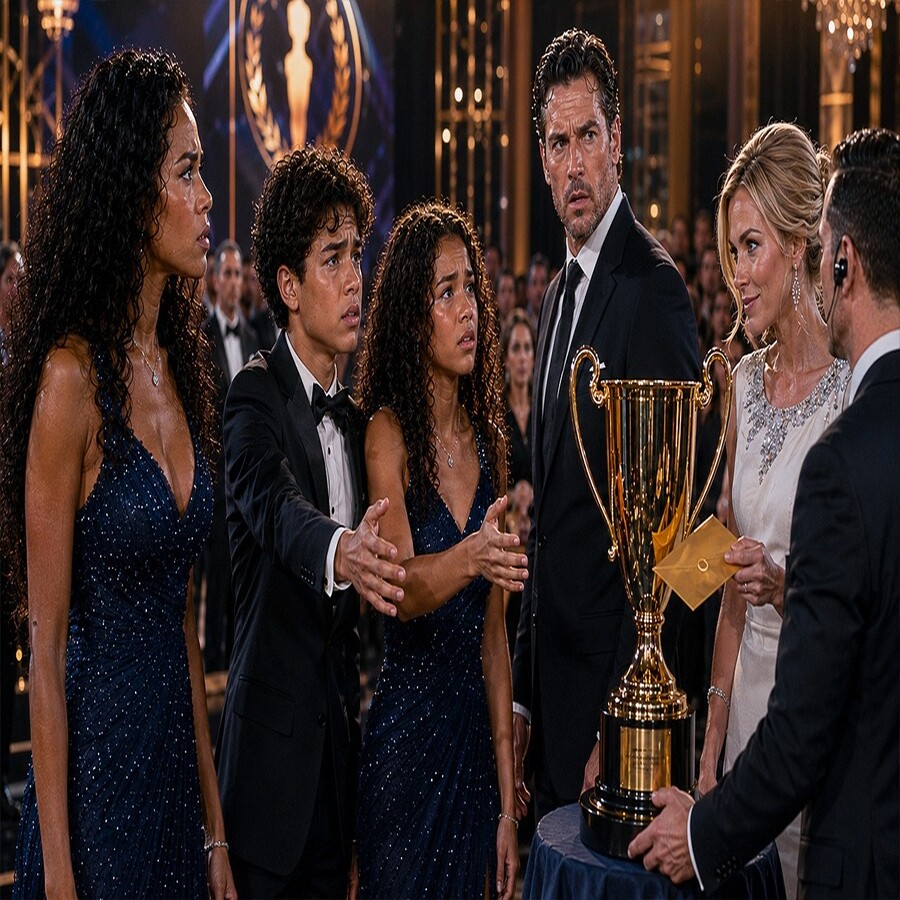
I covered my mouth to stifle a gasp. My phone automatically recording every word through my still-active conference call app.
“It’s done every year, Mrs. Wilson. But what if someone realizes?”
“Who would believe them over me? Just handle it like always. I have to go paste on a smile for these pathetic science fair rejects.”
The bathroom door swung open, and I saw her through the crack. Vanessa Wilson, immaculate in designer silk, admiring her reflection with a satisfied smile as she touched up her already perfect lipstick. What she did not see was me, her husband’s forgettable first wife, clutching the smoking gun evidence that would bring her carefully constructed world crashing down around her perfectly highlighted head.
Game on, Vanessa. My children may have your husband’s DNA, but they got my brains and my ability to fight dirty when necessary.
Three days later, the official rejection email arrived at 2:37 a.m., exactly as it had for the past three years.
“Dear Ms. Reed, we regret to inform you that your children’s submission to the Wilson Tech Youth Innovation Contest has been disqualified due to a conflict of interest policy violation. Please refer to section 4.3 of the contest guidelines for further information.”
I was not surprised, but my hands still trembled with rage. In our kitchen, Emma and Ethan’s solar energy prototype sat on the counter, the culmination of eight months of late nights, breakthrough calculations, and engineering that professors at MIT had called graduate-level work. My fourteen-year-old twins had poured their brilliant minds and broken hearts into this project, hoping yet again that their father might finally notice them.
But Jack Wilson, tech genius and billionaire CEO, would never see their work. Not as long as his wife kept ensuring their applications mysteriously vanished before reaching the judging committee’s final round.
I took a deep breath and clicked reply instead of deleting the email as I had done in previous years.
“To whom it may concern, thank you for your notification regarding my children’s disqualification. Could you please provide specific details about which conflict of interest policy their application violated? I’ve reviewed section 4.3 extensively and find no applicable violations. The twins have not listed their father’s name anywhere on their application materials for this precise reason.”
My finger hovered over send as I contemplated what I was starting. Then I thought of Emma’s face when she had shown me the energy conversion rates they had achieved. I thought of Ethan working until 2 a.m. to perfect their interface design. I thought about the college recommendation letters this win could secure. I hit send and closed my laptop.
The next morning, while making breakfast, my phone rang with an unfamiliar number.
“Hello, Ms. Reed. This is Marcus Jenkins from the Wilson Tech Innovation Contest administrative team about your email.”
I turned down the stove burner. “Yes, Mr. Jenkins. I’m still waiting for clarification on that disqualification.”
His voice lowered slightly. “Look, I’m not supposed to discuss this, but I feel terrible about what’s happening. Your kids’ project was incredible. Easily finalist material.”
“Then why was it disqualified?”
A hesitation. “Direct orders from above. Mrs. Wilson personally reviews all finalist candidates, and she specifically rejected your children’s application.”
“I can’t confirm that.”
“You don’t have to. I have evidence that she’s been systematically blocking their entries for years.”
The silence on the other end stretched so long I thought he had hung up.
“Mr. Jenkins, are you still there?”
“What kind of evidence?” he finally whispered.
“The recorded kind. The kind that would make fascinating listening for both the board of directors and my ex-husband.”
More silence. Then, “If hypothetically someone wanted to help make this right, what would that look like?”
I smiled for the first time in days. “Hypothetically, it would look like my children’s application being properly evaluated by the actual judges, not intercepted by a jealous second wife.”
“That would require bypassing established protocols.”
“Funny how protocols only seem to matter when they’re being used to harm my children.”
I heard him take a deep breath. “I need to think about this. If I help you and she finds out—”
“I understand the risk, Mr. Jenkins. But ask yourself, is this what Jack Wilson’s youth innovation program was created for? To let personal vendettas block brilliant young minds?”
Before he could answer, I heard footsteps on the stairs. “I need to go. My children are waking up. I’d appreciate your help making this right.”
I ended the call just as Emma walked into the kitchen, her dark hair still tangled from sleep, looking so much like her father it sometimes hurt to look at her.
“Who was that, Mom?” she asked, grabbing a glass for orange juice.
“Just a work call.” I forced a smile. “How did you sleep?”
“Fine, I guess.” But I could see the disappointment still etched in the slump of her shoulders.
Ethan appeared moments later, already dressed in his school clothes, his laptop tucked under his arm. “Did the rejection email come?”
I hesitated. “Yes.”
“We knew it would happen.” He grabbed an apple from the fruit bowl. “Three years in a row isn’t coincidence anymore.”
“I’m addressing it,” I said carefully.
Ethan looked up sharply. “What does that mean?”
“It means I’m not accepting this disqualification without an explanation.”
The twins exchanged a look, that silent communication they had perfected since they were toddlers.
“Mom, don’t,” Emma said softly. “We don’t need to beg Dad for validation.”
“This isn’t about your father. It’s about your work being judged fairly.” I set plates of scrambled eggs on the table. “Your project deserves recognition regardless of who your parents are.”
Ethan’s eyes narrowed. “You think Dad’s wife is behind this, don’t you?”
Sometimes I forgot how perceptive my children were, how little got past them. “I think something isn’t right, and I’m going to find out what.”
“Why bother?” Ethan pushed his eggs around his plate. “Dad made his choice five years ago. He chose his new family.”
“That doesn’t mean he gets to ignore your existence or your achievements.”
“Mom, can we just drop it?” Emma asked. “There are other competitions, ones where our last name doesn’t automatically disqualify us.”
My heart ached at the resignation in her voice. Five years of their father’s absence had taught them to expect disappointment, to lower their expectations, to settle.
“No,” I said firmly. “We’re not dropping it. Not this time.”
After they left for school, I called in sick to my engineering consulting job and opened my laptop. Phase one of my plan required research. I spent the morning combing through the Wilson Tech Innovation Contest guidelines, previous winners’ profiles, and judges’ backgrounds. By noon, I had confirmed what I suspected. Nothing in the written rules prevented the children of former employees from participating. In fact, several previous finalists had parents who had worked for Wilson Tech. The only difference: none of them were Jack Wilson’s biological children.
I was about to close my laptop when a new email arrived from Marcus Jenkins with a subject line that made my heart race. “Corrected contest results confidential.”
The attachment showed the actual judges’ scoring sheet for all entries. Before Vanessa’s review, Emma and Ethan’s project had received the highest preliminary scores in the contest’s history. The judge’s comments included phrases like “revolutionary approach,” “market-ready innovation,” and “unprecedented efficiency ratings.”
At the bottom was a personal note: “What’s right is right. I’ve anonymized their application and resubmitted it directly to the final judges, bypassing the administrative review. They’ll present on Friday at 3 p.m. Mrs. Wilson doesn’t attend the technical presentations. She only appears for the awards ceremony. This is all I can do.”
I stared at the screen, hardly daring to believe it. My children would get their chance after all. Now I just needed to get them there without revealing how I had arranged it or what I knew about their stepmother.
When the twins got home that afternoon, I casually mentioned checking my spam folder. “The weirdest thing happened,” I said, keeping my voice neutral. “I found a finalist notification for your project that was sent this morning. Apparently, there was a system error with your initial rejection.”
Emma froze halfway through pouring a glass of milk. “What?”
Ethan looked up from his homework. “That’s not possible. They don’t just reverse rejections.”
I showed them the forwarded email from the contest administration, actually from Marcus Jenkins’ personal account, carefully disguised. “Apparently, they do when they make mistakes. You’re presenting on Friday at 3 p.m.”
The twins stared at me with identical expressions of suspicion.
“Mom,” Emma said slowly. “What did you do?”
“Nothing. I just inquired about the disqualification, and they reviewed your application again.”
Ethan’s eyes narrowed. “Did you call Dad?”
“No.” At least that was not a lie. “This is about your project being judged on its merits, nothing else.”
“It’s weird,” Emma said.
“Don’t question good news,” I replied lightly. “Now, we need to practice your presentation.”
For the next two days, we prepared intensively. I watched them rehearse, fine-tune their prototype’s interface, and perfect their explanations of the technical innovations they had created. Their brilliance both amazed me and broke my heart. Jack was missing so much by allowing Vanessa to keep them at a distance.
Friday arrived with stomach-churning anticipation. I dropped the twins at Wilson Tech headquarters for their presentation, watching them wheel in their prototype with equal parts pride and anxiety. Would Vanessa somehow discover the subterfuge? Would she show up unexpectedly?
“You’ve got this,” I told them at the security checkpoint. “Your work speaks for itself.”
Emma hugged me tightly. “Thanks for fighting for us, Mom. Even if we don’t know exactly what you did.”
Ethan nodded. “Yeah, nobody goes to bat for us like you.”
I swallowed the lump in my throat. “That’s what mothers do. Text me when you’re done.”
After they disappeared into the elevator, I hesitated. I had planned to wait in the car, but something pulled me toward the executive floor, toward the office I had not visited since Jack asked for a divorce five years ago. Getting past reception was surprisingly easy. I still resembled my old ID photo enough that the new security guard barely glanced at me when I claimed to have a meeting with Jack.
The executive floor was quieter than I remembered, with more glass and chrome, fewer family photos. I was not entirely sure what I was doing there. Part of me wanted to confront Jack directly, to demand he acknowledge his children’s brilliance. Another part just wanted to see him, to remind myself that the man I had once loved was real, not the mythical figure my children described with equal parts longing and resentment.
As I rounded the corner toward his office, voices drifted from a conference room. One of them stopped me cold.
“The quarterly numbers look excellent, Jack. Asia-Pacific expansion is exceeding projections by twelve percent.”
Vanessa. I flattened myself against the wall, heart pounding. Through the partially open door, I could see them. Jack at the head of the table, still handsome at forty-three, silver just beginning to thread through his dark hair. Vanessa beside him, elegant in a navy dress, her hand possessively on his arm as she directed the meeting.
“The innovation contest is also generating significant positive press,” she continued. “I’ve selected a wonderful group of finalists, all very media-friendly with compelling personal stories.”
“What about that solar energy storage project?” someone asked. “The prototype with the forty-two percent efficiency improvement?”
I held my breath. Vanessa’s smile never faltered. “Unfortunately, that one didn’t meet all submission requirements. Technical disqualification.”
Jack frowned slightly. “That’s disappointing. The specs I saw were impressive.”
“There will be other impressive projects,” Vanessa said smoothly. “None with questionable development histories.”
“What was questionable about it?” Jack asked.
Vanessa touched his arm. “Darling, you pay me to handle these details so you can focus on the big picture. Trust me, this was the right call.”
I wanted to burst into the room to expose her lies right there. Instead, I pulled out my phone and sent a text to a number I rarely used. “Your wife has been systematically excluding your children from your innovation contest for three years. They’re presenting their solar project to the judges right now despite her efforts to block them again. Thought you should know.”
I hit send before I could reconsider, then quickly retreated toward the elevators. As I waited for the doors to open, my phone vibrated with a response.
“What are you talking about? What children?”
The text hit me like a physical blow. He could not even figure out which children I meant. Did he have so many secret families that he needed clarification?
I typed furiously: “Your children, Jack. Emma and Ethan. The twins. The ones you’ve barely seen since you left us for Vanessa five years ago. The ones who’ve entered your contest three years running, only to be mysteriously disqualified each time.”
The elevator arrived, but I barely noticed as another text came through. “Where are they presenting? Which room?”
“Innovation Lab 4, lower level. 3 p.m.”
As the elevator descended, another message appeared. “Does Vanessa know about this presentation?”
“No. And if you tell her before the judges see their project, I’ll never forgive you.”
The doors opened at the lobby, and I stepped out, unsure of my next move. Should I go to the presentation area? Wait in the car? My indecision was interrupted by a commotion near the security desk. Raised voices, hurried movements. Jack Wilson was striding across the lobby toward the restricted elevators, his expression thunderous, two security guards struggling to keep pace.
Vanessa followed, her perfect composure cracking as she called after him. “Jack, where are you going? We’re in the middle of the quarterly review.”
He ignored her, his badge already swiping through the elevator security panel. As the doors began to close, he looked up directly at me. Our eyes locked for the first time in over two years. In that moment, I saw something I had not expected: recognition, regret, and something that looked unsettlingly like grief.
Then the doors closed, and I was left facing Vanessa, who had finally noticed my presence. Her perfectly made-up face transformed from confusion to understanding to cold fury in the space of seconds.
“You,” she hissed, advancing toward me. “What have you done?”
I straightened my spine. “Nothing compared to what you’ve done. Three years of sabotaging children to protect your ego.”
“You have no idea what you’re talking about.”
“Don’t I? I have the recordings, Vanessa. Every word of your bathroom conversation with Marcus Jenkins. Every email ordering the twins’ disqualification.”
Her eyes widened fractionally before her mask of control slipped back into place. “No one will believe you over me. I’m Mrs. Jack Wilson now. I’m the mother of his children.”
“The children whose achievements you’ve been hiding from him. Let’s see which matters more when he finally sees what they’ve created.”
For a moment, genuine fear flashed across her perfect features. Then she smoothed her expression and adjusted her designer jacket. “This changes nothing. Jack made his choice years ago. He chose me, my world, my future. A few clever science projects won’t change that.”
“This isn’t about winning Jack back,” I said, surprised to realize I meant it. “This is about my children receiving the recognition they deserve. This is about you not being allowed to erase them from existence because they remind you of your husband’s past.”
Security guards approached us, clearly unsure how to handle the tension between their CEO’s current and former wives standing in a public standoff in the company lobby.
“Ma’am,” one began uncertainly. “Is everything fine?”
Vanessa cut him off. “Ms. Reed was just leaving, weren’t you?”
I smiled, feeling calmer than I had in years. “Actually, I’m headed to Innovation Lab 4. My children are finalists in today’s competition.”
The guard’s eyebrows rose. “The twins with the solar project? I helped them set up. Impressive kids.”
Vanessa’s complexion paled beneath her perfect makeup. “That project was disqualified.”
“Not according to the judging committee,” the guard replied, confused. “They’re presenting right now. Mr. Wilson just rushed down there himself.”
I could not help the small, satisfied smile that spread across my face. “If you’ll excuse me, I don’t want to miss their moment.”
As I walked away, Vanessa called after me, her voice tight with barely controlled fury. “This isn’t over, Amy. Not by a long shot.”
I did not bother turning around. “For once, Vanessa, we agree on something.”
Innovation Lab 4 was packed when I slipped in through the back door. The judges, five distinguished engineers and scientists, sat at a long table facing the presentation area. In the center of the room stood my children, confident and articulate, explaining their revolutionary approach to solar energy storage.
“The key innovation is our dual-phase conversion system,” Ethan was saying, manipulating a holographic display that showed their energy flow diagrams. “By implementing this algorithm, which my sister developed, we’ve achieved a forty-two percent improvement in retention compared to current market solutions.”
Emma picked up seamlessly. “More importantly, our solution uses readily available materials and existing manufacturing processes, meaning it could be implemented at scale without significant retooling costs.”
One of the judges leaned forward, clearly impressed. “The efficiency numbers are remarkable. Have they been independently verified?”
“Yes,” Emma replied confidently. “Professor Chin at MIT replicated our results in her energy systems lab. Her verification documentation is included in our supplementary materials.”
I scanned the room and found Jack standing in the corner, his expression unreadable as he watched his children present their innovation. Did he see himself in them? The same brilliant mind, the same intuitive understanding of technology, the same ability to communicate complex ideas simply? Did he regret missing the development of these extraordinary young minds?
The presentation concluded to enthusiastic questions from the judges. Emma and Ethan fielded each one with knowledge and poise that belied their fourteen years. When the last question was answered, the lead judge smiled broadly. “Thank you for an exceptional presentation. We’ll announce finalists at this evening’s reception.”
As the crowd began to disperse, Jack finally moved from his corner position. He approached the twins hesitantly, almost cautiously, like someone approaching rare and unpredictable creatures.
“That was,” he paused, seeming to search for adequate words, “extraordinary work.”
The twins froze, suddenly looking their age, uncertain, vulnerable, caught off guard by the father they barely knew.
“Thanks,” Ethan finally said, his voice carefully neutral.
Emma simply stared, her expression a complex mixture of longing, resentment, and pride.
“The energy conversion algorithm,” Jack continued. “It’s unlike anything I’ve seen. Did you develop that yourself?” He directed this question to Emma.
She nodded stiffly. “The basic concept came from Mom’s research papers on sustainable energy systems. I adapted her theoretical framework for our specific application.”
Jack’s eyes found mine across the room. “Your mother always was brilliant.”
An awkward silence fell. Five years of absence could not be bridged with a few moments of professional admiration.
“We should pack up,” Ethan said finally, turning away from Jack to disconnect their prototype. “We need to get this home safely.”
“Of course,” Jack replied, taking a step back. “I just wanted to say I’m impressed. Really impressed.”
As he walked toward me, I could see Vanessa hovering in the doorway, her expression tightly controlled, but fury radiating from her rigid posture.
“Amy,” Jack said quietly when he reached me. “We need to talk.”
“Now? You want to talk? After five years of canceled visits and missed birthdays?”
His jaw tightened. “This isn’t the place.”
“No, it’s not. My children just delivered the presentation of their lives. I’m going to help them pack up and take them for celebratory ice cream. Whatever you want to say can wait.”
“Did you know they were entering my contest every year for three years?”
“I mentioned it in at least a dozen emails you apparently never read.”
He had the grace to look ashamed. “I didn’t know they were being disqualified.”
“Convenient ignorance seems to be your specialty lately.”
Before he could respond, Vanessa appeared at his side, her hand sliding possessively through his arm. “Darling, the board members are waiting to continue our meeting.” Her voice was honey sweet, but her eyes, when they flicked to me, were glacial.
Jack gently disentangled himself. “The meeting will have to wait. I need to speak with Amy.”
“About what?” Vanessa’s smile remained fixed, but her fingers tightened on his sleeve.
“About our children. About why they’ve been systematically excluded from the innovation contest for three years.”
Vanessa’s laugh sounded forced. “That’s ridiculous. There’s no systematic anything. This year’s application had technical issues.”
“Stop lying, Vanessa.” Jack’s voice was quiet, but firm. “I’ve seen the judges’ original scoring sheets. I’ve heard the recording.”
Her perfect composure faltered. “What recording?”
I stepped closer. “The one where you ordered Marcus Jenkins to disqualify my children no matter how impressive their project was. The one where you said Jack could never know how brilliant his first family’s children are.”
Vanessa’s face drained of color. “That’s taken out of context.”
“Is it?” Jack asked. “Because it sounds exactly like what Amy’s been trying to tell me for years. That you’ve been deliberately keeping me from my children.”
“I’ve never kept you from them. You’re the one who never made time.”
“Because you scheduled over every planned visit. Because you convinced me they didn’t want to see me. Because you made sure every email from Amy went to my assistant instead of directly to me.”
Their argument was escalating, drawing attention from the few people still in the lab, including Emma and Ethan, who watched with wide eyes.
“Let’s take this somewhere private,” I suggested, nodding toward the twins.
Jack followed my gaze, seeing his children’s distress. He immediately lowered his voice. “You’re right. This isn’t the place.” He turned to Vanessa. “We’ll discuss this at home.”
“There’s nothing to discuss,” she hissed. “She’s manipulating you just like she always has.”
“The only person who’s been manipulating anyone is you,” I replied evenly. “And now Jack knows it.”
Vanessa’s carefully constructed mask finally cracked completely. “You think this changes anything? You think he’s going to leave me and play happy family with you and your science experiment twins?”
The cruel words hung in the air for a moment before Jack spoke, his voice colder than I had ever heard it. “That’s enough, Vanessa. Go back to the office. I’ll meet you there shortly.”
“Jack—”
“Now.”
She stared at him for a long moment, then turned on her heel and stalked out, her designer heels clicking angrily on the polished floor. Jack rubbed his hand over his face, suddenly looking tired.
“I’m sorry about that.”
“I’m not the one who deserves an apology,” I replied, nodding toward the twins, who were pretending not to watch us while they packed their equipment.
He nodded slowly. “You’re right.” He hesitated. “Would it be all right if I took all of you to dinner tonight? After the reception? I’d like to hear about their project properly.”
“That’s not up to me. It’s their decision.”
“Of course.” He straightened his shoulders. “Thank you for making sure I saw their presentation. I know you didn’t do it for me.”
“No,” I agreed. “I did it for them.”
He nodded again, then walked over to the twins. I could not hear what he said to them, but I saw their surprised expressions, the cautious way they nodded in response. When he left a few minutes later, they immediately turned to each other, engaging in their silent twin communication.
“Everything okay?” I asked, joining them at their workstation.
“Dad invited us to dinner,” Emma said, her voice carefully neutral.
“After the awards reception,” Ethan added. “We said maybe.”
“Whatever you decide is fine,” I assured them. “This is your moment, and you get to choose how to celebrate it.”
Emma frowned slightly. “What was all that with Vanessa? Did she really try to keep us out of the contest?”
I sighed, weighing how much to reveal. “Yes, she did. For reasons that have nothing to do with you and everything to do with her own insecurities.”
“Because we remind Dad of you?” Ethan asked perceptively.
“Something like that.”
“That’s messed up,” Emma declared. “We’ve worked so hard on this project.”
“I know, honey. And now the judges have seen it. That’s what matters.”
As we loaded the prototype into my car, Ethan asked the question I had been expecting. “Do you think we’ll win?”
“I think your project is the most innovative entry I’ve ever seen in this contest,” I replied honestly. “But I also think winning isn’t the most important outcome today.”
“What is?” Emma asked.
“Having your work recognized. Being judged fairly on your merits, not your last name.”
They seemed to accept this, though I could tell they were both processing the complicated dynamics they had witnessed. My brilliant, perceptive children rarely missed anything, which made Jack’s absence from their lives all the more painful. He had missed seeing them grow into these extraordinary young people.
As we drove home to prepare for the evening’s awards ceremony, I wondered if today would change anything. Would Jack finally recognize what he had been missing? Would he fight Vanessa’s influence to be part of his children’s lives? Or would he retreat back into his comfortable existence once the immediate drama subsided? I did not know. But for the first time in five years, I felt like my children might finally be seen for who they truly were. Not just as Jack Wilson’s abandoned first family, but as brilliant innovators in their own right.
The awards reception was held in Wilson Tech’s Grand Atrium, a soaring space of glass and sustainable bamboo that had been featured in architectural magazines. The twins had changed into their best clothes, Emma in a simple blue dress, Ethan in khakis and a button-down shirt. They looked so grown up it made my heart ache.
“Nervous?” I asked as we checked in at the reception desk.
“A little,” Emma admitted.
“Not about the contest,” Ethan clarified. “About dinner with Dad. If we go.”
“You don’t have to decide now,” I reminded them. “See how the evening unfolds.”
The atrium was filling with contestants, judges, Wilson Tech executives, and media representatives. Waiters circulated with hors d’oeuvres and sparkling cider for the underage participants. The atmosphere buzzed with excited conversation and anticipation.
I spotted Jack near the judges’ table, engaged in serious conversation with the head of the judging committee. Vanessa was nowhere to be seen. A small mercy.
“Reed family!” A voice called out. We turned to see Marcus Jenkins approaching, his expression both nervous and pleased. “Your project was the talk of the judges’ deliberations.”
“Really?” Emma perked up.
“Absolutely. I’ve never seen scores that high in preliminary judging.” He glanced around conspiratorially. “Between us, I think you’ve got this locked up.”
“Thanks for everything, Mr. Jenkins,” I said quietly.
He nodded, understanding my meaning. “Just doing my job. Making sure the best innovations get recognized.”
As he moved away to greet other contestants, I noticed Jack watching us from across the room. After a moment’s hesitation, he approached.
“You all look nice,” he said somewhat awkwardly. “Excited about the results?”
The twins nodded, their responses carefully measured. Five years of disappointment had taught them to protect themselves from this man who had once been the center of their world.
“I wanted to let you know,” Jack continued, “that I’ve reviewed the judging process personally. Every project was evaluated solely on technical merit and innovation potential.”
“Unlike previous years,” I could not help saying.
Jack’s jaw tightened slightly. “Yes. Unlike previous years.”
Before we could continue this fraught conversation, the lights dimmed slightly and a spotlight illuminated the small stage at the front of the atrium. The head judge, Dr. Eliza Chen, stepped to the microphone.
“Good evening, everyone. Welcome to the fifth annual Wilson Tech Youth Innovation Contest Awards Ceremony.”
Polite applause filled the space as she continued outlining the contest’s history and purpose. I tuned out the familiar preamble, watching my children instead. Their identical expressions of hopeful anxiety made them look younger, more vulnerable than the confident presenters from earlier today.
“This year’s entries were exceptionally strong,” Dr. Chen continued. “But one project stood out for its revolutionary approach, practical application potential, and technical excellence.”
The twins reached for each other’s hands, a gesture they had not shared since elementary school.
“The grand prize, including a one hundred thousand dollar development grant and mentorship program, goes to…” Dr. Chen paused dramatically. “Emma and Ethan Reed for their dual-phase solar energy storage system.”
The atrium erupted in applause. Emma’s hand flew to her mouth in shock while Ethan stood frozen, disbelief written across his face. I fought back tears as I nudged them toward the stage.
“Go on,” I whispered. “This is your moment.”
As they made their way to the podium, I caught sight of Jack watching them, undisguised pride on his face. It was the expression I had imagined for years, the father recognizing his children’s brilliance, their potential, their worth.
Dr. Chen handed each of them a crystal trophy and an oversized check. “Congratulations. Your innovation could genuinely change the renewable energy landscape. We’re excited to help you develop it further.”
Emma, always the more verbal twin, leaned into the microphone. “Thank you so much. We’ve been working on this concept for almost two years, building on our mother’s research in sustainable energy systems.”
Ethan stepped forward. “We want to thank our mom, Dr. Amy Reed, who taught us everything we know about engineering and perseverance.”
I brushed away tears as they continued their brief acceptance speech, thanking their science teachers, MIT’s Professor Chin, and the competition organizers. They did not mention Jack, a pointed omission that I knew he would notice.
As they returned to my side, flushed with victory and clutching their trophies, the crowd pressed around us with congratulations. University representatives, tech journalists, and other contestants all wanted to speak with the brilliant Reed twins. Through the crowd, I saw Jack watching from a distance, uncertainty on his face. For the first time, he seemed to realize he was an outsider to his children’s lives, a stranger witnessing their triumph rather than a parent sharing it.
When the crush of well-wishers finally subsided, he approached us again. “Congratulations,” he said sincerely. “Your victory was well deserved.”
“Thanks,” the twins replied in unison.
An awkward silence fell. Jack cleared his throat. “About dinner…”
Emma looked at Ethan. Their silent communication in full effect. After a moment, Ethan spoke. “We’re pretty tired. It’s been an intense day.”
Jack’s disappointment was visible, but he nodded. “Of course. Another time, perhaps.”
“Maybe,” Emma said, not committing. “We need to think about some things.”
“I understand.” Jack hesitated, then added, “I want you both to know how incredibly proud I am of what you’ve created. Your innovation, your brilliance, it’s extraordinary.”
“Mom says we get our technical abilities from both of you,” Ethan offered, the smallest olive branch.
Jack smiled slightly. “Your mother is being generous. The algorithmic thinking, that’s all her influence.” He glanced at me. “She was always the more innovative thinker between us.”
Before I could respond to this unexpected compliment, a commotion at the entrance drew everyone’s attention. Vanessa had arrived, looking stunning in an evening gown, but with an expression that could freeze fire.
Jack’s posture stiffened. “I should go.”
“I finished for him.” We understand.
He hesitated. “This isn’t over, Amy. The conversation about our children. It’s just beginning.”
“That’s up to Emma and Ethan,” I replied. “They’re old enough to decide what relationship they want with you.”
He nodded, acknowledging the truth of my statement. “Will you at least consider letting me see their project again? Maybe visit your lab space. I’d like to understand their work more thoroughly.”
“We’ll think about it,” Emma answered before I could. “But we’re pretty busy with school and other projects.”
“Of course.” Jack took a step back. “Congratulations again. You’ve earned every bit of this recognition.”
As he walked away to deal with his fuming wife, Emma turned to me. “Can we go home now? I want ice cream and pajamas and to not think about Dad or Vanessa for a while.”
“Absolutely,” I agreed, putting an arm around each of them. “This is your victory celebration. We’ll do it exactly how you want.”
As we headed toward the exit, Marcus Jenkins intercepted us briefly. “Just wanted to say congratulations one more time. And to let you know, I’ve been offered a position heading the new youth innovation division. Reporting directly to Mr. Wilson, bypassing Mrs. Wilson’s department entirely.”
I smiled. “Sounds like positive changes are happening.”
“They certainly are.” He glanced toward Jack, who was engaged in what appeared to be a tense conversation with Vanessa near the bar. “Some reckonings have been a long time coming.”
In the car, driving home with two exhausted but triumphant teenagers, I finally let myself process the day’s events. The twins had won the recognition they deserved. Vanessa’s sabotage had been exposed. Jack had seen, truly seen, the extraordinary children he had been missing.
“Do you think Dad will really try to be part of our lives now?” Ethan asked quietly from the back seat.
I glanced in the rearview mirror, seeing identical expressions of cautious hope on my children’s faces. “I don’t know,” I answered honestly. “I hope he tries. I hope he realizes what he’s been missing. But whatever he decides, it doesn’t diminish who you are or what you’ve accomplished.”
“We don’t need him,” Emma said firmly. “We’ve done fine without him.”
“True,” I agreed. “But it’s okay to want him in your lives. It’s okay to give him a chance to do better if that’s what you want.”
They fell silent, processing this. Finally, Ethan spoke again. “I think I’d like to show him our next project, the one we’re designing for the MIT competition.”
Emma nodded slowly. “Me too. But he has to make the effort. We’re not chasing him anymore.”
“That’s fair,” I said. “Completely fair.”
As we pulled into our driveway, my phone pinged with a text message from Jack. “They were amazing today. You’ve done an incredible job raising them. I’d like to try to be part of their lives if they’ll let me. No pressure, their timeline, but I’m ready to be the father they deserve. Thank you for making sure I didn’t miss this moment.”
I showed the message to the twins, letting them decide how to respond. After a moment of silent consultation, Emma typed a reply. “We won because our project was the best, not because of anything you did. If you want to know us, you need to make the effort consistently, starting with understanding our work. Mom says you can come see our lab space on Saturday at 2 p.m. Don’t be late.”
She hit send, then looked up at me. “Is that okay?”
I pulled my brilliant, brave children into a hug. “It’s perfect. Exactly right.”
Whatever happened next, whatever Jack decided to do with this opportunity, one thing was certain. My children would never again be invisible. They would never again be excluded or diminished or denied recognition because of someone else’s insecurities. Vanessa’s mistake had not just exposed her sabotage. It had freed Emma and Ethan from the shadow of their father’s absence. They had proven their worth on the world stage. They had won on their own merits. And that victory was sweeter than any revenge could ever be.
The Saturday after the competition dawned bright and clear. I had spent the morning stress-cleaning our home laboratory, a converted garage space filled with equipment I had collected over years of engineering work, supplemented by items purchased with my faculty research grants from the local university. The twins were unusually quiet as they recalibrated their solar prototype, both pretending this was just another Saturday morning in the lab rather than the first time their father would see the space where they developed their award-winning innovation.
“Mom, do you think we should explain the algorithm development process or just focus on the hardware components?” Emma asked, not looking up from her computer screen.
“Be yourselves,” I advised, straightening a row of technical journals for the third time. “Explain whatever you’re most passionate about. Your father is technically proficient enough to follow along.”
Ethan snorted. “If he even shows up.”
The doorbell rang at precisely 2 p.m.
“He’s on time,” I said, trying to keep surprise from my voice. “That’s encouraging.”
Both twins froze momentarily, then carefully arranged their expressions into masks of casual indifference, a defense mechanism that broke my heart. They had learned to protect themselves from disappointment where Jack was concerned.
“I’ll get it,” I said.
Jack stood on our porch holding a large box and looking uncharacteristically nervous. Gone was the polished CEO in tailored suits. Today, he wore jeans and a casual button-down shirt that reminded me of our early days together.
“You’re punctual,” I remarked, stepping aside to let him in.
“I didn’t want to start off by disappointing them again.” His voice carried a weight of self-awareness I had not expected.
I led him through the house toward the converted garage. “They’re in the lab. Try to remember this isn’t a corporate acquisition meeting. They’re your children, not a technology demonstration.”
He nodded, absorbing the gentle rebuke. “I know. I’m here to listen, not evaluate.”
As we walked, his eyes caught on the hallway wall covered with framed achievements, science fair ribbons, academic awards, newspaper clippings of the twins’ previous innovations. He slowed, studying a particular photograph of Emma receiving a young engineers award at twelve.
“I missed so much,” he said quietly.
“Yes, you did.”
“I want to fix that, Amy.”
“Some things can’t be fixed, Jack. They can only be moved forward from.”
He nodded again, accepting this truth without argument. Another surprising change. When we entered the lab, the twins looked up with carefully neutral expressions. The space fell into awkward silence.
“Hi,” Jack said finally. “Thank you for letting me see your workspace.”
Emma nodded stiffly. Ethan muttered something that might have been “whatever.”
Jack set the large box he had been carrying on a clear section of worktable. “I brought something that might be useful for your next design iteration.”
The twins exchanged their silent communication glance but did not move toward the box.
“It’s the latest Wilson Tech quantum processing module,” Jack continued. “Pre-release. It could help with your algorithmic calculations, make the system even more efficient.”
“We don’t need your fancy tech,” Ethan said, a defensive edge to his voice. “Our system works fine with standard processors.”
“I’m sure it does,” Jack replied carefully. “This isn’t a criticism of your design, just an option if you want it.”
Emma’s curiosity finally overcame her reserve. “The QP7 module? That’s not scheduled for release until next year.”
Jack smiled slightly. “Being the CEO has some advantages. I thought you might want to experiment with it.”
Emma approached the box, her technical interest temporarily overriding her emotional guardedness. “Does it really achieve the four hundred percent processing improvement the development team has been claiming?”
“Four hundred and thirty-six percent in our latest tests,” Jack replied. “But we’re still working on heat management issues for sustained operations.”
Just like that, they were off, diving into technical specifications and performance parameters, speaking a shared language of engineering that flowed naturally between them. Ethan held out longer but eventually joined the conversation, unable to resist the pull of cutting-edge technology discussion.
I watched from the periphery, feeling a complicated mixture of emotions. The easy technical rapport between Jack and the twins highlighted how much genetic coding they shared: thought patterns, problem-solving approaches, even certain gestures as they explained concepts. It was like watching three variations of the same brilliant mind at work.
Yet underneath this surface connection lay years of absence and hurt. The twins were engaging with Jack as fellow engineers, not as their long-absent father. They carefully avoided personal topics, steering conversation back to technical matters whenever Jack attempted to venture into their lives beyond the lab.
After nearly two hours of this dance, Jack finally addressed the elephant in the room. “I know I’ve been an absent father,” he said during a natural pause in the technical discussion. “I know I’ve missed important moments in your lives. I’m not asking for immediate forgiveness or a reset button. I just want a chance to be part of your lives moving forward.”
The twins froze, their technical animation replaced by guarded expressions.
“Why now?” Ethan asked bluntly. “Because we won your contest? Because we’re suddenly worth your attention?”
Jack flinched but did not dodge the question. “I deserve that. And yes, seeing your brilliant work was a wake-up call. But it’s not just about your technical abilities. It’s about realizing what I’ve thrown away by not being present in your lives.”
“We’ve been entering your contest for three years,” Emma pointed out. “You could have had this realization sooner if Vanessa hadn’t been blocking our applications.”
Jack’s expression darkened. “I know. And that situation has been addressed.”
“Addressed how?” I asked, speaking up for the first time since the technical discussion began.
Jack hesitated, glancing at the twins. “Vanessa and I are re-evaluating our relationship. Her deliberate actions to keep me separated from my children crossed a line I can’t ignore.”
“Are you getting divorced?” Ethan asked with typical teenage bluntness.
“That’s complicated. We’re currently living separately while we work through things.” He looked directly at the twins. “But my commitment to rebuilding a relationship with you two is not dependent on what happens with Vanessa. That’s a separate issue.”
“What if she tries to interfere again?” Emma asked perceptively.
“She won’t,” Jack said with quiet finality. “That’s non-negotiable.”
Another awkward silence fell. The twins exchanged another look, their silent twin speak in full effect.
“We have robotics club on Tuesdays and Thursdays,” Emma finally said. “And we’re starting the MIT mentorship program for our next project on Mondays, but we’re usually here in the lab on Saturday afternoons.”
Ethan added cautiously, “If you wanted to, you know, come by again.”
The careful olive branch brought a smile to Jack’s face that transformed him from corporate titan to the young father I had once known. “I’d like that very much,” he said simply.
As they returned to discussing technical modifications to the solar prototype, I slipped out to make coffee, needing a moment alone to process the surreal situation. Jack Wilson, the man who had walked away from our family five years ago, was now sitting in our home lab discussing engineering principles with the children he had barely seen since leaving.
In the kitchen, I leaned against the counter and took a deep breath. This was not how I had imagined things unfolding. I had expected Jack to make a token appearance and then retreat back to his perfect life with Vanessa. I had not expected genuine effort or what appeared to be real remorse.
I was startled from my thoughts by my phone buzzing with a text from an unknown number. But the content immediately identified the sender. “I hope you’re satisfied with yourself. You’ve systematically destroyed my marriage while pretending to be the victim. Jack may be temporarily blinded by guilt, but this little family reunion fantasy won’t last. Enjoy it while you can.”
Vanessa. I stared at the message, debating whether to respond or simply block the number. Before I could decide, another text arrived. “We both know Jack will get bored playing weekend dad once the novelty wears off. He left you once. He’ll leave them again.”
The words hit a vulnerable spot. My deepest fear about Jack’s sudden reappearance in the twins’ lives. What if Vanessa was right? What if this was temporary interest that would fade, leaving Emma and Ethan heartbroken all over again?
I was still staring at the messages when Jack entered the kitchen. “Everything okay?” he asked, noticing my expression.
I hesitated, then handed him my phone. “Your wife is reaching out.”
His face hardened as he read the messages. “I’m sorry about this. I’ll handle it.”
“Will you? Because she’s not entirely wrong, Jack. You did leave once. What guarantee do the twins have that you won’t disappear again when this gets difficult or inconvenient?”
He returned my phone, his expression serious. “No guarantees. Only actions consistently over time. That’s all I can offer.”
“They deserve better than that.”
“They do. Which is why I need to prove myself worthy of their trust again.” He paused. “I’ve made a lot of mistakes, Amy. Walking away from our family was the biggest. I can’t undo that, but I can try to be better going forward.”
“For how long? Until Vanessa forgives you and welcomes you back? Until some exciting new acquisition demands your full attention?”
“Until—” He stopped, then continued carefully. “I’ve restructured my entire work schedule. Delegated two major divisions. Cancelled the Asia expansion trip. Pushed back product launches. For the first time in my career, Wilson Tech is not my top priority.”
I stared at him, genuinely shocked. Jack Wilson’s identity had always been inextricably linked to his company. Even during our marriage, it had been his primary focus.
“That’s significant,” I managed.
“It should have happened years ago.” He ran a hand through his hair, a familiar gesture from our past. “I missed the point of success, Amy. What good is building a tech empire if I don’t know my own children? If they don’t even want me in their lives?”
Before I could respond, Emma appeared in the doorway. “Mom, Dad. We’ve got the simulation running with the new parameters.”
“Dad.” She called him Dad, not Jack. The simple word seemed to hit Jack like a physical force. His eyes widened slightly, and I could see him fighting to maintain composure.
“We’ll be right there,” I said, giving him a moment to collect himself.
As Emma disappeared back toward the lab, Jack exhaled slowly. “I don’t deserve that. Not yet.”
“No,” I agreed. “You don’t. But they’re giving you a chance anyway. Don’t waste it.”
The rest of the afternoon passed in a strange new rhythm. Technical discussions interspersed with cautious personal revelations. I watched the twins gradually lower their defensive walls, allowing Jack glimpses of their personalities beyond their scientific brilliance. By the time he left, promising to return the following Saturday, something had shifted. Not forgiveness exactly, but the beginning of possibility.
“What do you think?” I asked the twins after his departure.
They exchanged their silent look. “He seemed different,” Emma offered. “More like a real person and less like a corporate robot.”
“The quantum processor is seriously advanced tech,” Ethan added pragmatically. “And his suggestions about our cooling system redesign were actually helpful.”
“But do you want him to come back next Saturday?” I pressed gently.
Another twin exchange. “Yeah,” they said simultaneously.
“We’re not like expecting anything,” Ethan clarified quickly.
“We just think the technical input could be valuable,” Emma added.
I smiled slightly at their transparent attempt to protect themselves. “It’s okay to want a relationship with your father. It’s also okay to be cautious about it.”
“What about you, Mom?” Emma asked perceptively. “Are you okay with him being around again?”
The question caught me off guard. “This isn’t about me. It’s about what’s best for you.”
“But you have feelings about it too,” Ethan pointed out.
Sometimes my brilliant children were too observant for their own good. “I’m cautiously optimistic,” I admitted. “But also realistic. Your father has a complicated life and a history of prioritizing his company over family. I want him to prove himself before I fully trust his commitment to you.”
“And what about Vanessa?” Emma asked. “She really hates us, doesn’t she?”
“She doesn’t hate you,” I said carefully. “She feels threatened by you, by what you represent. That’s her problem, not yours.”
“Will she try to keep Dad away from us again?” Ethan’s voice held a vulnerability that tugged at my heart.
“I don’t know,” I answered honestly. “But if she does, we’ll handle it together.”
That night, after the twins went to bed, I sat in my home office reviewing emails from universities and tech companies suddenly interested in my children’s innovation. The contest win had opened doors that previously seemed firmly closed. MIT’s formal mentorship program. Stanford’s early admission interest. Even preliminary patent discussions with clean energy investors.
My phone buzzed with a text from Jack. “Thank you for today. I know you could have blocked this entirely, and you would have been justified in doing so. I won’t waste this opportunity.”
I stared at the message, uncertain how to respond. Part of me, the part still hurt by his abandonment, wanted to remain coldly professional. Another part remembered the genuine connection I had witnessed today between Jack and our children.
Finally, I typed: “They’re giving you a chance. Don’t disappoint them again.”
His response came immediately: “I won’t. Whatever it takes.”
I set my phone aside, wondering if people really could change. If the Jack Wilson who had walked away from our family five years ago could truly transform into someone who prioritized relationships over achievement and status. I was not sure, but for my children’s sake, I hoped it was possible.
The following Saturday, Jack arrived at 1:45 p.m., early, with specialized components the twins had mentioned needing and a tentative invitation to tour Wilson Tech’s advanced research labs whenever they were ready.
This pattern continued for three consecutive weeks. Jack appearing reliably, engaging genuinely, slowly earning incremental trust from his children. The technical conversations gradually expanded to include personal topics: the twins’ other interests, their academic achievements, their future plans. Jack listened more than he spoke, absorbing the details of their lives he had missed.
I maintained a careful distance, providing supervision without interference, protecting my children while allowing this fragile new relationship to develop at its own pace. Each weekend, I watched for signs that Jack’s interest was waning, that Vanessa’s prediction about temporary novelty might be coming true. Instead, I saw him becoming more committed, more integrated into the twins’ routines. He began attending their school events, Ethan’s robotics competitions, Emma’s engineering presentations. He hired tutors to help him understand their more specialized interests so he could engage more meaningfully in their discussions.
One month after his first visit to our lab, Jack arrived looking unusually serious.
“Is everything okay?” I asked as I led him toward the garage.
“I need to talk to all of you,” he replied. “About some developments with Vanessa.”
My stomach tightened with apprehension. Had she convinced him to return? Was he about to retreat from this cautious new relationship with the twins?
In the lab, Emma and Ethan immediately sensed the shift in atmosphere. “What’s wrong?” Emma asked, always the more emotionally perceptive twin.
Jack took a deep breath. “Vanessa has filed for divorce.”
The statement hung in the air for a moment before Ethan asked bluntly. “Is that because of us?”
“No,” Jack said firmly. “It’s because of fundamental differences in values and trust that can’t be reconciled. The situation with you both exposed those differences, but they existed long before.”
“Is she still trying to keep you away from us?” Emma’s question cut straight to her core fear.
“She tried,” Jack admitted. “She presented me with an ultimatum last night. Either I stopped these weekend visits or she files for divorce.”
“And you chose us.” Ethan sounded disbelieving.
“There was no choice to make,” Jack replied simply. “I’ve already missed five years of your lives. I won’t miss anymore.”
The twins exchanged their silent communication look, processing this development.
“What does this mean going forward?” I asked, concerned about potential fallout.
“It means things might get complicated for a while,” Jack acknowledged. “Vanessa is not taking this well. She’s threatening to make the divorce as difficult and public as possible.”
“Will that affect your company?” Emma asked perceptively.
Jack smiled slightly. “Worried about Wilson Tech stock prices?”
“Worried about you,” she clarified. The admission clearly costing her something.
His expression softened. “The company will be fine. I’ve navigated bigger challenges. And some things matter more than corporate stability.”
“Like what?” Ethan challenged, still not fully trusting.
“Like being there when my son competes in the state robotics championship next weekend,” Jack answered. “Like helping my daughter refine her algorithm for the MIT competition. Like making up for lost time with the two most important people in my life.”
The simple sincerity of his statement seemed to catch the twins off guard. They looked at each other, then back at their father.
“You’re really serious about this,” Emma said slowly. “About us?”
“More serious than I’ve been about anything in my life,” Jack replied.
Something shifted in that moment. A subtle but profound change in the emotional atmosphere. The twins did not suddenly forgive five years of absence, but a barrier seemed to dissolve, allowing for genuine possibility where before there had only been cautious tolerance.
“Well,” Ethan said pragmatically, breaking the emotional tension, “if you’re going to be around more, you might as well make yourself useful. We need help reconfiguring the backup power system for our MIT project.”
Jack smiled, understanding the olive branch for what it was. “Let me see what you’ve got so far.”
As they dove into technical discussion, I slipped outside, needing a moment to process this development. Jack and Vanessa divorcing changed the dynamic significantly. His commitment to the twins was no longer theoretical. He had chosen them over his marriage. That carried weight.
I was lost in thought when Jack joined me on the porch an hour later. “The twins are running some simulations,” he explained. “Thought I’d check in with you. About how you’re feeling about all this. About whether you have concerns I should be aware of. About where we go from here.”
I studied his face, the face I had once known better than my own. “I’m cautiously optimistic. The twins seem to be lowering their defenses. You’ve been consistent. These are good signs.”
“But?” he prompted, hearing the reservation in my voice.
“But divorces get messy, Jack. Especially high-profile ones with angry spouses. I won’t let the twins be collateral damage in a public battle between you and Vanessa.”
“I agree completely. I’m doing everything possible to keep them out of it.”
“Can you? If Vanessa is determined to make this painful—”
He sighed. “I’ve offered her a very generous settlement. More than generous. If she’s rational, she’ll take it and move on.”
“Big if,” I observed. “She seemed pretty invested in being Mrs. Jack Wilson.”
“She was,” he acknowledged. “But ultimately, we wanted different things.”
“What did she want?”
“The status. The social position. The perfect corporate wife image. What I thought I wanted five years ago.”
“And what do you want now?”
He looked toward the garage where our children worked. “A second chance to be the father they deserve. A life with meaning beyond quarterly reports and product launches.”
The sincerity in his voice was difficult to dismiss. This was not the Jack Wilson who had walked away from our marriage, the man obsessed with legacy and corporate achievement. This was someone different. Or perhaps someone rediscovered.
“For what it’s worth,” he added quietly, “I’ve regretted leaving our family every day since I did it.”
I stiffened. “Jack, if this is leading toward—”
“It’s not,” he interrupted. “I’m not asking for anything beyond co-parenting. I know I destroyed what we had. I know you’ve built a life without me. I just wanted you to know that I recognize what I threw away. And I’m genuinely sorry for the pain I caused you and the twins.”
The simple apology, delivered without expectations or qualifications, caught me off guard. In five years of separation and divorce, Jack had never directly acknowledged the emotional damage his departure had caused.
“Thank you for saying that,” I managed after a moment.
He nodded, accepting that some wounds could be acknowledged but never fully healed. “I should get back to the lab. Ethan’s probably wondering where I disappeared to.”
As he turned to go, I found myself asking, “Why did you really leave, Jack? Was it really just about corporate compatibility and social status?”
He paused, considering the question with unexpected thoughtfulness. “I think I was terrified of failing at the one thing that truly mattered. Being a good husband and father seemed so much harder than building a successful company. And when things got challenging between us, when we started growing in different directions, running away seemed easier than doing the hard work of growing together.”
The honest self-assessment surprised me. “That’s insightful.”
“Five years and a good therapist will do that,” he said with a sad smile. “Too little, too late. I know.”
Before I could respond, my phone rang. The twins’ school. I answered quickly, my parental instincts immediately on alert.
“Ms. Reed, this is Principal Winters. There’s been an incident involving Emma and Ethan. They’re okay, but I need you to come to the school right away.”
“What kind of incident?” I asked, fear tightening my chest.
“I’d rather discuss it in person. But again, they’re not hurt.”
“I’ll be right there.” I ended the call, already heading for my car keys.
“What’s happened?” Jack asked, concern evident in his voice.
“Something at school. The principal wants me there immediately.”
“I’ll drive,” he offered.
I hesitated only briefly before nodding. Whatever was happening, getting there quickly was the priority. During the tense drive to Wilson Academy, the irony of the name never escaped me. Jack had endowed the elite STEM-focused private school years before our divorce. Jack maintained a calm exterior that I found oddly reassuring.
“It’s probably nothing serious,” he said as we navigated through traffic. “If they were hurt, the school would have said so immediately.”
“Unless they’re trying not to panic us,” I countered. Worst-case scenarios flooding my mind. Emma was working on that chemical battery experiment. What if there was a lab accident?
“The school’s safety protocols are excellent. And both of them are meticulous about lab safety.”
I glanced at him, surprised by his confidence. “How would you know their lab habits?”
“Emma mentioned receiving perfect scores on all safety protocol evaluations when she was showing me her chemistry project documentation. And Ethan described their home lab safety procedures in detail when we were discussing proper ventilation for the MIT prototype.”
The fact that he had retained these casual details about our children, that he had been paying such close attention to their off-hand comments, struck me forcefully. He was not just going through the motions of reconnection. He was genuinely investing in knowing them.
We arrived at Wilson Academy to find the normally calm campus buzzing with unusual activity. A security guard directed us to the administrative building where we were immediately ushered into Principal Winters’ office. The twins sat in chairs facing her desk, both looking angry but unharmed. Relief flooded through me at the sight of them physically intact.
“Ms. Reed, Mr. Wilson,” Principal Winters greeted us, looking unusually flustered. “Thank you for coming so quickly.”
“What’s happened?” I asked, moving immediately to the twins.
“There was an altercation in the advanced engineering lab,” Principal Winters explained carefully.
“Altercation,” Jack repeated. “What kind of altercation?”
Emma and Ethan exchanged their silent twin communication before Emma spoke. “Jason Prescott sabotaged our MIT competition project and then accused us of cheating in the Wilson Tech contest.”
“He deleted our backup files too,” Ethan added bitterly. “Three months of work gone.”
Principal Winters cleared her throat. “While that may be true, the physical confrontation that followed is unacceptable at Wilson Academy.”
“Physical confrontation?” I echoed, looking between the twins in shock.
Ethan had the grace to look slightly ashamed. “I might have pushed him after he called Mom a gold digger who slept her way into Stanford’s engineering program.”
Jack’s expression darkened dangerously. “Who is this Jason Prescott?”
“Vanessa’s nephew,” Emma said quietly.
The pieces clicked into place instantly. “Vanessa put him up to this,” I said, the certainty cold in my stomach. “This was retaliation.”
Principal Winters looked uncomfortable. “We have no evidence of adult involvement, Ms. Reed. Jason claims the twins have been receiving unfair advantages because of their relationship to Mr. Wilson.”
“That’s ridiculous,” Jack said flatly. “Their contest entry was judged anonymously by an independent committee.”
“Nevertheless, the situation has escalated beyond a simple academic dispute. Jason’s parents are demanding disciplinary action for the physical assault.”
“And what about the deliberate sabotage of my children’s work?” I challenged. “What about the verbal harassment?”
“We’re investigating those allegations as well.”
Jack straightened to his full height, the powerful CEO suddenly evident beneath the casual father persona. “Principal Winters, I funded this school’s engineering program with the explicit understanding that students would be evaluated on merit alone. If my children are being targeted because of personal vendettas—”
“Dad.” Emma interrupted, the word still new and tentative on her lips. “We don’t need special treatment.”
“This isn’t about special treatment,” Jack replied, his voice softening as he addressed her. “This is about basic fairness. If someone deliberately destroyed your work and verbally attacked your family, that deserves consequences.”
“We’ll handle this according to school protocols,” Principal Winters assured us quickly, clearly uncomfortable with Jack’s implied threat to the school’s funding. “For now, I’ve suspended all parties from the engineering lab pending our investigation.”
“Suspended?” Ethan protested. “But the MIT deadline is in three weeks.”
“I understand, but we need to determine exactly what happened before allowing students back into the lab environment.”
The twins looked devastated. After all their hard work, after finally beginning to build something positive with their father, Vanessa had found a way to strike at them where it would hurt most. Jack’s expression was controlled but determined.
“I’d like to speak with the Prescotts.”
“I don’t think that’s a good idea right now,” I cautioned. “They’re making accusations about my children. They’re threatening their academic standing. I’m not going to stand by and let that happen.”
“Jack, escalating this won’t help. We need to follow proper procedures.”
He looked at me for a long moment, then nodded. “You’re right. But I’m not letting this go either.” He turned to Principal Winters. “I want a full investigation, including security footage from the lab. If Jason Prescott deliberately sabotaged their project, he should face appropriate consequences.”
“Of course, Mr. Wilson,” she agreed quickly.
As we left the office with the twins, Jack pulled out his phone. “I’m calling our home lab team. They can help you reconstruct your project data.”
“We don’t have backups of everything,” Ethan said dejectedly. “Some of the simulation results took weeks to generate.”
“We’ll figure it out,” Jack promised. “This is a setback, not a defeat.”
In the parking lot, standing beside our cars, the reality of the situation sank in. Vanessa was escalating her attempts to interfere, moving beyond corporate sabotage to directly attacking the twins through her family connections.
“This is just the beginning, isn’t it?” I said quietly to Jack while the twins waited a few steps away. “She’s going to keep coming after them to hurt you.”
“Not for long,” he replied, his voice carrying a steely determination I remembered from our early days together. “I’ve been patient because I hoped she would accept the situation gracefully. That patience has just run out.”
“Jack, don’t do anything rash.”
“I’m going to protect our children, Amy. Whatever it takes.”
The intensity in his voice was both reassuring and concerning. The Jack Wilson I had known during our marriage had been relentless when protecting what he valued. It seemed that protective instinct had found a new focus in Emma and Ethan.
“We’ll get through this,” I told the twins as we prepared to drive home. “Your project isn’t lost. We’ll rebuild it.”
“Can Dad really help?” Emma asked. The question revealing how quickly she had come to believe in Jack’s ability to fix difficult situations.
“Your father built a technology empire from a dorm room startup,” I reminded her. “I think he can handle data recovery.”
Jack smiled slightly. “Your mother was there for the dorm room days. She debugged the original Wilson Tech security algorithm when everyone else said it was unsolvable.”
The twins looked at me with new interest. “You never told us that,” Ethan said accusingly.
“Ancient history,” I deflected, uncomfortable with Jack highlighting my contributions to his early success.
“Not ancient,” Jack corrected. “Foundational. Wilson Tech’s core security architecture still uses elements of your mother’s original code.”
I felt my cheeks warm under the unexpected praise. “We should get home. You two have a project to rebuild.”
As I drove the twins home, my mind raced with contingency plans. If Vanessa was willing to use her nephew to attack my children at school, what might she do next? How far would she go in her vendetta? Jack followed us home in his car, already making calls to his technical team about data recovery options. By the time we reached our house, he had arranged for specialized equipment to be delivered and a data recovery expert to consult remotely.
The rest of the weekend became an intensive rebuilding effort. Jack practically moved into our home lab, working alongside the twins to reconstruct their sabotaged project. I provided technical support where needed, but mostly observed the evolving dynamic between father and children. Under pressure, their natural similarities emerged even more clearly: the focused problem-solving approach, the ability to work for hours without breaks, the creative thinking that allowed them to see solutions where others saw only obstacles. They functioned as a seamless team, anticipating each other’s needs and building on each other’s ideas in a way that seemed almost genetic.
By Sunday evening, they had recovered approximately seventy percent of the lost data and developed a streamlined approach to regenerate the rest within a week.
“We might actually make the MIT deadline after all,” Emma said, hope replacing the defeated expression she had worn since the school incident.
“We will definitely make the deadline,” Jack corrected. “And your project will be stronger than before.”
“How can you be sure?” Ethan asked, exhaustion evident in his voice after two straight days of intensive work.
“Because you’ve learned from this setback,” Jack replied. “You’ve identified vulnerabilities in your backup systems. You’ve streamlined your testing protocols. And you’ve proven you can recover from deliberate sabotage. Those are valuable lessons for any innovator.”
His confidence seemed to reinvigorate both twins. They straightened, looking at their reconstructed work with renewed determination. As Jack prepared to leave that evening, he pulled me aside.
“I need to handle some things at the office tomorrow, but I’ve arranged for the data recovery team to continue working remotely with the twins. Will you call me if there are any developments with the school situation?”
“Of course,” I agreed, surprised by how naturally we had fallen back into co-parenting coordination over the past two days of crisis.
“What are you going to do about Vanessa?”
His expression hardened slightly. “Address the situation directly. She’s crossed a line targeting the twins at school.”
“Be careful, Jack. She’s clearly willing to fight dirty.”
“So am I. When necessary.” He hesitated. “Thank you, Amy.”
“For what?”
“For not shutting me out during this. For letting me help them. For giving me the chance to be their father again, even though I don’t deserve it.”
The simple sincerity in his voice caught me off guard. “They’re your children too. They need you right now.”
He nodded, the weight of that responsibility visible in his expression. “I won’t let them down. Not again.”
As I watched him drive away, I found myself in unfamiliar emotional territory. For five years, Jack Wilson had been the villain in our story. The man who abandoned his family for status and a younger wife. Now he was becoming something else entirely. A father fighting to protect his children. A man acknowledging his mistakes and trying to make amends. I was not ready to forgive the past. But I was beginning to believe in the possibility of a better future for my children with their father in it.
The following morning, as I was helping the twins prepare for school, Principal Winters had confirmed they could attend regular classes while suspended from the engineering lab, my phone rang with Jack’s number.
“Amy, have you seen the news?”
“No, we’re just getting ready for school. What’s happened?”
“Check Wilson Tech stock price. And maybe keep the twins home today.”
Alarmed, I opened my laptop while still on the phone. Wilson Tech stock had fallen nearly twenty percent in pre-market trading. The financial news headlines explained why: “Wilson Tech CEO Faces Allegations of Innovation Theft from Ex-Wife.” “Vanessa Wilson Claims Husband’s Company Built on Stolen Intellectual Property.” “Divorce Battle Threatens Tech Giant Future as Wilson’s Ex-Wife Seeks Patent Rights.”
“What the hell?” I breathed, scanning the articles.
According to the reports, Vanessa had held an impromptu press conference, claiming that Wilson Tech’s core security architecture, the one Jack had mentioned I helped create during our college days, had been stolen from my original work without proper attribution or compensation.
“She’s using our past to attack your present,” I said. The strategy becoming clear. “She’s trying to create a corporate crisis to force you to back down about the twins.”
“It won’t work,” Jack replied, his voice steady despite the corporate chaos he must be facing. “But it will get ugly before it gets better. The board is already calling for emergency meetings.”
“What do you need from me?”
“A statement refuting her claims would help, but I don’t want to drag you into this if you don’t want to be involved.”
I thought quickly. “The twins’ project is more important right now. If I make a public statement, the media will be camped outside our house by noon. They need stability, not a media circus.”
“I understand. I’ll handle it from my end.”
“What are you going to tell the board?”
“The truth. That you and I collaborated on the original security architecture while we were both students. That all appropriate credit and compensation was documented in our original partnership agreement. And that Vanessa is making false allegations as leverage in our divorce.”
“Will they believe you?”
“They’ll believe the documentation. I never deleted our original agreement, Amy. Your contribution to Wilson Tech has always been acknowledged in the company archives, even if it wasn’t publicized.”
This revelation surprised me. I had assumed all traces of my involvement with the company’s founding had been erased after our divorce.
“Keep the twins home today,” Jack advised. “This will be all over their school by first period.”
He was right. I needed to protect them from the immediate fallout of Vanessa’s latest attack. After ending the call, I found the twins already dressed for school, backpacks in hand.
“Change of plans,” I announced. “We’re working from home today.”
“Why?” Emma asked immediately. Suspicious.
“Technical difficulties?” I hedged. “The school system is down.”
Ethan pulled out his phone. “No, it’s not. I just checked the online portal.”
Sometimes having genius children was exhausting. “Fine. There’s been a development with your father’s company that might create some attention at school. We thought it would be better for you to avoid that today.”
They exchanged their twin look. “What kind of development?”
I sighed, realizing there was no way to shield them completely. “Vanessa has made some public allegations about Wilson Tech’s founding that involve me. It’s complicated and not entirely accurate, but it’s causing some corporate drama.”
“Is Dad in trouble?” Ethan asked, concern evident in his voice.
“He’s handling it,” I assured them. “But the media might try to connect you both to the story, which is why staying home today seems wise.”
Another twin exchange, followed by nods of acceptance. They understood corporate battles better than most adults, having grown up with a father whose company made regular headlines. Throughout the day, we worked on rebuilding their MIT project while I monitored the developing news situation. Wilson Tech stock continued its decline as financial analysts debated the potential impact of intellectual property challenges to the company’s core technology.
Around noon, my phone rang with an unknown number. I answered cautiously.
“Dr. Reed, this is Megan Chen from the Wilson Tech legal department. I was hoping to discuss the current situation with you.”
“I’m not interested in making public statements, Ms. Chen.”
“Actually, I’m calling about something else. Mr. Wilson has instructed me to offer you full co-founder status and appropriate equity compensation as part of a corporate restructuring. He believes it’s long overdue.”
I nearly dropped the phone. “Excuse me?”
“The board is meeting now to discuss stabilization strategies. Mr. Wilson has proposed acknowledging your founding contributions publicly with appropriate historical equity compensation. He says it’s setting the record straight regardless of Miss Wilson’s motivations for raising the issue.”
“That’s unexpected.”
“He asked me to tell you this isn’t about the current situation. He’s been planning this for several weeks, ever since reconnecting with your children. The documentation was already being prepared before Miss Wilson’s press conference.”
I was not sure whether to believe this convenient timing, but the gesture itself was significant and potentially worth millions depending on how the appropriate equity compensation was calculated.
“I’ll need to think about this,” I said carefully.
“Of course. The offer isn’t contingent on any public statements from you regarding the current allegations. Mr. Wilson was very clear about that.”
After ending the call, I sat in stunned silence. Jack was offering me co-founder recognition after all these years. The cynical part of me saw this as a strategic move to neutralize Vanessa’s attack. The more generous interpretation was that reconnecting with the twins had genuinely led him to reconsider the past and attempt to write old wrongs.
Either way, it represented a seismic shift in our complicated history, one with significant implications for both my financial future and my professional legacy. The twins found me still processing this development.
“Mom, Dad’s on TV.” Emma called from the living room.
I joined them to see Jack addressing a hastily assembled press conference, looking every inch the confident CEO despite the corporate crisis swirling around him.
“Wilson Tech has always acknowledged the contributions of all its founding team members,” he was saying calmly. “Dr. Amy Reed’s algorithmic innovations were indeed instrumental to our early security architecture, as our corporate archives clearly document. What’s regrettable is that her contributions weren’t more publicly celebrated.”
A reporter interrupted. “Are you saying your ex-wife’s allegations are true?”
“I’m saying that my former wife, Dr. Reed, made significant contributions to Wilson Tech’s founding technology that have never been in dispute internally. What is in dispute is Miss Vanessa Wilson’s characterization of that contribution as stolen intellectual property. Dr. Reed was properly credited and compensated according to our partnership agreement at the time.”
Another reporter: “Is it true you’re offering Dr. Reed co-founder status now after your current wife raised these issues?”
Jack’s expression remained steady. “The timing is unfortunate but coincidental. As part of Wilson Tech’s twentieth anniversary corporate history project, we’ve been researching our founding period. That research naturally highlighted Dr. Reed’s critical contributions. Acknowledging her role more formally has been under discussion for several months.”
The twins watched this exchange with undisguised fascination. “Did you really help create Dad’s company?” Ethan asked, looking at me with new interest.
“I contributed to some early algorithms,” I said modestly. “It wasn’t a big deal.”
“Apparently it was,” Emma countered, gesturing at the television where financial analysts were now debating the potential impact of the situation.
“Your father and I were a team back then,” I explained reluctantly. “We had complementary skills. My algorithmic approach and his system architecture vision worked well together.”
“Why didn’t you stay with the company?” Ethan asked.
“I wanted to pursue academic research. Commercial applications weren’t my passion.”
This was true, if incomplete. I had not shared with the twins how Jack’s growing commercial ambition had gradually eclipsed our original shared vision of technology that prioritized social benefit over profit margins. That divergence had been the first significant fracture in our relationship, one that eventually contributed to our divorce years later.
As the press conference continued, Jack handled each question with remarkable transparency, neither minimizing my contributions nor exaggerating them for crisis management purposes. He presented a straightforward acknowledgement of shared history and intellectual collaboration. When a reporter asked about the divorce proceedings with Vanessa, Jack’s expression hardened slightly.
“My personal relationships are not relevant to Wilson Tech’s corporate governance or intellectual property foundations. I will say that timing matters in evaluations of credibility. These allegations emerged only after significant developments in my relationship with my children from my first marriage. Developments Miss Wilson has actively opposed.”
The statement was measured but carried an unmistakable message. Vanessa’s motivations were personal, not principled. As the press conference concluded, my phone buzzed with a text from Jack.
“I meant what I said. The co-founder acknowledgement was already in process. This just accelerated the timeline. No pressure to accept, but the offer stands regardless of how the current situation resolves.”
I stared at the message, uncertain how to respond. After five years of complete separation from Wilson Tech, the idea of being officially linked to the company again was complicated. The financial implications were significant, but so were the personal ones.
“Mom,” Emma’s voice pulled me from my thoughts. “Are you going to accept Dad’s offer?”
“I don’t know,” I answered honestly. “It’s complicated.”
“Because of Vanessa?” Ethan asked perceptively.
“Partly. And partly because reconnecting with Wilson Tech means reconnecting with a part of my past I’ve moved beyond.”
The twins exchanged another look before Emma spoke again. “We think you should do it.”
“You do?”
Ethan nodded. “It’s your work. You deserve credit for it.”
“And,” Emma added with typical teenage directness, “it would really annoy Vanessa.”
Despite everything, I laughed. “That’s not a good reason for major life decisions.”
“Maybe not,” Emma conceded. “But justice is. And so is setting the historical record straight.”
From the mouths of babes. Or rather, from the minds of my extraordinarily perceptive fourteen-year-olds. As the corporate drama continued to unfold in the financial news, I found myself reconsidering the past from a new perspective. Jack had been acknowledging my contributions, at least internally, all along. He was now willing to make that acknowledgement public and formal, regardless of the personal complications it created in his divorce.
Was this the act of a man truly trying to write past wrongs, or a strategic corporate move disguised as personal growth? The cynical part of me remained suspicious. But watching him fight for our children over the past month, seeing his willingness to prioritize their needs over his company for perhaps the first time in his life, made me wonder if genuine change was possible after all.
By late afternoon, Wilson Tech stock had stabilized as market analysts digested Jack’s measured response and the company’s release of historical documentation supporting his claims. The corporate crisis was far from over, but the immediate panic had subsided.
My phone rang again. Jack once more. “I’m heading to the school to meet with Principal Winters. The security footage confirmed Jason deliberately corrupted the twins’ project files. I thought you might want to be there.”
“Absolutely,” I replied. “When?”
“I can pick you up in twenty minutes. The meeting’s at 4:30.”
“The twins?”
“Better if they’re not there. This will get heated.”
He was not wrong. The Prescotts, Vanessa’s brother and sister-in-law, were unlikely to back down easily, especially with the current corporate battle as backdrop.
“I’ll arrange for them to stay with my research assistant,” I decided. “She can help them continue the project reconstruction.”
“Perfect. See you soon.”
As I hung up, I was struck by how naturally we had fallen back into co-parenting coordination. Despite everything that had happened, despite the years of separation and hurt, we still made an effective team when it came to protecting our children. Whether that teamwork could extend to rebuilding trust in other areas remained to be seen. But for the first time in five years, I found myself open to the possibility that Jack Wilson might actually be capable of meaningful change after all.
As Jack drove us to the school meeting, the tense silence in his luxury sedan reflected the gravity of the situation. Five years ago, I would have filled this silence with nervous chatter. Now, I simply watched the familiar streets of our city pass by, contemplating how quickly life had changed in just a few weeks.
“Thank you for coming with me,” Jack finally said, breaking the quiet. “I know this puts you in an awkward position.”
“My children’s academic future isn’t awkward. It’s non-negotiable.” I straightened my blazer, mentally preparing for battle. “What’s your strategy for this meeting?”
“Direct confrontation with irrefutable evidence.” Jack’s hands tightened slightly on the steering wheel. “The security footage clearly shows Jason deliberately sabotaging their project and deleting their backup files. There’s no room for interpretation.”
“And if the Prescotts try to deflect?”
“Then I’ll remind them that Wilson Academy’s substantial endowment comes with expectations of fairness and academic integrity.” His voice carried the calm authority that had built a tech empire. “I’m prepared to escalate this to the board of trustees if necessary.”
“Going nuclear immediately might not be the best approach. These are still Vanessa’s relatives.”
“Which is precisely why they need to understand there will be consequences if they continue acting as her proxies against our children.”
The “our children” struck me. How naturally he had reclaimed that connection after years of distant, perfunctory involvement.
Principal Winters was visibly nervous when we arrived at her office, where the Prescotts already waited. Gregory Prescott, Vanessa’s brother, wore an expensive suit and a contemptuous expression. His wife Maryanne maintained a carefully neutral facade that wouldn’t risk her meticulously applied makeup.
“Mr. Wilson, Dr. Reed,” Principal Winters began. “Thank you for coming. As I explained, we’re here to discuss the incident between Jason and the twins.”
“Incident?” Gregory scoffed. “Your son physically assaulted my boy. At my sister’s husband’s school, no less.”
“After your son deliberately destroyed months of their work,” I countered evenly.
“Alleged destruction,” Maryanne corrected with a dismissive wave. “Jason says the twins are simply blaming him for their own technical failure.”
Jack placed a small tablet on the principal’s desk. “I believe this will clarify the situation.”
The security footage was damning in its clarity. The high-resolution cameras installed at Jack’s insistence years ago captured Jason entering the lab early, accessing the twins’ workstation, inserting what appeared to be a USB device, and systematically deleting files before carefully wiping his fingerprints from the keyboard.
“As you can see,” Jack said as the footage concluded, “this was a deliberate, premeditated act of academic sabotage.”
The Prescotts’ expressions had shifted from smug certainty to uncomfortable awareness of their weakened position.
“Teenagers make mistakes,” Gregory attempted, his tone notably less confident.
“Indeed they do,” Jack agreed pleasantly. “And they should face appropriate consequences for those mistakes. Just as adults should face consequences for encouraging such behavior.”
Gregory stiffened. “What exactly are you implying?”
“I find it interesting that this incident occurred immediately after I informed Vanessa I wouldn’t be ending my relationship with my children despite her ultimatum. The timing suggests coordination rather than coincidence.”
“That’s absurd,” Maryanne snapped. “You think my sister-in-law directed a teenager to commit sabotage?”
“I think your nephew did exactly that on camera,” I pointed out. “The question is whether he acted alone or with adult encouragement.”
Principal Winters cleared her throat. “The evidence regarding Jason’s actions is certainly concerning. As per our academic integrity policy, this would typically result in suspension, possibly expulsion.”
“You can’t be serious,” Gregory protested. “Over a simple prank?”
“Destroying another student’s academic work isn’t a prank, Mr. Prescott,” Principal Winters replied firmly. “It’s a severe violation of our core values.”
“Values that apparently don’t apply to the Wilson twins,” Maryanne interjected. “Everyone knows they only won that contest because of who their father is.”
“Actually,” Jack said with dangerous calm, “they won despite who their father is. Their project was judged anonymously by external experts, after three years of having their applications systematically blocked by Vanessa.”
The Prescotts exchanged a quick glance that confirmed my suspicions. They had known about Vanessa’s interference all along.
“The situation is straightforward,” I stated, keeping my voice professional despite my rising anger. “Jason deliberately destroyed my children’s work. The evidence is irrefutable. The school policy on such violations is clear.”
“If Jason is expelled,” Gregory said with barely concealed menace, “the Wilson Academy can expect the Prescott family to withdraw all financial support immediately. Including my sister’s considerable influence.”
Jack smiled thinly. “That would be unfortunate. Almost as unfortunate as Wilson Tech’s legal department discovering that a Wilson Academy student used proprietary hacking techniques that bear remarkable resemblance to unpublished security exploits recently developed at Prescott Ventures.”
Gregory paled visibly. “What are you talking about?”
“The USB device Jason used contained malware with your company’s digital fingerprints all over it. My security team identified it within minutes.” Jack leaned forward slightly. “I wonder how your investors would react to learning your corporate resources were used in an attack against children.”
The threat hung in the air, perfectly calibrated. Gregory Prescott’s venture capital firm could not afford even a whisper of corporate espionage allegations.
“Perhaps,” Principal Winters suggested carefully, “a measured response would best serve everyone’s interests.”
“Jason could face a three-week suspension rather than expulsion,” I suggested. “With mandatory ethics counseling and community service.”
“And full restoration of the twins’ project data,” I added firmly.
“That may not be possible,” Maryanne protested weakly.
“It’s entirely possible,” Jack countered. “The USB drive contained a complete copy of their files before deletion. Standard practice for this type of targeted attack. I expect that data returned immediately, along with a written apology from Jason.”
Principal Winters looked between us, clearly relieved at the prospect of resolution. “This seems reasonable, Mr. and Mrs. Prescott.”
After a tense moment, Gregory nodded stiffly. “Fine. But this incident stays within these walls. No public discussion.”
“Agreed,” Jack said. “Provided there are no further attacks against my children. Physical, digital, or otherwise.”
As we left the meeting, I felt a complex mixture of satisfaction and unease. Jack’s approach had been effective but ruthless, reminding me of both his protective instincts and his willingness to leverage power when necessary.
“That was intense,” I observed as we walked to his car.
“It needed to be. People like the Prescotts only respond to clear demonstrations of consequences.”
“The threat about the proprietary code. Was that real?”
Jack’s smile was slight but genuine. “Real enough. Our security team identified signatures that match Prescott Ventures’ development patterns. Whether that would hold up in court is another matter, but Gregory couldn’t risk finding out.”
“You haven’t lost your edge.”
“Some skills remain useful even when priorities change.”
As we drove back to my house, Jack’s phone rang continuously with corporate calls. He diverted them to voicemail. The Wilson Tech crisis management team was clearly in full emergency mode following Vanessa’s allegations.
“You should take those,” I said after the fifth call. “Your company is in crisis.”
“The company has an excellent executive team trained to handle crisis. My children’s situation was the priority.” He glanced at me briefly. “Have you thought about the co-founder acknowledgement?”
“I’m still processing it. It’s a significant change after all these years of separation from Wilson Tech.”
“I understand. There’s no deadline.”
When we arrived home, we found the twins and my research assistant, Priya, working intensively in the home lab. Their faces lit up when they saw us.
“Dad, Mom,” Emma called excitedly. “We recovered almost everything using the quantum processing module and Priya’s compression algorithms.”
“And we improved the energy transfer rate by another 3.8 percent while reconfiguring,” Ethan added proudly.
“That’s fantastic,” Jack said, genuine pride evident in his voice.
“What about the simulation data?”
“Still working on that,” Ethan admitted. “The quantum processor helps, but some calculations just take time.”
“I might have a solution for that,” Jack replied, pulling out his phone. “Jason Prescott’s USB drive contains complete copies of your original files. They’re being sent over now.”
The twins exchanged their silent communication look. “So, what happened at the meeting?” Emma asked directly.
“Jason suspended for three weeks,” I explained. “He’ll be required to apologize and complete ethics counseling.”
“That’s it?” Ethan sounded disappointed. “After what he did?”
“Sometimes strategic compromise achieves more than total victory,” Jack said thoughtfully. “The Prescotts have been neutralized as a threat without creating unnecessary drama that would distract from your work.”
“Did you threaten them?” Emma asked perceptively.
Jack smiled. “Let’s just say I helped them understand their options clearly.”
The twins seemed to accept this, returning to their project with renewed energy. Jack stayed for dinner, seamlessly integrating into our family routine in a way that felt both strange and oddly familiar. As we ate, conversation flowed naturally between technical discussions of the twins’ project and more personal topics, something that would have been unimaginable just a month ago.
After the twins went to bed, Jack and I sat in the living room, the comfortable silence of co-parents who had successfully navigated a crisis together.
“I should get going,” he said eventually. “Tomorrow will be complicated with the board and the ongoing Vanessa situation.”
“How are you handling all of that?” I asked genuinely curious.
“One step at a time.” He smiled ruefully. “Honestly, reconnecting with the twins has given me perspective I didn’t have before. Corporate drama seems less all-consuming when measured against the years I missed with them.”
“They seem to be accepting you back into their lives.”
“Cautiously. Which is more than I deserve.” He hesitated. “Amy, regardless of what happens with Vanessa or Wilson Tech, I want you to know that my commitment to Emma and Ethan is non-negotiable. Now, whether you accept the co-founder acknowledgement or not—”
“I believe you,” I said, surprising myself with the realization that I actually did. “Your actions these past few weeks have shown that.”
His relief was visible. “Thank you. That means a lot coming from you.”
As he left, I found myself contemplating the strange new reality we were building. Co-parents with complicated history navigating a path forward focused entirely on our children’s well-being. Not the reconciliation Vanessa had feared, but not the cold distance of recent years either. Something new and undefined.
The next two weeks unfolded in a whirlwind of activity. The twins’ project was fully reconstructed with the recovered data, stronger than before due to the improvements they had made during rebuilding. Jack maintained his weekly presence while navigating the corporate crisis Vanessa had initiated. Wilson Tech stock stabilized as the market digested the truth about my historical contributions. The board ultimately backed Jack’s decision to formally acknowledge my role, though the details remained under negotiation pending my acceptance.
Meanwhile, Vanessa’s divorce strategy shifted from public accusations to private demands. Through lawyers, she sought enormous financial compensation and continued social connections to the Wilson name, essentially trying to purchase what she could not maintain through intimidation. Jack kept these details mostly private, but I gathered enough from business news and his occasional comments to understand the divorce was becoming increasingly contentious.
Despite this background stress, he never missed a commitment to the twins, even rescheduling critical board meetings to attend Ethan’s robotics qualifier.
One evening, two days before the MIT submission deadline, Jack arrived at our house looking unusually serious.
“Everything okay?” I asked as the twins worked in the lab.
“There’s been a development,” he said quietly. “I wanted to tell you before it becomes public.”
“What kind of development?”
“Vanessa’s pregnant.”
The news hit me with unexpected force. “Oh.”
“She’s claiming it changes everything. That I can’t possibly divorce the mother of my child.”
“Does it change things for you?” I asked carefully.
“It changes the logistics. Not the fundamentals.” His expression remained resolute. “I’m still proceeding with the divorce. But I’ll obviously support the child and be part of its life.”
“Have you told the twins?”
“Not yet. I wanted to discuss with you how best to handle it.”
I appreciated this consideration, his recognition that news of a half-sibling would impact Emma and Ethan emotionally in ways that required careful navigation. “They should hear it from you directly. I advised sooner rather than later before it becomes public. And they’ll need reassurance that this new child won’t mean they’re replaced or deprioritized.”
“I would never—”
“I know that. But they’ve spent five years believing you left them for a more appealing life. This will trigger those insecurities, Jack. You need to be prepared for that.”
He nodded, accepting my insight. “You’re right. I’ll talk to them tonight.”
The conversation with the twins went better than I had feared, but worse than I had hoped. Emma immediately retreated into cool intellectual analysis, asking detailed questions about how this would affect visitation schedules and Jack’s availability. Ethan simply shut down, giving monosyllabic responses before disappearing to his room.
Jack looked devastated by their reactions. “I’ve hurt them again, haven’t I?”
“They’re processing,” I said gently. “This is complicated for them. Give them time.”
“What if Vanessa uses this baby the way she tried to use her position to come between me and the twins?”
“Then you’ll handle it the way you’ve handled everything else. By showing up consistently for Emma and Ethan, regardless of obstacles.”
He nodded, but the worry remained evident in his expression. Later that night, after Jack left, I found Ethan in his room staring at old family photographs, pictures from before the divorce, when we had been a complete family.
“Want to talk about it?” I asked, sitting beside him on the bed.
“It’s stupid,” he muttered. “I shouldn’t care.”
“It’s not stupid to have feelings about your father having another child.”
“He’s going to forget about us again,” Ethan said, finally articulating his fear. “This new baby will be with him all the time. We’ll go back to being his other family. The one he visits when he remembers we exist.”
“I don’t think that’s going to happen.”
“How can you be sure? He left us once.”
I chose my words carefully. “I’ve watched him these past weeks. The way he prioritizes you and Emma. The way he’s fighting for your relationship despite significant personal and professional cost.”
“But this is different. This is his new baby.”
“And you and Emma are his children too. His commitment to you isn’t contingent on his relationship with Vanessa or any other child.”
Ethan looked unconvinced. “We’ll see, I guess.”
“Yes, we will. And if he disappoints you again, I’ll be right here as I’ve always been. But I think… I hope he’s finally understood what matters most.”
Emma appeared in the doorway. Her analytical expression softened by evident emotion. “Do you think Dad will love his new baby more than us?”
The vulnerability in her question broke my heart. “No, sweetheart. That’s not how parental love works. Each child holds a unique place that can’t be replaced or diminished by another.”
“But he left us,” she said, echoing her brother’s fear.
“He left our marriage,” I clarified. “His relationship with you was complicated by that choice and by Vanessa’s interference. But I truly believe he’s fighting to rebuild what was damaged.”
The twins exchanged their silent communication look, processing this perspective.
“We should finish the MIT submission,” Ethan said finally. “The deadline’s in two days.”
“Yeah,” Emma agreed. “Dad said he’d help us with the final testing tomorrow.”
The simple fact that they still referred to their planned work session with Jack suggested they were not giving up on this fragile new relationship. At least not yet.
The next day brought another surprise. As the twins were conducting final tests on their MIT project, a delivery arrived: three large presentation portfolios and a note from Jack.
“What is this?” Emma asked as she opened the elegant folder. Inside were complete, professionally prepared patent applications for their solar energy storage system. The applications listed Emma and Ethan as primary inventors with detailed technical documentation of their innovation.
“He’s helping us patent our design,” Ethan realized, flipping through the meticulously organized documentation.
“Read the note,” I suggested.
Jack’s handwritten message was simple but profound: “Your innovation deserves protection and recognition. Wilson Tech’s legal team prepared these filings, but the patents will be registered solely in your names. This is your intellectual property, not the company’s. I’ve established a trust to cover all maintenance fees until you’re of age to manage them yourselves. I’m incredibly proud of what you’ve created and the brilliant minds behind it. See you this afternoon for final testing. Dad.”
The twins stared at the note, then at each other, their silent communication conveying complex emotions.
“That’s actually pretty cool of him,” Ethan admitted reluctantly.
“And smart,” Emma added. “Patent protection before the MIT submission is strategically sound.”
I smiled at their attempts to maintain emotional distance while clearly being touched by their father’s gesture. “It shows he’s thinking about your long-term interests.”
When Jack arrived that afternoon, the twins greeted him with cautious warmth rather than the cold distance I had feared. They did not directly mention Vanessa’s pregnancy or the patent applications, but their willingness to engage with him suggested the foundation he had been building had not completely crumbled.
The MIT submission was completed with hours to spare. The project stronger and more refined than it would have been without the setbacks they had overcome. As Jack prepared to leave, Emma surprised us all by hugging him. A brief, awkward embrace that nonetheless represented significant emotional progress.
“Thanks for the patent help,” she said, stepping back quickly.
“You’re welcome,” Jack replied, visibly moved. “Your innovation deserves proper protection.”
Ethan did not offer a hug, but his usual cool distance had softened. “Will you come to the MIT presentation if we make the finals?”
“It’s during a school day.”
“I’ll be there,” Jack promised. “Front row.”
After he left, the twins seemed more settled than I had expected given the emotional complexities they were navigating.
“He really means it, doesn’t he?” Emma said as we cleared dinner dishes. “About being part of our lives now.”
“I think he does,” I answered honestly.
“Even with a new baby coming?” Ethan pressed.
“Even with that. Sometimes people don’t recognize what truly matters until they’ve nearly lost it completely.”
The twins pondered this, their brilliant minds processing emotional complexities with the same intensity they applied to technical challenges.
Two days later, a courier delivered an envelope addressed to me. Inside was formal documentation from Wilson Tech acknowledging my role as co-founder along with equity grants representing my historical contribution to the company’s founding technology. The value was substantial. Life-changing money that would ensure financial security for generations.
Attached was a personal note from Jack: “This acknowledgement is long overdue and entirely separate from our personal history or current co-parenting relationship. Your brilliant work helped build Wilson Tech’s foundation. This simply corrects the historical record and provides the compensation you should have received years ago. Whether you accept is entirely your decision. Either way, the truth of your contribution will now be properly documented in the company’s official history.”
I sat at my kitchen table staring at paperwork that represented both validation of my past work and a complex new connection to the company I had deliberately distanced myself from after our divorce. My phone buzzed with a text from Jack.
“No pressure. Take all the time you need. This offer stands regardless of your decision.”
Before I could respond, another message arrived: “The twins made the MIT finals. They just received notification. Presentation scheduled for next Friday at 2 p.m.”
I smiled, setting aside the complex co-founder documentation to focus on our children’s achievement. Some decisions could wait. Celebrating the twins’ success couldn’t.
The week leading up to the MIT finals passed in a blur of preparations and continued developments in Jack and Vanessa’s increasingly public divorce battle. Vanessa had taken her pregnancy announcement to the media, positioning herself as the wronged expectant mother abandoned by a husband reconnecting with his first family. Jack maintained dignified silence in the face of these provocations, refusing to engage in public mudslinging despite considerable pressure. His focus remained divided between managing the corporate fallout and supporting the twins’ MIT preparation, consistently choosing the latter when conflicts arose.
The morning of the MIT presentation, I found myself in the unusual position of driving to Cambridge with Jack beside me and the twins in the back seat, a family unit we had not presented in over five years.
“Nervous?” Jack asked the twins as we approached campus.
“A little,” Emma admitted.
“The judging committee includes three Nobel laureates,” Ethan added. “That’s slightly intimidating.”
“Remember,” Jack advised, “they’re evaluating your innovation, not you personally. Your work speaks for itself.”
“And even if you don’t win, making the finals at fourteen is extraordinary,” I added.
“But we want to win,” the twins said in unison, showing the competitive drive they had inherited from both parents.
Jack laughed. “That’s the Wilson spirit.”
“Reed-Wilson,” Emma corrected automatically. “We’re both of you.”
The simple statement carried weight beyond its literal meaning. For the first time, the twins were openly acknowledging their connection to both parents, the intellectual and personal heritage that had shaped them into the remarkable young people they were becoming.
MIT’s Innovation Center buzzed with activity when we arrived. The twins’ project had been set up in a prominent position, their solar energy storage prototype drawing interested glances from passing professors and students. Jack stayed in the background during their preparation, offering quiet support without overshadowing their moment.
As presentation time approached, a commotion near the entrance caught my attention. Vanessa had arrived, her pregnancy now visibly showing, accompanied by several photographers who were clearly not affiliated with MIT.
“What is she doing here?” I muttered to Jack.
His expression darkened. “Creating a media moment, apparently.”
The twins noticed her arrival with identical expressions of dismay. “Dad,” Emma said urgently. “She’s going to ruin everything.”
Jack squeezed her shoulder reassuringly. “No, she won’t. This is your moment, not hers.”
He moved purposefully toward Vanessa, intercepting her before she could approach the twins’ presentation area. I could not hear their exchange, but his body language was clear, protective, and firm. After a tense conversation, MIT security appeared and escorted Vanessa and her photographers from the building.
Jack returned looking grim but composed. “Problem solved. She won’t be interrupting your presentation.”
“What did you say to her?” Ethan asked.
“That this was an academic venue, not a publicity opportunity. And that if she respected the well-being of our child, she wouldn’t create unnecessary stress during her pregnancy.”
The twins exchanged their silent communication look, impressed by this effective handling of a difficult situation.
“Now,” Jack continued, “focus on your presentation. That’s all that matters today.”
Emma and Ethan’s presentation was flawless. Confident, technically precise, and compelling in its articulation of their innovation’s potential impact. The judging committee asked probing questions that the twins handled with remarkable poise, showcasing not just their technical knowledge but their deep understanding of real-world applications. Watching them from the audience, I felt overwhelming pride mixed with a strange sense of completeness. Seeing Jack beside me, equally captivated by our children’s brilliance.
Whatever complicated history existed between us, we had created something extraordinary together. Two remarkable human beings who were already changing the world with their innovations.
When the judges announced the twins as winners of the MIT Future Energy Innovators competition, the entire auditorium erupted in applause. At fourteen, Emma and Ethan had achieved something unprecedented. Recognition from one of the world’s premier technical institutions for an innovation with genuine commercial potential.
The celebration afterward was joyous but oddly intimate. Despite the significance of their achievement, the twins wanted only a simple dinner with Jack and me. Their parents together in a way that had not happened since before the divorce.
“To Emma and Ethan,” Jack toasted at the restaurant, “whose brilliance continues to amaze me every day.”
“And to second chances,” Emma added unexpectedly, raising her glass of sparkling cider. “For all of us.”
The moment felt weightier than a typical celebration, charged with the emotional journey we had all traversed over the past months. Jack caught my eye across the table, his expression reflecting the same complex mixture of joy, pride, and tentative hope that I felt.
Later that night, after returning home and putting the exhausted twins to bed, Jack and I stood awkwardly on my front porch. Two people with too much history and an uncertain future.
“Thank you,” he said simply.
“For what?”
“For raising them to be the extraordinary people they are. For giving me a chance to know them again. For not letting justifiable bitterness deny them a relationship with their father.”
“They needed you,” I said. “They always have.”
“I know that now.” He hesitated. “Have you thought more about the co-founder acknowledgement?”
“I have.” The decision had crystallized during the twins’ presentation. Watching the brilliant minds we created together. “I’ve decided to accept it.”
His smile was genuine. “I’m glad. Your contribution deserves recognition.”
“Not for the money,” I clarified. “Or even the professional acknowledgement. But because it’s part of our shared history. Part of the foundation that eventually led to Emma and Ethan. Denying that connection seems pointless now.”
Jack nodded, understanding my meaning. “Our past created something extraordinary. Whatever mistakes we made along the way.”
“Yes,” I agreed. “And now we’re creating something else. A different kind of family unit built around our children’s needs rather than our own history.”
“Co-parents with common purpose,” Jack said thoughtfully.
“Exactly. Not trying to recover what was lost, but building something new that works for all of us.”
The clarity of this realization felt right. Acknowledging our permanent connection through our children without pretending the past could be erased or that romantic reconciliation was the goal. Jack seemed to understand perfectly.
“I can work with that.”
“Good,” I said simply. “Because the twins need both of us. Especially with all the changes ahead.”
“I won’t let them down again,” he promised. “Whatever happens with Vanessa or the new baby or Wilson Tech.”
“I believe you,” I said, surprising myself with the realization that I genuinely did.
Three months later, “Mom, Dad’s here,” Ethan called from the living room. I looked up from grading papers to see Jack entering with his usual weekend punctuality. This routine had become our new normal. Regular involvement in the twins’ lives, coordinated co-parenting, and a gradually deepening trust built on consistency rather than promises.
“How was London?” I asked, referring to his first international business trip since reconnecting with the twins.
“Productive. The new European headquarters is coming along well.” He set down his briefcase. “But I’m more interested in how the patent meeting went yesterday.”
“Incredibly well,” Emma enthused, appearing from the kitchen. “The examiner said our application is one of the most comprehensive she’s seen for inventors our age.”
“The Wilson Tech legal team did an amazing job with the documentation,” Ethan added.
They had amazing support. And that made all the difference.
Disclaimer : This content may be created by AI for entertainment purposes. Any resemblance to real persons, events, or places is coincidental.






