PART ONE: THE JOB INTERVIEW THAT CHANGED EVERYTHING
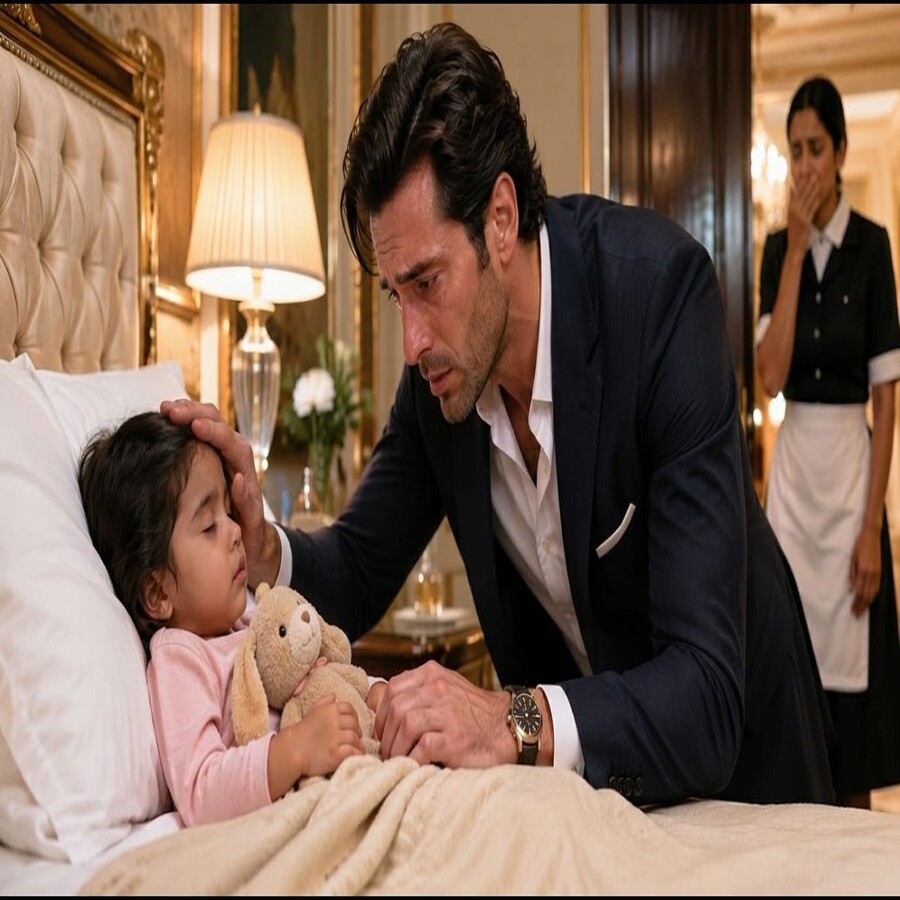
The Woman Who Had Nothing Left To Lose
Sophia Reyes had learned very early in life that the world doesn’t slow down for grief. She had lost her husband eighteen months ago—a car accident on a rainy Tuesday morning in Nashville, Tennessee that took him in less than four minutes. No goodbye, no last words, just a phone call, a hospital hallway, and then silence that never really ended. She was twenty-nine years old, newly widowed, and the single mother of a little girl named Lily, who had her father’s eyes and her mother’s stubborn heart.
For the first year, Sophia had survived on savings, a small life insurance payout, and the kindness of her sister who lived two streets away. But kindness has limits when rent doesn’t stop coming. When the grocery bill doesn’t shrink. When your daughter needs new shoes and a dentist appointment and school supplies all in the same week. So Sophia had done what she always did when life cornered her. She pushed forward.
She applied for every housekeeping and domestic assistant position she could find in the greater Nashville area. She had experience. She was organized, hardworking, and the kind of woman who showed up ten minutes early to everything. But interview after interview ended the same way. The moment they found out she had a young child with no regular childcare, the enthusiasm in their voices went flat.
Then she found the listing. It was tucked at the bottom of a job board she almost didn’t check. A private estate in Brentwood, Tennessee—one of the wealthiest zip codes in the state—was looking for a full-time household manager. The pay was more than she had ever earned. The estate was large. The employer was listed simply as “M. Hale, Private.” She almost didn’t apply. It felt too far out of her reach. But Lily was asleep on the couch that evening, one little arm wrapped around her stuffed bunny rabbit named Bun Bun. And Sophia looked at her daughter and thought, “I have to try.”
The Interview That Almost Didn’t Happen
She sent her application at 11:47 at night. By 7:15 the next morning, she had a response—an interview that Friday at the estate. Sophia ironed her best blouse, practiced her answers in the bathroom mirror, and arranged for her sister to watch Lily. But Thursday night, her sister called. Sick. Fever. Couldn’t come. Sophia had no backup. She had no other option. She brought Lily with her.
She dressed her daughter in a neat little navy dress with white buttons, put her hair in two small braids, and held her hand the whole drive to Brentwood. She told herself she would explain at the door, that she would apologize, that she would be professional. What she didn’t expect was what happened the moment they stepped inside the estate and came face to face with Marcus Hale.
He was tall, dark-haired, somewhere in his early forties, wearing a suit that probably cost more than Sophia’s monthly rent. He was the kind of man who filled a room, not with arrogance, but with a quiet, controlled energy that made you feel like every word he said had been carefully chosen. He looked at Sophia. Then he looked down at Lily. Lily looked back up at him with her father’s big brown eyes, completely unafraid, and said, “You have a sad face.”
The room went very still. Marcus Hale blinked. His assistant standing nearby looked mortified. Sophia opened her mouth to apologize, but Marcus didn’t say anything for a long moment. He just looked at this tiny three-year-old girl who had just said out loud the thing that no one in his life had dared say to him in years. Then he crouched down to her level and said, “Do I?”
Lily nodded seriously. “Yeah, like when my mommy misses my daddy.”
Sophia felt her heart crack open right there in the marble foyer of that magnificent house. She expected Marcus to stand up, thank them for coming, and send them home. Instead, he stood up slowly, looked at Sophia, and said, “Shall we begin the interview?”
The Job She Almost Didn’t Get
She was hired by the end of that same afternoon. But nobody—not Sophia, not Marcus’s assistant, not even Sophia’s sister when she heard the news—could have guessed what was waiting just three weeks down the road. Because Lily had seen something in Marcus Hale’s eyes that day, something she didn’t have words for yet, and in a way that only small children can, she had already decided to do something about it.
The Hail estate was unlike anything Sophia had ever worked in. It was a twelve-thousand-square-foot property set behind iron gates and old oak trees, with a kitchen that could have fed a restaurant and a garden that stretched longer than Sophia’s entire apartment building back in East Nashville. There were six bedrooms, a library, a home office where Marcus spent most of his hours, and a formal dining room with a table that seated fourteen. Though as far as Sophia could tell, it had not been used in a very long time.
She learned quickly that Marcus Hale was a man of precise routine. He woke at 5:30. He took his coffee black with no sugar in a specific navy blue mug—not the white ones in the cabinet. He ate the same breakfast every weekday—two eggs over easy, wheat toast, half a grapefruit. He worked until noon without interruption. He took a thirty-minute walk in the garden after lunch, always alone, always with his hands in his pockets, always looking at the ground more than the sky.
The Room That Was Always Closed
He did not like noise before eight in the morning. He did not like things moved from where he had placed them, and he did not talk about himself—not once, not ever. His staff, a rotating cast of two cleaning assistants and a part-time groundskeeper, all kept a respectful, careful distance. The previous household manager, Sophia learned from the groundskeeper named Earl, had lasted eleven months before quietly resigning. The one before that lasted seven. Nobody explained why they left. Nobody asked.
Sophia was not deterred. She had managed harder things than a quiet, private man. What was harder to manage was what she noticed in the east wing of the house. There was a room on the second floor that was always closed. Sophia was told on her first day—clearly and firmly—that she was not to enter that room. It was not part of her cleaning duties. It was not to be disturbed. She nodded and asked no questions.
But she noticed things. Small things. The way Marcus’s footsteps always slowed when he passed that door. The way he sometimes stood in the hallway outside it at odd hours—not going in, not walking away, just standing there. The way the groundskeeper Earl would glance toward that wing of the house, sometimes with an expression that was too careful to be nothing.
Sophia didn’t pry. She wasn’t that kind of person. She focused on doing her job beautifully, because she was exceptional at it. Within two weeks, the estate felt different—not just cleaner, but more alive. She had reorganized the kitchen so that everything was actually findable. She had quietly stocked the pantry with better ingredients and started leaving a small fresh flower arrangement on the kitchen table every Monday morning because she believed a house should feel like someone lived in it, not just existed in it.
The Child Who Noticed Everything
Marcus noticed. He didn’t say much, but she could tell by the way his shoulders were slightly less tense at breakfast. By the way he sometimes paused at the kitchen table before heading to his office, as if the space itself had surprised him. And Lily—Lily loved the estate with the unbridled joy of a child who sees magic in everything.
On the three days a week when Sophia’s sister still couldn’t provide care, Marcus had, without any formal discussion, simply made it clear that Lily could come. He hadn’t made a big announcement about it. He had just—on the second occasion Sophia arrived with Lily in tow and an apology already forming on her lips—held up one hand and said, “It’s fine.”
So Lily came. And she brought Bun Bun. And she explored the garden with Earl, who turned out to have a deep weakness for curious little girls and kept peppermint candies in his shirt pocket. She sat on the kitchen floor and drew pictures while Sophia worked. She narrated her drawings in great detail to anyone who passed by. And sometimes—not always, but sometimes—she wandered to the bottom of the stairs and looked up toward the east wing. She never went up. She seemed to understand, in the way children sometimes understand things they were never told, that there was something up there that was important. But she watched. And she waited.
And she asked Sophia one evening on the drive home, in her small and certain voice, “Mommy, why does Mr. Marcus keep his sad locked in a room?”
Sophia had no answer for that, and she couldn’t stop thinking about it for the rest of the week. Because the truth was, she was wondering the same thing. Nobody planned what happened that Monday morning. But Lily had made up her mind, and a determined three-year-old is a force of nature.
👉 [Tap here for the Next Part ] 👈
Disclaimer : This content may be created by AI for entertainment purposes. Any resemblance to real persons, events, or places is coincidental.






