THE GREAT DISCONNECT: Australia’s High-Stakes Gamble to Reclaim Childhood from the Digital Giant
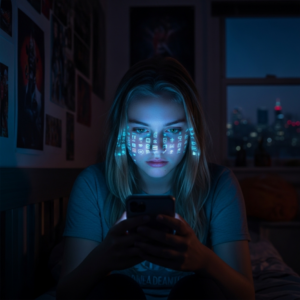
The sun sets over the Sydney Opera House, casting long, amber shadows across a city that is currently at the center of a global firestorm. Inside suburban homes from Perth to Brisbane, a silent war is being waged. It is a battle fought not with weapons, but with glowing rectangles—the smartphones that have become the primary heartbeat of teenage life. For years, parents have watched as their children drifted into a digital mist, their faces illuminated by the blue light of algorithms that know them better than their own mothers do.
But now, the Australian government is attempting to do the unthinkable. They are stepping into the arena to pull the plug. With the proposal of a landmark ban on social media for anyone under the age of 16, Australia isn’t just making a law; they are making a stand for the soul of a generation. It is a moment of profound emotional stakes: a nation trying to “kick a can down the road” to save its children’s mental health, while those same children feel their primary lifeline to the world is being severed by a group of “angry old people.“
This is the story of a runaway train, a digital revolution, and the desperate attempt to pull the brake before it’s too late.
I. The Runaway Train in a Strange Land
In the cozy, lived-in warmth of a family kitchen, the conversation inevitably circles back to the device. For parents today, social media feels like a runaway train—a massive, iron-willed machine thundering through a landscape they never visited as children. They stand on the platform, watching their teenagers disappear into carriages labeled “TikTok,” “Snapchat,” and “Instagram,” feeling a desperate, gnawing desire for the train to just pull over and give everyone a breath of air.
Teenagers don’t see a train; they see the air they breathe. For them, these platforms aren’t “media”—they are the town square, the locker room, and the sports field rolled into one. It is where plans for sports practice are solidified, where social alliances are forged, and where they go to feel “loved” through the dopamine hit of a notification.
BBC Cyber Correspondent Joe Tidy observes this firsthand. In his own home, the conversation is constant. “The kids want to be on there all the time,” he notes, describing a world where social arrangements are impossible without a login. The tragedy, however, lies in the design. These platforms are the most successful companies in history because they have mastered the art of the “dwell.” If a teenager lingers a micro-second too long on a photo of a perfect body or a “macho” influencer, the algorithm—sophisticated and relentless—begins a feedback loop that can lead down a dark corridor of eating disorders or toxic misogyny.
II. The Minister’s Corner: Protection or Punishment?
Deep within the corridors of power in Canberra, Australia’s Communications Minister, Michelle Rowland, is attempting to frame this ban not as a cage, but as a shield. “This is about protecting young people, not punishing or isolating them,” she declares. The message is clear: the government wants to let parents know they are “in their corner” in the grueling struggle to support their children’s well-being.
The ban is ambitious. It aims to cover the heavy hitters—TikTok, X, Facebook, and Instagram. Curiously, while few teens actually use Facebook anymore, the legislation casts a wide net. But this isn’t just about a “suggested age.” In Australia, this is a legal framework with no exceptions. Even if a parent sits their child down and says, “I trust you, I’m okay with you having an account,” the law says no.
The “onus,” the heavy weight of responsibility, is being shifted. The government isn’t coming for the parents, and it isn’t coming for the teenagers who sneak through the cracks. Instead, it is pointing a finger at the billion-dollar tech giants. The message is simple: You built it, you police it. If these companies fail to keep under-16s off their platforms, they face staggering penalties of up to 50 million AUD—roughly 33 million USD. It is an ultimatum designed to make the digital gods of Silicon Valley blink.
III. The View from the Playground: “Angry Old People” and Digital Rights
While the politicians talk about “well-being,” the teenagers on the ground in Australia feel a sense of betrayal. To them, this isn’t protection; it’s an intellectual and social embargo. Katy Watson, joining from the bustling streets of Sydney, describes the wave of shock the age of 16 has caused.
One young influencer she spoke to summed up the generational divide with a single, biting sentence: “It’s just a bunch of old people who are making up rules for young people who know far more about it.” For a teenager who has grown up navigating the internet with more dexterity than their parents navigate a remote control, the ban feels like a threat to their community. For those in the LGBT, queer, or trans communities, the internet is often the only place they can find “their people.” Removing that access isn’t just about stopping memes; it’s about removing a lifeline.
Yet, even among the youth, there is a split. Some teenagers look at the digital landscape and see the “terrible influencers” and the toxic comparison culture and admit that perhaps, just perhaps, a ban is a good thing. They recognize the “predicament” that parents have long feared: that social media is a double-edged sword that cuts deepest into those who haven’t yet learned how to hold it.
IV. The Creator Economy: Why the Giants Want the Children
To understand the resistance from tech platforms, one must look at the “strain” they are under. Teenagers are not just consumers; they are the vibrant, creative heart of the internet. The memes that make us laugh, the GIFs we share, and the trends that eventually filter down to “boring” platforms like Instagram all start with the creative fire of the very young.
Joe Tidy points out that social networks need these kids. They want their creators to be young because it ensures a long future of building content that keeps people addicted. If you “get rid of the children,” you effectively kill the farm system for the next generation of digital culture.
This tension is visible in the evolution of technology. Even as Australia moves to raise the age, Mark Zuckerberg’s Meta is lowering the age for VR headsets to ten in America and Canada. They are banking on the “Metaverse” being populated by children who feel right at home in virtual rooms. If Australia succeeds in creating a digital “dead zone” for teens, it threatens the very future of these technological empires.
V. The Sedentary Lifestyle vs. the “Typical” Childhood
The Australian Prime Minister, Anthony Albanese, invoked a powerful, nostalgic image when he announced the ban: “We want people back on the footy fields.” It is a dream of a typical childhood—the sound of a ball being kicked, the feeling of grass underfoot, and face-to-face socialization.
However, experts point out a massive assumption in this rhetoric. “Everybody’s good at sport,” the attitude implies. But what about the child who hates football? What about the teenager who finds solace in digital art, coding, or niche online communities? Taking away the phone doesn’t automatically mean a child will pick up a ball.
Researchers in the UK have looked into similar bans on smartphones and devices late at night. They found that a 10% reduction in screen time resulted in only ten more minutes of playing outside. The trade-off isn’t as simple as the government suggests. There is also the “navigation” argument: if you launch a 16-year-old into the untamed wild of the internet with zero prior experience, will they know how to spot AI-generated fakes? Will they have the digital “antibodies” needed to survive the onslaught of online manipulation?
VI. The Nitty-Gritty: VPNs, Face Scans, and the Friction of Law
How do you actually stop a savvy 14-year-old from logging on? This is the $33 million question. Suggestions are flying, ranging from “age verification” systems to controversial facial recognition scans. Joe Tidy recalls playing with a TikTok filter that guessed his age exactly, yet platforms seem hesitant to implement such technology for verification purposes—likely due to the massive privacy concerns of uploading a child’s ID to a global corporation.
Then there is the VPN—the “digital invisibility cloak.” Savvy teens in France, where similar bans have been trialed, simply pretend they are logging in from a different country. The Australian government’s hope is that by adding “friction”—an extra series of difficult steps—they can knock out a significant portion of users. They aren’t looking for a 100% success rate; they are looking for a manageable digital “swimming pool” that is slightly safer than the open ocean.
VII. Deep Reflection: The Lesson of Douyin
As the world watches Australia’s experiment, many point to China’s “Douyin”—the version of TikTok used within Chinese borders. Douyin is identical in technology but radically different in content. For young users there, the feed is populated with science, math, and campaigns about how to be a good citizen.
This leads to a profound question: is the problem the platform, or is the problem the content? The argument against the ban is that we should be making the digital spaces less dangerous rather than blocking children from them. But until the tech giants are forced to value well-being over “dwell time,” nations like Australia feel they have no choice but to reach for the most dramatic tool in their arsenal.
The Australian ban is a headline-grabber, but the nitty-gritty of its implementation will be the true test. It is a one-year window from legislation to implementation—a year of negotiation, fear, and high-stakes planning.
A Final Thought for the Global Community
We are at a crossroads. We can either continue to let our children be the “guat pigs” for the world’s most powerful algorithms, or we can attempt to redraw the boundaries of the digital world. Australia’s move is a desperate, emotional attempt to “reclaim” a childhood that many feel has already been lost.
Whether it works or not, it has started a conversation that can no longer be ignored. We are finally asking: What do we owe the next generation? Is it the freedom to navigate the world as it is, or the protection to grow up in a world that isn’t trying to sell them something at every turn?
How do you feel about your children’s relationship with social media? Is Australia’s “under 16” ban a necessary shield, or is it a sign that we’ve failed to build a safe internet? Share your stories, your fears, and your hopes in the comments below. Let’s figure out how to pull the train over, together.
Disclaimer : This content may be created by AI for entertainment purposes. Any resemblance to real persons, events, or places is coincidental.






