The Architecture of Silence: How One Woman Reclaimed Her Soul from a Life of Perfect Plans
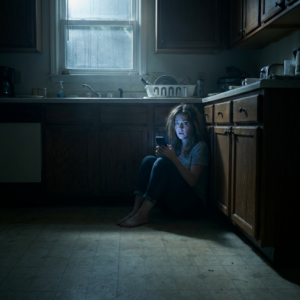
In the sterile, fluorescent-lit corridors of modern existence, it is easy to mistake a lack of disaster for a presence of happiness. We build walls made of calendars, color-coded schedules, and predictable routines, convinced that if we can just control the next sixty seconds, we can keep the darkness at bay. This is the story of Judy Web, a woman who lived within the high, cold walls of a “beautiful” life—until the rain, a stray dog, and the terrifying weight of an unanswered question forced her to realize that being safe is not the same thing as being alive.
It was a life measured out in coffee spoons and subway schedules. For Judy, a paralegal who understood the heavy finality of law and order, life was a series of timed maneuvers. Her mornings were not defined by the rising sun, but by the precise 40-minute window between 6:30 and 7:10 AM. Black coffee, no sugar—a chemical necessity to prevent the mid-afternoon collapse she had scientifically verified through trial and error. The 7:18 subway led to the 7:52 arrival, granting her exactly eight minutes to breathe before the world of Attorney Marilyn Okafor demanded her precision.
But behind the ticking clock lay a ghost. Judy’s mother, Marilyn Web, had raised her in the echoes of a father’s sudden departure—a man who vanished when Judy was eleven, leaving behind a silence that Marilyn filled with relentless, uncomplaining work. From her mother, Judy learned that plans were the only armor against the unpredictability of pain. She learned that if you stay in motion, if you pay the bills on time, and if you never ask for more than what is scheduled, you can survive anything. What she didn’t know was that survival is a very quiet way to die.
The Ghost of Owen Bradley and the 14-Month Silence
To the outside observer, Owen Bradley was the perfect man. He was the human equivalent of a paid-off mortgage—reliable, steady, and entirely predictable. He never raised his voice. He never canceled a plan. He even knew that Judy disliked pepper on her pizza. Yet, as they moved through their fourteen months together, Owen existed in a different room of her soul. He knew her pizza toppings, but he didn’t know which book sat on her nightstand. He didn’t ask, not because he was cruel, but because he lacked the curiosity to wonder who Judy was when the schedule was turned off.
Their relationship was a series of synchronized movements. They checked their phones to find the date their romance officially began because the memory wasn’t etched in passion, but recorded in data. Even as they moved into a bigger apartment together, the space between them grew. In the quiet evenings, the silence wasn’t the comfortable stillness of two souls at rest; it was the heavy, suffocating silence of two people who had nothing left to say because they had never truly spoken.
Judy’s mother, calling from Cincinnati, would ask, “Did Owen call you yet?” followed by a silence that spoke volumes. Marilyn Web knew the sound of a hollow relationship; she had lived in one until it collapsed. She could sense that Owen Bradley was not a bad man, but he was a man who was simply “there,” a placeholder in a life designed to avoid the messiness of true connection.
The Rain, the Dog, and the Man with Ink Stains
The disruption of Judy’s architecture began with a storm. On a Monday evening, as the rain turned the city streets into a gray, shimmering blur, Judy stood under an awning, waiting for a car that was fourteen minutes away. Her life was on track until a small dog slipped its leash, sending a ten-year-old girl into a paroxysm of grief on the sidewalk. While the rest of the city walked past, shielded by their umbrellas and their own rigid schedules, Judy looked at her phone, looked at the girl, and did the one thing she never did: she stepped out of the plan.
She ran into the rain, her professional bag abandoned on the wet pavement. She turned a corner and collided—hard—with a man named Rhett. They landed together on the soaking sidewalk, a tangle of limbs and wet fabric, while the dog stopped between them and the little girl screamed with joy. In that micro-moment, as Judy sat on the cold concrete, looking at a man with blue ink stains on his wrist and a shirt that had seen better days, something shifted. He smiled first. He asked if she was okay. And Judy, the woman who never rushed and always had a plan, found herself smiling back.
Rhett was the antithesis of her orderly world. He worked at a nonprofit on the south side, spending his days in the trenches of human struggle, helping young people who had no one else. He was a man who carried a child’s drawing of a green dinosaur in his wallet like a sacred relic—a gift from a boy named Allan. Rhett didn’t just know names; he asked for them. He asked the man at the coffee shop his name, not because of a name tag, but because he cared about the person behind the counter. He spoke to Judy as if her words carried weight, and for the first time in her life, she felt the terrifying thrill of being seen.
The Library on 43rd Street and the Dangerous Question
The contrast between Owen and Rhett became a chasm Judy could no longer ignore. While Owen sent texts that said “Home late. Don’t wait,” devoid of questions or care, Rhett shared the burdens of his heart. One evening, after a long day at the law firm, Judy found Rhett in a corner shop, his face etched with the weariness of bad news. Allan, the boy from the dinosaur drawing, had run away again.
“Where does he go?” Judy asked. “The library on 43rd Street,” Rhett replied. “He likes the fish tank there.”
That simple exchange sparked a question that kept Judy awake long after she returned to her dark, quiet apartment where Owen lay sleeping. Allan ran to the library because he knew Rhett would look for him there. The question that haunted Judy was: When did I stop going to a place where someone knows to look for me? She realized that in her quest for safety, she had made herself impossible to find. She was hidden behind the subway schedules and the black coffee, a ghost in her own home, living with a man who wouldn’t know to look for her because he didn’t realize she was lost.
The Saturday Morning on Michigan Avenue
The decision to meet Rhett for coffee on a Saturday morning was the first real choice Judy had made in years. It wasn’t a coincidence or a chance encounter; it was a clear departure from her life with Owen. She put on a green sweater—a color that felt like a secret rebellion—and sat with Rhett for two hours. They didn’t stay because they had no plans; they stayed because they didn’t want to leave.
Rhett told her about his own past, about a caseworker who came to his door when he was seventeen and simply stayed. He challenged her perception of her mother’s strength. “Maybe she just doesn’t know how to complain,” he suggested. “Or maybe she does it so you don’t have to.” This insight into the woman who had shaped Judy’s world was a revelation. No one had ever spoken about her mother with such nuance. As she looked at her coffee cup, Judy realized that her entire identity was built on a foundation of unvoiced pain and stoic endurance—a legacy she was now ready to question.
The Bank Envelope and the Architecture of Betrayal
While Judy’s heart was waking up, her “safe” life with Owen was rotting from within. She began to notice the small, jagged edges of a secret: Owen closing his laptop when she entered, the shift from credit cards to cash, the muffled phone calls on the balcony. Then came the final blow—a bank envelope addressed to her for an account she never opened.
Owen had used her identity, her social security number, and her life’s order to hide his own mess. When she confronted him in their kitchen, there was no shouting. There was no dramatic climax. There were just two people across a table, the air thick with the realization that their fourteen months had been built on a void. Owen didn’t deny it; he simply looked at his hands and admitted he didn’t think she could help him.
The anger Judy felt was secondary to the shame—not because Owen had betrayed her, but because she had seen the signs and chosen to look away. She had traded her intuition for the “easier” path of a quiet house. She realized that the most dangerous thing in life isn’t the disaster you don’t see coming; it’s the disaster you see clearly and choose to ignore.
The Empty Cupboard and the Salty Eggs
After Owen moved out, taking his silence with him and leaving only a forgotten coffee mug, Judy found herself in an empty apartment that felt too wide for one person. She called her mother and finally asked the question she had been holding for decades: “When Dad left, did you know before it happened?”
The answer was a heartbreaking admission of shared history. “I knew the day he came back the third time,” her mother said. “I just didn’t want to know it yet.” In that moment, the cycle of silence between mother and daughter was broken. Judy realized that they had both been waiting for lives that weren’t theirs, stuck in the “safety” of a hurt that lasted far too long.
Judy’s first morning of true independence was marked by a plate of over-salted, burnt eggs. There was no recipe, no plan, and no voice in her head telling her what to do next. There was just the sun moving across the floor and the realization that she didn’t need to reach out to Rhett just to fill the emptiness. She needed to sit in the empty space until she knew who she was without a schedule to guide her.
Deep Reflection: The Universal Lesson
Judy’s journey is a profound meditation on the difference between being “careful” and being “safe.” We often spend our lives building fortresses of routine to protect ourselves from the pain of the past, only to find that we have locked out the possibility of joy. True safety isn’t found in a color-coded calendar or a partner who never argues; it is found in the courage to show up as your authentic self, to ask the dangerous questions, and to go to the places where you can be found.
Call to Action:
Is your life a series of plans, or is it a series of choices? Have you ever realized that your “safe” routine was actually a place you were hiding? We invite you to share your thoughts in the comments. When was the last time you did something that wasn’t on your schedule? Let’s talk about the beauty of the unplanned and the courage it takes to let someone truly look for you.
Disclaimer : This content may be created by AI for entertainment purposes. Any resemblance to real persons, events, or places is coincidental.






