How Six Whispered Words Saved Me from the Weight of a Perfect Life
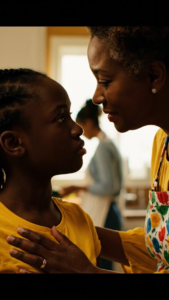
The most profound moments of our lives rarely arrive with the sound of trumpets or the crash of thunder. They don’t often happen on stages or during grand proclamations. Instead, they slip into our reality during the most mundane of times—while we are washing dishes, staring out a window, or standing in a crowded kitchen, surrounded by the hum of ordinary existence. For me, the moment that rewrote my destiny happened when I was seventeen years old, standing amidst the smell of roasting garlic and the clinking of silverware, when a soft brush on my arm and six whispered words dismantled a prison I had spent years building for myself.
The Sterile Mask of the “Strong One”
To the outside world, my life was a masterclass in stability. At seventeen, I was the daughter every parent in our neighborhood pointed to as an example. My grades were impeccable, my smiles were polite and timed to perfection, and I never caused a moment of “trouble.” I was the reliable one, the one who navigated the world with a composure that seemed well beyond my years.
But that composure was a costume. Years earlier, my father had passed away, leaving a jagged, gaping hole in our family’s fabric. In the vacuum of that grief, I made a silent, unconscious pact: I would be the pillar. I watched my mother’s eyes fill with a sorrow so deep it threatened to drown her, and I decided right then that she would never have to worry about me. I became her emotional bodyguard. I never complained. I never cried in her presence. I tucked my loneliness into the furthest corners of my heart, believing that to be “strong” meant to be “silent.”
I was drowning in a sea of expectations that I had curated myself, gasping for air behind a mask of “I’m fine.” I thought that as long as no one saw the cracks, the house wouldn’t fall down. I didn’t realize that by refusing to be a child, I was losing the ability to be human.
The Kitchen, The Noise, and the Intuition of Aunt Sarah
It was a Sunday afternoon, one of those family gatherings where the air is thick with overlapping voices, the heat of the stove, and the forced joviality of relatives. The kitchen was the epicenter of the chaos. My mother was laughing with her friends, the sound brittle but determined. I was standing near the counter, performing my usual role—filling glasses, clearing plates, maintaining the equilibrium of the room.
Aunt Sarah was there. She wasn’t a biological relative, but she had been a fixture in my mother’s life since before I was born. Sarah was a woman of quiet observant power. While others practiced the art of talking over one another, Sarah practiced the art of listening to what wasn’t being said.
I remember the lighting vividly—the harsh, yellow glow of the overhead fluorescent light mixing with the fading afternoon sun through the window. I felt a sudden, sharp flinch deep in my chest when an uncle made a casual joke about my future, about how I “had it all figured out.” My fists clenched instinctively at my sides, the skin over my knuckles turning white.
Then, it happened.
Sarah moved past me to reach for a tray. It wasn’t a collision; it was a deliberate, feather-light brush of her hand against my forearm. It was so brief that no one else in that crowded room noticed. But then she leaned in, her breath warm against my ear, and whispered with a calm, terrifying certainty:
“Some secrets don’t need words.”
The world didn’t just pause; it stopped. The clatter of forks and the burst of laughter faded into a dull, underwater hum. I looked up, and for the first time in my life, I felt truly seen. She wasn’t looking at my “good grades” or my “polite smile.” She was looking at the weight I was carrying—the invisible, crushing baggage of a girl trying to play the part of a woman. She didn’t ask me to explain. She didn’t demand a confession. She simply acknowledged the existence of my hidden pain.
The Fear of Breaking: Avoiding the Mirror
For the rest of that day, I was a ghost. I avoided Sarah with a frantic intensity. It wasn’t that I was angry; I was petrified. When you have spent years perfecting a lie, the truth feels like a physical threat. I was scared that if she looked at me for too long, or if she asked the “right” question, the dam would break, and the seventeen-year-old girl I had buried would come screaming to the surface.
That night, the silence of my bedroom was louder than the noise of the party had been. I lay awake, staring at the shadows of tree branches dancing on my ceiling. I kept replaying those six words. How did she know? I wondered if my pain was written on my skin like a neon sign, or if Sarah possessed a unique ability to read the quiet language of suffering.
The realization was exhausting. If someone knew, then the “strength” I had been projecting was a failure. But if the silence was no longer working, what was left?
The Park Bench: Breathing in the Silence
Days later, Sarah invited me for a walk to the nearby park. There was no “we need to talk” tone in her voice, no heavy atmosphere of an intervention. It was just an invitation to walk.
The park was bathed in the cool, crisp air of autumn. We sat on a weathered wooden bench, watching children chase each other through piles of fallen leaves. We listened to the rhythmic creaking of the swings and the wind sighing through the oak trees. For a long time, she said absolutely nothing.
In my world, silence was a weapon or a shield. But Sarah’s silence was different. It was a space. She sat beside me, comfortable and unhurried, offering a presence that didn’t require me to perform. And slowly, the tightness in my chest began to loosen. It became easier to draw a full breath.
Finally, she spoke, her voice steady and kind. “You don’t owe anyone your silence,” she said, looking out at the horizon. “And you don’t owe anyone an explanation, either.”
It was the second half of the lesson. The secrets in the kitchen weren’t about hiding something shameful; they were about the fact that my pain was real regardless of whether I had a vocabulary for it. She was giving me permission to exist without the mask, and more importantly, permission to not have to “fix” it immediately.
The Brave Act of Being Human
With the pressure valve finally released, the words began to come. They didn’t come in a flood; they came in slow, hesitant trickles. I talked about the suffocating pressure of being the “perfect” daughter. I talked about the terror I felt every time I saw my mother look sad, fearing that if I stumbled, she would shatter. I talked about the sheer, bone-deep exhaustion of being the “strong one” for everyone but myself.
Sarah didn’t interrupt. She didn’t offer platitudes like “it will get better” or “be brave.” She didn’t try to “fix” me. When I finally finished, she looked at me with a soft smile and said the four words that changed my life:
“You’re allowed to be human.”
In that moment, the definition of strength changed for me. It was no longer a synonym for silence. Strength was the ability to say, “I am overwhelmed.” Strength was the courage to be seen in your weakness.
Following that day, my life didn’t suddenly become a fairytale. The grief over my father was still there. The responsibilities were still there. But the internal landscape had shifted. I started setting boundaries. I started being honest with myself about when I was at my limit.
The most terrifying part was the conversation I eventually had with my mother. I had spent years protecting her from my feelings, only to discover that by doing so, I had built a wall between us. When I finally let her in—when I told her I was lonely and tired—she didn’t see me as weak. She wept, not out of disappointment, but out of relief. She didn’t need a pillar; she needed her child.
The Legacy of Empathy: Being the Safe Presence
Years have passed since that afternoon in the kitchen. I am no longer that seventeen-year-old girl, but I carry her with me. I have found myself in Sarah’s position more times than I can count—sitting with a friend who is staring at their shoes, or noticing the clenched jaw of a stranger who is trying too hard to smile.
I learned that empathy doesn’t always announce itself with a grand gesture. True empathy is the quiet understanding that someone is hurting and the willingness to stand there in the dark with them without asking for a map.
Aunt Sarah taught me that healing doesn’t always begin with a confession. It begins with the simple, profound act of being seen. It begins when someone notices the weight you’re carrying and whispers, without judgment, that you don’t have to carry it alone.
Strength isn’t about how much you can endure in silence. It’s about the bravery it takes to let the mask slip and the wisdom to know that some secrets don’t need words—they just need a safe place to land.
Deep Reflection: We live in a world that celebrates the “strong,” the “unshakable,” and the “stoic.” But perhaps the greatest strength we can ever possess is the vulnerability to be honest about our own exhaustion. Who is the “Sarah” in your life—the person who sees through your mask without you saying a word? Or perhaps, are you the one who needs to tell someone today: “You are allowed to be human”?
Call to Action: Have you ever felt the weight of being the “strong one” in your family? Has a single sentence from a friend ever changed your life? We invite you to share your journey and your feelings in the comments below. Let’s create a space where silence is no longer a requirement for strength.
Disclaimer : This content may be created by AI for entertainment purposes. Any resemblance to real persons, events, or places is coincidental.






