How a Brother’s Manufactured Trauma Shattered a Family’s Reality
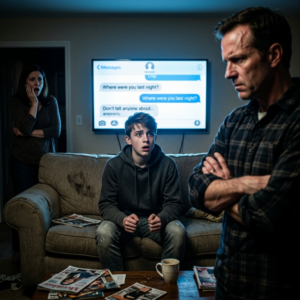
The concept of a home is universally understood as a sanctuary, a quiet refuge shielded from the unpredictable storms of the outside world. It is the place where we retreat to heal, to rest, and to simply exist without the burden of defense. However, what happens when the architecture of that sanctuary is slowly, deliberately dismantled from the inside?
What occurs when the very empathy that holds a family together is weaponized, twisted into a sharp instrument of control and psychological manipulation? This story is not merely a recounting of a dispute over a video game console. Instead, it offers a deep, agonizing exploration of the human capacity for deception. It highlights the paralyzing weight of parental guilt and the silent, solitary battle of a teenager fighting to preserve their reality in a house suffocated by manufactured trauma.
The walls of this house did not fall all at once. On the contrary, they cracked slowly, fracturing under the weight of thousands of carefully calculated lies, until the truth finally erupted, shattering the illusion forever.
The Architecture of Jealousy
For the first thirteen years of his life, Norman’s existence was defined by the bleak, unforgiving walls of one of the city’s most notorious crack houses. It was a beginning steeped in profound darkness, a narrative that would rightfully command the deepest reservoirs of human empathy. Consequently, when he was welcomed into his foster family, he brought with him a fierce, almost defiant pride.
Norman acted like the survivor—the boy who had walked through the fire and emerged miraculously unburned. He actively and loudly proclaimed that his past held no power over him. There were no nightmares, no flinching at loud noises, and no shadows of complex Post-Traumatic Stress Disorder haunting his steps. He wore his resilience like an armor woven from steel.
A Price Tag on Pain
That impenetrable armor dissolved the moment he calculated the monetary value of Christmas morning. The catalyst for his sudden, catastrophic psychological unraveling was not a sensory trigger or a profound emotional revelation. Rather, it was a simple price tag. When Norman discovered that his foster brother’s Christmas present cost exactly fourteen dollars more than his own, the resilient survivor vanished. He was replaced instantly by a fragile, irreparably broken victim.
This fourteen-dollar discrepancy became the foundation of an empire of emotional extortion. Suddenly, the mere sight of younger kids receiving gifts activated deeply repressed, agonizing memories. The transformation was absolute and violent. For instance, when his ten-year-old cousin gleefully unwrapped LED lights for her birthday, the gentle, colorful glow did not bring joy to him.
Instead, Norman grabbed the remote and shattered it against the floor. The plastic cracked with a sharp, violent finality that silenced the room. He stood amidst the debris, chest heaving, and declared that his own childhood had been consumed by darkness. Therefore, he claimed the presence of her lights was an act of emotional violence against his soul.
Demanding Compensation
He did not stop at destruction. He turned to his aunt, his voice trembling with practiced agony, and demanded that she cease buying presents for her own children. Furthermore, he pivoted to his foster parents, demanding monthly surprise gifts as retroactive compensation for the childhood he never had. The parents, blinded by a suffocating cocktail of pity and savior-complex guilt, bowed to his demands. As a result, the precedent was set: empathy had become a currency, and Norman had discovered how to print it.
The Exile of Joy
The purchase of a PlayStation 5 should have been a triumph of adolescent independence, a reward bought with hard-earned savings. Instead, the sleek white console became a monument of alleged oppression. The moment the box crossed the threshold, Norman declared its existence an act of emotional violence. He painted the console as a glaring, malicious reminder of his impoverished youth.
The protagonist, attempting to navigate the delicate tightrope of familial peace, offered immediate compromises. They offered to share. They offered to purchase a custom-made controller specifically for Norman. However, Norman rejected these olive branches violently. He did not want to play; he wanted to control.
Banished to the Shadows
The parents, desperate to soothe the manufactured wounds of their foster son, instituted the first of many compromises. They ruled that the console could only be played when Norman was physically absent from the living room. They mandated headphones, effectively silencing the joy. But even this invisible, silent existence was deemed too aggressive by Norman.
Norman claimed he did not feel safe walking the halls of his own home. He acted as though he were paralyzed by the knowledge that a piece of technology was radiating its wealth from behind closed doors. Within a week, the parents banished the console to the bedroom, connected to a lagging, thirty-frames-per-second monitor.
Staging the Trauma
The peace lasted exactly forty-eight hours. The protagonist returned from school to a scene meticulously staged for maximum emotional devastation. On the cold linoleum of the bathroom floor, the mother sat cradling Norman. He presented a portrait of manufactured terror, his body wracked with theatrical, full-body tremors, while rivers of tears streamed down his face.
When his eyes met the protagonist’s, he scrambled backward, pressing himself against the bathtub like a cornered animal. After twenty minutes of orchestrated sobbing, he delivered the narrative: he had accidentally caught a fleeting glimpse of the PlayStation menu screen while walking past the bedroom. He claimed the mere sight of the glowing interface had triggered a catastrophic breakdown.
Purgatory in the Garage
The mother’s gaze shifted to the protagonist, her eyes hard and accusing. She implicitly assigned blame as if the protagonist had personally engineered the crack house of Norman’s youth. Consequently, the new edicts were swift and suffocating. The parents restricted gaming to a single hour after nine o’clock at night.
They chose this hour specifically because it was when Norman retreated to his room. Additionally, they reduced the television brightness to its absolute minimum. They plunged the screen into near-darkness, lest a single, stray photon of light escape beneath the bedroom door and assault Norman’s fragile psyche.
The Spy in the Hallway
When the protagonist sought reason, the father delivered a crushing blow of emotional manipulation. He questioned if a mere video game was worth destroying a boy’s fragile recovery. Thus, the protagonist was cast as the villain in their own home. For weeks, the protagonist existed as a ghost, straining their eyes in the dark, desperate to simply enjoy a momentary escape.
But Norman was not satisfied with capitulation; he required absolute surrender. He transformed into an amateur surveillance state, documenting perceived infractions. He captured photographs of the microscopic slivers of light seeping beneath the door, claiming they caused agonizing flashbacks. He stood silently in the dark hallway, recording the faint, rhythmic clicking of the controller’s plastic buttons to present as evidence of acoustic torment.
Subterranean Exile
The ultimatum was delivered with quiet finality: surrender the console entirely, or move it to the basement. The protagonist chose the darkness. This basement was a hostile environment, devoid of heating and thick with dampness. Spiders regularly descended from the exposed wooden beams onto the protagonist’s shoulders.
The television was a relic, boasting perhaps three functional pixels, which rendered the games into unrecognizable smudges of color. Yet, in this freezing, arachnid-infested purgatory, a glimmer of freedom remained. The protagonist could finally raise the volume. The hours were unrestricted—at least until Norman’s own failures brought new trouble.
The Martyr and the Truth
Having spent his days skipping classes to smoke marijuana with older college students, Norman catastrophically failed his midterm examinations. However, the accountability bypassed him entirely and landed squarely on the PlayStation. He spun a tale to the parents, claiming the faint vibrations of the console had traveled upward through the floorboards.
He argued that these vibrations relentlessly disrupted his crucial study sessions. Moreover, he painted himself as a silent martyr, claiming he chose to suffer in silence so his brother could enjoy the luxuries he was denied. The parents, intoxicated by this narrative of profound self-sacrifice, looked at him with sheer reverence.
The Toxic Garage
The following morning, the exile deepened further. The parents physically relocated the console to the forgotten garage. This was a space untouched by human hands for years, where the air was noxious and heavy with the toxic fumes of old paint cans. The concrete floor was a graveyard of dead wasps and cockroaches.
Gaming was now strictly forbidden on weekdays, reducing the protagonist’s joy to a few shivering hours on Saturday afternoons amidst the decaying ruins. Three months of this bleak existence passed in heavy silence. Then, everything changed when Norman required an item from the garage.
The Final Performance
Norman crossed the threshold and immediately initiated a spectacular physical collapse. Full-body tremors overtook him as he fell to the greasy concrete floor, gasping for air. It was the final, masterfully executed performance of this act. The parents, utterly broken by the relentless emotional siege, decided the only path to peace was eradication.
They decided the PlayStation had to be sold. Norman, wearing the serene mask of a suffering saint, whispered that he could simply play mobile games, because that was the reality for impoverished children. The mother, tears in her eyes, immediately opened her laptop to browse secondhand prices on eBay. The trap was finally set.
The Digital Confession
In the living room, the atmosphere was thick with the tension of impending loss. As the mother scrolled through the auction site, a profound, visceral snap occurred within the protagonist. It was not a gentle realization, but a violent breaking of the psychological dams that had held back months of injustice.
“Shut up,” the protagonist commanded, the words tearing through the quiet hum of the house. The desperation poured out in a torrent of defensive pleas, a catalog of every humiliating compromise and frozen hour spent in exile. Norman seamlessly slipped back into his character, weaponizing his past with surgical precision.
Behind the Mask
He sarcastically took the blame for his own childhood abuse and declared himself an irredeemable failure. The mother rushed to his side, wrapping him in a fierce, protective embrace. In that intimate moment, hidden from the mother’s eyes but fully visible to the protagonist, Norman’s face shifted.
The mask of sorrow dissolved into a cold, victorious smile. He thought he had won. “I’m done,” the protagonist roared. The time for silent endurance was over. The protagonist pulled a smartphone from their pocket, their fingers moving with the frantic precision of a bomb technician.
Exposing the Arcade
The screen connected to the large television in the living room. “You want to see what your precious traumatized sweetie actually does?” the protagonist challenged. They announced that a hidden camera had been placed in the garage a month prior. The blood drained from Norman’s face, leaving him a ghastly, pale white.
The protagonist delivered the crushing blow: every Sunday, while the family sat in church, the “traumatized” boy was running a lucrative, underground arcade in the garage. He was charging the neighborhood children ten dollars an hour to play the very machine he claimed caused him debilitating flashbacks.
The Confrontation
The video file began to play, and the high-definition footage filled the living room screen. There was Norman, healthy, vibrant, and entirely free of tremors. He was confidently collecting folded bills from two quiet brothers who lived down the street. The mother’s jaw went slack.
The protagonist swiped the screen to show text messages where Norman bragged that his foster parents would believe absolutely anything as long as he produced tears. Finally, the protagonist delivered the devastating correlation. The demand to sell the console was not triggered by a psychic collapse; it was a cold business calculation.
Business vs. Trauma
The exact day the neighborhood children announced they could no longer afford his extortionate hourly rates was the very day Norman declared the console must be permanently liquidated. The silence that followed was absolute. Norman stood frozen as his mind frantically recalibrated.
He tried confusion and wounded betrayal, but the glowing screen behind him rendered the performance absurd. The father stood rigid, a thick vein throbbing visibly against his temple. When the father finally spoke, his voice was a terrifying, quiet rumble. “Norman, explain the money.”
The Final Deception
Norman straightened his posture and adopted a persona of grave, societal concern. He claimed he was not extorting the children, but rather creating a “safe space” for kids whose families could not afford gaming systems. Surprisingly, the mother leaned into the lie, her voice softening as she asked if he was simply trying to help them.
While they engaged in this surreal dance of denial, the protagonist walked calmly to the television stand. They gripped the power cord and pulled it out with a sharp, incredibly satisfying click. The protagonist then change every single digital password associated with the account. The digital locks were secured.
The Ripple Effect
The father announced an immediate suspension of all gaming activities pending a proper family reckoning. He physically blocked Norman’s path when the boy tried to move toward the protagonist. The mother, retreating to the safety of her authoritative teacher persona, declared a total ban on electronics.
The protagonist nodded, turned their back on the wreckage of the living room, and climbed the stairs. “This isn’t over,” Norman’s voice hissed from the bottom of the steps. Behind the locked door of the bedroom, the protagonist initiated protocols of digital preservation to ensure the evidence remained safe.
Tactical Strategy
They pushed the video of the illicit transaction to Google Drive and secured the screenshots in Dropbox. A final, undeniable copy was dispatched to the father’s email inbox. An hour passed before Norman offered his signature, gentle tapping at the door. He tried one last time to spin a tale of “charitable donations.”
The protagonist offered no response, denying him the fuel of engagement. Later, the father’s voice bled through the walls as he made excruciating phone calls to the parents of the exploited neighborhood children. He was finally confronting the devastating truth that his own foster son was a sociopath.
Social Warfare
The next morning brought a new challenge. Norman had launched a preemptive digital strike, authoring a sprawling social media post detailing his “betrayal.” The narrative was entirely controlled to paint him as the tragic hero. The protagonist’s reputation was being systematically dismantled online by neighbors and schoolmates.
The journey through the school hallways was a physical torment. Whispers trailed the protagonist’s footsteps like ghosts. However, deliverance arrived in the form of a bright pink slip of paper. The counselor, Deina Naier, was waiting. She listened as the entire, twisted history poured out.
Reclaiming Reality
Deina Naier transformed from a counselor into a tactical strategist. She told the protagonist they had done absolutely nothing wrong. Furthermore, she helped draft a blueprint for survival: document everything, erect emotional boundaries, and maintain redundant copies of all evidence.
The protagonist felt the heavy chains of the house begin to loosen. When they returned home, the father was in the bedroom, methodically reinstalling the PlayStation 5. His words were sparse, but his actions were a tangible restitution. The machine was to remain there permanently; the era of communal areas was over.
The Universal Cost
The social worker, Alisa, eventually returned to impose strict behavioral contracts. She underscored the mandate to repay the stolen money twice in thick, black ink. Although Norman attempted more theatrical panic attacks, Alisa remained unyielding. She professionally informed the mother that boundaries must be maintained.
The protagonist eventually moved the console to a friend’s house for total safety. They secured employment at a local grocery store, quietly funneling every dollar into a secret bank account. They were finally calculating the precise mathematical distance to freedom and away from the manufactured trauma.
Please share your thoughts and experiences in the comments below. Have you ever encountered a situation where empathy was weaponized? How did you protect your own boundaries? Let’s build a global community of support and understanding.
Disclaimer : This content may be created by AI for entertainment purposes. Any resemblance to real persons, events, or places is coincidental.






