How Being Abandoned at 17 Taught Me the True Meaning of Family
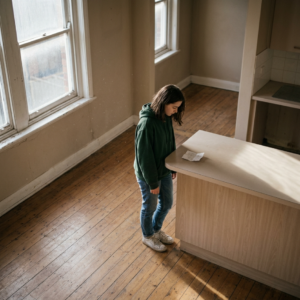
The air inside the house felt different the moment the front door swung open. It was a suffocating, hollow stillness—the kind of silence that rings in your ears and makes your heart hammer against your ribs before your brain can even process what is wrong. I was seventeen years old, standing on the threshold of the only life I had ever known, and the living room was entirely devoid of furniture.
The carpet bore the deep, geometric indentations where the sofa and the television stand used to be. The walls were stripped of pictures, leaving behind pale rectangles of un-faded paint. There was no smell of dinner, no hum of the refrigerator, no sound of my brother’s music thumping through the ceiling. There was only me, the dust motes dancing in the afternoon light, and a single piece of paper left on the bare kitchen counter.
I walked toward that piece of paper with lead in my shoes. The silence was so absolute that I could hear my own shallow breathing. I picked up the note. It was written in a hurried, careless scrawl, delivering the cruelest arrangement of five words I have ever encountered in my life: “You’ll figure it out.”
There was no explanation. No destination. No apology. My parents and my brother—the entirety of my known universe—had packed up our home and vanished into the ether, leaving me behind like a forgotten umbrella. I stood in that echoing kitchen, staring at the letters until they blurred, wondering what dark, unforgivable sin I had committed to deserve such an erasure. For years, I had assumed they were just exhausted from the effort of pretending to love me. Standing in the ruins of my childhood, the devastating truth washed over me: they had never even pretended.
The Echoes of an Unloved Childhood
To understand the weight of that empty room, you have to understand the years that preceded it. I was a child who desperately tried to earn her keep in an emotional economy that was perpetually bankrupt.
I remember the texture of the flour on my hands when I was thirteen years old. I had spent hours in the kitchen, meticulously following a recipe to bake a birthday cake for my mother. I wanted to see her eyes light up. I wanted, just for a moment, to be the source of her joy. When I proudly presented the cake, she did not smile. She looked at it, wrinkled her nose, and called it “clumpy.” The word landed like a stone in my stomach.
At fifteen, I spent weeks sitting beside my brother, Michael, tutoring him patiently through his final exams. I broke down complex concepts, wrote out flashcards, and sacrificed my own free time so he wouldn’t fail. His gratitude was a slammed door in my face and the mocking title of “know-it-all” shouted through the wood.
At sixteen, the desperation to prove my worth reached its peak. I took my entire paycheck from my part-time job—every single dollar I had scrubbed and sweated for—and handed it to my father to cover the household bills. I wanted to be the hero. I wanted him to look at me with pride. Instead, weeks later, when I dared to mention the contribution after he coldly called me “useless,” his face twisted in rage. The shouting that followed rattled my bones. I was always useful to them. I was a tutor, a bank, a caretaker. But I was never, ever loved.
And then, they were gone. Two states away. Without a single word of goodbye.
The Cold Reality of Survival
The landlord delivered the final blow a week later. The lease had been canceled early. I had seven days to vacate a house that already felt like a tomb.
The descent into survival mode was a visceral, bodily experience. I slept on a friend’s floor for three nights, the carpet scratching against my cheek, my mind racing with the terror of overstaying my welcome. When that temporary grace ran out, I found myself facing the abyss. I took the very last remnants of my savings and rented a metal storage unit.
I want you to imagine the smell of corrugated steel and dust in the dead of night. I want you to imagine the biting cold seeping through a thin sleeping bag laid on concrete. This was my bedroom. My mornings began by sneaking into the local YMCA, praying no one would ask for a membership card while I scrubbed the smell of the storage unit from my skin under the lukewarm water. My meals were stripped down to the absolute biological minimum: a jar of peanut butter and a plastic spoon. Breakfast, lunch, and dinner tasted like sticky desperation.
During the day, the public library became my sanctuary. The harsh fluorescent lights illuminated the free computer screens where I obsessively filled out job applications, forcing my fingers to type out professional cover letters while my stomach growled. I walked through the world wearing a mask of perfect normalcy, smiling at strangers, pretending I had a warm bed to return to.
Salvation came in the form of a diner that smelled of stale coffee and fried grease. The manager, a woman with a gruff voice but a perceptive gaze, hired me for the night shift. She saw the exhaustion etched into the purple bags under my eyes. She paid me cash under the table until I could secure a legal ID. Once, when the room spun and I nearly collapsed from the sheer weight of sleep deprivation, she quietly guided me to the break room and let me sleep. She was the first glimpse of a truth I would later learn: sometimes, strangers offer the grace that family denies.
The Architecture of a New Life
I clawed my way out of the darkness with bleeding fingernails. I bought a cheap prepaid phone, guarding its limited minutes like gold. I saved every crinkled receipt, treating my meager finances like a puzzle that had to be solved. I spent hours in the library watching free YouTube tutorials on goal setting and financial literacy. I was building a new foundation from scratch, and I was doing it entirely alone.
The first year was a blur of aching feet and near-starvation, but I survived. The universe finally cracked open when a regular customer at the diner noticed my relentless work ethic and offered me a temporary job cleaning out office files. It paid triple my server’s wage. I said yes before the sentence had fully left their mouth.
That singular “yes” was the domino that started a cascade. One temp job bled into another. I arrived before the sun rose, I learned with a ravenous hunger, and I asked endless questions. By twenty-two, I was a full-time freelancer. By twenty-five, the vision expanded. I launched a consulting business. It wasn’t glamorous. My headquarters consisted of me, a wobbly folding table, and a laptop I had begged to borrow.
But by twenty-seven, the landscape had shifted entirely. I had five contractors looking to me for leadership. I walked into an office with my name on the door. I sat across tables from clients representing companies I used to stare at on library computers.
And by twenty-nine, the ultimate milestone arrived. I became a millionaire. Not the smoke-and-mirrors, heavily filtered influencer illusion of wealth. I had an actual, robust retirement account. I had zero debt. I owned my apartment outright. I had premium health insurance. I remember the exact lighting in the room the evening I opened my banking app and saw the balance cross into seven figures. The screen glowed against my face. My chest heaved, and the tears I had held back for twelve years finally spilled over, hot and heavy, landing right on the glass. I had done it. I had figured it out.
Throughout that entire brutal, magnificent climb, my family never reached out. Not a phone call. Not a letter. The silence was a ghost that haunted the edges of my success. I saw my brother pop up on a suggested friends list once. I stared at his smiling profile picture, noting the strange woman beside him. He was married. He was still living in the state they had fled to. I sat there for hours, the blue light washing over my face, wondering if he ever spoke my name to his wife. Did he tell her I was dead? Did he say I ran away? Or did he simply pretend I had never existed?
It would have been so much easier to summon hatred. Anger is a shield; it protects you from the softness of vulnerability. But the truth, explored through years of intensive therapy with a brilliant woman named Melissa, was that I didn’t hate them. I was simply heartbroken. I was a fractured piece of glass trying to reflect light, taking inventory of the co-workers, classmates, and strangers who had shown me what real, unconditioned support actually looked like.
The Ghosts in the Machine
The collision of past and present happened because I decided to speak my truth. I sat in a recording studio, a heavy microphone in front of me, and shared my story on a podcast about surviving family estrangement. The vulnerability was terrifying, but the response was earth-shattering. The interview exploded across the internet, racking up a million views in just four days.
My inbox became a beautiful, overwhelming river of human connection. Strangers from across the globe poured their hearts out, thanking me for articulating the silent agony they carried.
And then, the ghost appeared.
The email subject line burned a hole through my monitor: “You’re still our daughter.” It was from my mother. The physical reaction was immediate—my lungs seized, and the blood roared in my ears. I opened it with trembling fingers. There was no desperate apology. There was no begging for forgiveness. It was a cold, clinical paragraph mentioning she had heard “my side” and suggesting we “talk.”
Minutes later, a second message materialized. From Michael. “We miss you. Can we fix this?”
I stared at the glowing pixels until my eyes ached. I closed the laptop, the click of the hinge echoing in my quiet, safe apartment. The past was suddenly sitting on my living room sofa, demanding an audience. I sat in the stillness, grappling with a profound philosophical dilemma: does healing require us to look back at the wreckage, or does it demand we keep our eyes firmly locked on the horizon?
Melissa, my therapist, anchored me. Her voice through the phone was a steady lifeline. She commanded me to take space, to let the emotions rise and fall without the pressure of an immediate reaction. I tried to immerse myself in the present. I gripped heavy iron at the gym. I clinked wine glasses with chosen friends. I sat in boardrooms. But those emails were a phantom itch. I opened them, analyzed the syntax, and closed them again. My mother’s words felt utterly devoid of warmth, like a corporate memo from an estranged acquaintance. Michael’s, though painfully brief, carried a microscopic weight of reality.
After ten agonizing days of mental gymnastics, I typed out a reply to my brother. It was devoid of pleasantries.
“It’s been 12 years. What changed?”
I hit send, holding my breath. The response pinged back within an hour. He wove a narrative of helplessness. He claimed the podcast had been an awakening. He leaned heavily on his youth, reminding me he was only fifteen when they abandoned me, asserting he had no agency. He claimed he had searched for me online over the years, paralyzed by a lack of courage. He expressed pride in my success.
I read the words, but the melody felt out of tune. If his concern was so deep, so abiding, why wait until my success was public knowledge? Why did a viral podcast prompt the courage that twelve years of silence could not? I fired the question back at him, blunt and uncompromising.
His next email shattered the illusion. The paragraphs grew longer, spilling the ugly, desperate truth. Money was tight. Our parents’ business had collapsed. His wife was pregnant with their second child. The medical bills were a rising tide threatening to drown them.
My stomach plummeted toward the center of the earth. There it was. The grand reunion was not fueled by love or regret; it was a transaction.
A week later, my mother attempted another maneuver. She sent an email laden with weaponized nostalgia. Attached were digital ghosts: a baby wrapped in a blanket, a five-year-old smiling on a sun-drenched beach, two siblings building a snowy figure in the yard. I looked at the little girl in the photos, and she felt entirely alien to me. Those happy fragments belonged to a timeline that had been brutally severed. At the bottom, she wrote, “We made mistakes. We want to make amends.”
Sitting in Melissa’s office, surrounded by soft lighting and the smell of jasmine tea, I laid the digital evidence bare. She reminded me of my sovereignty. I held the keys to the gate. I owed them nothing. Yet, she gently suggested that confronting the ghosts might offer the ultimate closure, whether that led to a fragile peace or a final, decisive burial of the past. The conflict inside me was a raging storm. The protector in me wanted to burn the bridge to ash. The analyst wanted to dissect their motivations. And somewhere, buried deep beneath layers of armor, a tiny, wounded seventeen-year-old girl still foolishly wished to be wanted.
I chose to face the brother who let me disappear.
The Stranger at the Coffee Shop
We agreed on a neutral battleground: a bustling coffee shop in Chicago, a geographical compromise between our two lives. I flew in early, the hum of the jet engines doing nothing to settle the vibration in my bones. I checked into a hotel room overlooking the gray sprawl of the city, pacing the carpet, picking up my phone to cancel three separate times. But when two o’clock struck, I pushed through the heavy glass doors of the cafe.
I saw him instantly. The boy I had tutored was gone. In his place sat a man carrying the visible weight of the years. He was heavier, his hairline retreating in defeat, but the shape of his eyes—my eyes—remained unchanged. He scrambled to his feet as I approached, his body language screaming uncertainty. There was no embrace. We settled into the wooden chairs across from each other, wrapping our hands around ceramic mugs, two strangers sharing a bloodline and a trauma.
The first twenty minutes were an excruciating dance of superficiality. We discussed the flight paths and the chilling wind off Lake Michigan, desperate to delay the inevitable. Finally, the dam broke.
“Emma, I’m so sorry,” Michael choked out, the crack in his voice betraying a deep well of emotion. “I was just a kid when it happened. I didn’t know they were planning to leave you behind until it was too late. I was too scared to stand up to them.”
I watched the muscles in his face, hunting for deception. The sorrow appeared genuine, but my trust was a fortress with the drawbridge permanently raised. I leaned forward, the steam from the coffee rising between us, and asked the question that had echoed in the metal storage unit all those years ago.
“Why me? Why was I the one left behind?”
He couldn’t meet my gaze. He stared into the dark liquid in his cup. “They always saw you as the strong one,” he murmured softly. “The independent one. The one who would be fine on your own. They thought you didn’t need them as much as I did. They convinced themselves you’d be better off without them.”
The sheer audacity of the rationalization knocked the breath from my lungs. It was a grotesque twisting of reality. They had weaponized my resilience to absolve themselves of their cruelty.
I stripped away the polite facade. I painted the picture for him with brutal, graphic strokes. I told him about the freezing concrete of the storage unit. I described the exact taste of peanut butter when it is the only thing keeping you alive. I told him about sneaking into the YMCA to wash away the grime of homelessness, and walking into the diner at midnight while kids my age were studying for the SATs.
Michael’s face visibly crumbled. The color drained from his cheeks. “I didn’t know,” he whispered, a tear finally escaping and tracking through his beard. “They told me you had a plan. That you wanted to stay behind. That you were going to live with a friend’s family. That you’d chosen to separate from us.”
The foundation of his reality had been built on a staggering lie.
The meeting ended in an ambiguous gray space. He showed me photos of his vibrant daughter and his smiling wife. He spoke of his accounting job. Miraculously, the conversation ended without a single request for a loan. When we walked out onto the windy Chicago street, he reached out and enveloped me in a hug. I stood perfectly rigid, my arms pinned to my sides. I allowed the embrace, but I offered absolutely nothing in return. I felt numb.
Back in the sterile safety of my hotel room, Melissa’s voice through the speakerphone stripped the sentimentality away. She analyzed his words with clinical precision. Yes, he was deceived. Yes, he was sorry. But he was still painting himself as the paralyzed victim. At fifteen, he was a teenager, not a toddler. He knew how to dial a phone. He knew how to send an electronic message. Twelve years of silence was a choice, regardless of the lies he had been fed.
That very night, the hotel room phone remained silent, but my personal cell vibrated. An unknown number. Michael had surrendered my contact information. Curiosity, that dangerous, intoxicating poison, forced my thumb to swipe the green icon.
The rasping, aged voice of my mother poured through the speaker. She began to weep the moment I breathed a greeting. She launched into a frantic monologue about my brilliance, about her deep, unwavering pride, claiming she had always foreseen my triumph. I let the manic energy burn itself out. When she paused for breath, I struck with the same blade I had used on Michael.
“Why me?”
Her defense was a different breed of poison entirely. “We were in debt, Emma,” she pleaded, her voice trembling. “We couldn’t afford three mouths to feed. We knew you were smart enough to make it on your own. We figured you’d go to social services and get placed with a better family. We thought we were doing you a favor.”
The sheer sociopathy of the statement was suffocating. She had abandoned her child on the assumption that the state welfare system would act as a superior parent. I didn’t say a single word. I pulled the phone from my ear, hit end, blocked the contact, and hurled the device across the room, watching it bounce off the hotel carpet. I buried my face in a feather pillow and let out a primal scream that tore at the lining of my throat.
The morning light brought the final piece of the dark puzzle. An email from my father. Twelve years of absence culminated in a message entirely devoid of contrition. He spun a tragic tale of woe—failed ventures, crushing medical debts, Michael’s wife facing surgery, the looming specter of eviction. And there, buried at the end of the digital sob story, was the demand. He asked if I could open my vault and save the family. There was no inquiry about my well-being. No recognition of the trauma. Just an open palm reaching for the gold I had spun from the straw they left me.
I forwarded the text to Melissa with a five-word subject line: “And there it is.”
The Siege and the Sister-in-Law
Boundaries are not requests; they are electrified fences. I established mine with Michael. I emailed him my terms: a tentative relationship moving forward, but absolutely no financial support, no loans, and zero contact with our parents until they took radical, public accountability.
His reply was a masterclass in inherited manipulation. He expressed profound disappointment. He invoked the sacred, binding duty of “family.” He accused me of hoarding my success selfishly while our parents suffered. Every carefully installed guilt button from my childhood was mashed simultaneously. I packed my bags, booked a flight to Bali, and vanished into the tropical humidity to meditate among the rice terraces. I needed the ocean to wash away the static.
When I returned, rested and armored, the escalation began. Michael had retreated, apologizing and seeking a fragile peace on my terms, but the real storm was gathering. He casually mentioned that our parents were visiting him and asked if I would grant them just a single hour in a public space.
My chest seized. The terror was primal. I refused, realizing through tears in Melissa’s office that my fear was rooted not in hatred, but in the pathetic, lingering desire to finally be deemed “enough” by the people who threw me away.
The denial of their request triggered an aggressive siege. My mother reportedly wept through the night. My father threatened to drive to my city. I locked myself in my luxury apartment, ordering groceries to the lobby, hiding like a hunted animal. When my doorman called to announce an unidentified couple demanding entry, the blood froze in my veins. My father’s angry voicemail followed, labeling my boundaries “childish.”
The following morning, the heavy wooden door of my apartment rattled under the force of a violent pounding. I lay paralyzed in my bed, the sheets pulled to my chin. I crept to the peephole. The distorted, fish-eye lens revealed the monsters of my past standing in my hallway. My mother’s voice slithered under the door, begging. My father demanded entry, wielding the word “love” like a blunt instrument. I sank to the floor, my back pressed hard against the drywall, trembling violently until they finally retreated.
The harassment morphed into psychological warfare. My mother staged a medical emergency in my building’s lobby, resulting in an ambulance ride and a barrage of furious phone calls from Michael blaming me for her heart attack. I fled the city, seeking refuge in Portland with Rachel, the fierce friend who had offered me her couch when I was a homeless teenager. Drinking wine in her kitchen, listening to her righteous fury on my behalf, I felt the lingering guilt evaporate.
I returned home to find emotional blackmail in the form of flowers outside my door, and a text message showing my mother looking frail in a hospital bed, asking if I wanted to live with the regret of her impending death. I blocked the number and prepared to disappear into remote work.
But before I could vanish, the doorman called with a different visitor. A young woman with a small child. Claiming to be my sister-in-law.
I told him to send her up. It was time to stop running.
Jenny stood in my hallway looking like a woman who had not slept in a month. She cradled a sleeping toddler—my niece, Lily—against her shoulder. I ushered her into the safety of my home. She laid the sleeping girl on my expensive sofa, tucking a blanket around her delicate shoulders, and sat at my kitchen counter.
Jenny was the whistleblower. She had only known of my existence for three years. Michael had spun the family narrative: I was a troubled teen who ran away and cut contact. But my viral podcast had shattered the illusion. Jenny confronted him, and the dam broke.
She looked at me with immense sorrow and revealed the true depth of my parents’ depravity. “They are telling everyone you abandoned them,” she whispered. “That you were mentally unstable. That you stole their money before disappearing. That they spent years searching for you.”
When I demanded proof, she slid her phone across the granite counter. The screen illuminated years of meticulously crafted Facebook posts. My mother pleading for prayers for her “lost, troubled daughter.” My father lamenting the stolen savings. Fabricated tales of private investigators and tearful visits to homeless shelters. They had authored an entire alternate reality where they were the tragic, loving victims of an ungrateful, thieving child.
Jenny’s visit was a declaration of allegiance. She exposed their financial lies—she and Michael had insurance for her surgery; it was my parents who were drowning. She offered an open door for me to know my niece, entirely free of guilt or obligation. As they left, leaving the faint smell of baby shampoo in my apartment, I knew the battle lines had been permanently redrawn.
The Shattered Glass and the Courtroom
The truth always demands a toll. When my parents realized Jenny had crossed enemy lines, the desperation turned violent.
I sat in a restaurant with Marcus, my formidable attorney, listening to Michael and Jenny confess the true nightmare of their lives. My parents were financial parasites, bleeding Michael dry, controlling his parenting, and emotionally suffocating his marriage. When Jenny confronted them about the lies regarding my abandonment, my father turned physical, gripping her arm hard enough to leave deep, purple bruises. Michael had finally kicked them out, triggering a campaign of stalking and harassment.
We were all victims now. Bound by the shared trauma inflicted by the same two architects.
The breaking point arrived with the sound of shattered glass. Jenny called me, hysterical. My parents had broken into their home. They ransacked the drawers, stealing Lily’s baby photos, vital financial documents, and Michael’s laptop. They left a chilling, cinematic note: “Family matters should stay in the family.”
Standing in their violated living room, watching the police take apathetic notes, the final remnants of my passive defense burned away. We moved them into my secure building. My solitary sanctuary transformed into a fortress of shared survival. For the first time in my life, surrounded by Lily’s toys and the quiet hum of domestic solidarity, I felt the faint, warm pulse of what a real family could be.
Marcus filed the emergency restraining orders. The retaliation was swift: a brick hurled through Michael’s car window in the parking garage, followed by an ominous email from my mother promising lifelong regret if we took them to court.
We walked into the courthouse as a united front. I wore my success like armor. I watched my parents shrink under the harsh fluorescent lights of the legal system. They stood before the judge without counsel, spinning their web of lies, denying the break-in, framing themselves as loving parents trying to reconnect.
The judge was a master of cutting through delusion. He looked my father dead in the eye and asked the only question that mattered: “Did you leave your minor child alone and move to another state?”
My father stammered, mumbling pathetic excuses about financial hardship. The gavel fell. Three years. No contact. Immediate arrest for any violation.
We walked out into the sunlight, the heavy air of the courtroom lifting from our shoulders. Michael pulled me into a desperate, crushing hug on the concrete steps. It was an apology for a lifetime of cowardice, and I held him back, knowing we were finally standing on the same side of the battlefield.
The Final Stand on 8th Street
The ink on the restraining order wasn’t even dry before the phone buzzed. A text message from an unknown number. A covertly taken photograph of Lily playing in a friend’s backyard. Four words: “This isn’t over yet.”
The panic that gripped my apartment was absolute. Jenny wept, clutching her child. Michael paced like a caged animal. The police offered platitudes and increased patrols, but they couldn’t stand guard against the relentless, unpredictable terror of my parents. Sitting in the dark at 2:00 a.m., taking the first watch by the window, I spotted my father’s old Buick slowly circling the block, parking just outside the legal boundary of the restraining order. He was a phantom, haunting the edges of our sanity.
The legal system had done all it could. The paper shield was not enough. The fear was dictating our every move, turning my home into a prison.
I realized, with cold, crystalline clarity, that running was no longer an option. I made a list of my deepest desires: To live without fear. To know my brother’s family. To release the past. Reconciliation was not on the list. Forgiveness was not on the list.
Without telling anyone, I typed a message to the demons parked outside my building. I invited them to one final parley. A coffee shop on 8th Street. High noon. Just me.
I arrived early, securing a tactical position in the back corner. When they walked in, they looked haggard, hesitant, treating me like an unexploded bomb. They sat down, waiting for me to speak. I didn’t offer pleasantries. I didn’t offer a path to redemption. I offered a declaration of absolute war.
“I didn’t call this meeting to reconcile,” my voice was flat, devoid of any emotional tremor. “I called it to make you understand one thing. It’s over. You’ve lost.”
I pulled out my phone and laid the digital guillotine on the table. I showed them the sprawling file of evidence—the threatening texts, the photo of Lily, the unhinged emails. I leaned forward, looking my mother directly in her tear-filled eyes.
“I have sent copies to everyone in your lives. Your siblings. Your church. Your neighbors. Your employers. They don’t have access to it yet. But if you contact any of us again, if you come near our homes, if you breathe our names, I will hit send. I will destroy your reputation. I have the resources to make your lives very difficult.”
My mother crumbled, sobbing about making mistakes and not wanting to die alone. My father flared with narcissistic rage, calling me ungrateful, demanding payment for the bare minimum of raising me for seventeen years before discarding me.
I laughed. A genuine, hollow sound that echoed off the brick walls of the cafe. I looked at the man who had demanded my teenage paycheck and told him exactly what he was worth. The silence that followed was total. I felt nothing for them. The spell was broken. The ghosts were just sad, broken people sitting in a coffee shop.
“I don’t hate you,” I said as I stood up, adjusting my coat. “I feel nothing for you. You’re strangers to me now, and that’s your loss, not mine.”
The Architecture of a Chosen Family
The silence that followed the confrontation was permanent. The Buick never returned to my street. The unknown numbers stopped calling. They retreated back into the shadows from whence they came.
Six months later, a letter arrived through my lawyer. It contained no demands. It was a stark, sobering admission of their failure as parents, an acknowledgment of the boundaries, and a promise to honor the restraining order. I read it with Michael over dinner. We didn’t celebrate. We didn’t rush to forgive. We simply folded the paper and placed it in a desk drawer—a monument to the war we had won and the peace we had finally secured.
Last week, my apartment was unrecognizable from the quiet, sterile sanctuary it once was. The air was thick with the smell of a custom-ordered vanilla cake. Brightly colored balloons bumped against the high ceilings. Laughter bounced off the walls. It was Lily’s fourth birthday party.
I stood in the kitchen doorway, holding a glass of water, watching the chaos unfold. Michael was spinning his daughter in dizzying, joyous circles. Jenny was throwing her head back in laughter at a joke a friend had told. The room was packed with people who had chosen to be there, people who showed up, people who understood the sacred weight of loyalty.
I thought back to the seventeen-year-old girl standing in an empty house, staring at a cruel note left on a bare counter. “You’ll figure it out.”
They meant it as a dismissal. A final, callous wave goodbye. But standing in my living room, surrounded by the beautiful, messy, vibrant family I had painstakingly built from the shattered pieces of my past, I realized it was the only true thing they had ever given me.
I did figure it out. I figured out that blood is an accident of biology, but family is a deliberate, daily choice. I still flinch when the doorbell rings. I still unpack my trauma in a therapist’s chair every week. I am a work in progress. But I am no longer defined by the people who walked away. I am defined by the people I invite to stay.
To my global community: Have you ever had to build your own family from the ground up? Have you ever had to walk away from the people who were supposed to protect you? Please, share your stories in the comments below. Let this be a safe space for us to remind each other that we are never truly alone, and that the family we choose is the most powerful force on earth.
Disclaimer : This content may be created by AI for entertainment purposes. Any resemblance to real persons, events, or places is coincidental.






