cover crops to seed, pruning on the earlier bearing trees, a drainage issue on the south end of the property that had been intermittent for 2 years and had decided to become chronic. He worked long days. He came in for meals. He helped Sophie with the homework that she mostly didn’t need help with, sitting beside her at the kitchen table while she worked with the focused patients of a child who had gotten used to being self-sufficient.
He drove her to school and picked her up. He fixed the dripping faucet in the upstairs bathroom without mentioning that he was doing it. Just did it one evening while she was drawing in her room. And the next morning, she came downstairs and said, “The dripping stopped.” And he said, “Yeah.” And she said nothing else.
But she looked at him with those dark eyes for a moment in a way that felt like acknowledgment of something larger than a faucet. Victoria worked through most of November in the way she always worked, intensely, quietly on a schedule that didn’t seem to quite follow normal hours. She had two trips out of state, one to Seattle for 3 days, one to San Francisco for two.
Each time she left, she told Sophie the day before specifics, where she was going, how long, when she’d be back, and gave Sophie her direct number with the instruction to use it if she needed anything. Sophie nodded each time with the air of someone taking a security briefing seriously. Each time Victoria left, the house changed slightly.
Not dramatically, not in the way that made it unlivable, but something in the air shifted. The particular quality of steadiness that Victoria carried around with her went with her, and Ethan and Sophie were left with each other in the farm in the low gray November sky. The first time they navigated it by mostly operating in parallel, Ethan working, Sophie drawing, a kind of parallel play arrangement that was awkward in its separation, but functional.
They ate dinner mostly in silence, which was not comfortable silence, but not combat either. Sophie went to bed at 8:30, which she seemed to have established as her own rule, and Ethan sat with his coffee and the particular loneliness of a house that had one more person in it, but was not yet connected. The second time Victoria left, things were slightly different.
It was a Saturday, no school, rain so heavy it made working the orchard impractical. Sophie appeared at the door to the barn where Ethan had retreated to deal with some equipment maintenance and stood there in her rain jacket with Humphrey under her arm and said, “What are you doing?” He was reassembling a chain sprocket. Fixing something, he said.
She came in out of the rain and looked at the parts spread across his workbench. What does that do? It’s part of the pruning saw attachment for the tractor. He held up a piece. This goes here and it transfers the power from the He stopped. You want me to actually explain it or are you just talking? She considered actually explain it.
So he did. He explained the chain sprocket and the power takeoff shaft and why mechanical maintenance mattered more than people thought. And she stood beside him and listened with genuine attention and asked one or two questions that were better questions than most adults would have asked. And at some point she had put Humphrey on the workbench and was holding a small wrench and asking if she could tighten the bolt he was pointing to.
He handed her the wrench. She did it carefully with the right pressure, like someone who’d been told once how to do something and had stored the information. You’re pretty good at that, he said. Mom said I had good fine motor skills, Sophie said. She was looking at the wrench. She said that’s why I draw well. She was right, Ethan said. On both counts.
Sophie handed the wrench back and looked at the workbench and the parts in their rough arrangement and said, “Did you know her well, my mom?” The question arrived without announcement, the way Sophie’s important questions tended to. He sat down what he was holding. Yeah, he said for a while.
We were together for about 2 years. When we were young. How young? She was 22 when we met. I was 25. Sophie did the math in the way kids do visibly. That’s not that young. No, he agreed. We were adults. We just didn’t always act like it. She was quiet for a moment. Rain hammered the barn roof, a sustained percussion that made the inside feel more enclosed, more separate from everything outside.
“Did you love her?” Sophie said. He was quiet for a moment because the question deserved a real answer and not a diplomatic one. “Yes,” he said. “In the way you love the first person who really sees you. That’s a particular kind of love. It’s not always the same as the kind that lasts, but it’s real while it’s happening.
” Sophie was looking at the wrench in his hand. She didn’t talk about you a lot, she said. But when she did, she didn’t sound angry. She just sounded tired, I guess, like it was something she’d carried for a long time and wasn’t sure what to do with it. He didn’t know what to say to that. So, he said nothing, which was the honest response.
I’m not angry at you, Sophie said. She said it carefully, like she’d thought about how to say it. I was, but I’ve been thinking about it and I think I think mom made a choice and she had her reasons and I don’t know all of them and you made a choice and you had your reasons. And I don’t think it’s useful to be angry at people for not knowing things they didn’t know.
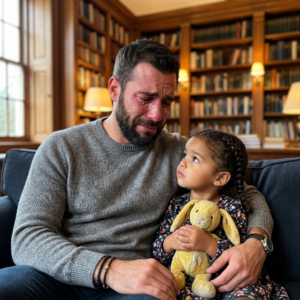
He looked at her. She was 7 years old. She was 7 years old and she had just constructed an ethical framework for forgiveness with the precision of a person twice her age standing in a barn in the rain holding a stuffed animal named Humphrey. That’s a really mature way to look at it, he said and heard how insufficient it sounded.