My Husband Stayed Silent When His Son Humiliated Me… So I Stayed Silent Too
Mom, the bank is calling. They said the transfer hasn’t come through. His voice was tight. Not loud, not angry, but strained in a way I had never heard before. I stood by the window, one hand resting lightly on the edge of the table, watching the early morning light settle across the yard.
Everything outside looked calm, ordinary, unaffected. Inside, something had already shifted. Didn’t I tell you? I said. There was a pause on the other end. Not confusion, something deeper than that. The sound of someone realizing they may have misunderstood more than just one conversation. Tell me what he asked slower now. I didn’t rush to answer. I had learned over time that silence often carries more weight than explanation.
It gives people space to hear what they have been avoiding. That I never agreed, I said. Another pause, longer this time. Behind him, I could hear faint movement. Paper’s voices the distant pressure of something beginning to unravel. “Mom, we talked about this,” he said, trying to steady himself. “You said you’d help.
” “No,” I replied calmly. “You talked. I listened. The difference mattered. I could hear his breathing shift. Not anger yet, just uncertainty. The bank is expecting the money,” he said. “They told me everything was already arranged.” “I’m sure they did,” I answered. That was when his voice changed again. “What am I supposed to do?” he asked. For a brief moment, I closed my eyes.
Not out of frustration, not out of guilt. Because I recognized the moment. The first time he was no longer speaking from confidence, but from consequence. That’s something you should have figured out before I said. And then I ended the call. The silence that followed was not empty. It was clear. That was a week after the opening. A week after I learned quite by accident that I had not been invited. It had started with a simple question.
When is the opening? I asked. We were in the kitchen late morning, coffee already cooling in my cup. My stepson leaned against the counter, scrolling through his phone, dressed sharper than usual. Intentional. He did not look up right away. Opening of what he said. Your company, I replied.
You said it would be this month. That was when he smiled. Not warmly, not politely. A small controlled smirk that seemed to say more than his words would. “It was yesterday,” he said. I blinked once. “Yesterday?” He looked up then, meeting my eyes with a kind of calm confidence I had come to recognize over the years. “Yeah,” he said. “We kept it small.
” I nodded slowly. I didn’t realize. That was the point, he replied. The words were quiet, almost casual, but they landed exactly where they were meant to. What do you mean? I asked. He tilted his head slightly as if deciding how honest he wanted to be. Then he chose. It was just for people with class, he said.
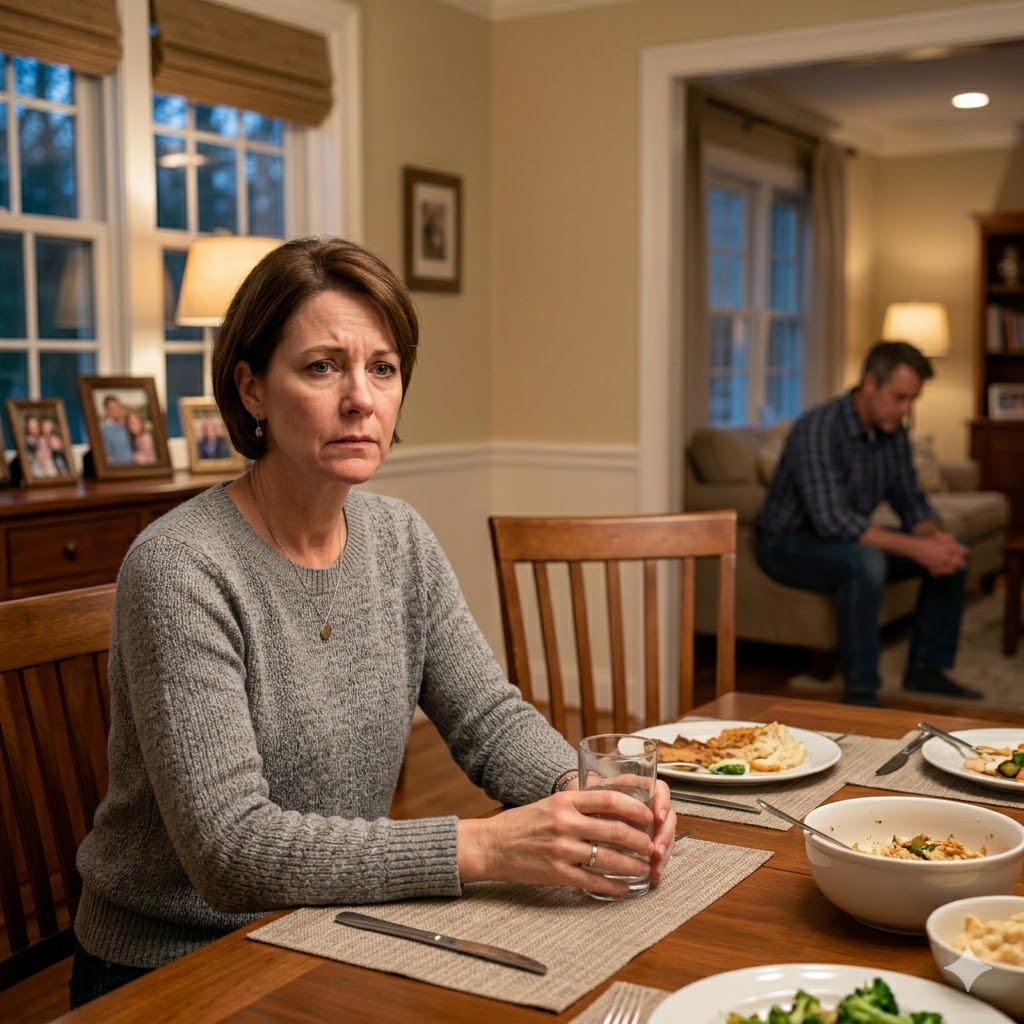
Not everyone gets in, mom. He said the word mom like it belonged to the sentence, not to the relationship. I did not respond immediately. Instead, I turned slightly. That was when I saw my husband standing just behind him. Close enough to hear every word. Close enough to say something. He didn’t.
He simply stood there, hands at his sides, quiet, watching, waiting, perhaps expecting me to smooth it over as I had done in smaller moments before. To laugh, to dismiss, to pretend it was nothing. I looked at him for a second longer than necessary. Then I looked back at my stepson. I see, I said. And that was all. No raised voice, no argument, just acknowledgement. because sometimes that is enough to understand exactly where you stand. My name is Carol.
I married my husband later in life, long after both of us had already built separate histories. I had raised my own daughter, worked more than three decades most of that time in bookkeeping for a regional bank. Numbers were never just numbers to me. They told stories, patterns, risks, and more importantly, they revealed what people preferred not to say out loud.
When I entered this family, I did not come in expecting to replace anything. His son was already grown, independent, polished in that way younger men often are when they are still proving something. We were polite with each other, respectful on the surface, but distance has a way of showing itself over time.
Not in arguments, in small exclusions, in decisions made without you, in conversations that happen around you instead of with you. I did not confront it. Not because I didn’t notice, but because I understood something most people learn too late. You do not need to chase clarity. If you wait, it reveals itself. The company had been his idea. He spoke about it often.
Growth, opportunity, expansion, but rarely about structure, rarely about details. And in my experience, details are where the truth lives. There had been conversations about support, indirect ones, careful ones. words like family and help and being there for each other. I listened.
I asked questions and I noticed what was missing. No clear plan, no direct request, only expectation. The day after I learned about the opening, I sat at the kitchen table longer than usual, not thinking about the insult. That part was already clear.
I was thinking about the foundation, about what kind of business moves forward without transparency, about what kind of person assumes support without offering respect. And for the first time, I asked myself a different question. Not how to help. But why? When the phone rang a week later, I already knew. Not because anyone had told me, because patterns, once you see them, do not hide. And this time, I chose something different.
I chose not to step in, not to assume, not to fill in the space they had left open. I chose to let things unfold exactly as they were built. Because sometimes the most important decision you can make is to do nothing at all. The next morning, I woke before the alarm. Old habit. Years of work had trained my body to rise early before the day could get ahead of me.
I moved quietly through the house, made coffee, and sat at the small table by the window. The same place I had been sitting when everything became clear. I opened a notebook I hadn’t touched in months. Not because I planned to write anything important, but because I needed a place to organize my thoughts. Clarity, in my experience, does not come from reacting. It comes from stepping back far enough to see the full picture.
And the picture once I started laying it out was not complicated. It was incomplete. That was the problem. Over the past year, my stepson had mentioned the business many times, always in broad terms, growth, opportunity, connections, the kind of language that sounds convincing when you don’t ask for specifics.
But I had spent too many years working with numbers to ignore what wasn’t there. No detailed projections, no clear breakdown of capital, no discussion of risk, just confidence. And confidence without structure is not stability. I remembered a conversation from a few weeks before the opening. We had been in the living room. The television was on, but no one was paying attention. My stepson was pacing slowly, phone in hand. “Banks are slower than they used to be,” he said.
“They’re not slower,” I replied. “They’re more careful.” He stopped for a moment. “Same thing he said.” “Not really,” I said. “Careful means they want to understand what they’re dealing with.” He gave a small smile, the kind that closes a conversation rather than opens one. Sometimes you just need support, he said. Family support. I looked up at him then. What kind of support? I asked. He shrugged.
You know, the kind that helps things move forward. I held his gaze. Most things move forward when there’s a clear plan, I said. He nodded, but he didn’t answer. And that was when I understood something important. He wasn’t trying to explain. He was testing the ground, seeing what would be accepted without being questioned. That was the first moment I noticed the assumption. The second came from my husband. It was later that week.
We were in the kitchen cleaning up after dinner. He dried dishes while I rinsed them. He’s working hard, my husband said. I can see that I replied. He’s got a lot writing on this. That’s usually how new businesses work. There was a pause. Then he said more carefully. Sometimes a little help can make a difference. I turned off the water and looked at him. What kind of help? I asked. He hesitated. Financial, he said.
There it was. Clear. Finally. Is he asking me? I said. No, he answered quickly. Not asking, just hoping. I dried my hand slowly. Hoping isn’t the same as asking, I said. He didn’t respond. And assuming isn’t the same as agreeing, I added. That was where the conversation ended. Not resolved, just left there.
That night, I went through what little information I had, not their documents, my understanding, a business with no transparent structure, a timeline that seemed rushed, and a quiet expectation that I would step in at the right moment and make everything easier. Not because I had been included, but because I was available, because I had always been reasonable.
because I had always made things smoother. The next day, I received a call. The number was familiar. A bank, not the one I used to work for, but close enough that I recognized the system. I answered on the second ring. Good afternoon, the voice said. We’re calling regarding a pending transfer connected to your name. I listened carefully. Every detail confirmed what I had already suspected.
There was a transfer expected, a timeline attached to it, and an assumption that it would be completed without delay. “Will you be proceeding with the transfer,” the voice asked? I paused. “Not because I was unsure, but because I wanted to be certain of how I said it.” “No,” I replied. “Not at this time. There was a brief silence on the line.” “Understood,” the voice said.
The call ended quickly after that. I set the phone down and sat there for a moment, not shaken, not conflicted, just steady. That was the moment everything shifted for me. Not because of what I had done, but because of what I had chosen not to do.
For years, I had stepped in when things became uncertain, offered support before it was clearly requested, filled in gaps before they caused problems. It had always felt like the right thing until it didn’t. until I realized that stepping in too early can prevent people from seeing what they are actually building and what they are not. By the end of the week, I could feel the pressure building even without being directly involved.
Shorter conversations behind closed doors, longer pauses at the dinner table, a change in tone when my husband spoke on the phone. We’re working on it. I heard him say once that phrase again, working on what exactly? the plan or the expectation that someone else would solve it. That Friday evening, my husband sat across from me at the table. They’re expecting the transfer soon, he said. I know, I replied. He looked at me more directly.
You spoke to them? Yes. And you told them no. Yes. There was a pause. This could create a problem, he said. It already has. I answered for him. He said, for all of you, I corrected. He frowned slightly. I don’t understand why you wouldn’t help. I held his gaze. Because I was never asked, I said. He opened his mouth, then stopped. Because I was never included, I continued.
His expression changed just slightly. And because support is not something you assume, I said it is something you build. He leaned back in his chair quieter now. I think he thought you would just step in, he said. I know he did, I replied. And that was exactly why I didn’t because sometimes the only way people learn the difference between expectation and reality is to meet it directly. The photos appeared on my phone before noon the next day. Not sent to me, shared through someone else.
A neighbor’s granddaughter had posted them, and from there they found their way across a few familiar names until they reached me. I didn’t go looking for them, but I didn’t ignore them either. I opened the first image and saw my stepson standing in front of a clean white backdrop with his company’s name printed behind him.
He looked confident, well-dressed, composed in the way people are when they believe everything is moving in the right direction. A small group stood around him, glasses raised, smiles held just long enough for the camera. In the second photo, my husband stood slightly behind him, not in the center, not leading, but present. Close enough to be included. I studied his expression for a moment.
He was smiling, but it did not quite reach his eyes. Then I closed the images and set the phone down. There was no anger in me, only confirmation. The next few days moved forward as they always do. Groceries, laundry, small routines that give structure to time. But underneath that rhythm, I was watching, listening, not for words, for patterns.
By midweek, I began to notice changes. subtle at first. The way my husband answered calls in another room, his voice quieter than usual, the way conversations ended more quickly. The way silence stretched a little longer afterward. Once as I passed by the study, I heard him say, “We’re working on it.” There was a pause then, “No, the transfer hasn’t been made yet.” I kept walking.
There was nothing to interrupt, nothing to fix. On Thursday afternoon, he came home earlier than usual. He set his keys down carefully as though placing them mattered more than it should have. “You busy?” he asked. I was sitting at the table reviewing a few documents for a former colleague who still reached out from time to time. “No,” I said. “What is it?” He sat across from me. For a moment, he said nothing. “Then there’s been a delay in the business,” I asked.
He nodded. “Cash flow,” he said. “Timing issue.” I folded my hands on the table. Timing issues usually come from planning issues, I said. He did not argue. That’s what we’re trying to fix, he said. We That word again. Has he asked you for help? I said. He hesitated. Not directly, but he expects it, I said.
He did not deny it. I think he was counting on it, he said quietly. I leaned back slightly, counting on what I asked. He looked at me then away and in that small movement I had my answer. That evening my phone buzzed. A message from my stepson. Hey mom, did you get a call from the bank? Short, direct, no explanation.
I read it once, then set the phone down. I did not respond. Not immediately, not because I wanted to make a point. Because I wanted him to sit with the question. The next morning, another message. Just checking. They mentioned a transfer. Still no context. Still no acknowledgement. Only assumption. I picked up the phone, typed a response, then erased it.
Some conversations need to happen face to face or not at all. By Friday, the tension had found its way into the house. Not in raised voices, in quieter things. Doors closing a little more firmly. Footsteps carrying a bit more weight. My husband sat across from me that evening again. They’re expecting it soon, he said. I know, I replied.
You spoke to them? Yes. And you told them no. Yes. He exhaled slowly. This is serious. Yes, I said it is. For him, he added, for all of you, I said. He frowned slightly. I don’t understand, he said. Why you wouldn’t help? I looked at him carefully. because I was never asked,” I said. He shifted in his chair.
“That’s not entirely fair,” he said. “It is accurate,” I replied. I let a moment pass before continuing. “Because I was never included,” I said. He did not respond. “And because support is something you build with people,” I added, not something you expect from them. He leaned back quieter now. “I think he thought you would just step in,” he said. “I know,” I replied. That night I slept better than I had in days.
Not because anything had been resolved, but because everything had become clear. And clarity once it arrives changes how you move. The next morning, there was a knock at the door, firm, direct. I opened it and found my stepson standing there. He looked the same at first glance, well-dressed, composed. But there was something underneath now.
Urgency. Can we talk? He asked. I stepped aside. Yes, I said. We sat in the living room. Same space we had shared many conversations in before. But this one carried weight. The bank says the transfer isn’t coming, he said. That’s correct, I replied. He leaned forward slightly. I don’t understand. We talked about this. No, I said we didn’t.
His expression tightened. You knew we needed it. I knew you were counting on it, I said. And you let it get this far, he asked. I held his gaze. Yes. He stared at me. Why? I took a breath, not to steady myself, but to give the answer the space it deserved.
Because I needed you to see the difference, I said, between assuming someone will support you and building something that earns support. He did not respond right away. For the first time, he looked uncertain, and that was where everything began to change. By Monday morning, the tone of everything had changed. Not dramatically. No raised voices, no arguments echoing through the house.
Just a quiet shift. The kind that happens when confidence begins to give way to reality. My husband stood in the study with the door half closed. His voice was low controlled, but there was strain in it now. We’re working on it, he said. A pause. No, the transfer hasn’t come through yet. Another pause longer this time. I understand.
When he stepped out, he looked at me briefly, then away, not avoiding me, just adjusting, as if he was still trying to understand where things stood now. We had dinner in silence that evening. Not uncomfortable, but not easy either. Finally, he set his fork down. He’s under pressure, he said. I nodded once. I can tell he didn’t expect things to go this way. That’s the issue, I replied.
He expected instead of prepared. My husband frowned slightly. You make it sound simple. It isn’t simple, I said. But it is clear. He leaned back in his chair quieter now. I think he believed everything would come together, he said. Things come together when they’re built properly, I replied. And when they’re not, he asked. They come apart, I said.
The next afternoon, there was a knock at the door. I already knew who it was. I opened it and saw my stepson standing there again. This time he did not try to appear composed. He looked tired. Not physically, something deeper than that. Can we talk? He asked. Yes, I said. We sat at the table. No small talk this time. No careful introductions. The bank is calling every day, he said. I nodded.
I assumed they would. He looked at me, frustration still there, but softer now. I thought we had more time, he said. Time doesn’t replace planning, I replied. He exhaled slowly. I’ve been going through everything, he said. The numbers, the commitments, what’s actually there. And I asked, he hesitated. It’s not as solid as I thought he admitted. I held his gaze.
That’s an important realization, I said. He gave a small, tired laugh. A little late for that. Late is still better than never, I said. He nodded, but he didn’t look convinced. This could fall apart, he said. Yes, I replied. It could. He studied my face, searching for something. Sympathy, perhaps. Reassurance. A sign that I would step in now. I didn’t offer it. Not because I didn’t care. Because I cared enough not to interrupt what he was finally seeing.
I didn’t think you would just let it happen, he said. I leaned forward slightly. I’m not letting it happen, I said. You are. That stopped him. Not harsh. Just precise. I didn’t build this, I continued. I didn’t make the decisions. I wasn’t included in the process. He looked down at the table. I see that now, he said quietly. We sat in silence for a moment.
Not uncomfortable, just honest. What am I supposed to do? He asked. This time, the question was different. Not a reaction, a genuine search for direction. Start with the truth, I said. He looked up. What truth? the actual numbers, I replied. What you have, what you owe, what you can realistically manage. He nodded slowly.
I’ve started doing that, he said. Good, I answered. And then he asked. Then you make decisions based on that, I said, not on what you hope will happen. He leaned back thinking. And if it’s not enough, he asked. Then you adjust, I said, or you accept the consequences. He sat with that for a long moment.
I should have included you, he said finally. Yes, I replied. I should have asked directly. Yes, and I shouldn’t have spoken to you that way, he added. I looked at him. No, I said you shouldn’t have. He nodded, not arguing. I was wrong, he said. The words were simple, but they mattered. Understanding that is where things start to change, I said. He looked at me carefully.
Do you think I can fix this? He asked. I considered the question. Not quickly, not casually. I think you can improve it, I said, if you’re willing to be honest about where it stands. He nodded. That’s fair. He stood up slowly, paused for a moment, then said, “I’m sorry.” This time he meant it. I could hear it in the way he said it. “I know,” I replied.
After he left, my husband came into the room. He had heard enough to understand. “How bad is it?” he asked. “It’s serious,” I said. He nodded, absorbing that. “I should have stepped in earlier,” he said. “Yes,” I replied. He looked at me, not defensive this time. “Why didn’t you?” he asked. I met his eyes. “Because stepping in earlier would have prevented him from seeing this clearly,” I said.
“And now he asked. Now he has a chance to understand it,” I replied. My husband stood there quietly. Then he said something I had not heard from him in a long time. You were right. I didn’t respond. Not because I disagreed, but because being right was not the point. Understanding was. That evening the house felt different. Not lighter, not heavier, just more honest.
And sometimes that is what change looks like. Not dramatic, not immediate, just a quiet shift towards something more real. That night, the house settled into a kind of quiet I hadn’t felt in a long time. Not the quiet of avoidance. The quiet of things finally being faced. My husband stood at the sink, rinsing a glass that didn’t need rinsing.
He turned it in his hands once, twice, then set it down and dried it slowly. “I should have said something,” he said. His voice was steady, but there was weight in it. I leaned against the counter, watching him. “Yes,” I said. “You should have.” He nodded, accepting it without argument. I thought it would pass, he admitted that it wasn’t serious.
Small things rarely stay small when they’re ignored, I replied. He let out a slow breath. I didn’t want to take sides. You weren’t taking sides, I said. You were choosing silence. He looked at me then, and for the first time, I saw that he understood the difference. The next afternoon, my phone rang again. His name on the screen. I answered. Mom, he said.
His voice was quieter now, more measured. Can I come by? Yes, I said. When he arrived, he didn’t carry the same certainty he once had. He still stood straight, still held himself together, but something had shifted beneath the surface. We sat at the table. Same place, same chairs, different understanding. I owe you an apology, he said. He looked at me this time when he said it.
for how I spoke to you,” he continued. “And for assuming about the money,” I nodded once. “Thank you for saying that,” I replied. He exhaled slightly as if the words had been sitting with him for a while. “I thought that was how it worked,” he said. “Family just steps in.” “Family can step in,” I said, “but not without respect and not without clarity.” He nodded. I see that now.
There was a pause, but it wasn’t uncomfortable. It was thoughtful. I’ve been going through everything he said, all the numbers. What’s actually there and what isn’t. That’s where you start, I said. I should have done that earlier. Yes, I replied. But earlier is gone. What matters is what you do now. He gave a small, tired smile.
That sounds like something you’ve said before. It probably is, I said. He reached into his bag and pulled out a folder, placing it carefully on the table between us. I put this together, he said. Real numbers this time. I looked at the folder, then back at him. I’m not asking you for money, he added quickly. Not like before. I appreciated that he understood the difference now.
Then what are you asking? I said. He hesitated, choosing his words more carefully than I had ever seen him do before. I’m asking for your opinion, he said. And if you’re willing, your guidance. That was new, not an expectation. A request. I opened the folder. The numbers weren’t perfect. There were gaps, risks, things that would need to be addressed. But there was something else as well.
Structure, honesty, effort. We went through it together, line by line. I pointed out what needed attention, where the risks were, where he needed to be more precise. He listened, not defensively, not impatiently. He listened like someone who finally understood what was at stake. When we finished, I closed the folder and rested my hands on top of it.
You have work to do, I said. He nodded. I know, but it’s possible, I added. He looked up, surprised. You think so? I think it’s more possible now than it was before, I said. Because of the numbers, he asked. Because of how you’re approaching it, I replied. He sat with that, then nodded slowly.
As he stood to leave, he paused near the door. I meant what I said, he added about being sorry. I know, I said. And thank you, he continued for not stepping in and fixing it. I gave a small smile. You’re welcome. After he left, my husband stepped into the room. He had been nearby giving us space. How did it go? He asked. Better, I said. He nodded. I can see that. We stood there for a moment. Not everything repaired.
Not everything forgotten, but something important had changed. Later that evening, I sat by the window again. The same place where I had first chosen not to act. Only now it didn’t feel like distance. It felt like balance. I thought about everything that had happened. The assumptions, the silence, the consequences, and what came after.
There is a common belief that strength means stepping in and holding everything together. But sometimes strength is knowing when not to. Not out of anger, not out of pride, but out of respect, respect for yourself, and respect for others to face what they have created. Because growth does not come from being protected from mistakes. It comes from understanding them.
If you have ever been in a position where you were expected to give without being truly valued, take a moment to think about where your boundaries are. And if this story felt familiar or meant something to you, consider sharing it with someone who might need to hear it. Sometimes the quietest lessons are the ones that stay with us the longest. Thank you for listening. The end.