I buried my brother on a cold gray morning, and by nightfall, I was holding his five year old daughter, knowing she could be taken from me if I made the wrong choice. The sky over St. Louis hung low and metallic that day, like it was holding back something heavy. Wind cut through the streets, pushing paper across sidewalks and rattling traffic lights, but none of that noise felt real. The only thing that felt real was the silence inside my chest. Grief didn’t come like a wave. It came like pressure, steady and constant, pressing inward until breathing itself felt like work.
Ryan had always been the steady one. Two years older than me, stronger in ways that didn’t show up in muscle or rank. While I chased structure and purpose in the Navy, he stayed behind and built something quieter. A life. A home. A family. He believed in routine, in showing up, in fixing things with his hands instead of walking away. Emily completed that picture in a way that made everything look effortless. She had a calm presence, the kind that made chaos feel manageable. Her voice never needed to rise to be heard, and children trusted her instantly. And Lily… Lily was five. Too young to understand death, but old enough to feel something had been torn away.
The accident didn’t give anyone time to prepare. Forty two vehicles on black ice. A chain reaction no one could outrun. Metal twisted into shapes that didn’t make sense. Sirens layered over each other in a kind of mechanical grief. By the time I landed and got back, everything that mattered had already been reduced to paperwork and condolences, to signatures and sealed envelopes and quiet conversations that ended too quickly.
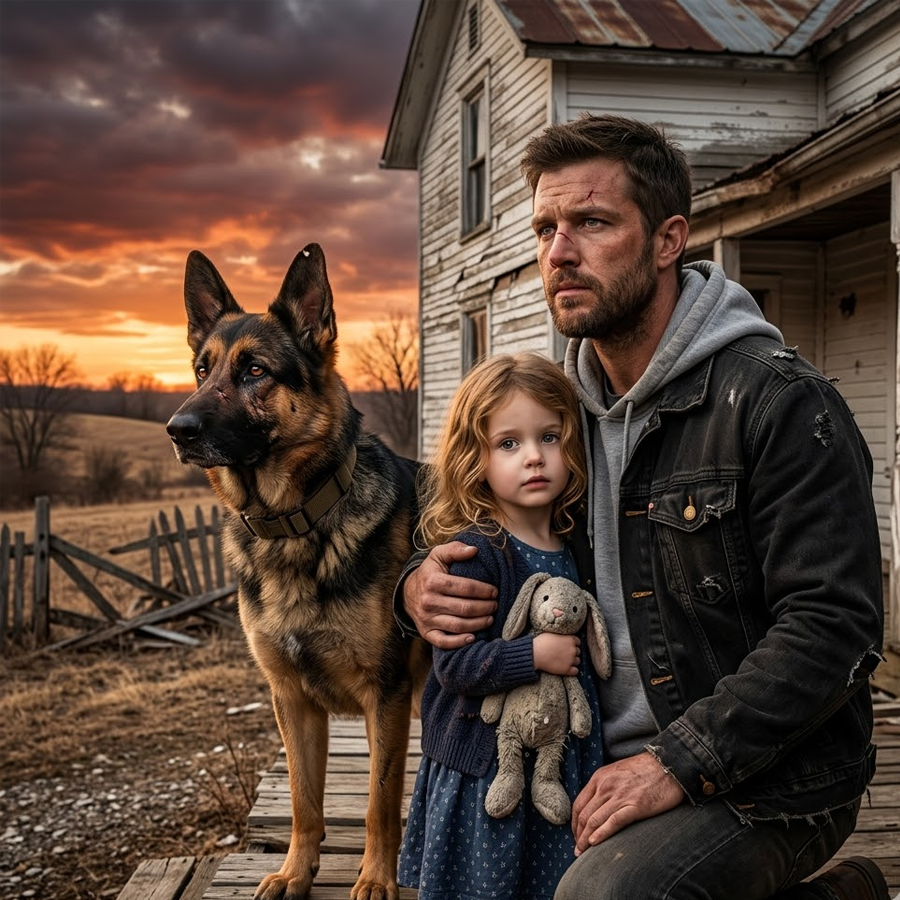
At the funeral home, the air smelled like lilies and polished wood. People spoke in hushed tones, like volume alone could disturb the dead. I didn’t hear most of it. My focus locked on one small figure sitting in the front row, feet not touching the floor. Lily held a worn stuffed rabbit in one hand and stared at the urns with quiet confusion. No tears. No outburst. Just waiting, as if patience alone might reverse what had happened.
When she looked up at me and said, “Uncle Ethan?” something inside me shifted in a way I wasn’t prepared for. I had been trained for pressure, for chaos, for situations where hesitation cost lives. But nothing in my life had prepared me for a child asking a question she didn’t fully understand.
The social worker found me shortly after. She was direct, efficient, the kind of person who had learned that clarity was kinder than false hope. Without a legal guardian stepping forward, Lily would be placed into foster care. Temporary at first, then permanent if no one claimed her. The word family hung between us like a challenge rather than a comfort.
I looked down at Lily again. Her small hands tightened around that rabbit like it was the last solid thing left in her world. In that moment, the decision wasn’t complicated. It was immediate, instinctive, almost automatic. “Get me the papers,” I said.
That was how it started. Not with confidence. Not with certainty. Just a decision made in a moment where there was no other acceptable outcome.
The first weeks were survival in a form I didn’t recognize. My apartment felt smaller overnight. It had always been temporary, a place to sleep between deployments. Now it held a child’s shoes by the door and a toothbrush next to mine. The walls seemed thinner. The sounds of the neighborhood sharper. Sirens at night didn’t feel distant anymore. They felt like warnings.
Lily didn’t adjust overnight. She woke up calling for her mom, voice small and uncertain. Sometimes she didn’t cry. Sometimes she just sat there in silence, like she was trying to understand something that didn’t make sense. I didn’t have answers for her. I only had presence, and even that felt fragile.
Rex stayed close to her. He had been my partner overseas, a military working dog trained for detection and protection. Precision. Instinct. Loyalty forged under pressure. After his retirement, he refused reassignment and stayed with me. Now, without command, he shifted roles again. He watched her. Protected her. Positioned himself between her and anything unfamiliar. At night, he lay close enough that she could reach him without waking fully.
The first time I realized I was failing wasn’t dramatic. It was quiet. I had taken two jobs to keep everything afloat, telling myself discipline would carry me through. That exhaustion was temporary. That I could push through it the way I always had. One afternoon, I sat down for a minute and didn’t wake up when I was supposed to. When I reached her school, Lily was sitting alone on a bench, legs swinging slowly, hands folded in her lap. She wasn’t crying. She wasn’t scared. She was just waiting, like she believed I would come.
That kind of trust doesn’t ask questions. It doesn’t consider circumstances. It simply exists. And breaking it isn’t something you recover from easily.
That night, I made a decision that felt reckless and necessary at the same time. I left the city.
The farm wasn’t much to look at. The house leaned slightly, paint peeling, roof worn thin by years of neglect. The barn looked like it had survived storms it shouldn’t have. The land stretched wide but tired, like it had been waiting for someone who never came back. It wasn’t security. It wasn’t comfort. It was a gamble. But it was quiet, and quiet felt like something Lily needed more than anything.
The first night there, every sound felt amplified. Wind against the walls. Wood settling. The distant movement of something in the fields. Lily slept curled against Rex, one hand buried in his fur. I stood in the doorway and realized something simple and terrifying. There was no backup. No system. No safety net. Just me.
The days that followed were harder than anything I faced in the military. Not because they were more dangerous, but because there was no clear objective. No mission briefing. No defined end. Just problems layered on top of each other. The roof leaked. The well failed. The fence collapsed. Money ran thinner than expected. And every night, I had to sit across from a five year old girl and pretend everything was under control.
There were moments I considered walking away. Selling the farm. Going back to something stable. Something predictable. But then Lily would do something small. Ask if this was our home. Fall asleep holding onto my sleeve. Laugh at something Rex did. And quitting stopped being an option.
The storm came in late fall. I saw it building hours before it hit. The sky darkened in a way that felt heavy. The wind shifted direction. The air carried that metallic edge that meant something was coming. I secured what I could, but I knew it wasn’t enough.
When it hit, it hit hard. Rain came sideways, driven by wind that tore at the barn and rattled the house. A section of the roof gave way with a crack that cut through everything. The animals panicked. Lily stayed inside, exactly where I told her. Rex ran straight into the storm with me. He moved the way he always had, controlled, focused, precise. He circled the animals, redirected them, blocked escape routes. No hesitation. No fear. Just purpose.
By the time it ended, the farm was still standing. Barely. But it was enough.
The next challenge came in the form of a letter. Guardianship review. Inspection. Evaluation. If I failed, Lily would be taken. It didn’t matter how hard I had tried. It didn’t matter what we had built. If it didn’t meet their standards, it was over.
That pressure hit harder than the storm.
I worked harder than I thought possible. Repaired everything I could. Reinforced what I couldn’t fully fix. Accepted help when it came, even when it challenged my pride. Because this wasn’t about me anymore.
Inspection day came and went faster than expected. The social worker observed everything. The house. The barn. Lily. Rex. Me. When she said we could proceed with permanent guardianship, I didn’t react immediately. Not because I didn’t care, but because part of me didn’t believe it was real.
When the official letter came weeks later, it was.
Lily was staying. Not temporary. Not conditional. Home.
Life didn’t become easy after that. The farm still demanded more than it gave. Money remained tight. Problems didn’t disappear. But something shifted. We weren’t just surviving anymore. We were building.
Spring came slowly, then all at once. The ground softened. Crops began to grow. Chickens produced consistently. I built a small stand at the end of the driveway and started selling eggs. Neighbors showed up, not out of pity, but out of respect.
Lily changed too. She laughed more. Slept better. Made friends. Started to look like a child again instead of someone carrying something too heavy. One evening, she almost called me “Dad.” She corrected herself quickly, embarrassed. I told her she could call me whatever felt right. That moment stayed with me, not because of the word, but because of what it meant.
The day I put up the sign at the end of the driveway, it didn’t feel like a milestone. It felt like a quiet acknowledgment. Walker Farm. Home. Not perfect. Not easy. But ours.
For the first time since that cold gray morning, I wasn’t just standing. I was steady. And sometimes, that’s the real victory. Not that the storm disappears, but that you learn how to stand through it without breaking. Because in the end, responsibility didn’t take everything from me. It gave something back. A reason. A place. A family rebuilt from loss instead of defined by it.
And that was enough.
THE END






