Katherine was sitting on the worn-out velvet sofa, her heart fluttering like a trapped bird, when she heard her daughter scream for the third time that morning. The sun had barely begun to cast its pale light over the suburban streets of a quiet town in Ohio, but the atmosphere inside the house was already boiling.
Victoria stormed into the living room like a localized hurricane, her heels clicking sharply against the hardwood floor she had once thanked her parents for helping her buy. She threw her designer handbag onto the floor with a thud that echoed through the hallway, and pointed a trembling manicured finger directly at her mother’s face.
Her eyes were wide with a cold, sharp fury that Katherine barely recognized as belonging to the little girl she had once tucked into bed every night. Enough, Mom. I’ve had it. You and Dad cannot keep living here for free like you’re at some all-inclusive resort. Victoria’s voice cracked with the strain of her anger.
Katherine felt a familiar, sharp constriction in her chest, a physical manifestation of the grief that had been building for months. Since they had moved in, she and Mark had done everything in their power to be useful. They had spent their days looking after the three grandchildren, cooking endless meals, scrubbing floors until their joints ached, and tending to the garden that Victoria and her husband, Ronald, usually ignored.
Katherine looked up at her daughter, her voice small and trembling. Sweetie, we help with everything. Your father fixes what’s broken, and I take care of the kids from morning until night. We thought we were helping you guys. Victoria let out a bitter, a jagged laugh that felt like a slap. Helping? Mom, do you have any idea what the utility bills look like? You guys use water and electricity like it grows on trees.
This isn’t a hotel, and it certainly isn’t a retirement home. We need our space, and we need this house to ourselves. At that moment, Mark appeared in the kitchen doorway, drying his hands on a tattered towel. He had just finished washing the breakfast dishes for the entire family, dishes he had also filled with food he had prepared. He looked at his daughter, and for a split second, he saw a stranger.
This wasn’t the Victoria he had walked down the aisle. This was someone hardened by a life of perceived inconveniences. Victoria, please show some respect to your mother, Mark said, his voice deep but layered with an exhaustion that went down to his bones. Victoria turned on him, her eyes flashing. Respect? Dad, I have bills to pay.
Ronald is constantly on my back about the finances, and he’s sick of you two being underfoot. He says you’re ruining our family routine, that we can’t even have a private conversation without one of you popping up. Ronald, the son-in-law who barely managed a grunt of acknowledgement when he came home from work, was the ghost behind these complaints.
He would walk straight to the bedroom, ignoring the hot dinner Katherine had kept waiting for him. Yet he was the one dictating their expulsion. Can we contribute more? Mark asked, his voice dropping to a humble, pleading low. We have some savings tucked away. We’ve been careful over the years. Victoria crossed her arms, a cynical smirk playing on her lips.
Savings? How much, Dad? $100? A 200? That wouldn’t even cover the air conditioning you blast in the guest room. It’s pathetic that you’re even bringing it up. Katherine stood up from the sofa, her legs shaking so violently she had to grip the armrest. She had seen this coming in the way Ronald looked through them, in the way Victoria avoided their eyes during dinner.
So, this is it, then? Katherine asked, a single tear escaping and tracing a path through the wrinkles on her cheek. You really want us to go? Victoria looked away, unable to meet her mother’s gaze for more than a second. It’s not about wanting, Mom. It’s about needing. The house is too small for five people and two seniors.
We need the guest room for an office. Mark stepped forward, interrupting her. We sleep in the living room half the time just so the kids can have the playroom, Victoria. And we aren’t taking up anyone’s space. For heaven’s sake, Dad, Ronald is driving me crazy with this. Either you leave on your own terms or or She didn’t finish the sentence, but the implication hung in the air like a thick, suffocating fog.
Mark’s posture straightened, a flicker of his old strength returning. Or what? You’ll call the police on your own parents? You’ll throw our suitcases onto the sidewalk? The silence that followed was heavy, suffocating. Victoria looked at the floor, her silence providing a louder answer than any words could. Katherine felt the weight of decades of motherhood crumbling.
She had sacrificed her health, her youth, and every penny they had ever made to ensure Victoria had the best life possible. And now, they were being discarded like old furniture. Fine, Mark said, his voice suddenly firm, a coming from a place of deep, hidden resolve. We’re leaving. Katherine, go get our things. We’re leaving today.
Katherine began to protest, her mind racing with the terrifying reality of having nowhere to go, but Mark raised a hand to silence her. We will pack our bags and be out of your way by sunset. Victoria looked surprised, perhaps not expecting them to give in so quickly. Do you even have somewhere to go? she asked, a momentary flicker of guilt passing over her face.
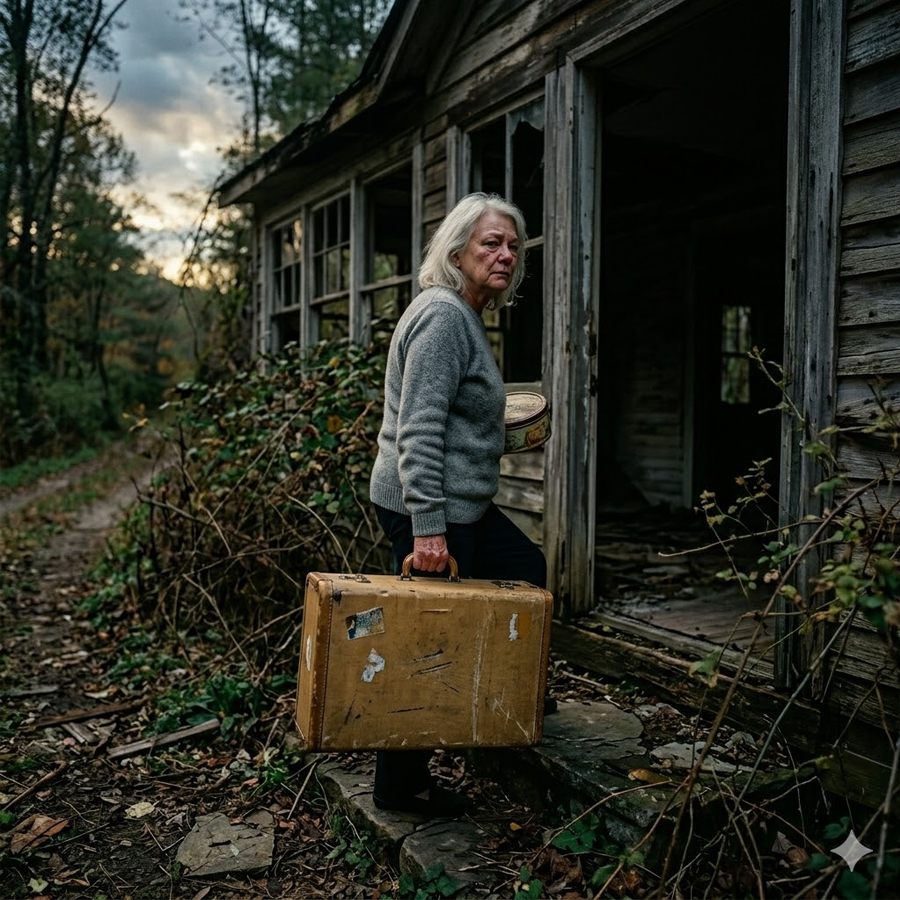
Mark didn’t look back as he led Katherine toward the stairs. That is no longer your concern, Victoria. You wanted your space. Now you have it. They went up to the small room they had been sharing, a space that felt more like a prison than a sanctuary. They didn’t have much, just a few changes of clothes packed into an old, battered suitcase.
Their vital documents stored in a fading plastic folder, and a rusted tin of butter cookies that Katherine kept hidden beneath their pillows. Mark sat on the edge of the bed and pulled the tin out. He opened it slowly, revealing stacks of folded bills they had accumulated over a lifetime of labor. Every single note in that tin represented a sacrifice, a vacation they never took, a new coat Katherine had desperately needed but refused to buy, a dinner out that was skipped to pay for Victoria’s ballet lessons.
How much is in there, Mark? Katherine whispered, her voice barely audible over the sound of her own heartbeat. Mark counted the money slowly, his fingers methodical. It’s about $15,000. It’s not a fortune, but it’s enough to start over somewhere modest, somewhere where we don’t have to apologize for existing.
Katherine wiped her tears with the back of her hand. But, Mark, we have nothing else. No house, no land, no family who wants us. Mark took her hand, his grip warm and steady. We have each other, Katherine. And in all the years we’ve been together, that has always been enough. We’ve survived lean winters and hard harvests before.
We can do it again. They carried their suitcases down the stairs. Victoria was in the kitchen with her back turned, pretending to be busy with the kettle, but the tension in her shoulders gave her away. She didn’t turn around as they walked toward the front door. We’re going to call Robert, Victoria said without looking.
He has more room in his house in the city. Maybe he can take you for a while. Mark didn’t even break his stride. Don’t bother, Victoria. We’ll manage on our own. We don’t need to be moved from one problem house to another. Katherine stopped for a moment at the threshold, looking back at the home where she had spent the last year trying to buy her daughter’s love with chores and silence.
Victoria, Katherine said, her voice echoing in the hallway. One day, you will understand exactly what you’ve done today. And I truly hope that when that day comes, someone has more compassion for you than you had for us. Because being old isn’t a crime, and being a parent shouldn’t mean being a servant. They stepped out into the bright, unforgiving sunshine of the afternoon.
The street was quiet, the neighbors’ houses looking peaceful and indifferent to the tragedy unfolding at number 42. He Mark hailed a taxi and gave the driver the address of the Greyhound bus station. During the entire 20-minute ride, neither of them spoke a word. They simply held hands, their fingers interlaced so tightly, it was as if they were afraid they might float away into the void.
At the station, Mark walked up to the ticket counter. He looked at the map of the region, his eyes settling on a small, obscured dot labeled Serene Valley. It was a town his old colleague had mentioned years ago, a place tucked away in the rolling hills of West Virginia, known for being quiet, affordable, and far away from the hustle of the city.
He bought two one-way tickets. The bus departed in the middle of the afternoon, roaring to life as it pulled out of the terminal. Catherine leaned her head against Mark’s shoulder and finally let the tears fall freely. But they were silent tears, the kind that hurt the most because they come from a place of internal shattering.
“We’re going to be okay, Catherine.” Mark whispered into her hair. “I promise you. We are going to find a place that is ours.” They arrived in Serene Valley just as the sun was dipping below the horizon, painting the sky in bruised shades of purple and orange. The town was tiny, just a few cobblestone streets, a town square with a weathered gazebo, and an old stone church that looked like it had stood there for two centuries.
They walked down the main street, their suitcases rattling against the uneven pavement, until they saw an elderly man sitting on a bench in front of a hardware store. Mark approached him. “Excuse me, sir. Here, is there a cheap inn or a boarding house around here?” The man pointed a gnarled finger toward a side street.
“Check with Benjamin at the Horizon Realty office on the corner. He stays late. He might know of something.” The Horizon Realty office was a cramped room filled with the scent of old paper and wood smoke. Photos of modest farmhouses and plots of land were pinned to the walls. Benjamin, a man with a thick grizzly mustache and kind eyes, looked up as they entered.
“Good evening. How can I help you, folks?” Mark set their bags down. “We’re looking for a place to stay. Something very simple, very cheap.” Benjamin looked at their worn clothes, their tired faces, and the desperation etched into their posture. “Are you from out of town?” Mark nodded. “We just got in.
” “Are you looking to rent or buy?” The question took Mark by surprise. Sure, he hadn’t dared to think about buying. “Depends.” Mark said, his voice regaining some of its strength. “Do you have anything incredibly cheap that we could pay for in cash? Something no one else wants?” Benjamin scratched his chin and pulled out a dusty, overstuffed folder from his desk.
“Well, there is one property, a real fixer-upper. To be honest, it’s been abandoned for nearly 20 years. The original owner passed away without any heirs, and the county took it over for back taxes. They’re selling it just to get it off the books.” Mark leaned in. “How much?” Benjamin named a price that was nearly $13,000, almost their entire life savings.
“Can we see it?” Benjamin checked his watch. “It’s getting dark, but if you’ve got a flashlight, I I can take you out there now.” They piled into Benjamin’s old, rusted pickup truck and drove out of the town center. The paved roads soon gave way to gravel, then to a narrow dirt track hemmed in by overgrown thickets and ancient oak trees.
They passed several well-kept farms before reaching a spot where the brush was so thick it nearly touched the sides of the truck. In the middle of a clearing stood a house, or what was left of one. The walls were cracked, the windows were devoid of glass, and the roof had collapsed in several places. The front door was hanging by a single, rusted hinge, groaning in the wind.
Catherine looked at it and felt a wave of nausea. It was worse than she had imagined. It looked like a den for wild animals, not a home for humans. “You see why no one wants it?” Benjamin said, shining his flashlight on the rotting porch. “But the land is decent. It’s almost 3 acres, and there’s an old stone well out back that they say still has water in it.
” Mark climbed out of the truck and walked toward the structure. He stepped onto the porch, the wood groaning dangerously under his weight. He pushed the door open, the sound echoing through the empty rooms. Inside, it was a graveyard of dust, cobwebs, and the smell of mold. But it had a roof, mostly. And it had walls.
Most importantly, it could be theirs. He walked back to where Catherine and Benjamin were waiting in the shadows. “We’ll take it.” Mark said. Benjamin’s eyes widened in disbelief. “Sir, are you sure? This place needs an incredible amount of work. It might be cheaper to tear it down and start over.” Mark looked at Catherine, who was pale but nodding slowly.
“We’ll buy it. Can we sign the papers tonight?” Benjamin shook his head in amazement. “You have the money on you?” Mark opened their old suitcase right there on the tailgate of the truck, pulled out the cookie tin, and showed the stacks of bills. Benjamin went silent. He looked at the dented tin, at the carefully saved notes, and he understood.
He understood that this couple wasn’t looking for an investment. They were looking for a life. “Let’s get back to the office. I’ll prepare the paperwork.” The drive back was silent. When they finished the transaction, Benjamin directed them to a small, clean motel nearby. “Get some rest.
Tomorrow, you can start your new life.” Mark and Catherine climbed into the motel bed, which creaked under their weight, but felt like a luxury after months of sleeping on Victoria’s sofa. “Did we do the right thing, Mark?” Catherine whispered into the dark. Mark held her hand tightly. “We did what we had to do. That place is ours now.
No one can ever kick us out again. No one can ever tell us we’re in the way, or that we’re costing too much. We’ll build it back up, Catherine. We’ve always been builders.” Catherine closed her eyes, and for the first time in a very long time, she felt a flicker of hope. The first morning at the new property was a harsh awakening.
They had returned with Benjamin, finalized the deeds at the local courthouse, and received a set of rusted keys that looked like they belonged in a museum. Standing in the middle of the overgrown yard in the harsh morning light, the house looked even more daunting. The silence was absolute, only broken by the chirping of birds and the rustle of the wind through the tall grass.
They spent the entire day just clearing a path to the front door and sweeping out the thick layers of dust that had settled over two decades. Their muscles screamed in protest, and their hands were soon covered in blisters, but they didn’t stop. To stop was to let the despair catch up to them. As the sun began to set on their first full day of ownership, Catherine was trying to scrub the grime off the kitchen counter when she heard a voice from the gate.
“Hello? Is anyone actually living in this ruin?” Mark went to the door. Standing there was a woman in her late 60s, short and sturdy, wearing a floral apron and a pair of sensible gardening clogs. She had the look of someone who knew everything that happened within a 10-mile radius. “Oh, good afternoon.” Mark said tentatively.
The woman put her hands on her hips. “I’m Lillian. I live about half a mile down the road. I heard Benjamin finally sold this place. I assumed it was to a developer who was going to knock it down.” Catherine stepped up behind Mark. “I’m Catherine, and this is my husband, Mark. We’re the new owners.” Lillian looked them up and down, her gaze lingering on their worn-out shoes and Catherine’s soot-stained face.
“You’re serious? You’re going to live here? In this? My goodness, you two must be either incredibly brave or completely out of your minds. This place is a death trap. There are snakes in the cellar and probably ghosts in the attic.” Catherine felt a flush of embarrassment creep up her neck. “We just wanted a place of our own.
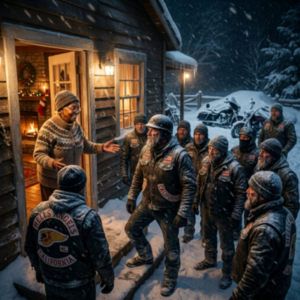
” she said, her voice defensive. Lillian let out a sharp laugh. “Well, you’ve certainly got that. Good luck with the raccoons. They’ve considered this their palace for years.” Lillian was about to say more when a man appeared behind her. He was tall and thin, wearing a faded plaid shirt and a straw hat, leaning heavily on a wooden cane.
Lillian, leave the poor folks be. You’re scaring them off before they’ve even unpacked. He turned to Mark and Catherine with a warm, toothy grin. I’m Jack. Don’t mind her. She’s got a tongue like a viper, but she’s harmless enough. I’ve lived in Serene Valley my whole life. This old place used to be quite something before the Colonel passed away.
Mark shook Jack’s hand. It’s nice to meet you, Jack. We’re trying to make it livable, but it’s a bit of a struggle. Jack looked at the house with a nostalgic eye. The Colonel was a strange one. Kept to himself. But he took care of this land. You’ll be wanting to check that well in the back. If the pump still works, you’ll have the best water in the county.
If you need a hand with the heavy lifting, you just let me know. I might be slow, but I know how to fix a stubborn engine. Catherine felt a lump form in her throat. After the coldness of their own children, the simple offer of help from a stranger felt like a miracle. We’d appreciate that more than you know, she said.
Lillian huffed, but didn’t leave. I suppose I could bring over some extra blankets and some soup later. You look like you haven’t had a decent meal in a week. Over the next few days, the reality of their situation settled in. They had no electricity, no running water, and very little money left. They spent their nights huddled together under a pile of blankets on the floor, listening to the house groan and settle.
Every creak sounded like a warning. But every morning, they woke up and went to work. Mark used the last of their cash to buy some basic tools and lumber from the town’s hardware store. He spent his days on the roof, patching the holes with salvaged shingles, while Catherine tackled the interior, scrubbing away years of neglect.
It was backbreaking work, but there was a strange dignity in it. They were no longer the burdens in Victoria’s house. They were the masters of their own destiny. One afternoon, while Mark was working on the back porch, he called out to Catherine. Come look at this. She hurried outside to find him standing by the old stone well.
He He had spent hours cleaning out the debris and greasing the rusted hand pump. He gave the handle a long, rhythmic series of pumps. For a few minutes, nothing happened but a dry, rasping sound. Then, with a sudden gurgle, a stream of clear, cold water erupted from the spout. Mark caught some in his hands and splashed it on his face, laughing.
It’s perfect, Catherine. It’s cold and sweet. We have water. It was a small victory, but in their world, it felt like winning the lottery. That evening, as they sat on the porch steps drinking the fresh water, Catherine’s phone vibrated in her pocket. It was a text from Victoria. Mom, Ronald and I were talking.
Robert says he can’t take you guys, either. He’s renovating his kitchen and doesn’t have the space. And we need you to send back the $200 you took from the grocery jar before you left. It’s urgent. Catherine read the message twice, her hands beginning to shake. She hadn’t taken any money from a grocery jar. Every cent they had was their own.
The sheer pettiness of the accusation stung worse than the expulsion itself. Mark took the phone from her hand and read the message. His face hardened, the lines around his eyes deepening. He didn’t say a word. He simply deleted the message and then went into the settings. With a few clicks, he blocked Victoria’s number.
Then, he did the same for Robert. He handed the phone back to Catherine. There, he said firmly, we don’t owe them anything, and we certainly don’t owe them our peace of mind. We are starting over, Catherine. To truly starting over. They sat together in the gathering twilight, the sound of the crickets rising from the tall grass.
For the first time, the house didn’t feel like a ruin. It felt like a fortress. The weeks turned into a month, and the shack was slowly becoming a home. With Jack’s help, they had managed to install a small wood-burning stove they found at a yard sale for $50. The heat it provided made the evenings much more bearable.
They were living on a diet of beans, rice, and whatever vegetables Catherine could grow in the small garden patch she had started. But they were healthy. One rainy Tuesday afternoon, Mark was in the back room, a space they had been using for storage, trying to find the source of a persistent leak. As he pulled away a piece of rotting wallpaper, he noticed something strange.
See, the wood paneling underneath didn’t match the rest of the room. He pushed against the panel, and to his surprise, it shifted. He grabbed a crowbar and carefully pried the wood away. Behind it sat a small, narrow door, painted the same dull beige as the walls, almost invisible to the naked eye. Catherine, get the flashlight, he shouted.
Catherine ran into the room, her heart racing. Together, they stood before the hidden door. Mark turned the handle, which surprisingly moved with ease. The door swung open to reveal a set of steep stone stairs descending into the darkness. The air that drifted up was cool and smelled of damp earth and old parchment.
What is this? Catherine whispered, clutching Mark’s arm. Benjamin didn’t say anything about a basement. Mark led the way, his flashlight cutting through the thick darkness. And the stairs were solid, carved directly into the bedrock. At the bottom, they found themselves in a room about 20 ft square. The walls were lined with sturdy wooden shelves, and in the center of the room sat three large, iron-bound chests.
The floor was dry, which was a miracle given the state of the house above. Mark approached the first chest and wiped away a thick layer of dust. The initials A.M. were burned into the wood. Augustus Mendez, Mark whispered. The Colonel. He used his crowbar to snap the rusted lock. The lid creaked open, revealing stacks upon stacks of yellowed documents, tied together with rotting twine.
These weren’t just old newspapers. They were legal deeds, maps, and geological surveys. Mark picked up a heavy, leather-bound ledger and began to flip through the pages. His eyes widened as he read the entries. These were records of land purchases that extended far beyond the 3 acres they had bought. According to these papers, the property actually encompassed over 200 acres of the surrounding valley.
Catherine picked up a bundle of letters. They were from a company called Pure Spring Resources, dated nearly 40 years ago. The letters were increasingly frantic, offering the Colonel enormous sums of money to buy the rights to a mineral anomaly on his land. One letter, stamped with a corporate seal, offered $3 million for a 20-year lease.
Mark, look at this, she said, her voice trembling. They wanted this land. They wanted something in the ground. Mark opened the second chest. Inside were technical maps of the water table, showing a massive underground reservoir directly beneath their feet. And the maps were detailed, marked with notations about mineral content, lithium, magnesium, and calcium.
There was a report from a laboratory in Virginia stating that the water from the well was of a rare, therapeutic quality, potentially worth a fortune in the bottled water market. The third chest was the most shocking of all. It contained the original, unrecorded deeds to the entire valley, along with a stack of gold coins and several bars of silver, hidden away like a dragon’s hoard.
Mark sat down on the cold stone floor, the flashlight rolling from his hand. We aren’t just homeowners, Catherine, he breathed. We’re sitting on a gold mine, literally.
PART 2
They spent the entire night in the basement, pouring over the documents by the light of several candles. The more they read, and the more they realized the scale of their discovery.
The Colonel hadn’t been a hermit. He had been a man who realized the world was going to come for his resources and decided to hide them until someone he deemed worthy found them. Or perhaps he had simply run out of time. Regardless, the papers in their hands were legal, stamped, and signed. They proved that the sale by the county had been based on incomplete records.
By buying the shack, they had legally inherited the claims and the surrounding acreage that hadn’t been sold off because no one knew it existed. “We need a lawyer.” Mark said as the first rays of dawn filtered through the cracks in the floorboards above. “Not just any lawyer. Someone who won’t try to steal this from us.
” Catherine thought of Jack. “What about Helen?” “Jack’s daughter?” And he mentioned she was a high-powered attorney in Charleston who moved back to the valley to open a small practice. Mark nodded. “Let’s go see her today. We can’t keep this a secret for long. If the county finds out before we have our legal ducks in a row, they’ll try to seize it back.
” They packed the most important documents into Catherine’s old handbag and made their way to the town center. Helen’s office was a modest suite above the local bakery. She was a sharp-eyed woman in her late 30s with a no-nonsense attitude that reminded Mark of her father. She listened to their story with a skeptical expression until Mark laid the maps and the unrecorded deeds on her desk.
She picked up a magnifying glass and studied the seals for nearly 20 minutes. When she finally looked up, her face was pale. “Do Do you have any idea what you found?” she asked. “We think it’s a mineral spring.” Catherine said. Helen shook her head. “It’s not just a spring. It’s a subterranean aquifer of high alkaline water.
Companies are paying billions for access to these kinds of sources now.” “But is it ours?” Mark asked, his heart hammering against his ribs. Helen leaned back in her chair, tapping a pen against her chin. “Technically, yes. The deed you signed with Benjamin was for the parcel and all associated historical rights.
Since the county didn’t properly subdivide the land after the colonel’s death and since these deeds were never officially voided, you have a very strong claim to the entire 200 acres. But,” she paused, her gaze turning serious, “the moment we file these papers, the whole world is going to come knocking. The county and the state and probably your family.
” Catherine flinched at the mention of Victoria and Robert. “We don’t want them to know. Not yet.” Helen nodded understandingly. “I’ll handle the filings in a way that keeps it quiet for a few weeks. In the meantime, we need to get a modern geological survey done to confirm the water quality. I have a friend at the university who can do it discreetly.
” As they left Helen’s office, the weight of their new reality began to sink in. They had arrived in Serene Valley as outcasts and now they were potentially the wealthiest people in the region. But as they walked back to their crumbling shack, Mark realized that the money didn’t change the way his back ached or the way Catherine still looked over her shoulder expecting her daughter to yell at her.
The survey took 10 days. During that time, see Mark and Catherine tried to live as normally as possible. They continued to repair the house, though now they did so with a sense of irony. Every nail Mark hammered into a rotting board was a nail into a house that they could now afford to build out of solid marble if they wanted.
Jack came over often, bringing his tools and his stories. He never asked why they were so focused on the back of the property, but Mark could tell the old man suspected something. “You folks found something in that well, didn’t you?” Jack asked one afternoon as they sat on the porch. Mark smiled. “Just some peace and quiet, Jack.
That’s all.” The call from Helen came on a Friday afternoon. “The results are in.” she said, her voice crackling with excitement. “The water is even better than the old report suggested. Here, it’s naturally carbonated and has a mineral profile that’s virtually unique in North America. I’ve already had two preliminary inquiries from major beverage conglomerates who heard whispers through the lab.
They’re talking about a lease agreement in the seven-figure range plus royalties.” Catherine sat down on the porch steps, her breath hitching. “Millions?” she whispered. “Yes.” Helen confirmed. “Millions. You can move into a hotel tonight if you want. You never have to lift a finger again.” Mark looked at Catherine, then at the house they had spent the last month painstakingly bringing back to life with their own four hands.
He looked at the garden Catherine had tended, the green shoots of life pushing through the Appalachian soil. “No.” Mark said into the phone. “We’re staying here. We like this house. We were going to finish the repairs.” He hung up and took Catherine’s hand. They didn’t celebrate with champagne or a fancy dinner.
They went back inside, made a simple meal of vegetable stew, and sat by the wood stove. They felt a profound sense of justice. The children who had called them worthless and burdens were about to find out exactly how wrong they were. However, secrets in small towns have a way of leaking. Within 3 days, the local newspaper ran a small story about a significant geological find in the valley.
By the end of the week, the story had been picked up by a larger outlet in Charleston. The headline read, “Elderly couple finds fortune under abandoned shack.” Word traveled fast, faster than Mark could have imagined. On Sunday morning, a sleek silver Mercedes pulled up the dirt track to the house. Out stepped Victoria and Robert, followed by Victoria’s husband, Ronald.
They were dressed in expensive clothes, looking entirely out of place in the overgrown yard. Victoria walked up to the porch, her face transformed. The cold, sharp fury was gone, replaced by a wide, forced smile that didn’t reach her eyes. “Mom! Dad! We saw the news. We were so worried about you.
We came as fast as we could.” Catherine stood in the doorway, her arms crossed. “Worried? You haven’t answered a single one of my calls in a month, Victoria. And you blocked our numbers.” Victoria’s smile faltered for a second. “Oh, that was just a misunderstanding. Ronald was stressed and we just needed a little cooling-off period.
But look at you two, living in this charming rustic cabin.” Robert stepped forward, his eyes darting around the property as if he were already appraising it. “Dad, we heard about the water. That’s incredible. We’ve been talking and we think it’s far too much for you two to handle on your own. You’re at an age where you shouldn’t be dealing with lawyers and corporations.
We’re here to help you manage the estate. We’ve even brought some papers that will make it easier for us to take care of the legal side for you.” He held out a leather folder, the same kind of predatory document they had used to try and control them before. Mark didn’t even look at the folder. “Get off my property.
” he said, his voice like grinding stone. “Dad, be reasonable.” Robert shouted, his true colors beginning to show. “You’re nearly 80. You don’t have the mental capacity to negotiate a multi-million dollar deal. Uh people will take advantage of you. We’re your children. We’re the only ones you can trust.” Mark laughed, a deep, booming sound that silenced the birds in the trees.
“Trust? You threw us out like trash. You said we were a burden on your routine. The only reason you’re here is because you smelled money. You don’t care about us. You care about the royalties.” Victoria stepped closer, her voice dropping to a hiss. “We aren’t leaving, Dad. If you won’t be sensible, we’ll have to take this to court.
We’ll have you declared incompetent.” The legal battle that followed was the most grueling experience of their lives. Victoria and Robert hired a high-priced attorney from the city and filed a petition for guardianship, proclaiming that Mark and Catherine were suffering from diminished capacity and were being unduly influenced by Helen and Jack.
They cited the fact that the couple had bought a ruined shack with their life savings as proof of their poor judgment. The courthouse in Serene Valley was packed on the day of the hearing. Half the town had turned out to support the old folks, as they were now affectionately known. Jack was there, sitting in the front row, his jaw set in a hard line.
In the courtroom, Victoria took the stand, dabbing at her eyes with a silk handkerchief. “It breaks my heart,” she sobbed. “My parents were always so sharp, but after they moved out, they just snapped. Buying this dump, living without running water. We just want them to be safe and cared for in a proper facility.
” Robert followed, and testifying about the erratic behavior he had seen. When it was Mark’s turn to speak, he walked to the stand with a slow, deliberate pace. He didn’t look like a man who had lost his mind. He looked like a man who had finally found his soul. He pulled a small, dented cookie tin from his pocket and set it on the railing.
“This tin held every sacrifice we ever made for those two,” Mark said, pointing at his children. “We gave them everything. And when we had nothing left to give but our company, they told us we were a burden. We didn’t buy a shack because we were crazy. We bought it because it was the only thing in the world that was truly ours.
We found the water because we were willing to do the work that no one else wanted to do.” He then presented a mental competency evaluation from three independent doctors, the all of whom had found him and Catherine to be in perfect health. The judge, a stern woman who had lived in the valley for 40 years, looked at Victoria and Robert with pure disdain.
“In all my years on the bench, I have rarely seen such a blatant display of greed disguised as filial concern. This petition is denied. Furthermore,” she leaned forward, her eyes flashing, “I am ordering the petitioners to pay all legal fees for the respondents. And if I see you harassing this couple again, you will find yourselves in a jail cell.
” The courtroom erupted in cheers. Victoria and Robert fled the building, pursued by the cameras of the local news. Mark and Catherine walked out into the sunshine, finally free. Not just from poverty, but from the shadow of their children’s cruelty. With the legal battle won, the money began to flow in.
And they signed a lease with a sustainable water company that agreed to protect the valley’s ecosystem. But they didn’t spend the money on mansions or fast cars. Instead, they bought the neighboring 50 acres and began construction on something they called the New Beginnings Home. It was a beautiful, state-of-the-art facility for elderly people who had been abandoned by their families.
They hired Jack to be the groundskeeper and Lillian to run the kitchen. They created a place where being old was celebrated, not tolerated. They spent their days sitting on the porch of their now fully restored house, watching the residents of New Beginnings walk through the gardens. One afternoon, a year later, Victoria showed up at the gate.
She looked haggard, her expensive clothes replaced by a simple dress. She didn’t have a lawyer or a contract. She just had a small bunch of wildflowers she had picked by the road. “I don’t want the money, Mom,” she whispered as Catherine met her at the fence. “I lost my house. Ronald left me when the legal bills piled up.
I’ve spent every night thinking about what I said to you that morning. I’m so sorry.” Catherine looked at her daughter, and for the first time in a long time, she didn’t feel anger. She felt a deep, quiet pity. She opened the gate. “You can come in for tea, Victoria, but you’ll have to help with the dishes. This isn’t a hotel, you know.
” Life has a way of coming full circle, a slow and deliberate orbit that brings us back to the truths we often try to outrun in our youth. As we age, the world begins to feel both larger and smaller at the same time. We see the vastness of the mistakes we’ve made, and yet we find that the only things that truly matter can fit within the palm of a hand.
For those of us who have walked the long road, who have seen the seasons change in our own bones, there is a realization that dignity is not something granted by others, but something we carry within us, even when the world tries to strip it away. We spend our middle years chasing shadows, success, status, the approval of those who will eventually forget our names, only to find that at the end of the day, the only thing that sustains us is the quiet hum of a clear conscience, and the warmth of a hand that has held
ours through the storms. Forgiveness is perhaps the hardest harvest to reap. It is a bitter fruit at first, requiring us to swallow the pride that kept us standing when everyone else tried to knock us down. But to hold on to anger is like carrying hot coals in your pocket. The only person who truly gets burned is yourself.
When we look at our children, we often see the reflections of our own failures and our greatest hopes. And it is a painful thing to realize that they are flawed, human, and capable of profound cruelty. Yet, to be an elder is to be a bridge. We must bridge the gap between the hurt of the past and the possibility of the future, not because they deserve it, but because we deserve the peace that comes with letting go.
We learn that love is not a transaction. It is not something you earn through chores or silence. It is a gift you give, even when the recipient is unworthy, because that is the only way to keep your own heart from turning to stone. In the twilight of our lives, and we discover that the shacks we are given, the broken parts of our health, our families, or our fortunes, are often where the greatest treasures are hidden.
It takes a certain kind of vision, a sight sharpened by years of tears, to look at a ruin and see a palace. True wealth is not found in the gold coins of a hidden basement or the royalties of a mineral spring. It is found in the community we build when we have nothing left to offer but our presence. It is found in the neighbor who brings soup when you are tired, the friend who fixes your porch without being asked, and the quiet moments of sunset where you realize that despite everything, you are still here.
You are still standing. And in that standing, there is a victory that no amount of money can ever buy, a quiet, enduring triumph of the human spirit that echoes long after the noise of the world has faded into silence.