She Was the Duke’s Secret Love — But She Disappeared Without Looking Back
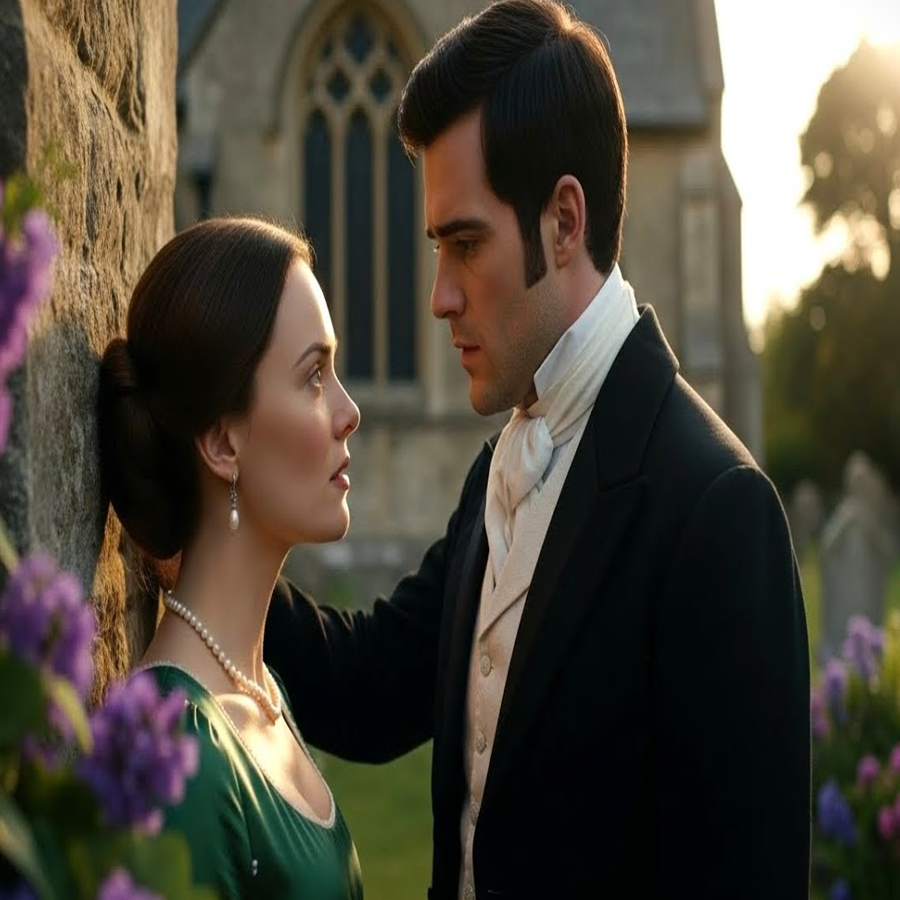
The first time Lydia Mercer saw the Duke of Ravencraftoft after 4 years, she was standing in the corner of the Bellingham ballroom with a glass of lemonade she didn’t want, and a smile she had carefully practiced in the mirror that morning. She was not supposed to be noticed. Governes, even those fortunate enough to accompany their employers to society events, were meant to fade into the wallpaper.
Lady Sinclair had been kind enough to bring her along, insisting that Lydia’s education and composure made her a suitable companion rather than mere staff. But kindness had limits, and Lydia knew better than to assume she belonged in a room full of silk and diamonds when she wore borrowed satin and her mother’s old pearls. She had been managing quite well until she heard his voice.
It was deeper than she remembered. Or perhaps memory had softened all the edges of him, the way grief softens everything painful until you can bear to look at it again. He was laughing at something Lord Markham had said, and the sound traveled across the ballroom like a knife sliding between her ribs. Lydia’s fingers tightened around the glass. She did not turn.
She would not turn. She had spent four years building a life where she did not turn at the sound of his voice. Did not scan crowded rooms for his profile. did not wonder if he ever thought of her in the dark hours before dawn, when the world was quiet enough to hear all the things you’d left unsaid.
“Miss Mercer, are you quite well?” Lady Sinclair appeared at her elbow, her expression concerned. “You’ve gone terribly pale.” “I’m perfectly fine, my lady. Perhaps the room is a bit warm. Then let us move closer to the terrace doors. The breeze will do you good.” It was the worst possible direction. The terrace doors were near the refreshment table, which was exactly where the Duke of Ravencraftoft stood with his circle of admirers and aristocratic friends, but Lydia could not refuse without explaining why, and there were some stories you did not tell, even to
employers as kind as Lady Sinclair. She followed. She kept her eyes down, focused on the painted fan in Lady Sinclair’s hand, on the marble floor beneath her feet, on anything except the man whose presence she could feel like heat from a fire, even from 15 ft away. They were almost past him, almost safe. Almost. Miss Lydia Mercer.
His voice was not a question. It was recognition, certainty, and something else she refused to name. The ballroom did not fall silent. Life was rarely that dramatic, but the small circle around the Duke paused mid-con conversation, and Lady Sinclair stopped walking, and Lydia knew with the sick certainty of experience that she would have to turn now, would have to face him, because ignoring a duke in public was social suicide, even for women who had nothing left to lose. She turned.
Four years had been kind to him. He was broader in the shoulders, his face more angular, as though life had carved away everything soft and left only the essential architecture of him. His dark hair was shorter than he used to wear it, and there were faint lines at the corners of his eyes that hadn’t been there before. But his eyes, deep blue like storm clouds, exactly as she remembered, held the same expression they’d worn the last time she’d seen him.
Recognition, hunger, regret, your grace. She curtsied, the movement automatic, her voice steady, despite the way her heart was trying to break through her chest. I did not expect to encounter anyone who might remember me. It was a warning, a request. Stop this before it begins. He did not stop. How could I forget? His voice was quieter now, meant only for her, despite the audience.
You disappeared without a word, without a trace. Lady Sinclair’s sharp intake of breath told Lydia that the damage was already done. Questions would follow, questions she could not answer truthfully without destroying the life she had so carefully rebuilt. I relocated for personal reasons, your grace.
Surely you understand that not all departures require explanation. She saw the blowand saw something flicker in his expression before he mastered it. Of course, he said, but his voice had changed. though I confess I searched for you. Perhaps you should have searched harder. The words came out before she could stop them, sharp and bitter as medicine, and she watched his face go carefully blank the way it always had when she wounded him.
She had forgotten how much power she’d once had in this, how easily she could make him bleed with nothing but her voice. Lady Sinclair touched her arm. “Miss Mercer, perhaps we should.” Forgive me, Lady Sinclair, the Duke interrupted, his eyes never leaving Lydia’s face. But might I impose upon your kindness for an introduction.
I knew Miss Mercer years ago when she lived in Ashworth, and I would very much like to renew our acquaintance. Ashworth, the village near his estate, where he had kept her like a secret in a cottage surrounded by woods, where he had visited her three times a week, and promised her a future he never intended to give her.
We were not well acquainted, your grace, Lydia said, her voice steady despite the rage building in her chest. Merely neighbors, our association was brief and entirely unremarkable. I remember it differently. Memory often deceives us, particularly when we wish to assign significance to insignificant things.
Lady Sinclair was watching them both with the expression of someone witnessing a conversation in a language she didn’t speak, but could tell was full of profanity. Miss Mercer is my companion, Lady Sinclair said carefully. She has been in my employee for nearly 2 years, and I have found her to be a woman of exceptional character and discretion.
The emphasis on discretion was deliberate. A reminder to Lydia that scandal would cost her this position, this safety, this life she had built from the ashes of the one he had destroyed. I have no doubt, the Duke said, which is why I hope she will accept my invitation. What invitation? Lydia’s voice came out sharper than she intended.
Lady Sinclair, I’m hosting a small dinner party at Ravencraftoft House next week. Nothing elaborate, merely a gathering of friends. I would be honored if you and Miss Mercer would attend. It was a trap, an elegant, inescapable trap dressed in social obligation and polite invitation. Lady Sinclair could not refuse a duke without giving offense, and Lydia could not refuse Lady Sinclair without losing her position.
“How generous your grace,” Lady Sinclair said, her tone suggesting she recognized the trap, even if she didn’t understand why it had been set. “We would be delighted to attend.” “Excellent.” His eyes were still on Lydia, blue and intent, and full of things she would not let herself interpret. I look forward to continuing our conversation, Miss Mercer.
There is a great deal I wish to discuss with you. I’m certain there is, Lydia said quietly. Though I cannot imagine what we might have to say to one another after all this time. Can’t you? The ballroom was too warm, too bright, too full of watching eyes and whispered speculation. Lydia felt the weight of her past pressing against the careful facade of her present, threatening to crack it open and spill all her secrets onto the polished floor.
“If you’ll excuse us, your grace,” she said, her voice cold enough to frost glass. “Lady Sinclair and I have other acquaintances to greet.” She did not wait for his response. She turned and walked away with her spine straight and her head high. And she did not look back because looking back was how you turned into salt, into stone, into the woman you swore you would never be again.
But she could feel his eyes on her all the way across the ballroom. Lydia did not sleep that night. She lay in her small room on the third floor of Lady Sinclair’s townhouse and stared at the ceiling while her mind replayed every moment of the encounter. every word, every expression, every weighted silence that meant more than speech.
He had searched for her. The knowledge sat in her chest like a stone. She didn’t want it there. Didn’t want to care that he’d looked, that he’d tried, that he’d failed. She had left because staying would have destroyed her. Because loving him had been like loving a ghost, something beautiful and insubstantial that vanished whenever you tried to hold it.
She remembered the last night she’d seen him, 4 years ago, November. He had come to the cottage late after midnight, with rain in his hair and something desperate in his eyes. They had sat by the fire, and he had held her hands between his, and he had told her about the arrangement his family had made, an engagement to Lady Roselyn Thornfield, daughter of the Earl of Westmont, a match that would secure alliances and fortunes, and all the tedious important things that mattered to people like him.
“It doesn’t change how I feel about you,” he had said, as though that made it better. You know that I He had stopped unable to say the word love because saying it would have made it real would have given her the right to ask for more than he was willing to give. When will you announce it? She had asked her voice steady despite the way her world was ending.
3 weeks after the Thornfield family returns from Scotland and after you’re married. What then? I don’t know. He had looked at her with those blue eyes full of misery and want. But I cannot imagine my life without you in it, Lydia. Surely we can find a way to what? Keep me as your mistress while you play husband to a woman who deserves better than a man who keeps his heart locked in a cottage in Ashworth.
She had pulled her hands from his. No, I won’t do it. I won’t be the woman you visit between responsibilities, the secret you keep so you can feel like you’re still the man you wish you were. That’s not fair. None of this is fair, Nathaniel. It was the only time she’d ever used his name.
He had always been your grace or my lord, even in private, because maintaining the distance had been the only way to survive loving someone you could never truly have. But I will not spend my life loving you from the shadows while you build a real life with someone else. He had left at dawn. She had watched him ride away through the rain, and she had known even then that she would not be there when he came back.
She had packed that morning, taken the small amount of money she had saved, left the cottage key on the kitchen table, and disappeared before noon. No note, no explanation, no looking back, because looking back would have broken her. And now he was here in London. Inviting her to dinner parties and looking at her with those same blue eyes as though four years meant nothing, as though she was still the woman in the cottage waiting for him to decide she was worth more than secrecy. She wasn’t.
She had spent 4 years becoming someone else, someone who didn’t need him. She only hoped that was true. The dinner party at Ravencraftoft House was exactly as insufferable as Lydia had anticipated. Lady Sinclair’s carriage arrived promptly at 7, and Lydia spent the entire journey practicing the art of polite indifference.
She wore her second best dress, a deep green silk that Lady Sinclair had given her for Christmas, and she had pinned her dark hair into a simple arrangement that suggested elegance without presumption. She looked, she thought, like exactly what she was, a well-educated woman of limited means employed by a kind but practical aristocrat.
Nothing scandalous, nothing memorable, nothing that suggested she had once been the Duke of Ravencraftoft’s secret lover. Ravencraftoft house was exactly as grand as she remembered from the one time he had described it to her. Three stories of pale stone, windows blazing with light, a circular drive where carriages deposited guests who laughed and chatted as though gathering for dinner was the most delightful obligation imaginable.
It’s quite beautiful, isn’t it? Lady Sinclair said as they climbed the front steps. Quite, Lydia agreed, her voice neutral. A butler greeted them in the entrance hall. all marble floors and soaring ceilings, and the kind of wealth that didn’t need to announce itself because it was simply assumed. They were led through corridors hung with portraits of severe-looking ancestors, to a drawing room where other guests had already gathered.
The Duke of Ravenoft stood near the fireplace, deep in conversation with an older gentleman Lydia didn’t recognize. He wore black evening clothes that fit him perfectly, and his dark hair caught the firelight as he turned at the sound of new arrivals. His eyes found her immediately. Lady Sinclair, Miss Mercer. He crossed the room with the easy confidence of a man who owned everything in it. Thank you for joining us.
I trust your journey was pleasant. Perfectly pleasant, your grace, Lady Sinclair said. Your home is magnificent. You’re very kind, Miss Mercer. I don’t believe you’ve seen Ravencraftoft House before. It was a test, a question meant to determine whether she would admit their past or continue the fiction that they were merely old acquaintances.
I have not, your grace, I confess I’ve never had occasion to visit. Then you must allow me to show you the gallery after dinner. We have several paintings you might find interesting. How generous. Not at all. I am merely eager to renew our friendship. Friendship? As though that was what they’d had. as though two years of stolen hours and desperate passion could be reduced to something as bloodless as friendship.
I was not aware we had been friends, your grace, she saw the hit land. Saw something flicker in his expression. Pain or anger or both. Then perhaps we should remedy that, he said quietly. I would very much like to know the woman you’ve become, Miss Mercer. I suspect she is quite extraordinary. Before Lydia could respond, a woman’s voice cut through the room like a blade through silk.
Nathaniel, darling, you’re monopolizing Lady Sinclair’s companion. How terribly rude of you. The woman who glided toward them was beautiful in the way weapons were beautiful. All elegant lines and dangerous edges. She wore midnight blue velvet and diamonds that caught the light like ice, and her smile was the kind that made you check your pockets to ensure nothing had been stolen.
Catherine, the Duke said, and there was something careful in his tone. May I introduce Lady Sinclair and her companion, Miss Lydia Mercer? Ladies, this is my sister, Lady Catherine Thorne. Sister, of course, Lydia should have guessed from the resemblance, the same dark hair, the same elegant bone structure.
But where the Duke’s eyes held warmth beneath the formality, Lady Catherine’s were cold as winter frost. “How delightful,” Lady Catherine said, though her tone suggested she found it anything but. I don’t believe I’ve heard Nathaniel mention you before, Miss Mercer. How exactly did you come to know my brother? We were neighbors briefly, Lydia said smoothly.
In Ashworth several years ago, our association was quite unremarkable. I see. Lady Catherine’s eyes traveled over Lydia’s dress, her hair, her jewelry, cataloging every detail with the precision of someone assessing a threat. And now you are employed by Lady Sinclair as a companion, Lady Sinclair interjected. her voice pleasant but firm.
Miss Mercer has been invaluable to me. Her education and character are exceptional. How fortunate for you both. Lady Catherine’s smile sharpened, though I confess I’m surprised to find a former neighbor at my brother’s dinner table. Nathaniel is usually quite selective about his guest list. Catherine. The Duke’s voice carried a warning.
I’m merely making conversation, darling. Surely there’s no harm in expressing curiosity about a guest whose background is so ambiguous. The word hung in the air like smoke. Ambiguous. It was an accusation dressed in politeness, a suggestion that Lydia was not what she claimed. That her presence here was inappropriate in ways Lady Sinclair couldn’t possibly understand.
I assure you, Lady Catherine, Lydia said, her voice perfectly level. There is nothing ambiguous about my circumstances. I am a woman of limited means who has found honorable employment with a generous employer. If that troubles you, I can only assume you are troubled by a great many women in London,” Lady Catherine’s eyes flashed.
The Duke made a sound that might have been a laugh he’d converted into a cough. How refreshingly direct, Lady Catherine said, though I wonder if directness is always wise, particularly for women in delicate positions. I found that honesty is considerably less delicate than deception, Lydia replied. But perhaps we simply have different experiences in that regard.
The air between them crackled with unspoken hostility. Lady Sinclair cleared her throat, her discomfort visible, but before she could intervene, the butler announced that dinner was served. Shall we? The Duke offered his arm to an older woman Lydia didn’t recognize. Proper protocol demanded he escort the highest ranking female guest, but his eyes remained on Lydia as he left the drawing room.
“Lady Catherine moved to walk beside Lydia as they filed toward the dining room.” “A word of advice, Miss Mercer,” she said quietly, her voice pitched for Lydia’s ears alone. “My brother has a kind heart, but he is also a duke with responsibilities that extend far beyond sentiment. I would hate to see you embarrass yourself by imagining there could ever be anything more than polite acquaintance between you.
Your concern is noted, Lydia said. Though I assure you, I have no such illusions. Good. Then we understand one another perfectly. But as Lydia took her seat at the dinner table, carefully positioned at the far end well away from the Duke, she felt the weight of Lady Catherine’s gaze on her throughout the meal, and she knew with sick certainty that the evening’s conflict had only just begun.
Dinner was an exercise in carefully maintained composure. Lydia sat between a younger son of an earl, whose name she immediately forgot, and an elderly Vic count, who spent most of the meal complaining about the declining quality of modern society. She smiled politely, made appropriate responses, and tried to ignore the fact that the Duke of Ravencraftoft kept glancing in her direction when he thought no one was watching.
Lady Catherine, seated near the Duke, maintained a running commentary of charming anecdotes and subtle barbs. She was exactly the kind of woman who could destroy reputations with nothing but carefully placed words and a knowing look. Lydia had met women like her before, women who wielded social currency like weapons because it was the only power they were permitted to have.
Miss Mercer, Lady Catherine said during a lull in conversation, her voice carrying easily down the table. Lady Sinclair tells me you’ve been with her for 2 years. What did you do before that? The question seemed innocent enough, but Lydia heard the trap in it. Any answer she gave would invite more questions, more scrutiny, more opportunities for her past to collide with her carefully constructed present.
I was employed as a governness in Yorkshire, she said. It was true enough she’d spent 18 months teaching the children of a merchant family before coming to London. How industrious. And before Yorkshire, private study. My father left me a small library, and I made good use of it. How fortunate that education can compensate for other disadvantages.
The insult was delicate enough that calling it out would make Lydia seem oversensitive, but obvious enough that everyone at the table understood what had been implied, that she was beneath them, that education was all she had to recommend her, because birth and fortune had not.
Indeed, Lydia said pleasantly, though I found that character matters more than circumstance. Education may be acquired, but integrity is cultivated. Lady Sinclair made a small sound of approval. The Duke’s expression had gone carefully neutral, but his knuckles were white where they gripped his wine glass. Quite philosophical, Lady Catherine said.
Though philosophy is considerably easier to embrace when one has nothing to lose. I disagree, Lydia replied. I think it’s considerably harder. Those with nothing to lose have already lost everything. They know exactly what they’re protecting when they choose honor over convenience. How dramatic.
You speak as though you’ve suffered great hardship. I speak as someone who has learned that survival requires more than pretty words and proper lineage. The silence that followed was sharp enough to cut. Lady Catherine’s smile had frozen into something brittle, and the Duke had set down his glass with enough force to make it clink against the table.
Miss Mercer, he said quietly, perhaps after dinner you would join me in the gallery. I believe you expressed interest in the paintings. I made no such expression, your grace. Nevertheless, I insist. It was not a request, and because refusing a duke in his own home would create exactly the kind of scene that would cost her everything, Lydia inclined her head in acknowledgement.
As you wish. The meal concluded with excruciating slowness. By the time the ladies withdrew to the drawing room, leaving the men to their port and politics, Lydia’s composure was fraying at the edges. Lady Sinclair caught her eye and gestured toward a seti near the window, away from Lady Catherine and her circle of admirers.
Are you quite all right, my dear? Lady Sinclair asked quietly. Lady Catherine seemed rather pointed in her remarks. She was testing me, Lydia said, determining whether I pose a threat. A threat to what? Her brother’s reputation, his position, his future. Lydia kept her voice low, aware that they were being watched. She believes I have designs on him.
“Do you?” The question was blunt, surprising coming from Lady Sinclair, who usually avoided directness when possible. “No,” Lydia said. And then because she owed this woman honesty, she added, “But we were once acquainted more than I admitted to you.” “I see.” Lady Sinclair studied her for a long moment.
“Were you intimate with him?” Lydia’s breath caught. “My lady, I am not asking out of purience, Miss Mercer. I am asking because I need to know what I am defending you against. Lady Catherine will not stop with tonight’s dinner. She will dig and she will find whatever secrets you have, and she will use them if they suit her purposes.
Then perhaps I should resign my position before nonsense. Lady Sinclair’s voice was firm. I have no intention of losing an excellent companion simply because my friend’s sister is a territorial harpy. But I do need to know what weapons she might use. Lydia looked at her employer, at the woman who had given her safety and respect when she’d had nothing, and made a choice. Yes, she said quietly.
We were intimate for 2 years. He kept me in a cottage near his estate, and he visited me regularly. He promised me more than he was willing to give. When he became engaged to Lady Rosalind Thornfield, I left. I disappeared without explanation because staying would have destroyed me. Lady Sinclair absorbed this without visible shock.
And now he wants you back. I don’t know what he wants, but I know I cannot be what I was to him before. I will not be hidden again. Then you must tell him so directly. Before his sister decides to make an example of you. Before Lydia could respond, the men rejoined them, and the Duke crossed the drawing room with the deliberate purpose of someone who had made up his mind about something.
Miss Mercer, he said, the gallery. She rose. She had no choice. But as she followed him from the drawing room, she felt Lady Catherine’s eyes on her back like a blade between her shoulder blades. The gallery ran the length of the second floor, its walls lined with portraits and landscapes illuminated by carefully placed sconces. The Duke closed the door behind them, and the sudden quiet felt dangerous.
“You don’t have to do this,” Lydia said, her voice sharper than intended. You don’t have to isolate me in private rooms and pretend you want to show me paintings. If you have something to say, say it. He turned to face her. And in the soft light, she could see the exhaustion in his expression, the weight of whatever he’d been carrying for the past 4 years.
I looked for you, he said, “For 6 months. I sent men to Yorkshire, to Bath, to Scotland. I went to the cottage twice a week for a year, thinking perhaps you’d come back. I questioned everyone in Ashworth, but no one knew where you’d gone. It was as though you’d simply vanished. I wanted to vanish, Lydia said. I wanted to disappear so completely that I would stop being the woman who loved you.
Something in his face cracked. Did it work? What do you think? I think if it had worked, you wouldn’t look at me the way you do now, with fury and pain. And he stepped closer. Tell me you feel nothing. Tell me these four years erased what we had and I will leave you alone. I will never speak to you again beyond what courtesy requires.
What we had? Her voice rose despite her efforts to contain it. We had nothing, Nathaniel. We had stolen hours and empty promises and the constant knowledge that I was a secret you were ashamed to acknowledge. That’s not love. That’s cowardice. I was trying to protect you from what? From being seen with you. from having the world know you cared for someone who wasn’t highborn enough to be your duchess. She laughed bitterly.
You weren’t protecting me. You were protecting yourself from the inconvenience of having to choose between your heart and your comfort. That’s not fair. None of this is fair. You don’t get to invite me here to trap me in your home with your sister watching like a hawk and demand I explain why I left.
I left because you made me a ghost, Nathaniel. You made me someone who only existed when no one else was looking. And I decided I would rather not exist at all than exist only in your shadow. He was silent for a long moment, his jaw tight with whatever emotion he was fighting to contain. I didn’t marry her, he said finally.
Lady Rosalind. The engagement was broken before the announcement. Lydia went very still. What? I broke it. 3 days after I told you about the arrangement, I went to her father and told him I couldn’t go through with it. That I was committed to someone else. You broke your engagement. Yes.
Why? Because I realized I would rather lose everything than lose you. And then I discovered I’d already lost you anyway. The words hit her like a physical blow. She wanted to believe them, wanted to let them matter. But four years had taught her that words were cheap, that promises made in private meant nothing if they were never kept in public.
“You broke your engagement,” she said slowly. “But you still came to the cottage alone. You still visited me in secret. You still kept me hidden. I was going to tell you. I was going to explain that I’d chosen you that we could find a way to what, Nathaniel? To keep me as your mistress? to install me in a better house perhaps, but still keep me separate from your real life.
Because breaking an engagement to one woman doesn’t mean you were willing to make me your wife,” he flinched. “She’d hit the truth.” “My family would never have accepted it,” he said quietly. “My mother was already horrified that I’d broken the Thornfield match.” “Catherine was furious. My uncle threatened to cut off my access to the family estates.
If I had tried to marry you, then then you would have had to choose me over your comfort, over your position, over your family’s approval, and you couldn’t do it.” She stepped closer, her voice low and fierce. “I don’t blame you for that, Nathaniel. I blame you for making me believe you might. I want another chance.” “Why? So you can break my heart again? So you can keep me in a prettier cage while you live your real life without me? No.
” His hands lifted as though he wanted to touch her, then fell to his sides when she stepped back. Because I spent four years realizing that the life I thought I needed, the position, the reputation, the approval, meant nothing without you in it, because I was a coward then, and I want to prove I’m not a coward now.
Prove it how? However you need me to.” She wanted to believe him. wanted to let herself imagine that he had changed, that he had learned what she’d been trying to teach him when she left. But wanting something didn’t make it real, and she had spent too many nights in that cottage in Ashworth, wanting things that never came.
“I need you to let me go,” she said quietly. “I need you to stop looking at me like I’m still yours. I need you to accept that I built a life without you, and I don’t want to tear it down just because you’ve decided you’re ready to be brave.” “Lydia, don’t.” She held up a hand. Don’t say my name like that.
Don’t look at me like I’m breaking your heart when you’re the one who taught me how to break my own. She turned toward the door, but his voice stopped her. I’m not giving up on you. She looked back at him. This man she had loved with a desperation that had nearly destroyed her, and she felt something inside her chest crack open. “Then you’re a fool,” she said, “because I’ve given up on you.
” She left him standing in the gallery surrounded by portraits of his ancestors, and she didn’t look back because looking back would show him that she was lying. The carriage ride home was silent. Lady Sinclair seemed to sense that Lydia needed space to compose herself, and she asked no questions about what had transpired in the gallery.
But when they arrived at the townhouse, she placed a gentle hand on Lydia’s arm before she could escape upstairs. Whatever you decide, Lady Sinclair said quietly, know that you have a home here. You are not dependent on his mercy or his attention. You are my companion, and that position is yours regardless of what history you share with the Duke of Ravencraftoft.
Lydia’s throat tightened. Thank you, my lady, and Miss Mercer. Don’t let Lady Catherine frighten you. Women like her have power only because we give it to them. Stand your ground. Lydia nodded, though she wasn’t certain she had any ground left to stand on. That night she lay awake and thought about the way he had looked at her in the gallery with want and regret and something that might have been hope if she let herself believe it.
She thought about the cottage in Ashworth, about all the nights she’d waited for him by the fire, about the way he’d held her like she was precious, even as he refused to claim her in daylight. She thought about the woman she’d been then, young and foolish, and so desperate to be loved, that she’d accepted scraps and called them a feast.
She was not that woman anymore. But God help her, she still loved him. The letter arrived 3 days later. It was delivered by a footman in Ravencraftoft livery, sealed with the Duke’s crest, and Lydia knew before opening it that it would be a mistake to read it. She should burn it unopened, should refuse to acknowledge whatever plea or justification it contained.
She read it anyway. Miss Mercer, I have spent three nights trying to write this letter, and I have burned seven drafts because words fail to capture what I need to say. But cowardice has cost me enough already. So, I will attempt honesty even if it is inadequate. You were right about everything. I was a coward.
I kept you hidden because it was easier than fighting for you. I told myself I was protecting you from scandal when I was really protecting myself from the consequences of loving someone my family would not accept. I promised you things I had no intention of delivering because promising felt like loving. And I was too much of a fool to understand that love demands action, not words.
When you disappeared, I told myself you were punishing me. That if I found you, I could explain. could make you understand why I’d made the choices I had. But the truth is that you didn’t disappear to punish me. You disappeared to survive me. And I am ashamed that it took me 4 years to understand that. I broke my engagement to Lady Rosalind because I could not marry her while loving you.
But breaking an engagement is not the same as fighting for you. I should have come to you that same day. Should have told you what I’d done and asked you to build a life with me. Consequences be damned. Instead, I told myself I needed time to manage my family, to prepare them, to find the perfect moment. There is no perfect moment.
There is only now and the choice to be brave or to be comfortable. I am trying to choose bravery, even though I am 4 years too late. If you truly want me to leave you alone, I will respect that wish. But if there is any part of you that still cares, not for who I was, but for who I am trying to become, I am asking for a chance to prove that I have learned what you tried to teach me.
You deserve to be loved in daylight, loudly, without apology or hesitation. And if you let me, I would like to spend the rest of my life proving that I understand what that means. Yours, if you’ll have me. Nathaniel Lydia read the letter three times before she realized she was crying. She wanted to dismiss it as pretty words, as another promise he wouldn’t keep.
But there was something in the writing, in the way he’d admitted his failures without trying to excuse them, that felt different from the man she’d known 4 years ago. People could change. She had changed. Why couldn’t he? But wanting him to have changed and trusting that he had changed were very different things.
And trust, once broken, was a delicate thing to rebuild. It required more than letters and confessions. It required proof. She tucked the letter into her desk drawer and tried not to think about it. She failed. The second letter arrived 2 days later, then a third. Then a fourth. He didn’t plead. Didn’t demand responses or explanations. Instead, he wrote her the kind of letters she dreamed of receiving when she was alone in the cottage.
Letters that told her about his days, his thoughts, his regrets. letters that treated her like someone whose opinion mattered, whose absence left a hole in his life. I attended a dinner at the Westlake estate tonight. One letter read, “Lord Westlake spent 20 minutes explaining his plans to modernize his tenants cottages, and all I could think about was the cottage in Ashworth, how cold it must have been in winter, how isolated.
I told myself I was keeping you safe there. But the truth is I was keeping you convenient, close enough to visit, far enough to hide. I am sorry for that. I am sorry for so many things. Another letter arrived with a pressed violet tucked inside. You told me once that violets were your favorite flower because they grew in places other flowers wouldn’t.
Stubborn and resilient, you said, and you smiled like you were talking about yourself rather than flowers. I found these growing near the old oak on the east lawn, and I thought of you. I thought of how you survived me when you shouldn’t have had to. Lydia kept the letters. She told herself she was keeping them as evidence, as proof of his persistence, so she could show Lady Sinclair if questions arose.
But the truth was that she read them before bed each night, memorizing the shape of his handwriting, the rhythm of his words, the vulnerability in his admissions. She didn’t write back. couldn’t because responding would mean deciding and she wasn’t ready to decide anything except that she missed him with an ache that lived in her bones.
Lady Catherine made her move 2 weeks after the dinner party. Lydia was shopping with Lady Sinclair in a fashionable district when they encountered Lady Catherine and two other women whose names Lydia didn’t know but whose expressions suggested they’d been thoroughly briefed on scandal. Lady Sinclair, what a pleasant surprise, Lady Catherine said, her smile sharp as broken glass. And Miss Mercer.
I’ve been meaning to call on you, but I’ve been so occupied with preparations for my brother’s upcoming house party. You will both be attending, I trust. We received no invitation, Lady Sinclair said carefully. Oh, how strange. I specifically instructed Nathaniel to include you both on the guest list. He’s been so distracted lately, her eyes fixed on Lydia with predatory focus, though I suppose that’s understandable given recent revelations.
What revelations? Lady Sinclair’s voice had gone dangerously quiet, only that Miss Mercer’s past in Ashworth was rather more colorful than she’s let on. It seems my brother was quite devoted to a certain resident of that village, a woman he visited regularly, a woman who disappeared rather abruptly when his family made arrangements for a more suitable match.
The words dropped like stones into water, sending ripples of whispered speculation through the surrounding shoppers. Lydia felt her face go hot, felt the careful walls she’d built around her reputation begin to crack. “I see,” Lady Sinclair said, her tone glacial. and you are sharing this speculation publicly because because I would hate for you to be deceived, Lady Sinclair.
As a friend, I feel obligated to ensure you understand exactly who you’ve welcomed into your home. How thoughtful. Lady Sinclair’s voice could have frozen fire. Allow me to return the favor by ensuring you understand exactly who you’re maligning. Miss Mercer’s character is beyond reproach. Whatever history she may share with your brother is precisely that, history.
And if you continue to spread gossip designed to damage her reputation, you will find yourself unwelcome in my home and my social circle.” Lady Catherine’s smile tightened. “I’m merely concerned for your welfare. Your concern is noted and rejected.” “Good day, Lady Catherine.” Lady Sinclair took Lydia’s arm and swept from the shop with the kind of regal disdain that made everyone else step aside.
But Lydia could hear the whispers starting behind them, could feel the speculation spreading like ink in water. The damage was done. By evening, three invitations to upcoming events had been quietly rescinded. By the next morning, two of Lady Sinclair’s friends had sent notes expressing regret that they wouldn’t be able to attend her upcoming musical after all.
By noon, Lydia had decided she needed to leave London before her presence destroyed everything Lady Sinclair had built. “Absolutely not,” Lady Sinclair said when Lydia tried to resign. “I will not reward Lady Catherine’s cruelty by giving her what she wants. She wants me gone from your life, from her brother’s life, and she’ll keep attacking until she succeeds. Then let her attack.
I have weathered worse storms than a jealous woman with a sharp tongue. But your reputation is mine to risk. Lady Sinclair’s voice was firm. You are not responsible for other people’s choices, Miss Mercer. You are only responsible for your own. And I am choosing to stand by you. Lydia’s throat tightened. Why? Because women like Lady Catherine only have power when we allow them to divide us.
Because I am tired of watching good women be destroyed for loving unwisely. because you deserve better than to be driven from your home by gossip and innuendo.” Lady Sinclair paused. “And because my late husband once kept a mistress, and I learned the hard way that the problem was never the other woman. It was always the man who made promises he had no intention of keeping.
” Lydia stared at her employer, seeing her clearly for the first time. Not just a kind woman who had offered her employment, but someone who understood exactly what it felt like to be collateral damage in someone else’s choices. “I’m sorry,” Lydia said quietly. “Don’t be. I survived it, and I became stronger for it, just as you will.” Lady Sinclair squeezed her hand.
Now, we have a musical to plan, and I have invitations to send. If London wants a scandal, we’ll give them something to actually talk about. The letter from the Duke arrived that afternoon. Lydia, I heard what Catherine did. I am furious. I am humiliated and I am done. I have asked my sister to leave Ravencraftoft House.
I have made it clear to my entire family that you are not to be spoken of with anything less than complete respect. I have informed my mother that if she wishes to maintain a relationship with me, she will ensure that no gossip about you is spread through her social circles. But these are private actions and you deserve more than privacy.
You deserve to be defended publicly. You deserve to have someone stand beside you and declare that you are worthy of respect, of admiration, of love. I am calling on you tomorrow afternoon. I am not asking permission. I’m not requesting a private conversation. I am coming to Lady Sinclair’s home at 3:00 and I am going to tell you in front of her, in front of the staff, in front of anyone who happens to be watching exactly what you mean to me.
If you wish to refuse me afterward, that is your right. But I will not let you believe for one more day that I am ashamed of loving you. N Lydia read the letter twice, her hands shaking slightly. He was coming here to Lady Sinclair’s home in broad daylight where anyone could see. It was exactly what she’d wanted 4 years ago. What she’d needed him to do before she’d left.
But wanting something and being ready for it were not the same thing, because if he came here tomorrow and declared himself publicly, everything would change. She would have to decide whether she believed he’d truly transformed, whether she could trust him with her heart again, whether she was brave enough to risk everything she’d built on the possibility that he’d become the man he should have been all along.
She thought about the cottage in Ashworth, about all the nights she’d waited for him to choose her, about the moment she’d realized he never would. She thought about the woman she’d been then and the woman she’d become since. And she decided that whatever he said tomorrow, she would listen, not because she owed him that, but because she owed herself the chance to hear him say in daylight what he’d only ever been willing to say in shadows.
He arrived at 3:00 exactly, announced by a flustered butler, who looked uncertain whether to show a duke into the parlor or ask him to wait. Show him in,” Lady Sinclair said, her voice steady. She sat beside Lydia on the seti. A silent show of support that made Lydia want to weep with gratitude. The Duke of Ravencraftoft entered the parlor in full formal dress, dark coat, polished boots, every inch the aristocrat he’d been born to be.
But his hands were clenched at his sides, and there was something uncertain in his expression that she’d never seen before. “Lady Sinclair, Miss Mercer.” He bowed formally. “Thank you for receiving me. Your grace,” Lady Sinclair said coolly. “I confess I’m surprised by this visit. My understanding was that you preferred to conduct your personal business more privately.
It was a rebuke, gentle, but clear.” The Duke’s jaw tightened. “I have made many mistakes, Lady Sinclair. Privacy, when public acknowledgement was required, being chief among them. I am here to correct that error. How convenient that you’ve chosen to correct it now after your sister has already damaged Miss Mercer’s reputation. Nothing convenient about it.
I should have done this 4 years ago. He turned to Lydia and the intensity in his blue eyes made her chest tight. I should have stood in the village square in Ashworth and told everyone that I loved you. I should have defied my family’s expectations and married you before they could arrange anything else. I should have chosen you loudly, publicly without hesitation or shame.
But you didn’t, Lydia said quietly. No. And I have spent four years regretting that cowardice. He stepped closer, though he made no move to touch her. I told myself I was protecting you from scandal, but I was protecting myself from consequence. I told myself we could find a way to be together once things settled, but I never actually did the work to make that possible.
I kept you hidden because it was easier than fighting, and I am ashamed of that. Pretty words, your grace, Lady Sinclair said. But words are cheap. What are you willing to do to prove them? He didn’t look away from Lydia. Whatever she asks. I don’t want you to do something for me, Lydia said, her voice steady despite the way her heart was racing.
I want you to do something because it’s right. because you believe I deserve to be respected, not because I’m demanding it as the price of forgiveness. You deserve everything, he said simply. And I am done letting anyone, including my family, suggest otherwise. Even if it cost you, it should cost me. Cowardice always cost someone.
I just made certain the cost fell on you rather than me. I won’t do that again. Lydia studied him. This man who had broken her heart with kindness, with promises he never kept, with love he only expressed in private. She wanted to believe he changed, wanted to trust that he’d learned something in their four years apart.
But trust was earned, not given. If I give you another chance, she said slowly, it won’t be the chance you had before. I won’t be your secret. I won’t be hidden. I won’t wait quietly while you decide whether I’m worth fighting for. I know. I won’t forgive you just because you’ve decided to be brave now.
You’ll have to prove it consistently, publicly without expectation of reward. I understand, and if you fail me again, I will leave. And this time, I won’t come back. Something in his expression cracked. I know. She stood and he went very still, as though afraid sudden movement might shatter whatever moment this was.
Then prove it, she said. Not to me, not in private. Prove it to everyone who heard your sister’s gossip. Prove it to every person who has ever been made to feel less than because they loved someone who wouldn’t love them back publicly. Prove that you’ve become someone who understands that love without courage is just another word for cowardice.
How? She lifted her chin, feeling something fierce and bright unfurling in her chest. That’s not for me to tell you. If you’ve truly changed, you’ll know what to do.” He held her gaze for a long moment, and she saw the exact instant he understood what she was asking. Not for a grand gesture or a dramatic display, for the daily unglamorous work of being someone worthy of trust.
“All right,” he said quietly. “Then I will begin.” He turned to Lady Sinclair. Lady Sinclair, I am aware that my sister’s actions have created difficulties for you and Miss Mercer. I want you to know that I have severed Catherine’s access to my social circles and resources. She will no longer be welcome at Ravencraftoft House, and I have made it clear to everyone in my family that any further attempts to damage Miss Mercer’s reputation will result in permanent estrangement.
A good first step, Lady Sinclair said, though it would have been a better first step before she’d already struck. I agree. Which is why I have also sent letters to everyone who received Catherine’s gossip, clarifying that Miss Mercer is a woman of exceptional character who has been treated abominably by my family.
I have made it clear that I hold her in the highest regard and that anyone who spreads further rumors will be considered my enemy. Lydia’s breath caught. Public letters, actual irreversible public defense. You did that? She asked. Yesterday, after I heard what Catherine had done, the letters were delivered this morning. He paused.
I am also hosting a ball in 3 weeks. You will both be my guests of honor, not hidden in corners or placed at the far end of dinner tables. You will sit at my right hand, Lady Sinclair, and Miss Mercer beside you, and anyone who has a problem with that arrangement will be asked to leave.
That will destroy your standing, Lady Sinclair said, though there was approval in her voice now. Then it destroys it. I am finished prioritizing standing over principle. Lydia felt something in her chest loosened just slightly. It wasn’t forgiveness, wasn’t trust, but it was possibility, the shape of what he might become if he followed through. All right, she said quietly.
We’ll come to your ball. His relief was visible. Thank you. Don’t thank me yet. You have 3 weeks to prove you mean what you say. three weeks for society to test you, for your family to pressure you for all the reasons you found to keep me hidden before to resurface. If you can withstand that, if you can choose me publicly, consistently without wavering, then maybe we’ll talk about what comes next.
And if I fail, then you’ll have proved I was right to leave.” He nodded slowly. “Fair enough, though I should tell you, I don’t intend to fail. Everyone intends to succeed your grace. The difference is in what they do when success becomes difficult. Then I will show you what I do when things become difficult. He bowed to them both. Ladies, I will not take any more of your time.
But I want you to know, both of you, that I am grateful for your patience, and I will spend however long it takes proving that I deserve it.” He left the way he’d come, formal and proper, and every inch the Duke. But Lydia thought she saw something different in the set of his shoulders, the firmness of his stride. She hoped she was right.
“Well,” Lady Sinclair said after the door closed. “That was quite the performance.” “Do you think he meant it?” Lydia asked. “I think he believes he meant it. Whether he can maintain that belief when it costs him,” Lady Sinclair shrugged. “Time will tell. But Miss Mercer, for what it’s worth, I think you’re handling this remarkably well.
Most women in your position would have either forgiven him immediately or refused to see him at all. You’re making him earn it. That takes strength. Or stubbornness, Lydia said. In my experience, they’re often the same thing. The letters from the Duke’s public defense arrived over the next two days in a steady stream of responses. Some were supportive, praising his integrity and expressing regret for having believed gossip.
Others were coldly formal, withdrawing invitations or ending associations that had been maintained for years. Lady Sinclair read them aloud over breakfast, her tone sardonic. Lord Harrington regrets to inform you that he will be unable to attend your upcoming ball due to prior commitments. How convenient that he only just remembered these commitments.
She set the letter aside. Though Lady Fairmont writes that she’s always admired your courage and looks forward to meeting Miss Mercer properly at the ball. So you haven’t lost everyone. He’s losing enough. Lydia said quietly, staring at the pile of rejections. He’s losing people who value propriety over principle.
Good riddance to them, Lady Sinclair poured more tea. Though I confess I’m curious to see how he handles the pressure. 3 weeks is a long time to maintain conviction when the costs keep mounting. Lydia was curious too and terrified because part of her wanted him to succeed, wanted to believe he’d truly changed. But another part, the part that still remembered how it felt to wait in that cottage while he lived his real life elsewhere, expected him to break, expected him to realize that choosing her publicly cost more than he was willing to pay. The first
test came 5 days later. Lydia was walking through Hyde Park with Lady Sinclair when they encountered the Duke of Ravencraftoft with a group of men she recognized as his closest friends. He saw her immediately and rather than offering a polite nod and moving on, which would have been the socially appropriate response, he excused himself from his companions and crossed directly to them.
“Lady Sinclair, Miss Mercer,” he bowed. “What a pleasant surprise!” Your grace, Lady Sinclair said, her tone carefully neutral. I was just telling Lord Ashworth about the preparations for the ball. Miss Mercer, you’ll be pleased to know that I’ve arranged for the Bellingham Orchestra. I remembered you once mentioned enjoying their performance at the village festival in Ashworth.
It was a small detail, insignificant to anyone overhearing. But Lydia remembered that conversation, remembered telling him about the festival while they sat by the fire in the cottage, remembered the way he’d listened like her words mattered. He’d remembered, and he was mentioning it publicly, connecting them, acknowledging their shared history.
How thoughtful, she said quietly. Would you both join me for a turn around the serpentine? I’d welcome the company if you’re not otherwise engaged. It was a test, walking publicly with them in broad daylight where everyone could see. Lady Sinclair glanced at Lydia, giving her the choice. “We’d be delighted, your grace,” Lydia said.
“They walked through a breast, the Duke in the middle, and Lydia could feel the weight of eyes on them. Whispers followed in their wake. She saw Lady Catherine’s friend, Mrs. Bellingham, watching from a distance, her expression scandalized. She saw other women turn away deliberately cutting them. The Duke seemed to notice none of it.
He spoke easily about the upcoming ball, about changes he was making to the estate in Ashworth, about a book he’d recently read that he thought Lydia might enjoy. He treated her like an equal, like someone whose opinion mattered, like she had every right to walk beside him in public. When they finally parted, Lady Sinclair waited until they were out of earshot before speaking.
Well, that was certainly a statement. Do you think it was genuine, Lydia asked, or performance? I think it was both. He’s performing courage until it becomes genuine, which is, frankly, how most virtues are developed. Lady Sinclair squeezed her arm. But he’s trying. That counts for something. Lydia hoped she was right. The second test came a week later at a dinner party hosted by Lady Fairmont.
Lydia had been nervous about attending, uncertain whether the invitation was genuine or merely polite obligation, but Lady Fairmont greeted them warmly and seated Lydia beside the Duke at dinner, a placement that would have been shocking 3 weeks ago, but now seemed deliberate. The Duke arrived late, looking harried.
He took his seat beside Lydia with an apologetic smile. “Forgive me,” he said quietly. “Family crisis. Your mother,” Lydia guessed, and my uncle, and three cousins who felt compelled to share their opinions about my choices. His voice was dry. Apparently, defending you publicly makes me a disappointment to the family legacy.
You could still change your mind, Lydia said, watching him carefully. “Tell them you were temporarily mad. Smooth things over.” He looked at her with something that might have been amusement or might have been exhaustion. “Is that what you think I should do? I think you should do whatever you can live with.
Then I’ll keep disappointing my family. I’ve discovered I can live with their disapproval considerably better than I can live with my own cowardice. Before Lydia could respond, Lady Catherine’s name was mentioned by someone across the table. I heard she’s been staying with the Dow Countess of Milbrook. Mrs. Winters said apparently her brother asked her to leave Ravencraftoft House after some unpleasantness. The table went quiet.
Everyone looked at the Duke, waiting to see how he would respond. My sister made choices I could not support, he said clearly, his voice carrying. She attempted to damage the reputation of someone I hold in high regard. I made it clear that such behavior would not be tolerated in my home or my family. How extraordinary, Lord Fairmont said, though his tone suggested admiration rather than criticism.
Family loyalty is important, but I suppose principle must occasionally supersede it. I found that family loyalty means very little if it requires you to abandon your principles, the Duke replied. My sister chose to attack someone who couldn’t defend herself publicly. I chose to defend her. I’d make the same choice again.
His hand brushed Lydia’s under the table so briefly she might have imagined it, but she felt the warmth of it, the reassurance. The conversation moved on, but Lydia sat very still, processing what had just happened. He’d defended her publicly again in front of people who mattered, whose opinions shaped society.
He’d chosen her over his sister, over family unity, over the path of least resistance. It still wasn’t enough. Not yet. But it was more than he’d done four years ago. After dinner, as guests gathered in the drawing room, the Duke found her near the window. You’re wondering if I’ll keep doing this, he said quietly, defending you, choosing you publicly. Yes, I will.
Even when it costs me, especially when it costs me, because the cost is proof that it matters. Pretty words again, your grace. Then let me prove them with action. He paused. There’s something I need to tell you. Something I should have told you four years ago. What? I love you. Not the way I loved you then, desperately and selfishly.
and in secret. I love you the way you deserve to be loved all along, proudly, without reservation, without shame. The words hit her like a physical blow. She’d wanted to hear them for so long, had imagined them so many times in the cottage in Ashworth. But now that he was finally saying them here, where anyone could overhear, she found herself afraid of what they meant.
You don’t have to say anything, he continued. I’m not asking you to reciprocate. I’m not asking you for anything except the chance to keep proving that I’ve learned what you tried to teach me. That love without courage isn’t love at all. Nathaniel, three more weeks, he said. Give me three more weeks to show you that I can withstand pressure, that I can maintain conviction even when everyone tells me I’m wrong.
And then if you still don’t believe me, I’ll accept that and leave you in peace. And if I do believe you, then we’ll figure out what comes next together. She wanted to believe him. Wanted to let herself imagine a future where they stood beside each other in daylight. Where loving him didn’t require hiding who she was.
But trust was built through consistency, not declarations. And 3 weeks wasn’t very long to prove transformation. All right, she said. Three more weeks. The next two weeks tested him in ways Lydia hadn’t anticipated. His mother arrived at Ravencraftoft House and demanded he reconcile with Lady Catherine. He refused.
His uncle threatened to challenge his claim to certain family properties. He consulted lawyers. Three of his oldest friends stopped speaking to him after he refused to dismiss his defense of Lydia as a temporary lapse in judgment. Each time he chose her publicly, clearly, without wavering, and each time Lydia felt the walls around her heart crack a little more.
Lady Sinclair watched the progression with something like satisfaction. “He’s actually doing it,” she said one morning, reading yet another letter from someone cutting ties with the Duke. “He’s burning his bridges and choosing you anyway. He’s destroying his life,” Lydia said quietly. He’s rebuilding it on a foundation of principle rather than convenience. There’s a difference.
Lady Sinclair set down her teacup. The question is whether you’re ready to let him. I don’t know. He hurt me so badly. Elellanena. She’d started using Lady Sinclair’s given name in private. A sign of how close they’d become. What if he breaks me again? Then you’ll survive it. Just as you survived it before.
But Miss Mercer, Lydia, I think you need to ask yourself whether you’re protecting yourself from him or punishing him for who he used to be. The words stung because they were true. Part of her was still so angry at the man he’d been that she couldn’t quite trust the man he was becoming. I’m afraid, she admitted.
I’m afraid he’ll wake up one day and realize I’m not worth all the things he’s lost. Then you don’t understand what you’re worth, but he does. Finally, Eleanor smiled. Let him prove it. You’ve given him three weeks. See what he does with them. The ball arrived faster than Lydia expected.
She spent the morning in a state of barely controlled panic, convinced that something would go wrong, that the Duke would change his mind, or his family would stage some kind of intervention, or society would collectively decide to boycott the event as punishment for his defiance of propriety. Lady Sinclair remained infuriatingly calm.
You’re borrowing trouble,” she said as her maid arranged Lydia’s hair. The invitations were sent, the responses were received. Everything is arranged. How many people declined? Enough that it’s noticeable. Not so many that the ball will be empty. Elellanena met her eyes in the mirror. He knew there would be consequences, and he accepted them anyway.
That’s what matters. Lydia wore a gown Elellanena had commissioned specifically for the occasion. Deep sapphire silk with delicate silver embroidery that caught the light like stars. It was the most beautiful thing she’d ever worn, and she felt simultaneously magnificent and terrified. You look like a duchess, Ellena said approvingly.
I’m not a duchess. I’m a companion who used to be someone secret. No, you’re a woman who survived being someone’s secret and built a life on her own terms that’s considerably more impressive than being born into a title. They arrived at Ravencraftoft House precisely on time. The circular drive was full of carriages and light blazed from every window.
The Duke stood at the entrance greeting guests, and when he saw them, his entire face transformed. He came down the steps to meet them personally, which was highly irregular and probably scandalous, and exactly the kind of public gesture Lydia had needed from him four years ago. “Lady Sinclair, Miss Mercer,” he bowed deeply.
“Thank you for coming. You honor my home with your presence. Your grace,” Eleanor said warmly. “Your home is magnificent. It’s better now that you’re here.” But his eyes were on Lydia, blue and intent, and full of something that made her chest tight. Miss Mercer, you look extraordinary. You’re very kind. I’m very honest, he offered his arm.
May I escort you inside? I have someone I’d like you to meet. Lydia glanced at Elellanena, who nodded encouragingly. She placed her hand on his arm, feeling the solid warmth of him through the fabric of his coat, and let him lead her into the ballroom. It was breathtaking. Chandeliers hung from the ceiling like captured stars, and flowers were everywhere.
Roses and peies, and in the centerpieces, violets. Her violets, he’d remembered. But it wasn’t the beauty of the ballroom that made her stop breathing. It was the fact that he led her directly to the center of the room, where everyone could see them, and introduced her to his mother. The Daager Duchess of Ravencraftoft was an elegant woman in her 60s with steel gray hair and eyes that assessed Lydia with the precision of a jeweler examining a stone for flaws.
Mother, the Duke said quietly, I’d like you to meet Miss Lydia Mercer. Lydia, my mother, the Daaja Duchess, your grace. Lydia curtsied, her heart hammering. The Daager studied her for a long moment that felt like an eternity. Then, incredibly, she smiled. “Miss Mercer, my son has told me a great deal about you. I understand I owe you an apology for my family’s behavior.
” Lydia’s mind went blank. I My daughter’s actions were reprehensible. My own resistance to Nathaniel’s choices was rooted in concern for his position, but I realize now that I was more concerned with appearances than with his happiness. The Daajer’s voice was formal, but sincere. I hope you will accept my apology and give us the opportunity to know you properly.
It was the last thing Lydia had expected. She looked at the Duke who was watching his mother with an expression of surprised gratitude. That’s very generous, your grace, Lydia managed. It’s practical. My son has made his choice clear. I can either accept that with grace or lose him entirely. I choose grace.
The daager nodded toward the dance floor. I believe the orchestra is preparing to begin. You should claim your dance before someone else does. The Duke’s hand tightened on Lydia’s arm. Shall we? Lydia nodded, not trusting her voice. He led her onto the dance floor as the music began, a waltz, traditional and romantic, and exactly the kind of dance that required them to stand close and maintain eye contact for the duration.
As they took their positions, Lydia realized that everyone was watching them. speculating, judging. They’re staring, she murmured. Let them stare. I’ve spent 4 years caring too much about what people think. I’m done. His hand settled at her waist, warm and steady. All that matters now is whether you believe me. I want to, but you’re afraid. Terrified.
So am I. He smiled slightly. I’m terrified I’ll fail you again. that I’ll revert to the coward I was when it becomes difficult, that you’ll realize I’m not worth the risk. You’re worth it, she said before she could stop herself. You’ve always been worth it. That was never the problem. What was the problem? That you didn’t think I was worth fighting for.
His hand tightened at her waist, pulling her infinitesimally closer. I know that now and I am so so sorry that it took me four years to understand what I should have known from the beginning. They turned in time to the music and Lydia felt something inside her begin to shift. Not forgiveness exactly, not yet, but a softening, a willingness to believe that transformation was possible, that people could learn from their failures and become someone better.
The last 3 weeks, she said quietly, watching you lose friends and defy your family and stand beside me even when it cost you. That meant something. You’ve proved you can maintain conviction when it’s difficult. Does that mean you’re ready to trust me again? It means I’m ready to try. His face transformed.
Hope and relief and something fierce that made her breath catch. That’s all I’m asking. the chance to prove every day that I’ve learned that I can be the man you deserved all along.” The walts ended, but he didn’t immediately release her. For a moment, they stood there in the center of the ballroom, surrounded by watching eyes and whispered speculation, and Lydia realized that this was what she’d needed, not privacy, not secrets.
This, the two of them together in a room full of people who knew exactly who they were and what they’d been to each other. Thank you for giving me this chance,” he said quietly. “Don’t waste it. I won’t.” The rest of the ball passed in a blur of introductions and carefully polite conversations. Some guests were genuinely warm, Lady Fairmont, Lord Ashworth, several others who seemed to appreciate the Duke’s defiance of convention.
Others were coldly formal, maintaining propriety while making their disapproval clear. The Duke remained at Lydia’s side throughout, a constant presence that both comforted and unnerved her. He was different from the man she’d known in Ashworth, more certain, more willing to face conflict rather than avoid it. Near midnight he drew her out onto the terrace, where other couples strolled in the cool evening air.
“I have something for you,” he said, reaching into his coat pocket. “Something I should have given you four years ago.” He produced a small box, and Lydia’s heart stopped. It’s not what you think, he said quickly, reading her panic. Not yet, but I wanted you to have this. He opened the box to reveal a delicate gold bracelet set with small sapphires.
It was my grandmother’s, he continued. She was, according to family legend, a merchant’s daughter who married the fifth duke against everyone’s advice. My grandfather loved her desperately and publicly, and she wore this bracelet everyday as a reminder that she’d been chosen despite the scandal. He met Lydia’s eyes. “I want you to have it, not as a promise of marriage.
I know I need to earn that, but as a symbol that you are chosen, that you will always be chosen.” Lydia’s throat tightened as he fastened the bracelet around her wrist. The weight of it felt significant, like a vow made tangible. Thank you, she whispered. No, thank you for giving me another chance. For surviving me when you shouldn’t have had to.
For becoming someone so extraordinary that I couldn’t forget you, even when it would have been easier to try. Nathaniel, I love you, Lydia Mercer. I love you loudly and publicly and without reservation, and I will spend however long it takes proving that I understand what that means. I love you too, she said, the words spilling out before she could contain them.
I tried not to. I tried to hate you, to forget you, to become someone who didn’t need you. But I couldn’t. You were always there in every choice I made, every wall I built, every moment I convinced myself I was better off alone. He cupped her face in his hands, his thumbs brushing away tears she hadn’t realized she was crying.
“I don’t deserve you,” he said quietly. But I will spend the rest of my life trying to become someone who does. You already are, she said. You just had to learn it. He kissed her then. Not the desperate hidden kisses they’d shared in Ashworth, but something softer and deeper, a promise, a beginning. When they finally pulled apart, Lydia rested her forehead against his and breathed in the reality of him.
“What happens now?” she asked. Now we figure out the rest together slowly, publicly without hiding. He smiled and I caught you properly with flowers and terrible poetry and respectable chaperones. I want to do everything we should have done before. I’d like that. They stood there on the terrace while the ball continued inside, and for the first time in 4 years, Lydia let herself imagine a future where loving him didn’t require hiding who she was.
The weeks following the ball were strange and wonderful and occasionally terrifying. The Duke courted her exactly as he’d promised, properly publicly, with all the traditional rituals they’d skipped before. He called on her at Lady Sinclair’s home at appropriate hours, bringing flowers and books he thought she’d enjoy.
He escorted her to dinners and musical evenings and walks through Hyde Park, where everyone could see them together. Society’s response was mixed. Some accepted the relationship with varying degrees of enthusiasm. Others remained coldly disapproving. But gradually, as weeks turned to months, the scandal faded into background noise. They became a known quantity.
The Duke of Ravencraftoft and his unconventional choice, and eventually even the most rigid members of the ton found something else to talk about. Lady Catherine remained in exile, though Lydia heard through Elellanena that she’d married a Scottish baron and moved north. The Duke’s mother became, if not warm, at least consistently polite, and slowly, painfully, the wounds of the past began to heal.
But there were still difficult moments. 3 months after the ball, Lydia awoke from a nightmare about the cottage in Ashworth, about waiting for him while he lived his real life elsewhere, about the moment she’d realized he would never choose her. She found Eleanor in the morning room, and before she could stop herself, the whole story came tumbling out.
What if he’s only doing this because I left? She asked, her voice shaking. What if he doesn’t actually want me? He just wants to prove he’s changed. Then you have a choice to make, Elellanena said gently. You can continue punishing yourself for trusting him, or you can decide that transformation is real, that people can learn, that he’s proved through consistent action over months that he understands what he did wrong and has changed.
But how do I know? You don’t. Trust always requires a leap of faith. But Lydia, he’s done everything you asked. He’s defended you publicly, cost himself friendships and family relationships, stood beside you even when it was difficult. At some point, you have to decide whether you’re going to believe the evidence of his actions, or continue assuming he’ll revert to who he was.
I’m afraid, Lydia whispered. I know. But staying afraid forever isn’t protecting you. It’s just a different kind of prison. The words stayed with Lydia for days, echoing in her mind during quiet moments. Elellanena was right. She’d spent so long protecting herself from being hurt again that she’d built walls that kept out not just pain but possibility.
She thought about the Duke, about the man he was now versus the man he’d been, about the way he looked at her in public without shame or hesitation, about the patient steadiness with which he’d endured her doubts and fears without demanding she move faster than she was ready. He’d changed. She knew it in her bones.
The question was whether she was brave enough to trust it. 6 months after the ball, the Duke took her back to Ashworth. Lydia hadn’t been certain she wanted to go. The cottage held too many difficult memories, but he’d insisted there was something he needed to show her. They traveled with Eleanor as chaperon, though the entire village seemed to know exactly who Lydia was and why she’d left.
The whispers followed them everywhere, curious and occasionally disapproving. The Duke ignored all of it. He took her to the cottage first, and Lydia’s chest tightened as she saw it again. the same stone walls, the same thatched roof, the same windows she’d stared out while waiting for him to arrive. “I want to show you something,” he said, leading her inside.
The cottage was exactly as she’d left it. Furniture arranged the same way, books still on the shelves, even the blanket she’d folded over the back of the chair before leaving. But there was something new on the kitchen table, a key and a deed. “I bought the cottage,” he said quietly. 3 months after you left, I purchased it from the owner who’d been renting it to you.
I told myself I was preserving it in case you came back. But the truth is, I wanted to keep the one place where we’d been completely honest with each other. Lydia picked up the deed, her hands shaking. Why are you showing me this? Because I want you to have it. The cottage, the land around it, everything. It’s yours.
Not as my gift, but as what should have been yours from the beginning? He paused. I kept you here like a secret. I want to give it to you as an apology. A place that’s yours that you control that no one can take from you. Nathaniel, there’s more. He led her outside and she realized for the first time that there were people gathered near the old oak tree, villagers she recognized from her time here along with several she didn’t know.
“What’s happening?” she asked. “You told me once that you wished you could have made a difference in Ashworth. that you felt useless locked away in this cottage when there was so much need in the village. He gestured toward the crowd. I’ve established a fund in your name for education, for widows, for families struggling to make ends meet.
You’ll administer it. You’ll decide who receives help and how much. This is your work if you want it. Your purpose. Lydia stared at him overwhelmed. You did this? I did this because you deserve to be more than ornamental. because the woman I kept hidden in that cottage had so much to offer, and I was too blind to see it,” his voice roughened.
“I can’t give you back the time I wasted. But I can give you the future you should have had all along.” One of the villagers, Mrs. Hammond, who ran the bakery, stepped forward. “Miss Mercer, we remember you. Remember how you taught my Sarah her letters when no one else would remember your kindness?” She smiled. “We’re glad you came back.
We’re glad his grace finally had the sense to choose you properly. Other voices joined hers, sharing stories Lydia had forgotten or hadn’t known had mattered. Small kindnesses she’d shown during her time here, moments she’d thought insignificant that had left lasting impact. You were never just the woman in the cottage, the Duke said quietly.
You were someone who mattered, who made a difference, and I was a fool not to see it. Lydia’s eyes burned with tears. You really have changed. I’ve learned there’s a difference. He took her hands. I learned that loving someone means seeing them completely, celebrating them publicly, building a life together rather than keeping them separate.
I learned that you are extraordinary and I was lucky to be loved by you, and I will spend the rest of my life trying to deserve that luck. You already do, she whispered. Then will you let me prove it everyday for the rest of our lives? It wasn’t a proposal. Not yet. But it was a promise of partnership, of equality, of a future where she would be celebrated rather than hidden. Yes, she said. Yes.
He kissed her there in front of the entire village. And this time there was no shame, no secrecy, no holding back, just the two of them choosing each other in daylight, witnessed and celebrated by everyone watching. They stayed in Ashworth for 3 days. Lydia met with families who needed help from the fund, made plans for a small school, reconnected with people she’d thought she’d left behind forever, and through it all, the Duke remained at her side, not directing or controlling, but supporting, listening, learning. On
their last night there, they walked to the cottage at sunset. The sky was stre with pink and gold, and the air smelled of roses from the garden she’d planted years ago. “I was so angry at you,” she said quietly. For so long, I thought I’d never forgive you for what you did. You had every right to be angry.
But I’ve realized something. I wasn’t just angry at you. I was angry at myself for loving you despite everything. For not being able to hate you the way I wanted to. I’m sorry for that. For all of it. I know. And I’m ready to let it go. She turned to face him. Not forget. I’ll never forget. But I can let go of the anger.
I can choose to focus on who you are now rather than who you were then. He pulled her close, resting his forehead against hers. I don’t deserve that grace. Probably not. But I’m giving it to you anyway because holding on to anger was hurting me more than it was hurting you. And because I want to build something new rather than keep living in the wreckage of what we had before.
I love you, he said, more than I knew it was possible to love someone. and I will spend the rest of my life proving it. I believe you, she said, and she did. 9 months after the ball, Lady Catherine sent a letter. It arrived at Ravencraftoft House, where Lydia was having tea with the Duke and his mother. The Daager opened it with visible reluctance and read in silence before passing it to her son.
“She’s apologizing,” the daager said, her tone suggesting she found this as surprising as everyone else did. “To all of us. Apparently, her new husband has made her reflect on her behavior. The Duke read the letter carefully, his expression unreadable. Then he handed it to Lydia. Dear Nathaniel, I have spent these past months in Scotland reflecting on my actions, and I have come to realize that I was profoundly wrong.
I attacked Miss Mercer not because she was unworthy, but because I was afraid of losing my influence over you. I was afraid of change, of having to acknowledge that my understanding of what our family needed was incomplete. I spread gossip and used my social position to wound someone who had done nothing to deserve it.
I put my comfort above your happiness, and I am ashamed of that. I do not expect forgiveness. But I wanted you to know that I understand now what I did not understand then, that love requires more than propriety. that sometimes the right choice is the difficult one. That Miss Mercer is not a threat to our family. She is someone who makes you better.
I hope someday we can reconcile, but I will understand if that is not possible. Your sister, Katherine Lydia, read the letter twice, processing the apology. It felt sincere, though whether Catherine had truly changed or simply learned to recognize when she’d lost remained unclear. What do you think? The Duke asked quietly.
I think people can surprise you, Lydia said. I think transformation is possible, even for people who seem set in their ways, she paused. But I also think reconciliation takes time. That forgiveness doesn’t mean immediately restoring everything to how it was before. Wise words, the daager said. I will write to Catherine and let her know that while I appreciate her apology, she will need to demonstrate through consistent action that she has truly changed before she is welcomed back into this family’s inner circle. The Duke squeezed Lydia’s hand
under the table. Thank you for being generous even when you had every right not to be. I learned it from you, she said. You taught me that people can change, that past mistakes don’t have to define future possibilities. We taught each other,” he replied. A year after the ball, the Duke took Lydia to the gallery at Ravencraftoft House, the same gallery where she’d confronted him on the night of the dinner party.
But this time, the space felt different, less fraught with painful history, more full of possibility. “I’ve been thinking about something,” he said as they walked past portraits of his ancestors. “About the future, about what comes next? What have you been thinking?” He stopped in front of a painting of his grandmother, the one who had married the fifth duke despite scandal, who had worn the sapphire bracelet Lydia now wore everyday.
“I’ve been thinking that I want to be like them,” he said quietly. “Like my grandparents, who chose each other despite convention, who built a life based on love rather than expectation, who proved that sometimes the right choice is the unconventional one.” Lydia’s heart began to race. Nathaniel, let me finish. He turned to face her, taking both her hands.
I’ve spent a year proving to you that I’ve changed, that I understand what I did wrong, and have become someone different, someone better, and I hope I’ve succeeded in that. You have, she whispered. Then I want to ask you something. Not because I think I deserve you, but because I can’t imagine spending the rest of my life with anyone else.
He dropped to one knee and Lydia’s breath caught. Lydia Mercer, will you marry me? Will you let me spend the rest of my life proving every day that you were worth fighting for? That you are worth celebrating, defending, loving loudly and publicly and without reservation? Tears blurred her vision. She thought about the cottage in Ashworth, about all the nights she’d waited for him to choose her.
She thought about the woman she’d been then, desperate for scraps of affection, willing to accept being hidden because she’d thought that was all she deserved. She thought about the woman she’d become, someone who knew her worth, who refused to settle for less than she deserved, who had built a life on her own terms.
And she thought about this man kneeling before her, who had torn apart his comfortable life to become someone worthy of her trust, who had learned what she’d tried to teach him, who had proved through consistent action over more than a year that transformation was real. Yes, she said, her voice breaking. Yes, I’ll marry you. He stood and kissed her.
And this time there was no hesitation, no shadow of the past between them, just the two of them choosing each other freely without shame or secrecy or anything but love. I promise you, he said against her lips, that you will never be a secret again. That everyone will know you are mine and I am yours.
That I will defend you, celebrate you, stand beside you in every challenge that comes. I know, she said. You’ve already proved it. They were married 3 months later in a ceremony that defied convention in every possible way. Rather than a grand London wedding, they married in Ashworth in the village church surrounded by people from both worlds.
Villagers who remembered Lydia from her time in the cottage, aristocrats who had stood by the Duke through the scandal. Lady Sinclair, who gave Lydia away with visible pride, the Daager Duchess, who had become, if not quite warm, at least genuinely accepting. Even Lady Catherine attended, sitting in the back, and keeping appropriately humble throughout.
Lydia wore a gown of white silk embroidered with violets. The Duke wore his formal attire, but carried a single violet in his button hole, and when the vicar asked if anyone objected to the union, the silence was absolute. They said their vows clearly, loudly, witnessed by everyone who mattered.
And when the Duke kissed his bride, the church erupted in applause. At the reception held in the gardens of Ravencraftoft House, the Duke stood and raised his glass for a toast. “A year ago,” he said, his voice carrying across the crowd, “I made the mistake of believing that loving someone in secret was enough.
That privacy was protection. I was wrong.” He looked at Lydia, his eyes bright with emotion. My wife taught me that love demands visibility, that choosing someone means choosing them publicly, consistently, without reservation or shame. She taught me that transformation is possible, that past failures don’t have to define future choices.
And she gave me the greatest gift anyone has ever given me, a second chance. He raised his glass higher. To Lydia, who taught me what it means to love bravely, who survived my cowardice and became someone extraordinary, who made me better by refusing to accept less than I was capable of being. To Lydia, the crowd echoed.
Lydia stood and took the Duke’s hand, feeling the weight of his grandmother’s bracelet on her wrist, the gold band on her finger, the love in his eyes. She thought about the woman she’d been in that cottage, waiting, hoping, accepting scraps. She thought about the woman she’d become. Strong enough to leave, brave enough to return, wise enough to recognize transformation when she saw it.
“Thank you,” she said quietly, only for him, “for becoming the man I always knew you could be. Thank you for not giving up on me when I gave you every reason to.” They danced their first dance as husband and wife, as the sun set over Ashworth, painting the sky in shades of gold and rose. And when the music ended and they stood there in each other’s arms, Lydia realized that this this public celebration, this witness joy, this loud declaration of love was what she’d been waiting for all along.
Not to be loved in secret, but to be chosen in daylight. Epilogue. 3 years later, Lydia stood in the cottage in Ashworth, the cottage that was now hers, that she’d turned into a school for village children, and watched her students practice their letters. The Mercer Foundation had grown beyond anything she’d imagined, supporting families throughout the region, funding education and medical care and opportunities that hadn’t existed before.
The Duke joined her as the last student left for the day, wrapping his arms around her waist and resting his chin on her shoulder. “How were they today?” he asked. “Brilliant. Sarah Hammond is ready to move on to Latin. Thomas Wright has a gift for mathematics and little Emma asked if women could become scholars. She smiled. I told her absolutely.
Good. The world needs more women who refuse to accept limitations. Lydia turned in his arms, studying his face. The past 3 years had been good to them. They’d built a life together based on partnership and equality, dividing their time between London and Ashworth, working together on the foundation, celebrating each other’s successes.
They’d weathered small scandals and large challenges. They’d grown together rather than apart. I’ve been thinking, she said, about the title of this story, if it were a story. What title? She was the Duke’s secret love, but she disappeared without looking back. He winced. Painful, but accurate. Yes, but I think the real story is what happened after.
How you learned that love requires visibility. How I learned that leaving was the most powerful thing I could have done. How we both learned that transformation is possible when someone is brave enough to change. And what would you call that story? He asked. She thought for a moment, then smiled. She disappeared without looking back until he proved he was worth returning for.
I like that better, he said. Though I think the real story is still being written. Every day we choose each other. Every day we prove that love can be rebuilt on a foundation of trust rather than secrets. Every day, she agreed. They locked the cottage and walked back through the village together, hand in hand, as the sun set behind them.
And Lydia thought about all the ways she’d been broken and healed, hurt and restored, hidden and finally seen. She had been the Duke’s secret love. She had disappeared without looking back. But she had returned to find him transformed. Not into someone perfect, but into someone brave enough to admit his failures and determined enough to become better.
And together they had built something new, something that existed in daylight, witnessed and celebrated by everyone who mattered. Something worth fighting for. Thank you for staying with me until the end. This story exists because of you. because someone wanted to hear about transformation and second chances, about the power of leaving and the courage of returning, about learning to love boldly rather than carefully.
If this story spoke to you, I’d love to hear your thoughts in the comments. And if you’d like more stories about characters who refuse to settle for less than they deserve, hit that subscribe button and ring the notification bell. Remember, you are worthy of being loved loudly, celebrated publicly, and chosen without reservation.
Never settle for someone who wants to keep you hidden. Thank you for being here. You are the reason these stories exist.






