Billionaire Abandoned His Fat Crippled Wife & Married Her Best Friend & Instantly Regretted It
Inside a sleek black range rover autobiography, Zara Admi adjusted her sunglasses and exhaled sharply. Her driver was off that day. She had insisted on driving herself back from a board meeting. She liked control. She liked steering her own direction, literally and metaphorically. The car jerked. She frowned.
Another jerk, then silence. The engine died. Zara blinked once, then again. No. No. No, no. She pressed the ignition. Nothing. The air conditioning cut off and within seconds, the luxury SUV became a heated box. Cars behind her began honking. “Move!” Someone shouted from a Danfo, her jaw tightened.
Zara Admi was not used to being stranded. She was used to commanding rooms, signing multi-million naira deals, approving international contracts. Newspapers called her the iron lady of Lagos. Business magazines praised her for turning her father’s modest logistics company into a billionaire conglomerate spanning oil servicing, real estate, and importation.
And now she was stuck on the roadside like someone who didn’t plan their life properly. She inhaled slowly, grabbed her phone, and stepped out of the car. Her heels clicked sharply against the road. The sun kissed her caramel skin, but she stood tall. Cream silk blouse, tailored trousers, gold wristwatch glinting under the light.
She looked expensive, untouchable. Cars slowed not to help but to stare. Some men lowered their windows and whistled. “Fine girl, need help?” One called lazily, not even stepping out. She ignored them. She lifted the hood of the Range Rover awkwardly, pretending she understood engines. Truthfully, she didn’t. Her world ran on contracts and negotiations, not carburetors and spark plugs.
Minutes passed. Heat crept up her spine. Sweat gathered at her temple. Then, a modest silver Toyota Corolla pulled over behind her vehicle. It wasn’t flashy. The paint was slightly faded. One side mirror had a crack, but it stopped. The driver stepped out. He wasn’t dressed impressively. Simple navy shirt rolled up at the sleeves.
Dark trousers, well-worn shoes. He walked toward her without hesitation. “Good afternoon,” he said calmly. His voice wasn’t loud. It wasn’t boastful, just steady. Zara turned toward him cautiously. “Yes, your car broke down.” She resisted the urge to snap. Obviously, he didn’t flinch at her tone.
Instead, a small amused smile curved his lips. “May I take a look?” Zara studied him. There was something disarming about him. He wasn’t staring at her body. Wasn’t looking intimidated either, just present. She hesitated, but the son was merciless. Fine. He moved to the front of the vehicle and leaned over the engine.
His hands were steady, confident. He listened first like the car might speak to him. What happened before it stopped? He asked. It jerked, then died. He nodded thoughtfully. Probably overheating or fuel flow issue. She crossed her arms. You sound very sure. He glanced at her briefly. I work with engines. That made her pause. He adjusted something near the battery terminals, tightened a loose connector, then checked the coolant level.
You’ve been driving long without checking the temperature gauge. She looked away. I had meetings. He chuckled softly. Even machines need rest. He asked her to try the ignition. She stepped inside reluctantly, turned the key. The engine coughed, then roared to life. Zara’s eyebrows lifted. She stepped out slowly. “You fixed it for now,” he said.
“You should get it properly checked, but it’ll take you home.” She stared at him. “You didn’t even ask what I do.” He shrugged. “Does it matter?” That caught her off guard. Everyone usually knew who she was. Or at least tried to find out within minutes. “You don’t know me?” she asked.
He wiped his hands with a small cloth. “Should I?” There was no sarcasm in his tone, just genuine curiosity. For the first time in years, Zara felt ordinary. I’m Zara, she said finally tunned. They shook hands. His grip was firm but not overpowering. How much? She asked already reaching for her bag. He frowned slightly.
For what? For fixing my car. He shook his head. It was nothing. She blinked. Nothing. I was passing by. You needed help. That’s all. People did not refuse money from Zara Adm. She tried again. At least let me. No, he interrupted gently. Keep it. And just like that, he turned and walked back to his Corolla. No lingering glance, no phone number request.
He drove off. Zara stood there, stunned. The traffic resumed its chaos around her, but something inside her felt shifted. She got into her car slowly. As she drove away, her thoughts refused to settle. He didn’t ask for her number. didn’t try to impress her. Didn’t even seem curious about her wealth. When was the last time someone treated her like that? At home that evening, a mansion in Banana Island overlooking the lagoon.
She couldn’t focus. Her house staff noticed her distraction. She replayed the moment in her mind, the calm in his eyes, the quiet confidence, the way he said, “Even machines need rest.” That line lingered because she hadn’t rested in years. Her phone buzzed with business updates, investors calling, emails stacking, but for the first time they felt distant.
She found herself asking her assistant the next morning, “Can you help me find someone?” Her assistant blinked, “Who ma? A man named Tund drives a silver Corolla, likely a mechanic.” Her assistant looked confused but nodded. Within 48 hours, they found him. Tund Adabo, mechanical engineer by degree, currently doing freelance auto repairs and small contracts.
Living in a modest apartment in Suril, struggling financially, Zara stared at his file, so he wasn’t just a roadside mechanic. He was educated, qualified. Life just hadn’t favored him yet. A slow smile curved her lips. “Set up a meeting,” she said. “For what purpose, Ma?” She leaned back in her leather chair to thank him properly.
But deep down she knew it wasn’t just gratitude. It was curiosity. Something about him unsettled her in a way no billionaire suitor ever had. That weekend she visited the small workshop where he occasionally worked. When he saw her step out of a chauffeerdriven Mercedes this time, his eyes widened slightly. “You,” he said.
She smiled faintly. Yes, me. I thought your car would be fine. It is, she replied. But I wanted to say thank you properly. He looked uncomfortable. You didn’t need to come all the way here. Maybe I did. There was silence between them. Thick, unfamiliar, electric. “You’re not what I expected,” she said finally.
He raised an eyebrow. “And what did you expect? A man who would take advantage.” He gave a small laugh. Madam, not everyone sees opportunity and thinks of money first. That sentence pierced her deeper than she showed because in her world almost everyone did. She tilted her head slightly.
Would you have dinner with me? He blinked. Dinner? Yes. Why? She surprised herself with her honesty. Because I want to know you. Ton studied her carefully. He wasn’t dazzled. He wasn’t intimidated. He was measuring her. And after a long moment, he nodded. All right. As she walked back to her car, Zara felt something unfamiliar rising in her chest.
Anticipation, excitement, possibility. She didn’t know it yet, but that simple roadside breakdown would become the beginning of everything. Love, betrayal, loss, rebirth. But for now, it was just a billionaire and a man who stopped his car when everyone else drove past. And sometimes destiny doesn’t arrive with fireworks.
Sometimes it arrives in a slightly scratched Toyota Corolla on a hot Legos afternoon. Their first dinner almost didn’t happen. Zara changed her outfit three times, which annoyed her. She didn’t get nervous. She was the woman who negotiated contracts with oil magnates twice her age. She had stood before international investors without blinking.
But tonight, she stood in front of her mirror in Banana Island, staring at herself like a teenager preparing for her first date. “This is ridiculous,” she muttered. She didn’t want to intimidate him. “That was new. Usually, she enjoyed the power imbalance, the silent acknowledgement that she was the most important person in the room.
But with Tund, she didn’t want to be important. She wanted to be interesting. She finally chose something simple. A soft blue dress that hugged her curves but didn’t scream wealth. Minimal jewelry, low heels. When she arrived at the restaurant in Victoria Island, she noticed he was already there. Not pacing, not looking around anxiously, just seated calmly sipping water. He stood when he saw her.
And again, no exaggerated awe, no fumbling. You look nice, he said. Not stunning, not breathtaking, just nice. She surprised herself by smiling wider than she intended. You too. He had worn a clean white shirt and dark trousers. Simple, crisp, intentional. They sat for a moment. Silence hovered. Most men she dated tried too hard.
They bragged about deals, properties, connections. Tund asked her a completely different question. Do you enjoy what you do? She blinked. What kind of question is that? A normal one, he replied, leaning back slightly. You run a company. Do you enjoy it or are you just good at it? She stared at him. No one had ever separated the two before.
She had inherited her father’s business at 23 after his sudden death. She fought investors who thought she was too young, too emotional, too female. She built it into something powerful. But enjoy it. I don’t know, she admitted quietly. That seemed to satisfy him. He told her about his degree in mechanical engineering, about graduating with big dreams, about applying to companies that never responded.
Experience required, he said with a half smile. But how do you get experience without being given a chance? So you started fixing cars, she said. Not because I wanted to, he corrected gently. Because I refused to sit idle. She felt something shift inside her. He wasn’t lazy. He wasn’t small-minded. He was delayed. There’s a difference.
Dinner stretched longer than expected. They laughed. He teased her about her serious expression. You look like you’re about to fire someone when you’re thinking, he said. She gasped. I do not. You do. For the first time in years, she forgot to check her phone. When the bill came, she reached for it instinctively.
He stopped her hand. “I invited you,” he said. Her eyebrows rose. “Technically, I invited you.” He smiled slightly. “And I accepted.” He paid. Zara didn’t argue because something about that gesture, small as it was, made her feel protected in a way money never had. They started seeing each other quietly.
coffee shops in Aoyi, long walks in Leki Conservation Center, late night, Suya stops by the roadside. She loved that he didn’t care about appearances. Once she showed up in a modest car just to test him, he didn’t notice or didn’t care. Another evening, they sat on the bonnet of his Corolla overlooking the lagoon, the city lights flickering in the distance.
“Do you ever get tired?” he asked her. Of what? Being strong, she swallowed. That question hit deeper than he knew. Strength isn’t optional, she replied. He looked at her differently that night. Not impressed, not intimidated, just understanding, and that scared her more than anything. But Legos doesn’t allow quiet love stories.
Whispers began. One of her board members saw them together at a small restaurant. Within days, speculation spread. Who is he? Where did she find him? Does he even have money? Her best friend Sandra was the first to confront her. They sat in Zara’s living room, wine glasses between them.
You’re serious about this mechanic? Sandra asked bluntly. He’s an engineer? Zara corrected. Sandra waved her hand dismissively. Same thing, Zara. You’re worth billions. I know what I’m worth. Then act like it. Zara’s jaw tightened. Money isn’t everything. Sandra leaned forward. It’s not about money. It’s about power. Men like that. When they taste your world, they change.
Zara’s voice softened but remained firm. You don’t know him. Sandra gave her a long look. Just be careful. The warning lingered long after Sandra left. Meanwhile, Ton’s world was shifting, too. His friends noticed the change. You’re dating who? one of them asked in disbelief. Tund don’t joke like that. I’m not joking, he replied calmly.
You know, people like her don’t marry people like us. Ton stayed quiet because even he sometimes wondered. Zara was magnetic, powerful, brilliant. What was she doing with him? That insecurity crept in slowly, but when he was with her, it disappeared. She listened when he spoke about engines like they were living creatures.
She asked about his childhood in Abadon. She laughed at his dry humor. And one evening, after months of growing closeness, she invited him to a company event. It was a high-profile gala. Politicians.co foreign investors. He hesitated. I don’t belong there. She stepped closer to him. If you’re with me, you belong anywhere. He studied her face. She meant it.
The night of the gala, he wore his best suit. Simple but sharp. When they walked in together, the room shifted. Eyes widened. Whispers started instantly. That’s him. She brought him here. Zara felt the tension, but she didn’t loosen her grip on his arm. If anything, she held tighter. One investor approached them.
Zara, interesting choice, he said lightly, glancing at Tund. Tund met his gaze calmly. Good evening, sir. The investor smirked slightly and walked away. Zara felt anger rise, but Ton squeezed her hand subtly. “Let them talk,” he murmured. “Does it bother you?” she asked. He paused. “Yes,” he admitted. “But not enough to walk away. Her heart skipped.
” “That was the moment. The moment she realized this wasn’t infatuation. It was something heavier, something dangerous. Weeks turned into months. He met her mother. Her mother was skeptical but polite. You understand the kind of woman my daughter is? Her mother asked him privately. Yes, Ma. And you’re not intimidated. No, Ma.
Good. Her mother said quietly. Because she needs a partner, not a dependent. Tund held that sentence carefully in his mind. Partner, not dependent. He promised himself he would never be small beside her. The proposal happened unexpectedly. They were driving back from Ibadon after visiting his old university.
Rain tapped against the windshield. Traffic was slow. Zara was laughing about something trivial when he suddenly pulled over. “What happened?” she asked. He turned to her. His expression had changed. “Serious? Steady. Zara.” Her laughter faded. “Yes, I don’t have what you have.” She frowned slightly. I don’t own half of Lagos. I don’t attend meetings with governors.
I don’t live in Banana Island,” her heart thudded. “But I know this,” he continued quietly. “I want to build with you, not live under you, not behind you, with you.” Her breath caught. He reached into his pocket. The ring wasn’t enormous. It wasn’t flashy, but it was chosen carefully. “Marry me.
” The rain outside seemed to pause. Zara stared at him. In that moment, she didn’t see a struggling engineer. She didn’t see class differences. She saw the man who stopped when everyone else drove past. The man who asked if she enjoyed her life. The man who never made her feel like a trophy. Tears blurred her vision. “Yes,” she whispered, then louder.
“Yes,” he slipped the ring onto her finger. And somewhere deep inside her, she felt something settle. For the first time since her father’s death, she wasn’t carrying everything alone. Or at least she believed she wasn’t. As they drove back toward Lagos, headlights reflecting off wet roads. Neither of them knew the storms that would come later.
Right now, there was only hope. And hope, when you’re in love, can make even the most unlikely romance feel invincible. The wedding shut down half of Lagos. That was not an exaggeration. The event planners had been working for 4 months straight. Imported flowers from the Netherlands. Crystal chandeliers flown in from Dubai.
A customuilt glass marquee erected on the waterfront in Victoria Island overlooking the Atlantic. Social media was already buzzing before the ceremony even began. Billionaire CEO Mary’s former mechanic. Fairy tale or folly? Zara ignored the headlines. She stood in her bridal suite, staring at her reflection. Her gown was a masterpiece, hand embroidered lace, delicate beadwork that shimmerred under soft lighting.
The train stretched like royalty behind her, but her expression wasn’t prideful. It was peaceful. Her mother adjusted her veil gently. “Are you sure?” her mother asked softly. Zara smiled. I’ve never been more sure of anything. Outside, guests filled rows of white and gold seats. Politicians, oil tycoons, tech entrepreneurs, Nollywood actors, foreign investors, Legos elite all gathered under one roof.
And at the front, standing tall in a tailored ivory tuxedo, was tunned. He looked composed, but inside his heart was racing. He could feel the weight of every stare. Some curious, some judgmental, some amused. He heard whispers behind him. He’s lucky. Let’s see how long this lasts. He kept his shoulders squared. He wasn’t marrying her for money.
At least that’s what he told himself. When the music changed and Zara stepped into view, the entire room inhaled collectively. She moved like a queen. And for a moment, even the skeptics were silent. Ton’s breath caught. She chose me. That thought filled him with both pride and something darker. Responsibility, expectation, pressure.
When she reached him, their hands met. Warm, certain. The officient spoke of partnership, unity, shared destiny. Zara’s vows were simple. You stopped when no one else did. You saw me when I didn’t even see myself. I promised to build with you, trust you, and stand beside you. Ton’s voice was steady when he replied. You believed in me before the world did.
I promised to protect you, respect you, and grow with you. They kissed. The crowd erupted. Fireworks exploded over the lagoon. It was a fairy tale, or at least it looked like one. Marriage changed their rhythm quickly. Zara moved tund into her banana island mansion. His modest surir apartment became a memory.
The first week he felt like a guest. Staff greeted him as sir. Drivers waited for instructions. Security saluted. He walked through marble hallways and floor toseeiling glass windows. Feeling both powerful and misplaced. One evening he stood on the balcony overlooking the water. “You’re quiet,” Zara said, stepping beside him.
“Just thinking about.” He hesitated. “This is your world.” She slid her hand into his. It’s ours now. That word ours echoed inside him. Ours. Zara meant it. She didn’t believe in half measures. Within 3 months, she appointed Tund as operations director at Admy Holdings. The board meeting announcing it was tense. Some directors shifted uncomfortably.
One older investor cleared his throat. With all due respect, Zara, does he have corporate management experience? Tund felt the sting immediately. Zara didn’t flinch. He has engineering expertise and strategic insight. She replied calmly. And I trust him. The meeting room went silent. And that was that trust.
She used that word easily, freely, completely at first. Tunnel into the role with determination. He arrived early, studied financial reports late into the night, asked questions, observed processes. He wanted to prove himself not just to the board, but to himself. Zara watched him with pride. “You’re doing well,” she told him one evening as they reviewed reports together in their home office.
“You think so?” “I know so.” He looked at her then, searching her face for doubt. He found none. That did something to him because when someone believes in you fully, you either rise or you become afraid of falling. Months passed. Their marriage looked perfect from the outside. They hosted charity gallas together.
Appeared in magazines as the power couple of Lagos. Interviews praised Zara for supporting her husband’s rise. That phrase began to irritate Tund more than he admitted. supporting, right? Like he had no independent existence, like he was a project. He started noticing subtle shifts in how people treated him. At events, some addressed him warmly, others still went directly to Zara when decisions needed confirmation.
One afternoon, he made a major operational call regarding a new logistics contract. When the board questioned it, they didn’t confront him. They called Zara. That cut deeper than they realized. at home that evening. He was unusually quiet. “What’s wrong?” Zara asked. “Nothing?” she knew that tone. “It’s not nothing,” he exhaled sharply.
“They don’t respect me.” Her expression softened. “Respect takes time. I don’t want time. I want authority.” She frowned slightly. “You have authority because you gave it to me.” The room grew still. “What does that mean?” she asked carefully. It means everything I have in that company comes from you and and I don’t want to be seen as your charity case.
The word charity hit her unexpectedly. Is that what you think I’m doing? He ran a hand through his hair. I don’t know. Silence stretched between them. This was the first crack. Small, almost invisible, but real. A week later, Zara made a decision that would change everything. They were in their bedroom late at night reviewing expansion plans for Port Harkcourt operations.
Toned, she said thoughtfully. I’ve been thinking, he looked up. You handle operations better than I do now. The staff respond to you. Maybe it’s time to formalize things. Formalize how I can step back from daily control. Remain chairperson. You become CEO. The air shifted. He blinked. Zara, I trust you, she said simply.
Three words, heavy, permanent. He stared at her. Power, full executive control, decision-making authority, his signature on major contracts, his vision shaping the company, all the insecurity he’d been carrying suddenly found relief in one idea. He wouldn’t be under her anymore. He would be equal, maybe even above.
You’d really do that? he asked quietly. She smiled. You’re my husband. What’s mine is yours. She said it without hesitation, without calculation because love, when blind feels like generosity. Within 2 months, the transition was complete. Press releases announced the strategic restructuring. Investors approved. Tund became CEO of Ady Holdings.
The first week in his new office, he sat alone after hours staring at the skyline. He remembered the small workshop in Surilair, the cracked mirror in his Corolla, the rejection emails. Now he sat in a corner office with a panoramic view of Lagos Island. He felt powerful. And beneath that power, he felt something else.
Ownership, not partnership. Ownership. Zara noticed subtle changes. He started coming home later. Meetings extended. Phone calls taken in private. His tone during company discussions became firmer, sharper, less consultative. You didn’t tell me about the new shipping contract, she mentioned casually one evening. I handled it, he replied shortly.
I know, but we usually discuss major deals. I’m CEO now, he said. The words weren’t aggressive, but they carried weight. She stared at him for a second too long. “Yes,” she said slowly. “You are.” He didn’t notice the flicker in her eyes. He was too focused on finally feeling in control.
“That night,” as they lay in bed, Zara rested her head on his chest. “I’m proud of you,” she whispered. He kissed her hair. “Thank you.” But somewhere deep inside him, gratitude was slowly being replaced by entitlement. And somewhere deep inside her, trust was becoming dependency. Neither of them saw the danger because love at its peak can feel like invincibility.
And when you hand someone your heart, sometimes you don’t realize you’ve also handed them your kingdom. Rain in Lagos never arrives politely. It doesn’t knock. Crashes. That evening, the sky had been threatening since late afternoon. Dark clouds gathering like a warning no one took seriously. Zara stood at the entrance of a five-star hotel in Victoria Island, smiling for cameras as she concluded a charity fundraiser for underprivileged girls in STEM.
She looked radiant, powerful, untouchable. Her speech had gone viral within minutes. Women do not need permission to lead, she had said confidently into the microphone. We build, we create, we endure. The applause had been thunderous. Tund hadn’t attended. Board meeting ran late. He had told her over the phone. His voice sounded distracted.
She didn’t press. She rarely pressed anymore. As she stepped toward her car, thunder rolled across the sky. Her driver held an umbrella over her head. But heavy rain began falling before she even reached the door. I can drive, sir, she told the driver gently. You head home. He hesitated. Madam, the weather.
I’ll be fine. She needed the quiet. Lately, her house didn’t feel as warm as it used to. The drive began smoothly despite the rain. Windshield wipers swished rhythmically. Street lights reflected against wet asphalt. She turned on soft music, letting the melody fill the silence. But her mind wasn’t quiet. It replayed recent conversations.
“You’re not involved in daily operations anymore,” Tund had said a few nights ago. “Let me handle things.” She had laughed lightly then, pretending it didn’t sting. She told herself marriage meant stepping back sometimes, trusting, supporting. Still, something felt different. The rain intensified. Visibility dropped sharply. Cars slowed.
Water began pooling on parts of the expressway. Her headlights caught the blur of moving vehicles ahead. She tightened her grip on the steering wheel. Then it happened. A trailer. Out of nowhere, the massive truck ahead suddenly swerved. The back wheels hydroplaned on the flooded road. The red brake lights flashed violently.
Time slowed. Zara’s breath caught. She pressed her brakes hard. The tires screamed, but the car slid. Water under rubber. Physics refusing mercy. The trailer jacknifed sideways across the lane. There was nowhere to go. Metal metal. The impact was deafening. Glass shattered. Airbags exploded outward. Her body jerked forward violently before snapping back.
A scream tore from her throat. Then darkness swallowed everything. When she opened her eyes, the world felt distant. Blurry lights, sirens, voices shouting. Rain still falling. Her ears rang. She tried to move. Pain exploded through her spine. A sharp, blinding pain that stole her breath. I can’t, she whispered weakly. Hands were on her. Madam, don’t move.
Careful with her back. She felt herself being lifted. The rain hit her face. Then flashing ambulance lights. Everything faded again. Hospital ceilings are unforgiving. White, bright, cold. When she woke the second time, the air smelled like antiseptic. Her throat felt dry. Machines beeped steadily beside her. She blinked slowly.
The room came into focus. And then she saw him tunned. He was sitting beside her bed. His shirt was wrinkled. His eyes red. Relief flooded his face when he noticed she was awake. “Zara,” he breathed. Her lips trembled. “You’re here.” “Of course I’m here.” He grabbed her hand gently. “I was so scared.
” Tears gathered in her eyes. “My back,” she whispered. He hesitated just slightly. That hesitation would later haunt her. “The doctors are still running tests,” he said carefully. She tried to move her legs. Nothing happened. She frowned. Tried again. Still nothing. Her heart began pounding. Tunned. He squeezed her hand tighter. Relax. You’ve been through trauma.
I can’t feel my legs. Silence. Thick. Heavy. She looked at him sharply. Why can’t I feel my legs? Before he could answer, the door opened. Two doctors stepped inside. Their expressions were professional. Too professional. Mrs. Admy, one began gently. You sustained severe spinal trauma during the accident. Her chest tightened.
We performed emergency surgery to stabilize your spine. “Okay,” she whispered. The doctor inhaled. There is significant damage to the lower spinal cord. The room felt like it was shrinking. What does that mean? She asked, voice trembling. The words came carefully. It means you may not regain full use of your legs.
May not regain? Her ears rang again. No, she whispered. The doctor continued softly. We will begin rehabilitation immediately. There is always hope, but we must prepare for the possibility of long-term paralysis. The word paralysis landed like a gunshot. Zara stared ahead, unmoving, unblinking. The Iron Lady of Lagos, the unstoppable CEO, reduced to a hospital bed, her grip on Ton’s hand tightened painfully.
“This isn’t happening,” she said faintly. He leaned forward, pressing his forehead against her knuckles. I’m here,” he whispered again. But his voice had changed. There was fear in it. Not just fear for her. Fear of what this meant. The next few days were a blur of tests, scans, and whispered conversations outside her hospital room.
Zara drifted between hope and dread. Every morning, she tried to move her toes. Nothing. Every afternoon, therapists spoke of adjustment and long-term adaptation. She hated those words. Visitors came in waves. Flowers filled the room. News outlets reported the accident. Billionaire CEO survives major crash. Investors sent concerned messages.
Board members requested updates. Through it all, Ton stayed by her side. First, he fed her soup. He helped adjust her pillows. He reassured her when panic attacks came at night. But exhaustion began to show. He spent more time on his phone. stepped out frequently for calls. His tone grew shorter. One night, she woke up at 2:00 a.m.
The hospital room was dim. He wasn’t in his chair. She waited 10 minutes 20. When he returned, he looked startled to see her awake. “Where were you?” she asked quietly, taking a call. “At this hour?” “Business doesn’t stop because of this,” he snapped. The sharpness in his voice shocked them both. Silence filled the space between them.
I didn’t mean, he began, but didn’t finish. Zara turned her face away. For the first time, she felt something colder than fear. Distance. After 3 weeks, the doctors confirmed it. The damage was permanent. Rehabilitation might improve strength. But walking again? Unlikely. The day they transferred her into a wheelchair for the first time, Zara didn’t cry.
She refused to cry in front of the nurses, she sat upright, composed, regal. But when she caught her reflection in the mirror, seated, smaller somehow. Something inside her shattered quietly. Ton stood behind her. His hands rested on the wheelchair handles. “You’re still you,” he said. She gave a faint smile. “Am I?” He didn’t answer immediately, and that silence said more than words ever could.
As they left the hospital weeks later, cameras flashed outside. Reporters shouted questions. Tund pushed her wheelchair toward the car. To the world, he looked like a devoted husband, strong, supportive, protective, and for a moment, Zara allowed herself to believe they would survive this, that love would adjust, that marriage would adapt.
But storms don’t always end when the rain stops. Sometimes the real damage begins after the crash. And neither of them understood yet. The accident had not only broken her spine, it had fractured the foundation of their marriage. And the cracks were just beginning to spread. Recovery is not dramatic. It is not cinematic. It is repetitive, exhausting, humiliating.
Every morning at 6:00 a.m., Zara’s physiootherapist arrived. Stretch, lift, bend, try, fail, try again. Sweat gathered on her forehead as she attempted exercises that once would have been effortless. Her muscles trembled from the strain. Her legs remained stubbornly lifeless. “Again, madam,” the therapist encouraged gently.
Zara clenched her jaw and tried again. Across the room, Ton sat on the couch scrolling through his phone. At first, he used to sit closer. Used to watch attentively, used to encourage her. “You’ve got this small progress is still progress. Now, he barely looked up. Work,” he said. Meetings, investors, expansion.
The company was growing rapidly under his leadership. Newspapers praised his decisive restructuring. He was invited to speak at business forums. He appeared on panels without her. The irony was cruel. Her empire had never expanded faster, and she had never felt smaller. The first time he raised his voice at her, it shocked them both.
It was a Tuesday evening. Rain tapped softly against the windows. Ironic how Rain now felt like a bad omen. Zara was in the living room reviewing company reports on her tablet. Even though she had stepped back officially, she still read everything. “Old habits die hard.” “Tunded,” she called calmly. “I noticed the port hardcourt shipment numbers are inconsistent with the projected revenue.
He was pouring himself a drink at the bar. I handled it. I know. I just want to understand the variance.” His shoulders stiffened. You don’t trust me? That’s not what I said. That’s what it sounds like, she blinked, confused. I built that department from scratch, she said softly. It’s natural for me to ask.
He turned toward her fully now. You built it. Exactly. The words hung heavy. I’m running it now. She felt something twist inside her. I never said you weren’t. You don’t have to, he replied sharply. The silence afterward was thick and uncomfortable. He walked upstairs without another word.
Zara stared at the blank TV screen in front of her. When had conversations started feeling like negotiations, the distance grew. It wasn’t one big fight. It was a hundred small withdrawals. He stopped eating dinner with her consistently, stopped asking about her therapy sessions, stopped touching her casually. She noticed it most at night.
They used to fall asleep intertwined, her head on his chest. Now he lay on his side of the bed, back turned. She tried not to overthink it. Trauma changes people. “This is hard for him, too,” she told herself. One evening, she gathered courage. “Are you unhappy?” she asked quietly. He didn’t turn around. “Why would you ask that?” “Because you feel far away.” He exhaled sharply. Zara.
Everything changed. I know. You don’t know. He corrected. You’re the one in the chair. The statement stunned her. What does that mean? It means you’re not the only one adjusting. I never said you weren’t. He finally turned to face her. Do you know what it’s like? Every event I attend alone, people whisper.
They look at me with pity. Pity? Yes. Like I’m trapped. Her breath caught. trapped,” she repeated faintly. “I didn’t say that,” he muttered quickly. “But you thought it.” He said nothing. And silence can be louder than confession. Sandra returned more frequently. First, Zara was grateful, her best friend, her confidant, someone who had known her before the billions.
Sandra would sit beside her, painting her nails, gossiping about social events. You’re too quiet these days, Sandra said one afternoon. I’m adjusting. Sandra’s eyes flickered briefly toward Tund who was laughing at something on his phone across the room. You deserve more support, she added softly. Zara smiled faintly.
He’s trying, Sandra didn’t respond, but her gaze lingered on tund longer than necessary. It started with small signs, a lingering glance, a laugh shared too intimately. One evening, Zara wheeled herself into the kitchen unexpectedly. Sandra and Tund were standing closer than they should have been. They stepped apart too quickly. The air felt charged.
“Everything okay?” Zara asked. “Of course,” Sandra said brightly. Tund grabbed a glass of water. “Don’t overthink things,” he muttered under his breath. “Overthink?” That word became his shield whenever she sensed something off. Whenever she questioned his late nights, whenever she asked why Sandra was suddenly always around, you’re overthinking.
But deep down, Zara knew you don’t build an empire without reading people. And she was reading something she didn’t want to understand. The cruelty didn’t arrive loudly. It arrived casually. One afternoon, she asked him to help adjust her position in the wheelchair. Beside, can’t the house staff do it? The words pierced. I just thought. You thought what? He snapped.
That I don’t have enough to handle already. She stared at him. I’m your wife and I’m running a company. He exploded. I can’t be nurse and CEO at the same time. The room went silent. The house staff froze awkwardly. Zara’s hands trembled slightly on the wheelchair armrests. “You weren’t a nurse when I handed you everything,” she said quietly.
He looked like he wanted to respond, but instead he walked away. That night, she cried silently. Not because she couldn’t walk, but because she felt abandoned while still married. Then came the humiliation, the real humiliation. It was a Saturday evening. She had been resting in the bedroom when she heard laughter downstairs.
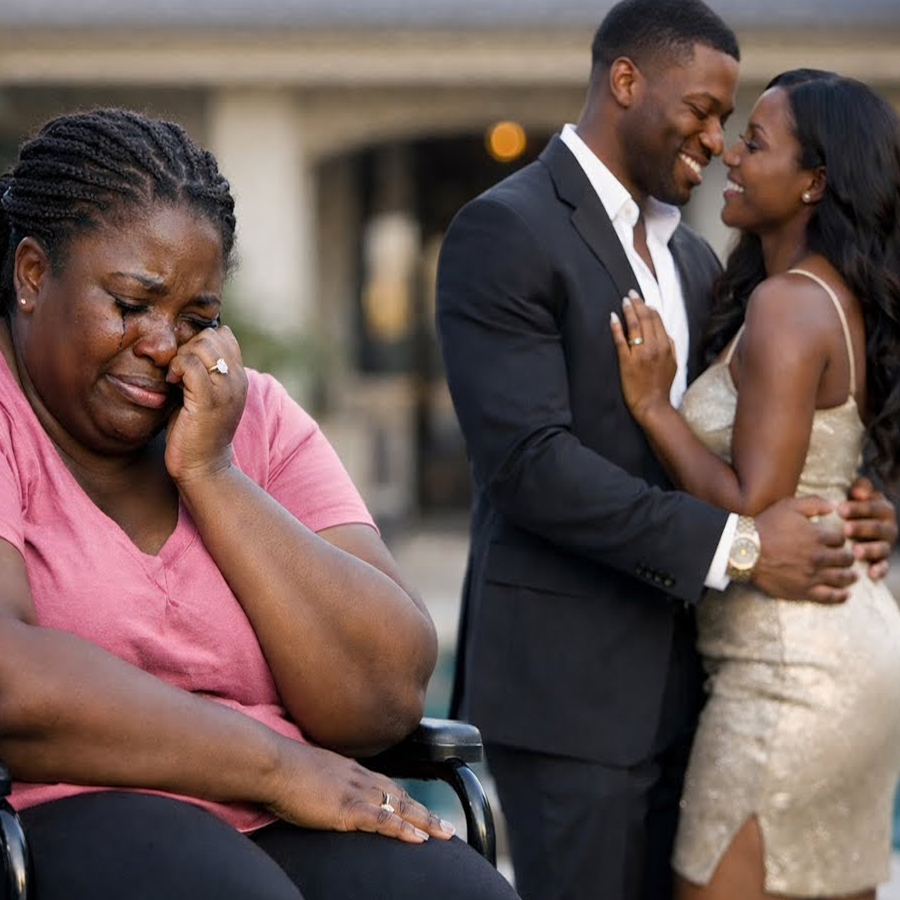
Female laughter. Familiar. She wheeled herself slowly toward the living room. Her heart pounded with each push of the wheels. When she reached the hallway, she saw them tund and Sandra on the couch too close, wine glasses in hand, music playing softly, Sandra’s hand resting casually on his arm.
They didn’t see her at first. They were laughing, carefree, intimate. Zara’s throat tightened. She pushed forward. The wheels made a slight sound against the marble floor. They turned. The silence was immediate. Sandra stood abruptly. Oh, Zara, you’re awake. Zara’s voice trembled. What is this? Ton stood slowly. Relax. Relax, she whispered.
Sandra grabbed her bag quickly. I should go. Yes, Zara said, her voice cracking. You should. After Sandra left, the house felt suffocating. You’re imagining things, Ton said coldly. I saw you. You saw what? Two adults talking. In my house? Our house? The correction felt deliberate. You think I don’t deserve happiness? He asked suddenly. Her eyes widened.
Happiness? Yes. My life changed, too. And so did mine, she cried. But you don’t see me complaining every day. He laughed bitterly. Of course not. You don’t have to stand beside a reminder of what you lost. The cruelty of that statement stole her breath. “Is that what I am to you?” she whispered. “He didn’t answer, but he didn’t deny it either.
” After that night, he stopped hiding. Sandra visited openly, sometimes staying late, sometimes not leaving at all. They would talk loudly in the living room while Zara remained upstairs. Once she heard Sandra say she can’t even stand up for herself. They both laughed. Zara covered her mouth to muffle her sob. The humiliation was worse than the paralysis because this pain was deliberate, intentional, and she had handed him everything, the company, the power, the authority, and now even her dignity felt borrowed.
One night, as she sat alone in the dark, staring at the city lights beyond her window, she finally allowed herself to admit the truth. The man who stopped to help her on the roadside was not the same man standing in her house now. And the slow cruelty had only just begun. There’s a particular kind of silence that fills a house before something terrible happens is not peaceful.
It’s heavy like the walls themselves are holding their breath. Zara felt it that morning. The mansion in Banana Island, once warm with ambition and shared laughter, now felt like a hotel suite she had overstayed in. Tund had been distant for weeks. Not just emotionally, physically. He barely slept in their bedroom anymore.
Sometimes he didn’t come home at all. When she asked where he had been the night before, he didn’t even look guilty. I was busy with Sandra, she asked quietly, his jaw tightened. You need to stop obsessing. Obsessing that word again. She studied him carefully. You don’t even deny it anymore. He shrugged. And that shrug hurt more than confession.
Later that afternoon, she received an email notification. Subject: Board restructuring update. Her brows furrowed. She hadn’t been informed about any restructuring. Her fingers trembled slightly as she opened the document. Her heart began to pound. New share allocations, revised executive control clauses, updated voting rights.
Her name was still listed as founder, but her control had been deluded significantly. She stared at the document in disbelief. She had signed preliminary restructuring paperwork months ago, trusting him to streamline operations. She had skimmed it. She had trusted him. Her breath grew shallow.
He had slowly transferred majority decision-making authority to himself legally, strategically, quietly, and she hadn’t noticed because she had been trying to walk again. When he returned home that evening, she was waiting in the living room. The printed documents lay on the table before her. Her wheelchair was positioned directly in front of the entrance.
He paused when he saw her. “What’s this?” she asked, holding up the papers. He didn’t feain confusion. You signed them. I signed operational restructuring. Not this. You should read more carefully next time. The coldness in his tone was surgical. You tricked me. No. He corrected calmly. I protected the company.
From me? Her voice cracked. From instability. The word felt like a slap. Instability? She repeated. You haven’t been active in months. Investors are nervous. So your solution was to strip my power. You weren’t using it? She stared at him stunned. I built that company from nothing and I made it stronger. He shot back. Silence thickened between them.
You think I owe you? He asked suddenly. She blinked. Owe you what? My success, my position, my life. Her chest tightened. I gave you opportunity, not ownership of my existence. He laughed bitterly. You handed me everything because I loved you. There it was. Love. The word sounded fragile now. His expression hardened.
And now, he asked quietly. Her voice barely rose above a whisper. Now I see who you really are. The final confrontation came 2 days later. Sandra was there. Of course she was. Zara wheeled herself into the living room and found them seated together comfortably. No attempt to hide anything anymore. Wine glasses, soft music.
Sandra’s head tilted toward him as she laughed. Zara felt something inside her finally snap. You’re not even ashamed, she said. Sandra rolled her eyes. Oh, please. T stood up slowly. This isn’t helping anyone. Helping? Zara repeated. You bring my friend into my house and call it help. Sandra stood too. Maybe if you weren’t so bitter, things would be different.
Zara stared at her. You used to call me sister. Sandra’s lips curved coldly. Things change. Tund stepped forward. This house can’t continue like this. Zara’s heartbeat slowed dangerously calm. What are you saying? I’m saying this arrangement isn’t working. Arrangement. marriage reduced to arrangement. You’re my husband, she said.
And you’re my responsibility, he replied sharply. That’s the problem. The words hit like bullets. Responsibility? Yes, he exploded. Everything is about your therapy, your moods, your limitations. I’m tired. Her hands tightened on the wheelchair armrests. So leave, she whispered. He looked at her. really looked at her, then said the unthinkable. No, you leave.
The room went still. I beg your pardon. This house is under my executive control now. Legally, her stomach dropped. You wouldn’t. I already have. Sandra folded her arms, watching silently. Zara’s voice trembled. This is my father’s house. It was, he corrected. Before restructuring, the realization dawned slowly.
The documents, the silent transfers, the updated ownership clauses. He had prepared for this. She felt physically ill. You planned this, she whispered. He didn’t deny it. Instead, he walked toward the hallway and called out to security. Prepare the vehicle. Her world tilted. You can’t do this. I can. Two security men approached hesitantly. They looked uncomfortable.
Sir, help her pack essentials. She’ll be relocating. Relocating? Zara felt tears blur her vision. Where would I go? She asked. He didn’t answer immediately. Anywhere but here. The cruelty was deliberate now. No more hiding. No more pretending. Sandra picked up her wine glass casually. You’ll land on your feet, she said mockingly. Oh, wait.
The insult hung unfinished, but its meaning was clear. Zara’s breath hitched. Humiliation burned hotter than anger. Security gently began packing a small suitcase. Clothes, medication, documents, nothing sentimental, nothing personal, no framed photos, no wedding album, no memories. When they wheeled her toward the door, rain had begun falling again. Of course, it had.
Rain marked every turning point in her life. Now she looked back once at the staircase, at the chandelier she had personally chosen, at the walls that had once echoed with laughter. Ton stood by the doorway, unmoved, unapologetic. She searched his face for even a flicker of doubt. There was none. After everything, she whispered.
He exhaled coldly. Life moves on. And just like that, the doors closed behind her. The driver left her outside a modest rehabilitation center temporarily, but after 2 weeks, funding complications orchestrated quietly by Ton’s new executive authority cut off her financial access. Her accounts were frozen pending corporate review.
She had no liquid control, no immediate funds. The woman who once signed billionaire deals found herself calculating bus fair. Eventually, a social worker recommended a transitional shelter in Yaba. The day she arrived, rain wasn’t falling, but the sky was gray. The building was simple, plain, functional. Women of different ages filled the space, some escaping abuse, some abandoned, some simply unlucky.
They looked at her wheelchair, then at her face. No one recognized her. And strangely, that anonymity felt both humiliating and freeing. That night, lying in a narrow bed for the first time without silk sheets or air conditioned silence. She stared at the ceiling. Her body hurt. Her heart hurt more. But beneath the pain, something hardened.
He took the house. He took the company. He took her dignity. But he did not take her mind. And as tears slid quietly down her temples into her hair, Zara made a silent promise. This would not be the end of her story. It would be the chapter he regretted the most. The first night in the shelter was the hardest.
Not because of the thin mattress, not because of the cracked paint on the ceiling, not even because of the unfamiliar sounds of women shifting, whispering, crying softly in the dark. It was the silence inside her own mind. For the first time in years, no one needed anything from her. No board meetings, no investors, no husband, just space. And that space felt terrifying.
Zara lay on her back, staring upward. The fan above creaked as it rotated lazily. The room smelled faintly of disinfectant and cooking oil. Across from her, a woman hummed a quiet lullabi to a child. Zara swallowed hard. Three months ago, she had slept in a king-sized bed in Banana Island. Now, she was number 14 in a transitional women’s shelter in Yaba.
Life does not descend slowly. It drops. The next morning, a social worker named Amaka introduced herself. “You’re new,” she said gently, sitting across from Zara in a small office. Zara nodded. “You don’t have to tell me everything,” Amaka continued. “But while you’re here, we help each other. That’s how this place works. Help each other.
The phrase lingered. Zara wasn’t used to being the one needing help. She was used to giving it. She was used to writing checks for places like this. The irony wasn’t lost on her. Amaka slid a form across the desk. Any skills, education, experience? Zara hesitated. What was she supposed to say? Former CEO of a billionaire conglomerate.
Recently discarded wife, wheelchairbound liability. She chose simplicity. Business management. Amaka raised an eyebrow slightly. University. Yes. Work history. Yes. There was something in Zara’s tone, restrained but confident, that made Amaka pause. We have women here trying to start small businesses. Amaka said thoughtfully. Hair braiding, food sales, tailoring.
Maybe you can assist with planning. Zara blinked. Assist. She felt something spark faintly in her chest. Yes, she said. The first workshop was awkward. Five women sat in plastic chairs arranged in a circle. Some skeptical, some curious. One young woman held a baby against her chest. Zara positioned her wheelchair at the front.
She didn’t introduce herself as a former billionaire. She introduced herself as Zara. I want to talk about profit, she began calmly. The women exchanged confused glances. Not just making money, she clarified. Keeping it. She drew simple diagrams on a whiteboard. Cost, revenue, savings, reinvestment. She broke down concepts she used to explain to investors into language that made sense for small roadside food vendors.
Don’t eat all your profit, she said gently. Even if you’re hungry, the women laughed softly. But they understood. For the first time since the accident, Zara felt alive in a way therapy had not given her. Her mind still worked. Sharp, strategic, powerful, and nobody could paralyze that. Days turned into weeks.
She developed a small financial literacy program inside the shelter. Taught budgeting, negotiation skills, supplier evaluation. She helped one woman restructure her acra business pricing and increase profit within a week. Another secured a microloan after Zara coached her through the application process. Word spread quietly.
Go meet Zara. She knows business. She listens. That last one mattered most. She listened because pain teaches you empathy faster than privilege ever could. But healing wasn’t linear. Some nights still broke her. There were moments she reached for her phone instinctively, then remembered she had blocked Ton’s number.
There were mornings she woke from dreams where she was walking again, running even, only to open her eyes and see the wheelchair beside her bed. And then there were the headlines. Even in the shelter common room, the television sometimes played business news. Admi Holdings announces major expansion.
Tund Admy speaks at global investment summit. He looked confident on screen, polished, victorious. She would turn away quietly, but not because she missed him, because she refused to let bitterness grow roots inside her. Bitterness makes you small, and she had already been made to feel small enough. One afternoon, Amaka approached her with hesitation.
There’s a donor event next week. She said, “We’d like one of the residents to speak.” Zara froze. Public speaking used to be effortless. But now, now she felt exposed, vulnerable. “Why me?” she asked. “Because when you talk, people pay attention.” She considered declining. Then she remembered something her father once told her.
Leadership is not about position. It’s about presence. Even in a shelter, even in a wheelchair, she agreed. The day of the donor event, she wore a simple navy dress. No designer labels, no jewelry, just quiet dignity. Volunteers arranged chairs under a canopy in the courtyard. Guests arrived in polished cars.
Some familiar brands she recognized immediately. She wondered briefly if any of them had attended her wedding. Life is strange that way. When her turn came to speak, she wheeled herself to the front. Her hands rested lightly on the armrests. She didn’t prepare a grand speech. She spoke truth. I used to think strength meant never falling. She began calmly.
Now I know strength means surviving the fall. The audience grew still. This shelter doesn’t give charity. It gives opportunity and opportunity changes lives. Her voice did not tremble because she was no longer ashamed. I lost many things, she continued. But I did not lose my mind. And as long as you have your mind, you are not finished.
Applause followed, not loud, but sincere. Afterward, several donors approached her. One older man studied her carefully. You speak like someone who has built before,” he said thoughtfully. She smiled faintly. “Maybe I have.” That night, back in her narrow bed, she stared at the ceiling again. But this time, the silence inside her wasn’t empty. It was steady.
She began outlining ideas in her notebook. Consulting services, microenterprise mentorship, small-scale investment partnerships. She might not have access to her former empire, but she still understood markets. And markets always reward value. Even if the path back looked different, even if it started from zero, 3 months into shelter life, she received an unexpected letter.
A former junior employee from Ady Holdings. I don’t know if this will reach you, the letter read. But many of us know what happened wasn’t right. If you ever return, we would follow you. Zara folded the paper slowly. Her eyes glistened. She wasn’t forgotten. Her legacy wasn’t erased. It was paused. There’s a difference.
That night, as rain tapped softly against the shelter roof, gentler than the storms before, she allowed herself a small smile. She had been thrown away, discarded, humiliated, but she had not been destroyed. And somewhere beyond the walls of that modest shelter, the future was quietly preparing to find her again. She didn’t know yet that destiny was already driving toward Yaba, that someone from her past would soon walk through those shelter gates.
And when he did, her rebuilding would accelerate. But for now, Zara Ady slept not as a victim, not as a fallen billionaire, but as a woman rediscovering her power from the ground up. The morning David returned to her life, Zara almost didn’t come downstairs. She had barely slept the night before.
Rain had fallen again, not violently, but persistently, drumming against the shelter’s tin extension roofing like a restless memory. She sat on her narrow bed, staring at her reflection in the small mirror nailed to the wall. There were faint shadows beneath her eyes now. Grief leaves fingerprints on the face, but her gaze still sharp, still alive.
From downstairs, she heard unusual activity. Voices, car engines, doors shutting. The shelter rarely received large-scale visitors on weekdays. She adjusted her simple cream blouse and smoothed her hair carefully. Pride doesn’t disappear just because circumstances change. When she wheeled herself down the corridor, she saw them through the open gates.
Convoy, three black SUVs, polished, coordinated, not flashy, but powerful. The shelter women whispered excitedly. Big donors today. Maybe international foundation. Zara didn’t think much of it. She had once been the one arriving in convoys. Now she stood among those waiting to receive. Life is humbling. He stepped out of the middle SUV, tall, broad-shouldered, well-tailored charcoal suit.
There was a calm authority in the way he moved, not arrogant, not rushed, intentional. Zara’s breath left her lungs before her mind caught up. “No, couldn’t be.” He turned slightly to speak to someone beside him, and she saw his profile. Her hands tightened on the wheels of her chair. “David, David Okono, her first love. The boy who used to walk her home after secondary school in Abadon.
The one who promised to come back successful. The one who left for the United Kingdom on a scholarship years ago. The one she waited for until life moved on. He laughed softly at something one of his team members said. The sound struck her chest like a memory detonating. She hadn’t heard that laugh in almost a decade. And yet her body recognized it instantly. She froze.
Part of her wanted to turn around, to retreat, to avoid being seen like this, in a shelter, in a wheelchair broken in ways he had never known. But before she could move, his eyes swept across the courtyard, scanning, observing, and then they stopped on her. The world narrowed. He blinked once, twice, like his brain was correcting a hallucination.
His lips parted slightly. Zara. Her name fell from his mouth the same way it used to. Soft, careful, disbelieving. Everything inside her trembled. The courtyard noise faded into background static as he walked toward her slowly. Not rushed, not dramatic, but with purpose. Each step measured. When he reached her, he didn’t look at the wheelchair first.
He looked at her face, searching, confirming. It’s you, he said quietly. Her throat felt tight. “Yes, silence stretched between them, thick with years, choices, missed chances. “What happened?” he asked gently. There was no pity in his tone, only concern. That alone nearly broke her. “It’s a long story,” she replied. His eyes softened.
“I have time.” Something about that sentence felt heavier than he realized. “I have time.” years ago. She had begged time to pause before he boarded that plane to London. Now here he stood back, successful, stronger, and looking at her like she still mattered. They sat beneath a shaded corner of the courtyard while his team distributed supplies and food packages.
The other women whispered curiously. Zara tried to maintain composure. “How long have you been back?” she asked. “6 months.” “6 months?” She swallowed. You didn’t reach out. I tried. Her brows furrowed. I called your old number. Your email bounced. Then I saw your wedding announcement years ago. He gave a faint controlled smile.
I figured you had moved on. Her chest tightened. I did. He nodded slowly. And now that question lingered. Now, she said carefully. I’m rebuilding. He studied her closely. You were never the type to stay down. A bitter laugh almost escaped her. You’d be surprised. He leaned forward slightly. I’ve been looking for you. Her heart skipped.
What? When I returned to Nigeria, I wanted to reconnect at least as friends, but your company had complications. She looked away. Yes, complications. He noticed the hesitation. Is it true? He asked quietly. The things I heard. She met his eyes. Which things? That your husband took over everything. The word husband felt foreign now. Yes, she said plainly.
It’s true. And the accident also true. His jaw tightened. She saw anger flicker briefly across his face. Not toward her, toward whoever hurt her. That was new. Tund used to defend her. Now another man sat across from her looking like he wanted to protect her. Felt disorienting. Later that afternoon, David requested a private conversation with the shelter coordinator.
Zara didn’t know what he said, but when he returned, his expression was settled. “Come with me,” he said gently. She blinked. “Where home?” The word hit her unexpectedly. “I can’t just leave,” she replied quickly. This place helped me and they will still help others, he said calmly. But you don’t belong here permanently. She stiffened slightly.
Belong. I don’t mean that disrespectfully, he added quickly. I mean your capacity is bigger than survival mode. He lowered his voice. You built something once. You can build again. Tears threatened her composure. You don’t even know the full story. Then tell me, he said softly. Let me carry some of it. There it was again.
Let me carry some of it. Not take over, not control, just carry, she hesitated. Pride wrestled with vulnerability, but exhaustion one. Okay, she whispered. His house wasn’t a mansion like Banana Island. It was in a koi. Modern, elegant, quiet, wealth, not loud, not performative. When they entered, she felt something strange. Peace.
No tension in the air. No hostility, just stillness. He personally pushed her wheelchair inside, not delegating it to staff, not avoiding the gesture, and he didn’t treat it like a burden. Guest room or master bedroom? He asked casually. She looked startled. Guest room? He smiled faintly. As you wish. Over dinner that night, she told him everything.
The roadside meeting, the marriage, the transfer of power, the accident, Sandra being thrown out. She expected shock, judgment, questions. Instead, he listened completely without interrupting. When she finished, silence filled the room. Finally, he spoke. I should have come back sooner. Her brows drew together. That wouldn’t have changed what I chose. No, he agreed.
But maybe it would have reminded you what real partnership feels like. Her heart stuttered slightly. You’re different, she said. So are you. They held each other’s gaze a moment too long. History doesn’t disappear. It waits quietly. Before she went to bed that night, he paused at the doorway. I never stopped loving you, he said calmly.
Not dramatic, not pleading, just truth. Her breath caught. David, I’m not saying that to pressure you, he continued. I’m saying it so you know that what happened to you doesn’t define your worth. Her eyes glistened. For months, she had been made to feel discarded, replaceable, broken, and now someone stood before her seeing her.
Not the wheelchair, not the scandal, her. Rest, he said gently. We’ll figure everything else out tomorrow. As he closed the door, Zara leaned back against the pillows. For the first time since the accident, she didn’t feel abandoned. She felt chosen. And somewhere across Lagos, in a house that once belonged to her, Tund had no idea that the man who once loved her first had just walked back into her life.
And this time, he hadn’t returned empty-handed. He had returned powerful. The first morning, Zara woke up in David’s house. She forgot for 3 seconds that she couldn’t feel her legs. Three full peaceful seconds. Then reality returned. But this time, it didn’t crush her because the room didn’t feel hostile. Sunlight filtered gently through sheer curtains.
The air smelled faintly of coffee. Somewhere downstairs, she heard quiet movement. Not hurried, not tense, just life. She turned her head toward the window and allowed herself a slow breath. This was not banana island. This was not the shelter. This was neutral ground. And neutral ground felt like possibility. David knocked lightly before entering.
Good morning. She smiled faintly. You knock in your own house? He leaned against the door frame. I respect closed doors. The subtle difference between him and Ton struck her again. Respect wasn’t something David announced. It was something he practiced. He wheeled her downstairs himself, refusing assistance from the housekeeper.
“You don’t have to do that,” she said. “I know,” he replied simply. “Breakfast was simple fruit, toast, eggs. They didn’t rush conversation. They didn’t avoid it either. I spoke to my legal team last night,” David said carefully. She looked up sharply. “You did what?” I asked them to quietly review public records on Admy Holdings.
Her heart thudded and he studied her face before answering. The restructuring wasn’t illegal, but it was strategic. There are vulnerabilities. Her pulse quickened. What kind of vulnerabilities? He leaned forward slightly. Transfer speed, share delilution patterns, executive override clauses that may have violated original founder protections. She stared at him.
You found that in one night? He smiled faintly. I’ve been investing in Nigerian firms for 6 months. I understand corporate weaknesses. She hadn’t asked about his success yet. She hadn’t needed to. It was obvious. Confidence like his doesn’t grow without foundation. I don’t want revenge, she said quietly. I know.
I want restoration. He nodded. Good, because revenge is emotional. Restoration is strategic. That sentence stayed with her. Within a week, quiet meetings began. Not public, not dramatic, discreet. David’s legal team met Zara in his home office. Documents were spread across the table. She analyzed them carefully.
Her mind felt sharper than it had in months. Pain had not dulled her intelligence. If anything, it had clarified it. He used your rehabilitation period to push through accelerated amendments, one lawyer explained. Zara’s jaw tightened. He knew I wouldn’t review them thoroughly. Yes. And investors, many trusted your legacy.
They didn’t question the changes. She leaned back slowly. I built loyalty. And loyalty can be reactivated, David said calmly. She looked at him. Not if I look weak. You don’t. The certainty in his voice steadied her. Step one was reputation correction. Quietly, David arranged a private investor dinner. No press, no announcements, just influential stakeholders.
Zara hesitated before attending. It would be her first appearance in months. Public, visible, wheelchair and all. What if they see me differently? She asked the night before. David didn’t sugarcoat it. They will. Her chest tightened slightly, but not in the way you think. The next evening, she wore a deep emerald dress, minimal makeup, no attempt to disguise her reality.
If they were going to see her, they would see her fully. When David pushed her into the private dining hall, conversations paused briefly, not in shock, in recognition. Several investors stood. Zara, it’s good to see you. I’m glad you’re recovering. Their tone wasn’t pitying. It was respectful. She spoke calmly that evening, not emotionally, not accusatory.
She outlined long-term growth projections, identified overlooked expansion risks, highlighted inconsistencies in recent operational decisions without naming tund directly. Investors listened because competence commands attention. Afterward, one older investor pulled David aside. “She still has it,” he murmured. David smiled slightly.
“She never lost it.” Meanwhile, Tund noticed subtle shifts. Investor calls grew shorter. Board inquiries increased. Financial audits were requested. He frowned at the unusual scrutiny. “Who’s pushing this?” he asked during a meeting. No one answered clearly, but the pressure was building. and for the first time he felt slightly exposed.
Sandra noticed his agitation. “You’re paranoid,” she said dismissively. “I’m not paranoid,” he snapped. “Something’s happening.” She rolled her eyes. “Relax. You control the company. He wanted to believe that. But control built through manipulation always feels fragile.” Back in Aoy, Zara worked daily.
She reviewed operational data, identified overextended contracts, calculated leverage points. “You’re not trying to destroy him,” David observed one evening. “No,” she replied calmly. “I’m trying to separate my legacy from his decisions.” He nodded approvingly. “There was no bitterness in her tone, only clarity.” He admired that.
“I should tell you something,” he said quietly. She looked up. I’ve been acquiring minority shares quietly through third parties. Her eyes widened. You what? Nothing illegal, he clarified. Just positioning. Her heartbeat quickened. How many? Enough to influence a vote. Silence fell. You did that for me? For us, he corrected gently.
The word us didn’t scare her this time. It didn’t feel like dependency. Felt like alliance. Rehabilitation continued too. David hired one of the best physiootherapists in Lagos. Not because he believed she would suddenly walk again, but because he believed in maximizing potential. You don’t treat me like I’m broken, she said one afternoon.
You’re not broken, he replied. You’re rebuilding. That distinction mattered. 3 months after their first meeting in the shelter, the decisive board session arrived. Zara insisted on attending physically. David didn’t argue. He simply stood beside her. When she entered the Admmy Holdings boardroom for the first time since being thrown out, the air shifted palpably.
Some board members looked nervous. Others relieved. Ton froze when he saw her. His expression flickered between shock and irritation. “You shouldn’t be here,” he said tightly. I’m founder and majority historical shareholder, she replied calmly. I belong here. The meeting began. Audits were presented. Financial risk exposure highlighted.
Operational overextensions exposed. And then David’s acquired shares were revealed. Gasps circled the room. Ton’s face drained of color. “You planned this?” he said through clenched teeth. Zara met his gaze steadily. No, I prepared. The difference was devastating. By the end of the session, voting rights shifted. Executive authority diluted an independent oversight committee reinstated.
Tund remained CEO for now, but no longer untouchable. As they exited the building, reporters outside caught a glimpse of Zara beside David. Cameras flashed. Is Ady Holdings undergoing leadership changes? She paused briefly. And for the first time publicly since the accident, she spoke. Leadership isn’t about position, she said calmly. It’s about responsibility.
Then she allowed David to wheel her forward inside the car. Silence settled between them. You didn’t destroy him, David said quietly. No, she replied. But you reminded him who built the foundation. She looked out the window at the Lego skyline. Her city, her work, her legacy. She wasn’t fully restored yet, but she was no longer powerless.
And across town, Ton sat alone in his office for the first time, feeling what she once felt. Unstable. The difference. She had rebuilt from nothing. He had built on borrowed ground. And borrowed ground never holds forever. The game had shifted. And this time she was not playing from a wheelchair. She was playing from strategy.
Power feels permanent when you’re holding it. That was Ton’s first mistake. 3 months after the board restructuring, the cracks in his empire began widening. At first, it was subtle. A delayed payment here. An investor withdrawing quietly there. A supplier requesting stricter terms. He blamed market instability. But instability has patterns, and these patterns felt personal.
Sandra, meanwhile, had grown increasingly restless. She no longer pretended to be discreet. She moved through the Banana Island mansion like it had always belonged to her. New furniture, new artwork, new friends visiting. She posted curated photos online, luxury dinners, champagne glasses, cryptic captions about elevation.
Tund noticed something else. Money was flowing out faster than it came in. Why is the private account lower than projected? He asked one evening, reviewing statements. Sandra barely looked up from her phone. Investments? What investments? Relax, she said casually. I know what I’m doing. That phrase sounded disturbingly familiar.
Across Lagos, Zara’s life had stabilized. Not in the way she once defined stability, no towering mansion or flashing cameras, but in a way that felt grounded. Her partial voting restoration had strengthened investor confidence. She wasn’t back in full executive control yet, but oversight committees now required transparency on major financial decisions.
David’s influence remained quiet, but firm. And something else had shifted, too. Her confidence no longer depended on position, came from survival. One evening, as they sat on David’s balcony overlooking the city lights, he asked softly. “Do you ever miss him?” she considered the question honestly. “I miss who I thought he was,” she replied.
David nodded slowly. “That’s harder to let go of,” she smiled faintly. “Yes, there was no bitterness in her voice, just truth.” Back in Banana Island, Ton’s world tilted suddenly. It began with a phone call from the bank. Sir, there have been substantial transfers from your joint investment account. His stomach tightened.
What transfers? International wire transfers over the past 6 weeks. His pulse quickened. He logged into the account. Large amounts repeatedly transferred to offshore accounts. His throat dried. He stormed into the living room. Sandra. She looked up calmly. Yes. What is this? He demanded, holding up his phone. She glanced briefly at the screen.
Oh, that that. His voice cracked. That’s millions. She stood slowly. Tunnal down. Calm down. She exhaled dramatically. You said you wanted expansion. Not theft. Her expression hardened slightly. It’s not theft if it’s strategy. The irony sliced through him. strategy,” he repeated. “Yes, I invested in international property developments without telling me.
” She tilted her head. “You didn’t tell your wife everything either.” The word wife hit him unexpectedly. Sandra stepped closer. “You built your power by being smart,” she said quietly. “I’m doing the same.” A chill crept down his spine. “Return the money,” she laughed softly. “It’s already moved. Move it back. It’s not that simple.
He stared at her, realization dawning slowly. You planned this. She didn’t deny it. Instead, she reached for her handbag. I’m traveling tomorrow. Traveling? Yes. Dubai first, then maybe London. His voice dropped. You’re leaving? I prefer the word relocating. And the company? She shrugged. You’ll manage. The arrogance mirrored his own from months ago.
And for the first time, he saw himself clearly, the same cold detachment, the same calculated calm. But now he was on the receiving end. The next blow came quickly. A financial audit triggered by the oversight committee uncovered irregular executive expenditures. Private accounts linked to company liquidity, overextended loan guarantees, high-risk ventures authorized without full board approval.
Tons sat across from the auditors, sweat forming along his collar. This is temporary cash flow management, he insisted. It’s exposure, one auditor corrected flatly. Within weeks, major investors began pulling out. Stock valuation dropped sharply. Credit lines tightened. Sandra was gone by then. Phones switched off. Social media deactivated.
International travel confirmed. He tried contacting her repeatedly. Nothing. He sold properties to stabilize liquidity, but desperation lowers negotiation power. He sold undervalued fast. Then came the final humiliation. An emergency board vote. Zara attended quietly, not triumphant, not vengeful, composed, financial mismanagement reports were presented.
Risk exposure documented. Investor confidence declining. Tund argued passionately. It’s temporary volatility. No, Zara said calmly for the first time during the session. Its consequence. Silence filled the room. Her gaze didn’t carry anger, just clarity. You dismantled safeguards to control everything, she continued.
And without safeguards, even you are vulnerable. The vote was swift. Tund was removed as CEO. Temporary executive oversight reinstated. Zara was not reinstated as CEO immediately. Instead, a neutral interim leader was appointed while restructuring occurred. She didn’t rush to reclaim full power. She had learned something important.
Control isn’t security. Structure is. As Tund exited the boardroom, reporters waited outside. Flashes erupted. Sir, is it true the company is facing insolveny? Did your partner abscond with funds? He pushed through them, humiliated. Months later, the mansion was sold. The luxury cars repossessed.
former allies avoided his calls. He moved into a modest apartment in Suril. Full circle. Only this time, no one saw him as promising. They saw him as reckless. One afternoon, Zara received a message request from an unknown number. I made mistakes. No name, no signature. She stared at the message, then deleted it. Closure doesn’t require conversation.
Six months later, Admy Holdings stabilized under careful restructuring. Zara gradually resumed a visible leadership role, not as sole authority, but as strategic chair with strength and governance, she launched a foundation supporting women entrepreneurs. Inspired by her time at the shelter, this time her philanthropy wasn’t performative. It was personal.
David stood beside her at the official launch event. Not ahead, not behind. Beside, later that evening, on the same balcony where they once talked about rebuilding, he knelt. No cameras, no spectacle, just quiet certainty. I loved you before you were powerful, he said softly. I loved you when you were broken.
I love you now because you’re whole. Her eyes filled. I’m not the same girl you left. I don’t want the same girl, he replied gently. I want this woman. She smiled. Yes. When he slipped the ring onto her finger, it didn’t feel like rescue. Felt like partnership. Months later, Zara visited the shelter in Yaba. Not as a resident, not as a victim, but as a donor and mentor.
She wheeled through the courtyard confidently. The women gathered around her. “Madame Zara,” one whispered with admiration. She smiled softly. I was you, she said, and you can be me that night. As she watched the Lego skyline shimmer, she reflected quietly. She had lost a husband, a house, company, her ability to walk, but she had gained something far greater.
Discernment, strength, boundaries, and a love that didn’t require her to shrink. across the city, tunned past a roadside breakdown. A woman stood beside her stalled car. For a moment, he considered stopping, but traffic pushed him forward. And destiny doesn’t always give second chances. Some lessons only come once. And karma, karma doesn’t shout, it restores balance. Thanks for watching.
If you enjoyed the story, please subscribe to this channel and tell us where you are watching from. Have a wonderful