The Detroit rain fell with relentless fury, transforming streets into shallow rivers and drowning out all sounds except the occasional rumble of thunder. Maxwell Thornton, CEO of Thornton Enterprises and one of Michigan’s wealthiest businessmen, stood beneath the inadequate shelter of his Italian designer umbrella, watching his chauffeur struggle with the stranded limousine.
“I’m sorry, Mr. Thornton,” the driver shouted over the downpour. “The flooding’s too deep ahead. We can’t make it through these streets.”
Max’s jaw tightened as he checked his platinum Rolex. The meeting with Harrison Wells was scheduled in thirty minutes. A potential partnership that could double his company’s value overnight. Missing it wasn’t an option.
“Where exactly are we?” he demanded, surveying the unfamiliar surroundings with distaste. Dilapidated buildings lined the narrow streets, their windows either boarded up or broken. This forgotten corner of Detroit seemed worlds away from the gleaming downtown skyscrapers visible in the distance.
“East Side, sir. About fifteen blocks from your destination.”
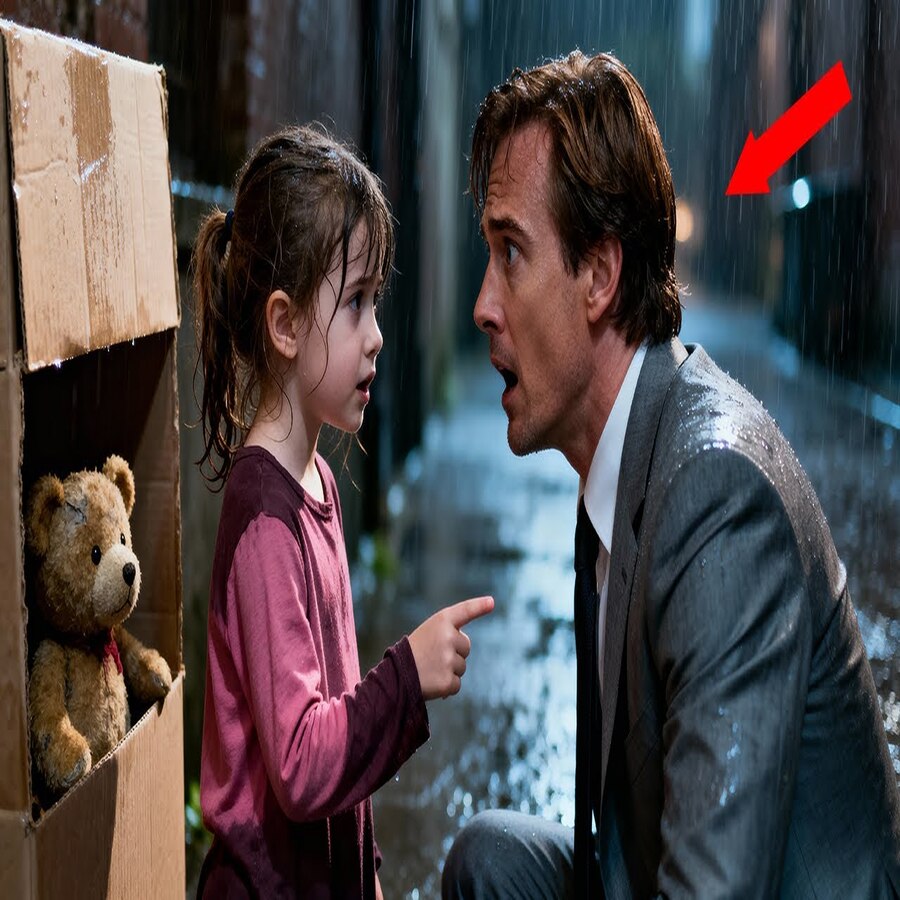
Max made a swift calculation. “Call for another car to meet me at Wells’s office. I’ll walk from here.” Before his driver could protest, he added, “And get this vehicle towed. I expect you to have everything resolved by the time my meeting concludes.”
Ignoring the chauffeur’s concerned expression, Max stepped onto the flooded sidewalk. His handcrafted Italian shoes were immediately soaked, but he pressed forward, guided by the GPS on his phone. The rain intensified, pelting his umbrella and soaking the bottom half of his tailored suit. His irritation grew with each squishy step. This neighborhood, with its crumbling infrastructure and evident poverty, was exactly the kind of eyesore that made investors nervous.
The East Side Renewal Project that Wells had proposed would transform these blocks into luxury condominiums, upscale shopping, and office spaces. The perfect solution for everyone involved. Property values would skyrocket, tax revenues would increase, and Thornton Enterprises would secure a commanding position in Detroit’s urban renaissance.
As Max navigated around a particularly deep puddle, a small voice penetrated the rain’s constant drumming. “Mister, do you have any food?”
He nearly missed her. A tiny figure huddled in the recessed doorway of an abandoned building. A girl no older than seven, with tangled brown hair plastered to her head, stared up at him. Her clothes were soaked through, her bare feet caked with mud. Max’s discomfort intensified. He glanced around, noticing other pedestrians hurrying past, eyes deliberately averted from the child. Taking their cue, he quickened his pace.
“Please, just a sandwich or something.”
The pleading in her voice made him hesitate, but only briefly. This wasn’t his problem. The city had programs for people like her. Besides, he was already running late.
Ten minutes later, having taken a wrong turn, Max found himself beneath a storefront awning, recalibrating his route. The rain had overwhelmed his umbrella, leaving his expensive suit drenched. As he cursed the weather, a movement across the street caught his attention. The same little girl was there, sharing what appeared to be a stale bread roll with a boy even smaller than herself. Despite their obvious hunger, she had given him the larger portion. The two children huddled together under a piece of soggy cardboard, their faces displaying a mixture of hunger and resigned acceptance that no child should know.
Something shifted inside Max.
Without consciously deciding to move, he found himself crossing the street, approaching the children. “Here,” he said gruffly, extending several twenty-dollar bills. “Get something to eat.”
The girl looked up, surprise replacing the resignation in her eyes. She hesitated before accepting the money, her small hand trembling slightly. “Thank you, mister.”
Instead of rushing off, she tilted her head, studying his frustrated expression and soaked clothing. “Are you lost? You don’t look like you’re from around here.”
Max found himself nodding. “I’m trying to get to Riverfront Plaza.”
Her face brightened. “I know where that is. I can show you a shortcut.” She stood, carefully tucking the money into her pocket. “I’m Lily, by the way.”
“Maxwell Thornton,” he replied automatically, then wondered why he’d given his full name to a street child.
Lily turned to the small boy. “Danny, go to Miss Martha’s place. Tell her I’ll be back later.” The boy nodded solemnly and scampered away, disappearing around a corner.
“This way,” Lily said, gesturing for Max to follow. She moved with surprising confidence through the labyrinthine streets, occasionally pointing out hazards with the authority of a seasoned tour guide.
“You really know this area,” Max commented after she’d led him through an alley that shaved several blocks off his route.
“I’ve lived here my whole life,” she replied matter-of-factly. “Well, except for the last two months. That’s when I started staying in my cardboard house.”
“Cardboard house?”
Lily nodded, her expression unnervingly adult. “Since Grandma Maggie went to the hospital. Nobody would let me stay with her, and the lady from social services never came back after the first day.” She shrugged. “It’s not so bad. I found a good spot behind the old library where the roof overhang keeps most of the rain off.”
Max felt a tightness in his chest. “What about your parents?”
“Mom left when I was little. Dad, too. It’s just been me and Grandma for as long as I can remember.”
They walked in silence for a moment, Max processing this information while Lily navigated them through the maze of streets.
“What’s wrong with your grandmother?” he finally asked.
“Her heart. She needs an operation, but they won’t do it. They say there’s a problem with her insurance.” Lily kicked at a stone. “She was getting better, but then some men in suits came to the hospital. After that, the doctor said she had to wait longer.” Her voice dropped to a whisper. “I think those men work for Mr. Wells.”
Max nearly stumbled. “Harrison Wells. How do you know him?”
Lily’s expression darkened. “Everybody around here knows about him. He’s the man buying all the buildings and making people leave. His people came to our apartment building, too, before Grandma got sick. They said we had to go because the building wasn’t safe, but they didn’t say where we were supposed to go.”
They emerged onto a wider street, and Max recognized the modern glass building of Riverfront Plaza in the distance. His meeting with Wells was in seven minutes.
“That’s the right direction,” Lily said, pointing. “Just keep going straight and you’ll see the fancy door with the gold handles.”
Max nodded, suddenly reluctant to end their conversation. “Thank you for your help, Lily.”
She smiled, revealing a missing front tooth. “You’re welcome, Mr. Thornton.” She turned to leave, then hesitated. “If you need a place to stay tonight, I could probably find another box. We could make it work. It would be tight, but we’d stay dry.”
The sincere offer from a child who had nothing to a man who had everything struck Max with unexpected force. Not the offer itself, but what it represented. That in Lily’s world, a cramped space beneath wet cardboard was the best accommodation she could imagine, and she was willing to share it.
“What’s the name of the hospital where your grandmother is?” he heard himself asking.
“Detroit Memorial,” Lily replied. “But visiting hours are probably over.”
Max checked his watch again, but this time with a different calculation in mind. The meeting with Wells suddenly seemed less urgent. “Lily, would you like to go see your grandmother?”
Her eyes widened. “Really? Could we?”
“Yes,” Max decided, surprising himself. “I think we should.” And on the way, you can tell me more about this Mr. Wells and what’s been happening in your neighborhood.
As they walked toward the main avenue to hail a taxi, Max felt his phone vibrating with incoming calls. Likely Wells wondering where he was. For the first time in years, Maxwell Thornton deliberately ignored a business obligation, sensing that the conversation with this remarkable child might be more important than any deal he could make.
The sterile fluorescent lights of Detroit Memorial Hospital cast harsh shadows across Lily’s small face as she pressed her nose against the glass window of the intensive care unit. Inside, an elderly woman lay motionless, connected to various machines that beeped steadily.
“That’s her,” Lily whispered. “That’s my grandma, Maggie.”
Max stood behind her, taking in the scene. Margaret Jenkins looked frail, her silver hair spread across the pillow like a halo. Even from a distance, he could see the family resemblance in the shape of her face and the determined set of her jaw even in unconsciousness.
“She looks peaceful,” he offered, unsure what to say to comfort the child.
Lily nodded. “The nurses are nice to her. They let me visit sometimes when they’re not busy.” She placed her palm against the glass. “I talked to her through the window when they won’t let me in. I think she can hear me.”
A nurse approached from within the room, noticed Lily, and smiled. She came to the door. “Well, hello there, sweetie. I was wondering when you’d visit again.” Her gaze shifted to Max, and her expression turned questioning. “And you are?”
“Maxwell Thornton,” he replied, extending his hand. “I’m a friend of the family.”
The nurse, whose badge read Nancy Parker, raised an eyebrow but accepted his handshake. “I’m glad Lily’s found someone to bring her. It’s not safe for a child her age to be wandering these streets alone.”
“Can I see Grandma up close today?” Lily asked hopefully.
Nurse Parker’s face softened. “Just for a few minutes, honey. And you’ll need to wash your hands first.” She glanced at Max. “Will you be joining her?”
“If that’s permitted,” he replied.
While Lily scrubbed her hands at a nearby sink, Max quietly asked, “How is Mrs. Jenkins doing? Lily mentioned she needs a heart operation.”
The nurse’s expression grew guarded. “Are you really a family friend? Because we’ve had some unusual situations regarding Mrs. Jenkins’s case.”
“I only met Lily today,” Max admitted. “But I’m concerned about her situation. She’s been living on the streets while her grandmother is hospitalized.”
Nurse Parker’s professional demeanor momentarily cracked. “I knew it,” she whispered fiercely. “Child services claimed they’d placed her with a foster family. I’ve been calling them for weeks without getting straight answers.”
Max felt his anger rising. “What about Mrs. Jenkins’s condition?”
The nurse hesitated, then spoke in low tones. “She needs a valve replacement. It’s not complicated surgery, but somehow her case keeps getting pushed back. First, it was insurance verification issues, then scheduling conflicts, then a review of surgical priorities.” She shook her head. “In twenty years of nursing, I’ve never seen so many administrative roadblocks for a relatively straightforward procedure.”
“When did these delays start?”
“About two months ago, right after those executives visited. They claimed to be from the hospital board, but I’d never seen them before.” Her eyes narrowed. “The next day, Mrs. Jenkins was moved from the surgical list to indefinite hold status.”
Lily returned, her hands still damp from washing. “I’m ready.”
Nurse Parker’s smile returned instantly. “Let’s go see Grandma, then.”
Inside the room, Lily approached the bed with reverence. “Hi, Grandma,” she said softly, taking her grandmother’s limp hand. “I brought a friend today. His name is Mr. Thornton, and he helped me find you.”
Max hung back, feeling like an intruder in this intimate moment. The room was sparse but clean, with a small window overlooking a brick wall. A single chair sat beside the bed, well-worn from use.
“The doctors say you’re getting stronger,” Lily continued, though Max suspected this was the child’s own hopeful interpretation rather than medical fact. “As soon as you wake up, we can go home.”
Max cleared his throat. “Lily, may I have a word with Nurse Parker outside? I’ll just be a moment.”
In the hallway, he turned to the nurse. “I’d like to speak with Mrs. Jenkins’s doctor.”
“Dr. Patel is on duty today. I can page him, but—”
“Please do,” Max interrupted. “And I’d appreciate if you didn’t mention this conversation to anyone else for now.”
The nurse studied him carefully. “Are you going to help them?”
“I’m going to try.”
Twenty minutes later, Max sat across from Dr. Anil Patel in a small consultation room. The doctor appeared exhausted, dark circles prominent under his eyes.
“Mrs. Jenkins’s case is complicated,” Dr. Patel began cautiously.
“I understand there have been unusual administrative obstacles,” Max replied. “I’d like to know why.”
The doctor’s gaze darted to the door as if ensuring it was closed. “Mr. Thornton, I don’t know who you are or why you’re involving yourself, but Margaret Jenkins’s situation isn’t unique. We’ve had several patients from the East Side neighborhood facing similar administrative issues in the past months. All needing care that would keep them in the hospital for extended periods.”
“Primarily elderly patients with stable but serious conditions requiring lengthy recovery. Patients who coincidentally all lived in buildings recently acquired by Wellspring Development Corporation.”
The connection crystallized in Max’s mind. Wells’s company was systematically removing obstacles to their development plans, including vulnerable residents who couldn’t be easily evicted.
“What would it take to move Mrs. Jenkins back onto the surgical schedule?” Max asked directly.
“Officially, resolution of her insurance status and approval from the medical director. And unofficially…” Dr. Patel’s expression hardened. “Someone with enough influence to counterbalance whoever’s keeping her off it.”
Max stood, extending his hand. “Thank you for your candor, Doctor. I’d like to pay for Mrs. Jenkins’s procedure privately, with all associated costs. Can you arrange that?”
The doctor’s eyes widened. “That would be substantial.”
“I understand. Please have your billing department contact my office with the details.” He handed Dr. Patel his business card. “And I’d prefer this arrangement remained confidential.”
When Max returned to the ICU, he found Lily singing softly to her grandmother, a lullaby that sounded both ancient and innocent. He waited until she finished before speaking.
“Lily, how would you feel about coming to stay at my house while your grandmother recovers?”
The child looked up, surprised. “Your house? Is it big?”
“Yes, quite big.”
“Does it have a roof that doesn’t leak?”
Something twisted in Max’s chest. “It has a very good roof and plenty of food.”
Lily’s face grew serious. “But what about Grandma? I need to visit her.”
“I’ll bring you to see her every day,” Max promised. “And I’ve spoken with her doctor. They’re going to do her operation very soon.”
Lily’s eyes widened. “Really? They said before that she had to wait a long, long time.”
“Not anymore,” Max assured her. “But there’s something I need to ask you about. You mentioned Mr. Wells earlier. Can you tell me more about him?”
Lily’s expression darkened. “He’s the man who makes people disappear.”
“Disappear?”
She nodded solemnly. “He comes to the neighborhoods with his men in suits. They talk to people who own buildings, and then the people who live there have to leave. My friend Emma’s whole family had to go after Mr. Wells came to their apartment building. They said they were going to stay with relatives in Chicago, but Emma never said goodbye, and she always said goodbye.”
Max frowned. “And you think something similar happened with other families?”
“Lots of families.” Lily confirmed. “Mr. Wells has this special school program, too. He comes to neighborhoods and tells parents their kids can go to a special school where they’ll get meals and education and even jobs after. But the kids who go never come back to visit.”
A chill ran down Max’s spine. “How do you know about this program?”
“His people came to our building before Grandma got sick. They said I could go to the special school and Grandma could move to a retirement community. But Grandma said no. She said it didn’t sound right.” Lily’s voice dropped to a whisper. “Two days later, she got really sick and had to come here.”
The implications were disturbing. Was Wells systematically clearing neighborhoods by any means necessary, using vulnerable children as leverage? The special school sounded suspiciously like a way to separate families and accelerate the emptying of properties Wells wanted to develop.
“Lily,” Max said carefully, “I was supposed to have a meeting with Mr. Wells today about a business deal, but I think I need to learn more before I talk to him.”
“Are you going to be his friend?” Lily asked, her voice small.
“No,” Max said firmly, surprising himself with his certainty. “I don’t think I am. In fact, I think I need to find out exactly what Mr. Wells has been doing in your neighborhood.”
A subtle shift occurred in that moment. A wealthy man’s priorities rearranging themselves in the presence of a child’s unspoken need. The East Side Renewal Project, which had seemed like a straightforward business opportunity that morning, now appeared in a sinister light.
“Let’s get you something to eat,” Max said, offering his hand to Lily. “And then we’ll go to my house. I think I need to make some phone calls.”
As they left the hospital, Max felt his phone vibrate again. Harrison Wells’s name flashed on the screen for the fifth time that afternoon. This time, instead of ignoring it, Max deliberately declined the call.
In the taxi heading toward his Grosse Pointe mansion, Max watched as Lily pressed her face against the window, marveling at the changing landscape, from crumbling buildings to manicured lawns and elegant homes. Her wonder at these ordinary sights made him see his world through new eyes, and what he saw disturbed him deeply.
He had built his fortune believing that business was business, impersonal, rational, and ultimately beneficial to society. But watching Lily’s reflection in the window, he wondered how many children like her had been invisible casualties of deals he’d celebrated with champagne.
Max’s Georgian-style mansion came into view as the taxi rounded the curved driveway bordered by perfectly manicured hedges. Lily’s eyes widened as she took in the imposing three-story home with its massive columns and sprawling grounds.
“You live here,” she whispered, pressing her face against the window. “By yourself?”
“Not entirely by myself,” Max replied. “There’s Mrs. Collins, my housekeeper, and Rodriguez, who manages the grounds.”
The taxi came to a stop, and Max paid the driver before helping Lily out. Her small hand felt fragile in his, a physical reminder of the responsibility he’d unexpectedly taken on.
Mrs. Collins, a stern-faced woman in her sixties with silver hair pulled into a tight bun, appeared at the door as they approached. Her customary stoic expression flickered with surprise at the sight of Lily.
“Mr. Thornton, we weren’t expecting you until this evening.” Her gaze settled on Lily’s soaked clothes and bare feet. “And we certainly weren’t expecting company.”
“Change of plans, Mrs. Collins,” Max said briskly. “This is Lily. She’ll be staying with us for a while. She needs dry clothes, a hot meal, and a room prepared.”
Mrs. Collins blinked, but decades of professional discretion prevented her from asking questions. “Of course, sir. I’ll see to it immediately.” She knelt slightly to address Lily directly. “Would you like some hot chocolate while we find you something to wear, young lady?”
Lily nodded shyly. “Yes, please. I haven’t had hot chocolate since Christmas at the community center.”
Mrs. Collins’s expression softened imperceptibly. “Then we’ll make it extra special with marshmallows.”
As Mrs. Collins led Lily toward the kitchen, Max called after them. “I’ll be in my study. Please bring me those files from Wellspring Development as soon as possible.”
In his wood-paneled study, Max loosened his tie and settled behind the massive oak desk that had once belonged to his father. He pulled out his phone and dialed a familiar number.
“Thornton, you’ve got some nerve standing me up today.” Harrison Wells’s voice was controlled but laced with irritation. “Do you realize how many people would kill for the opportunity you just squandered?”
“Something urgent came up,” Max replied evenly. “Family emergency.”
Wells scoffed. “Family emergency? Since when do you have family? Your parents have been gone for years, and you’ve never been married.”
Max ignored the jab. “I’d like to reschedule, Harrison, but I have some questions about the East Side project first.”
“Questions? Everything was in the prospectus. Thirty-block redevelopment, luxury condos, retail space, expected ROI of twenty-two percent within three years.”
“I’m more interested in the current residents,” Max said carefully. “The displacement plan wasn’t detailed in your materials.”
A brief silence followed. “Displacement is being handled. The properties we’ve acquired were mostly abandoned or in severe disrepair. The few remaining residents are being offered relocation packages and the educational opportunity initiative mentioned in the community benefits agreement.”
“The special school program?”
Another pause, slightly longer. “A workforce development program for underprivileged youth. Gives them skills, keeps them off the streets. It’s a win-win.” Wells’s tone hardened. “What’s this really about, Thornton? You’ve never concerned yourself with the social aspects of development before.”
“Just doing my due diligence,” Max replied. “I’ll have my team review the materials more thoroughly. Let’s plan to meet next week.”
After ending the call, Max turned to his computer and began searching for information on Wellspring Development and the East Side Renewal Project. The public materials were glossy and optimistic. Architectural renderings of gleaming buildings, parks, and happy residents enjoying a revitalized neighborhood. Press releases touted job creation, increased property values, and community benefits. But something felt off.
Max dug deeper, searching for news articles, community forums, and public records related to the project. Scattered reports of unusual eviction patterns emerged. Buildings suddenly condemned after inspections. Utilities mysteriously disconnected. Residents complaining of harassment.
Mrs. Collins knocked and entered, carrying a thick folder. “The Wellspring files, sir. And I’ve put the young lady in the blue guest room. She’s having a bath now. I found some of your niece’s clothes from when she visited last summer. They’re a bit large but will suffice until we can purchase appropriate items.”
“Thank you, Mrs. Collins.” Max hesitated, then added. “Lily’s situation is complicated. Her grandmother is hospitalized, and there appears to be no one caring for the child. I’m looking into the matter.”
Mrs. Collins nodded, her expression revealing nothing. “Will there be anything else, sir?”
“Yes, please contact Jameson’s department store. Have them deliver a complete wardrobe for a seven-year-old girl. Clothes, shoes, everything she might need. And perhaps some books and toys as well.”
“Very good, sir.” Mrs. Collins turned to leave, then paused. “If I may, sir. The child mentioned she hasn’t eaten since yesterday morning. I’ve prepared a light soup for now, but she’ll need regular nutritious meals to regain her strength.”
“Of course. See to it.”
Alone again, Max opened the Wellspring file. He spent the next hour pouring over legal documents, financial projections, and partnership agreements. The East Side Renewal Project was more extensive than he’d initially realized, nearly one hundred city blocks slated for complete transformation over five years. Wellspring had already secured most of the necessary properties through a web of subsidiary companies and was moving quickly to acquire the rest.
The Educational Opportunity Initiative was referenced several times, but with minimal details. It appeared to involve a residential facility outside the city where selected youth would receive specialized education and career training. The program was funded through a complex arrangement involving federal grants, corporate sponsorships, and a nonprofit foundation controlled by Wellspring.
Max was so absorbed in his research that he didn’t notice Lily standing in the doorway until she spoke. “Your house is really big, Mr. Thornton.”
He looked up to find her watching him, her small frame swimming in borrowed pajamas, her damp hair combed neatly. Without the grime of the streets, she looked even younger and more vulnerable.
“You can call me Max,” he offered, gesturing for her to enter. “Did Mrs. Collins get you everything you need?”
Lily nodded, approaching his desk cautiously. “She gave me soup and a sandwich and said a surprise is coming later.” She glanced at the papers spread across his desk. “Are you working?”
“Just looking into some things about Mr. Wells and his company.”
Lily climbed onto one of the leather chairs across from his desk, her feet dangling well above the floor. “Are you going to stop him from taking more people’s homes?”
The directness of her question caught Max off guard. “I’m trying to understand what’s happening first. These things can be complicated.”
“It doesn’t seem complicated to me,” Lily said with a child’s simple logic. “He wants the buildings, so he makes people leave. Then he tears everything down and builds fancy new things that nobody from the neighborhood can afford.”
Max couldn’t argue with her assessment. “You’re very observant, Lily.”
“Grandma says I notice things others miss.” Her expression grew serious. “Mr. Wells’s men came to our building lots of times. They talked to everyone, especially families with kids. They said the special school would give us opportunities we couldn’t get anywhere else.”
“Do you know anyone who went to this school?”
Lily nodded solemnly. “My friend Zach. His mom was sick like grandma. They told her they’d help with her medicine if Zach went to the school. He left three months ago. His mom got moved to a different place, too. Nobody’s heard from them since.”
Max felt a chill. “Were there others?”
“Lots of kids from my neighborhood. Always the ones whose families were having problems. No money, sick relatives, trouble with landlords.” Lily picked at a loose thread on her borrowed pajamas. “Grandma said it was fishy. That’s why she wouldn’t let me go, even when they offered her a new apartment in a different building.”
The pattern was becoming clearer, and Max didn’t like what he was seeing. Wells wasn’t just aggressively acquiring property. He appeared to be systematically targeting vulnerable families, using children as leverage to clear buildings.
His phone rang, and Max recognized the number of his private investigator. “Excuse me, Lily. I need to take this call.” He stood and moved toward the window. “Jenkins, what did you find?”
“Your hunch was right, Mr. Thornton,” the investigator replied. “The Wellspring Educational Facility isn’t registered with the State Department of Education. It operates as a private vocational training center under a subsidiary called Future Horizons LLC. The property is a former summer camp about forty miles outside Detroit. Very isolated, heavy security, minimal outside contact.”
“And the children?”
“Hard to get solid numbers, but local sources suggest anywhere from fifty to one hundred minors in residence. Staff turnover is high. Several former employees tried to raise concerns with county officials but were quickly silenced with legal threats or payoffs.”
Max glanced at Lily, who was leafing through a book she’d found on his shelf. “What about the families?”
“Most were relocated to various housing complexes owned by another Wellspring subsidiary, scattered throughout the Midwest. Ohio, Indiana, Illinois. Difficult to track. The pattern suggests deliberate separation of children from parents or guardians.”
“And Margaret Jenkins?”
“The elderly woman currently at Detroit Memorial. Her case is interesting. After she refused the relocation offer, there were suddenly issues with her building’s heating system. Code violations appeared after an unscheduled inspection. Then her health deteriorated rapidly. Medical records show symptoms consistent with certain environmental toxins, though nothing was ever conclusively proven.”
Max’s grip tightened on his phone. “I need more, Jenkins. Documentation, witnesses, anything concrete we can use.”
“Working on it, but Wells has friends in high places. City council, zoning board, even the police department. People are afraid to talk.”
“Keep digging. Whatever it costs.”
Max ended the call and turned back to find Lily watching him intently. “You’re going to help us, aren’t you?” she asked, her voice small but hopeful.
Before Max could answer, Mrs. Collins appeared at the door. “Sir, there are several large deliveries from Jameson’s. And Detective Sarah Mitchell is here to see you. She says it’s regarding the child.”
Max felt a surge of alarm. Had someone reported Lily missing? Was he about to be accused of kidnapping? “Show the detective in,” he said, trying to keep his voice calm.
Detective Sarah Mitchell entered the study with the confident stride of someone accustomed to command. Tall and athletic with short auburn hair, she wore a tailored pantsuit and carried herself with unmistakable authority.
“Mr. Thornton,” she began, then noticed Lily. Her expression softened momentarily. “And you must be Lily Jenkins. I’ve been looking for you, young lady.”
“Are you going to take me away?” Lily asked, shrinking back in her chair.
The detective shook her head. “Not if you’re safe and well cared for.” She turned to Max. “Which brings me to why I’m here. Mr. Thornton, would you care to explain how one of Detroit’s wealthiest businessmen ended up with a child who’s been reported missing from social services supervision for nearly two months?”
Max gestured toward the sitting area of his study. “Detective Mitchell, please have a seat. I believe we have much to discuss.”
The detective remained standing. “I’d prefer some answers first. Child services has been supposedly searching for Lily for weeks. Yet within hours of her being reported seen with you, I tracked her to your home. Care to explain?”
“You found me that quickly?” Max asked, genuinely surprised.
“A hospital security camera caught you and Lily leaving Detroit Memorial together. When facial recognition flagged Maxwell Thornton with an unidentified minor, it raised some eyebrows.” She finally sat down, her posture still rigid. “So again, what’s going on here?”
Max looked at Lily, who was watching the exchange with wide eyes. “Lily, would you mind if Mrs. Collins showed you those packages that just arrived? I think they might be for you.”
Understanding his intent, Lily nodded and slipped out of the room with Mrs. Collins, who had been hovering near the door.
Once they were alone, Max turned to the detective. “I met Lily today by chance. She was on the streets, hungry and alone. When I learned about her situation, her grandmother hospitalized, no one looking after her, I couldn’t just walk away.”
“So you brought her to your mansion instead of contacting authorities?” Detective Mitchell’s tone was skeptical. “That’s not standard procedure for finding a vulnerable child, Mr. Thornton.”
“Lily told me she had been contacted by social services once, right after her grandmother was hospitalized, but they never returned. She’s been living in a cardboard box for weeks, Detective. The system failed her completely.”
The detective’s expression hardened. “Child services has regulations and procedures—”
“That clearly aren’t working,” Max interrupted. “But I suspect there’s more to this story than bureaucratic incompetence. Have you heard of the East Side Renewal Project? Harrison Wells’s development. It’s been fast-tracked through city approvals.”
Her eyes narrowed. “What does that have to do with Lily?”
Max shared what he’d learned. The pattern of families being displaced, the suspicious circumstances surrounding Margaret Jenkins’s illness, the special school that separated children from their families. Detective Mitchell listened intently, her initial hostility gradually shifting to concern.
“These are serious allegations, Mr. Thornton. Do you have any evidence?”
“I’m gathering it. My investigator is looking into Wellspring Development and their operations. But Lily’s testimony alone raises significant questions. Why was her grandmother’s surgery repeatedly delayed after refusing Wells’s relocation offer? Why did social services mysteriously fail to follow up on a vulnerable child?”
The detective was silent for a moment, then pulled out a small notebook. “I’ve been investigating a series of unusual cases involving families from the East Side. Parents who suddenly surrender custody of their children, then relocate to other states. Guardianship transfers with questionable documentation. Foster placements that don’t follow standard protocols.” She looked up at Max. “All involving properties recently acquired by Wellspring subsidiaries.”
“You’ve been building a case,” Max realized.
“Trying to, but it’s difficult. Records disappear. Witnesses become uncooperative. My supervisor has warned me twice about harassing respected business leaders without evidence.” Her frustration was evident. “Wells has the mayor’s office, half the city council, and my police chief in his pocket.”
“What about the educational opportunity initiative, the special school?”
“Officially, it’s a prestigious program offering disadvantaged youth specialized education and career training. In reality, it’s nearly impossible to get information about what happens there. No visitors, no inspections, minimal communication between children and families.” She tapped her notebook. “I’ve interviewed three former staff members who left because of ethical concerns, but all were bound by strict non-disclosure agreements and afraid to speak openly.”
Max processed this information. “So you believe Wells is deliberately targeting vulnerable families to clear properties for development, using this school program as leverage?”
“That’s my working theory, but proving it has been nearly impossible.” She fixed Max with an intense gaze. “Until now, perhaps. Lily and her grandmother may be our best chance to expose what’s happening.”
“What do you mean?”
“Margaret Jenkins refused Wells’s offer directly. Then, she conveniently became ill. Her granddaughter was left unsupervised, and her surgery was mysteriously delayed. If we can document this pattern and connect it to Wells, it could be the break we need.”
Max considered the implications. That would put Lily at the center of a very public and potentially dangerous situation.
“She’s already in danger, Mr. Thornton. All those children are.” Detective Mitchell’s voice softened slightly. “But you’re right to be concerned. Lily’s safety must be the priority.”
The door opened, and Lily returned, her arms filled with colorful shopping bags. Her face was alight with excitement. “Max, Mrs. Collins says all these are for me. There are dresses and shoes and even books.” She dumped the packages on the floor and pulled out a stuffed elephant. “Look at this. I’ve never had a new toy before.”
Max smiled despite the gravity of their conversation. “Why don’t you take everything upstairs to your room? You can organize it all while Detective Mitchell and I finish our talk.”
When Lily had left again, the detective leaned forward. “She trusts you already.”
“I’m as surprised as you are,” Max admitted. “I’m not exactly known for my paternal instincts.”
“Well, you’ve put yourself in a position of responsibility now.” Her tone was challenging. “What’s your plan? You can’t keep her indefinitely without legal authorization.”
“I intend to ensure her grandmother receives the surgery she needs. After that, they can be reunited. And in the meantime—”
“Child services will need to be involved officially.”
Max frowned. “Given what we suspect about Wells’s influence, is that wise? What if they try to place her in that school?”
Detective Mitchell considered this. “I have a contact at family court, Judge Elena Peterson. She’s one of the few officials I trust completely. If you’re serious about taking responsibility for Lily temporarily, she could approve an emergency guardianship order without going through regular channels.”
“I’d need to be vetted, surely.”
“Normally, yes. But given the circumstances and your resources, Judge Peterson might expedite the process.” She studied him carefully. “Are you certain about this, Mr. Thornton? Taking in a child, even temporarily, is no small commitment.”
Before Max could respond, his phone rang. The screen displayed Harrison Wells’s name again.
“You should take that,” Detective Mitchell said, nodding toward the phone. “But remember, if Wells suspects you’re working against him, he won’t hesitate to retaliate.”
Max answered the call. “Harrison, twice in one day. I’m flattered by the attention.”
“Drop the act, Thornton.” Wells’s voice was cold. “I know you’ve been asking questions about my projects, visiting hospitals, taking in strays.”
Max’s grip tightened on the phone. “I wasn’t aware my schedule was of such interest to you.”
“Everything in this city is of interest to me.” Wells paused. “The Jenkins girl is a runaway, you know. Child services has been searching for her. Harboring her could be construed as kidnapping.”
“Interesting that you know exactly which child is in my care,” Max replied evenly. “Especially since I only met her today.”
Wells ignored the implication. “I’m offering you a courtesy, Thornton. One businessman to another. Return the girl to proper authorities. Forget whatever misguided crusade you’re contemplating, and our partnership offer remains open. The East Side Project will make us both very wealthy men.”
“And if I decline?”
“Then you’ll learn how expensive principles can be.” Wells’s tone became dangerously soft. “You’ve built an impressive empire, Maxwell. It would be a shame to see it dismantled because you couldn’t mind your own business.”
“Is that a threat, Harrison?”
“A reality check. By this time tomorrow, I expect to hear the girl has been placed in appropriate care. Preferably our educational opportunity program, where children like her receive the structure they need. Otherwise, consider our potential partnership permanently terminated along with several of your existing contracts that might suddenly face regulatory complications.”
The call ended, and Max looked up to find Detective Mitchell watching him intently.
“Wells knows Lily is here. He said he wants her placed in his school program by tomorrow, or he’ll retaliate against my business interests.”
“Then we don’t have much time,” the detective replied, standing. “I’ll contact Judge Peterson immediately about the emergency guardianship. In the meantime, you should increase security here. Wells isn’t known for idle threats.”
As if on cue, Mrs. Collins appeared at the door. “Sir, there are two gentlemen at the gate claiming to be from child protective services. They’re demanding to see you regarding Lily Jenkins.”
Max exchanged glances with Detective Mitchell. “That was fast.”
“Too fast,” she agreed, pulling out her badge. “Social services doesn’t make house calls at seven in the evening, and they certainly don’t send men to do initial assessments.” She moved toward the door. “Keep Lily out of sight. I’ll handle this.”
While the detective went to address the visitors, Max hurried upstairs to find Lily. She was in the blue guest room, happily arranging her new clothes in the massive oak wardrobe.
“Look, Max, I’ve never had so many things before.”
“It looks wonderful, Lily.” He kept his voice calm despite his growing concern. “Listen, there are some people at the door who might want to take you away. Detective Mitchell is talking to them, but I need you to stay quiet and hidden for a little while. Can you do that?”
Fear flashed across her face. “Are they from Mr. Wells?”
“Possibly. But I won’t let them take you. I promise.”
From downstairs came the sound of raised voices. Max led Lily to the connecting bathroom. “Stay in here. Keep the door locked and don’t come out until I come for you. Everything will be okay.”
Returning downstairs, Max found Detective Mitchell in a tense standoff with two men in the foyer. Both wore suits and carried clipboards, but their muscular builds and vigilant postures suggested backgrounds more aligned with security than social work.
“As I’ve explained,” Mitchell was saying, her badge prominently displayed, “any removal of a minor requires proper documentation and police presence. Your credentials appear irregular, and I’ve already contacted the child services office to verify your identities.”
The taller man maintained a professional demeanor. “We have reports of an endangered child. In emergency situations, standard protocols may be expedited.”
“Convenient timing,” Max remarked, joining them. “Considering I just spoke with Harrison Wells minutes ago.”
The men exchanged glances but revealed nothing. The shorter one stepped forward. “Mr. Thornton, we simply need to assess the child’s welfare and determine appropriate placement. The Educational Opportunity Initiative has an excellent facility that could accommodate her immediately.”
“I’m sure it does,” Max replied coldly. “Unfortunately, Lily isn’t here. Detective Mitchell was just explaining that she’s been placed with a certified foster family under police protection, pending investigation into her grandmother’s situation.”
“We’ll need verification of that placement,” the taller man insisted.
Detective Mitchell stepped closer, her stance subtly confrontational. “You’ll need to go through proper channels. I’ve already called for patrol officers to escort you from the premises. When they arrive, you can explain why you’re impersonating child services officials.”
The men hesitated, then retreated. “This isn’t over,” the shorter one warned.
“The child belongs in proper care.”
“On that much we agree,” Max said, holding the door open. “Now get off my property before I add trespassing to the growing list of charges against you.”
After they left, Max turned to Detective Mitchell. “We need to move quickly. Wells won’t stop there.”
“I’m already on it,” she replied, typing rapidly on her phone. “Judge Peterson will meet us at her home office in one hour to process the emergency guardianship petition. And I’m calling in some trusted officers to watch your house.”
Max nodded, relief mingling with a new sense of determination. “I’ll get Lily ready to go.”
As he climbed the stairs to retrieve the child who had so unexpectedly become his responsibility, Max reflected on how drastically his life had changed in a single day. That morning, he had been prepared to partner with Harrison Wells without a second thought. Now he was preparing to become the guardian of a homeless child and take on one of the most powerful men in Detroit.
The weight of this new path should have terrified him. Instead, for the first time in years, Maxwell Thornton felt absolutely certain he was doing exactly what he needed to do.
Judge Elena Peterson’s home office reflected her practical nature. Meticulously organized bookshelves filled with legal volumes, a solid oak desk bearing the scars of decades of use, and simple furnishings that prioritized function over fashion. At nearly seventy, with steel-gray hair cut in a no-nonsense bob and piercing blue eyes, the judge had a reputation for integrity that even her harshest critics respected.
“Let me be clear, Mr. Thornton,” she said, peering over her reading glasses as she reviewed the emergency guardianship petition. “I’m not granting this because of your wealth or influence. I’m granting it because Detective Mitchell has provided compelling evidence that the child may be at risk in the standard system, and because your resources can provide immediate security while we investigate further.”
“I understand, Your Honor,” Max replied.
Beside him, Lily sat quietly in an oversized armchair, the stuffed elephant clutched to her chest. She had insisted on bringing it along, a reminder of how young she truly was despite her street-hardened demeanor.
“This is a temporary arrangement initially thirty days,” Judge Peterson continued. “During that time, you’ll be subject to home visits from a court-appointed guardian ad litem, not affiliated with the regular child services department. You’ll also need to complete an expedited background check and parenting course.”
Detective Mitchell, standing near the window with a clear view of the street, nodded approvingly. “Judge Peterson has personally selected the guardian ad litem, Thomas Cooper. He’s trustworthy and thorough.”
“Thomas is a former FBI agent who now advocates for children in the system,” the judge explained. “He’s encountered similar irregularities in cases involving powerful interests. He’ll be your primary contact and the child’s official advocate.”
“When will we meet him?” Max asked.
“Tomorrow morning. He’s already been briefed.” Judge Peterson signed the order with a flourish. “And now, as for Margaret Jenkins’s situation, I’ve issued a separate order requiring Detroit Memorial to provide her complete medical records and proceed with her surgery without further administrative delays. I’ve also approved a court-appointed medical advocate to oversee her care.”
Max felt a wave of relief. “Thank you, Your Honor.”
“Don’t thank me yet,” she replied grimly. “Harrison Wells has considerable influence in this city, including with several of my colleagues on the bench. These orders will only protect you temporarily. For a more permanent solution, you’ll need concrete evidence of wrongdoing.”
“We’re working on that,” Detective Mitchell assured her. “But Wells is careful. The connections between his development projects and the displacement of families are deliberately obscured through subsidiaries and third-party contractors.”
“Focus on the school program,” Judge Peterson suggested. “From what you’ve described, that’s where the most vulnerable children end up. If there are improprieties there, that could be Wells’s undoing.”
Lily, who had been silent throughout the conversation, suddenly spoke up. “My friend Zach is at that school. And Emma, too. Could you help them?”
The three adults exchanged glances. “We’re going to try, sweetheart,” Judge Peterson said gently. “But first, we need to learn more about what’s happening there.”
“I know someone who could help,” Lily offered. “Miss Martha from the community center. She tried to stop kids from going to the school. She said it wasn’t right.”
Detective Mitchell knelt beside Lily’s chair. “Do you know Miss Martha’s full name or how we could find her?”
“Martha Washington,” Lily replied with the hint of a smile. “Like the first lady. She runs the East Side Community Resource Center. She keeps track of everybody in the neighborhood.”
“I’ll locate her first thing tomorrow,” Detective Mitchell promised, making a note.
Judge Peterson shuffled her papers into a folder. “It’s getting late, and this child needs rest. I suggest you return to your home, Mr. Thornton, but be vigilant. I wouldn’t put it past Wells to make another attempt to retrieve the girl.”
“I’ve arranged for private security,” Max assured her. “And Detective Mitchell has officers watching the property.”
“Good. Now, Lily,” the judge addressed the child directly, “I want you to know that you’re not in trouble, and you’ve done nothing wrong. Mr. Thornton will be taking care of you while we work to help your grandmother. If you ever feel unsafe or uncomfortable, you can tell Detective Mitchell or Mr. Cooper, and they’ll help you. Do you understand?”
Lily nodded solemnly. “Yes, ma’am.”
“Excellent.” Judge Peterson handed the signed guardianship order to Max. “I’ve scheduled a follow-up hearing in two weeks. By then, I hope we’ll have more information about both the grandmother’s condition and Wells’s activities.”
As they prepared to leave, the judge pulled Max aside. “A word of caution, Mr. Thornton. Taking responsibility for a child, even temporarily, will change you. Are you prepared for that?”
“I’m not sure anyone can be truly prepared for something like this,” Max admitted. “But I know it’s the right thing to do.”
Judge Peterson studied him thoughtfully. “Perhaps there’s more to you than your reputation suggests.”
The drive back to Max’s mansion was tense, with Detective Mitchell following in her unmarked car and both of them watching for any sign of surveillance. Lily, exhausted by the day’s events, fell asleep in the back seat, her head resting against the window. As they pulled through the gates, Max noticed additional security personnel patrolling the grounds. The private team he’d arranged on short notice.
The house itself was ablaze with lights, unusual for the typically subdued evening illumination Mrs. Collins preferred. The housekeeper met them at the door, her normally impassive face lined with worry.
“Mr. Thornton, while you were out, someone attempted to access the property through the east garden. Rodriguez confronted them, but they fled before security could apprehend them.”
Detective Mitchell immediately went on alert. “Description?”
“Two men, professionally dressed. Rodriguez believes they were the same individuals who came earlier, claiming to be from child services.”
Max looked down at the sleeping child in his arms. “Have all the guest rooms been prepared as I requested?”
“Yes, sir. The blue room for the young lady and the adjoining room for yourself, with the connecting door unlocked as specified. And the security upgrades implemented. New access codes on all entries, motion sensors activated, and the panic room is stocked and ready.”
Detective Mitchell raised an eyebrow. “Panic room?”
“My father was a cautious man,” Max explained. “It’s a secure space in the center of the house with independent communications, air supply, and enough provisions for several days.”
“Let’s hope it doesn’t come to that,” she replied. “I’ll have officers stationed outside all night, and I’ve requested surveillance on Wells’s known associates.”
Mrs. Collins led them upstairs, where Max gently placed the still-sleeping Lily on the bed in the blue room. As he removed her shoes and pulled the covers over her, he was struck by how small and vulnerable she looked. Just this morning, she had been a stranger, one of countless invisible children on Detroit’s streets. Now he was responsible for her safety and well-being.
After ensuring Lily was settled, Max joined Detective Mitchell in his study. Thomas Cooper, the court-appointed guardian ad litem, had called to confirm their meeting for nine the next morning, and Dr. Patel had reported that Margaret Jenkins was now scheduled for surgery in three days.
“Wells won’t take this lying down,” Detective Mitchell warned. “Judge Peterson’s orders will slow him down, but we need to move quickly to gather evidence.”
“My investigator is working on the financial connections,” Max replied. “Following the money trail between Wellspring, the subsidiaries handling property acquisitions, and the educational opportunity initiative.”
“We need someone inside that school facility,” Mitchell said. “Someone who can document what’s happening there.”
Max nodded thoughtfully. “I might have a solution for that. One of my technology companies specializes in surveillance systems, legitimate ones for corporate security. We’ve developed micro cameras and audio recorders that could be concealed on a visitor.”
“But how do we get a visitor inside? The facility is locked down tight.”
“What if we don’t try to sneak someone in?” Max suggested. “What if we walk in the front door, officially?”
Mitchell looked skeptical. “Wells would never allow it.”
“Not willingly, no. But what if we applied enough pressure that he had to make a show of transparency?” Max began pacing, his mind racing. “If we generated media attention about the program, portrayed it as a model of corporate social responsibility that other businesses should emulate, Wells might feel compelled to offer a tour to maintain appearances.”
“And who would he permit to take this tour?”
Max smiled grimly. “Me. The potential investor he’s been courting for months. He still wants my money and influence. That gives us leverage.”
Mitchell considered this. “It could work, but it would expose you as the opposition. You’d be putting a target on your back.”
“I think that target is already there,” Max replied. “The question is whether we can use it to our advantage.”
Their strategy session continued late into the night, mapping out potential approaches and contingencies. When Detective Mitchell finally left, promising to return with Thomas Cooper in the morning, Max found himself too restless for sleep. He wandered to the blue guest room and quietly opened the door to check on Lily.
She was still sound asleep, the stuffed elephant tucked under her chin. In the soft glow of the nightlight, she looked peaceful, a stark contrast to the street-wise child he’d met that morning. Max settled into the armchair near her bed, intending to stay just a few minutes.
As he watched her sleeping form, he reflected on Judge Peterson’s words: “Taking responsibility for a child will change you.” He was beginning to understand what she meant. Less than twenty-four hours ago, his primary concerns had been acquisition strategies and profit margins. Now he was contemplating how to protect a child, reunite her with her grandmother, and expose corruption that threatened countless vulnerable families.
Somewhere in these reflections, exhaustion overtook him, and Max drifted to sleep in the chair. He woke with a start to find sunlight streaming through the windows and Lily standing beside him, the stuffed elephant still in her arms.
“You stayed all night,” she said, sounding surprised.
Max straightened, his neck stiff from the awkward sleeping position. “I wanted to make sure you were safe.”
She considered this with a thoughtful expression. “Nobody’s ever done that before. Except Grandma.”
The simple statement hit Max with unexpected force. How many nights had this child spent alone and afraid while the world continued around her, indifferent to her existence?
“Well, I’m doing it now,” he said firmly. “And we’re going to make sure your grandmother gets better so you can be together again.”
Lily’s face brightened. “Can we visit her today?”
“After our meeting with Mr. Cooper. He’s coming to talk to us about your situation.”
As they headed downstairs for breakfast, Max was struck by how quickly Lily had adapted to her new environment. She moved through the mansion with growing confidence, chatting easily with Mrs. Collins and thanking Rodriguez when he held doors open for her.
In the dining room, Thomas Cooper was already waiting for them. Tall and lean with salt-and-pepper hair and a neatly trimmed beard, he projected an air of calm competence. He stood as they entered, offering Max a firm handshake before kneeling to address Lily at eye level.
“Hello, Lily. My name is Thomas Cooper. I’ve been appointed by Judge Peterson to make sure you’re safe and well cared for while we sort things out with your grandmother.”
Lily studied him cautiously. “Are you going to take me away from Max?”
“No, not unless you’re unhappy or unsafe here. My job is to look out for your best interests and help Mr. Thornton take good care of you.” Cooper’s gentle manner seemed to reassure her. “Would it be okay if we talked a bit about what’s been happening? You can bring your elephant friend if you like.”
While Mrs. Collins showed Lily and Cooper to the sunroom for their private conversation, Detective Mitchell arrived with news.
“I found Martha Washington,” she announced without preamble. “She’s been documenting the children who’ve disappeared into Wells’s program for over a year. She has names, dates, circumstances, a detailed record of families who were pressured or manipulated into giving up their children.”
“Is she willing to go on record?” Max asked.
“Yes, but she’s afraid. Wells’s people have threatened her before. Vandalized the community center, even had her investigated for misuse of grant funds. All bogus charges that were eventually dropped, but they drained her resources and credibility.”
“We’ll need to offer her protection,” Max mused.
“And a platform that can’t be easily silenced,” Detective Mitchell nodded. “She’s agreed to meet us this afternoon at a secure location. Cooper will join us after he finishes his assessment with Lily.”
As if on cue, Thomas Cooper entered the dining room, his expression serious. “Lily is a remarkable child,” he began. “Resilient, observant, and extremely protective of her grandmother. She’s clearly been through significant trauma, but she’s coping admirably.” He sat down, accepting the coffee Mrs. Collins offered. “Based on our conversation and my preliminary assessment, I fully support Judge Peterson’s temporary guardianship order. Mr. Thornton appears to be providing appropriate care, and Lily feels safe here.”
“That’s good news,” Max said with genuine relief.
“However,” Cooper continued, “I’ve identified several areas of concern regarding the broader situation. Lily has provided detailed descriptions of Wells’s recruitment tactics for his special school. Targeting vulnerable families, making promises of exceptional opportunities, and applying pressure when families hesitate.”
“Did she mention specific children who were taken?” Detective Mitchell asked.
Cooper nodded grimly. “Several, including a boy named Zach, whose mother became mysteriously ill, similar to Lily’s grandmother. According to Lily, Wells representatives tied medical care for the mother to the child’s enrollment in the program. When they agreed, both mother and son were relocated. The mother to a care facility in Indiana, the son to the school. Neither has been heard from since.”
The pattern was becoming clearer and more disturbing. Wells wasn’t just clearing properties for development. He was specifically targeting children, using their families’ vulnerabilities as leverage.
“We need to get inside that school,” Max declared. “Today. I’m going to contact Wells and express renewed interest in the East Side project, but with a specific focus on the educational opportunity initiative as a model of corporate responsibility. I’ll request a tour of the facility.”
“He’ll be suspicious,” Cooper warned.
“Undoubtedly, but his ego and greed may override that suspicion. Wells wants my investment too badly to refuse outright.”
Detective Mitchell looked concerned. “It’s risky. If he realizes what we’re doing—”
“It’s a risk I’m willing to take,” Max interrupted. “Those children have no one else fighting for them.”
Cooper studied Max with newfound respect. “I’ve reviewed your background, Mr. Thornton. Your business reputation doesn’t suggest a man who would put himself at risk for vulnerable children.”
“People can change, Mr. Cooper,” Max replied quietly. “Sometimes all it takes is seeing something you can’t unsee.” His gaze drifted to the sunroom where Lily sat reading one of her new books, her stuffed elephant propped beside her. “Or meeting someone who makes you question everything you thought you knew about what matters.”
The Wellspring Educational Opportunity Center stood in stark contrast to its surroundings. Located on fifty acres of formerly public recreation land, the modern campus featured sleek glass buildings, manicured lawns, and an impressive security perimeter. As Max’s car approached the main gate, he noted the surveillance cameras tracking their movement and the uniformed guards who materialized seemingly from nowhere.
“Remember,” Thomas Cooper murmured from the back seat, “stick to the agreed narrative. Interested investor, enthusiastic about the social impact potential, considering replicating the model elsewhere.”
Max nodded almost imperceptibly. He was dressed impeccably in his finest suit, projecting the image of the callous businessman that Harrison Wells would recognize and trust. Detective Mitchell had wanted to accompany them but had reluctantly agreed that her presence would immediately raise Wells’s suspicions.
The miniature recording devices concealed in Max’s watch, tie clip, and eyeglasses had been provided by Cooper’s former FBI colleagues, far more sophisticated than the corporate equipment Max had initially suggested. They would capture everything seen and heard during the tour, creating an irrefutable record of conditions inside the facility.
“Identification, please,” requested the guard at the checkpoint.
Max presented his driver’s license and the official invitation from Wellspring. “Maxwell Thornton and Thomas Cooper to see Harrison Wells. We’re expected.”
After a thorough verification process that included checking their names against a visitor list and scanning their vehicle, the gates swung open. They were directed to park in a designated visitor area near the administration building.
Harrison Wells was waiting in the lobby, his smile tight and his eyes calculating. “Maxwell, I’m delighted you reconsidered our partnership opportunity.” He extended his hand, then noticed Cooper. “I don’t believe I know your associate.”
“Thomas Cooper,” Max introduced smoothly. “My corporate social responsibility adviser. Given the innovative nature of your educational program, I wanted his expert assessment of how similar initiatives might be integrated into Thornton Enterprises’ community engagement portfolio.”
Wells’s smile didn’t reach his eyes. “Of course. Always wise to bring specialized expertise. Though I was under the impression this would be a private meeting.”
“The educational opportunity initiative is the aspect of your East Side project that most intrigues me,” Max replied. “If I’m to consider an investment of the magnitude we’ve discussed, I need to understand all components thoroughly.”
After a moment of visible calculation, Wells nodded. “Very well. We’re quite proud of what we’ve built here. Follow me, and I’ll give you the grand tour.”
The main administration building was impressive. State-of-the-art facilities, advanced technology, and professionally designed spaces that would rival any private school. Wells led them through gleaming hallways, pointing out classrooms equipped with computers, science labs, and art studios. Everything was immaculate, but Max noticed something odd. Despite it being a weekday morning, they hadn’t seen a single student.
“Your facilities are remarkable,” Max commented. “But where are the children? I was hoping to observe some classes in session.”
“Academic periods are held in the East Wing,” Wells explained smoothly. “We’ll visit there shortly. First, I wanted to show you our administrative infrastructure and curriculum development areas.”
Cooper caught Max’s eye with a subtle look that confirmed they shared the same suspicion. They were being shown a Potemkin village, carefully staged areas meant to impress visitors while the reality remained hidden.
After thirty minutes of touring empty facilities, Max grew more direct. “Harrison, these buildings are impressive, but I came to see your program in action. I’m particularly interested in meeting some of the students and instructors. My investment would be in people, not just buildings.”
Wells’s jaw tightened momentarily before his practiced smile returned. “Of course. I simply wanted to provide context first. Let’s head to the Education Wing now.”
They were led through a connecting corridor that required Wells to use his security badge twice. As they passed through the second checkpoint, Max noted the substantial increase in security personnel. The atmosphere changed immediately. The Education Wing, while still modern and well-equipped, had a distinctly institutional feel. The bright, airy spaces of the administration building gave way to more functional, controlled environments. Windows were smaller and positioned high on walls, doors had electronic locks, and cameras were more numerous.
Wells guided them into what appeared to be a classroom where approximately twenty children, ranging from seven to twelve years old, sat at desks arranged in rows. All wore identical gray uniforms and had the same closely cropped haircuts regardless of gender. They were working silently on tablets, supervised by two adults whose stern demeanor resembled security personnel more than teachers.
When Wells entered, the children immediately stood in unison, eyes forward, completely silent.
“Good morning, Mr. Wells,” they recited in perfect synchronization.
“Good morning, students,” Wells replied with a paternalistic smile. “Continue your work. We’re just observing today.”
The children sat down and resumed their silent activities with robotic precision.
“As you can see,” Wells explained in a low voice, “we maintain a structured environment that minimizes distractions. Many of these children come from chaotic backgrounds with little discipline or routine. Our system provides the stability they desperately need.”
Max noticed that none of the children made eye contact with the visitors or showed any natural curiosity about strangers in their classroom, unusual behavior for children their age. They worked with a focus that seemed almost forced, their postures unnaturally rigid.
“What are they working on?” Cooper asked, his tone professionally neutral despite the concern Max could see in his eyes.
“Individualized learning modules,” one of the supervisors answered. “Each child’s curriculum is tailored to their assessed aptitudes and projected vocational track.”
“Vocational track?” Max inquired. “They seem quite young for vocational specialization.”
Wells smiled. “That’s the innovation of our program, Maxwell. We identify capabilities early and channel development accordingly. Why waste time on broad education when we can target specific skills that will make them productive?”
“May I speak with some of the students?” Max asked.
Wells hesitated before nodding reluctantly. “Briefly. We try not to disrupt their concentration.”
Max approached a small boy who reminded him of Lily’s description of her friend Zach. The child kept his eyes fixed on his tablet even as Max stood beside his desk.
“Hello,” Max said gently. “My name is Mr. Thornton. What’s your name?”
“Student three-four-seven, sir,” the boy replied without looking up.
Max exchanged a quick glance with Cooper. “I meant your actual name.”
The boy hesitated, finally raising his eyes briefly. “Zachary Miller, sir. But we use student numbers here.”
“And how long have you been at this school, Zachary?”
“Three months, two weeks, and four days, sir.”
“Do you like it here?”
Before the boy could answer, one of the supervisors stepped closer. “Students aren’t encouraged to form subjective opinions about their educational environment, Mr. Thornton. It creates unnecessary emotional attachments that interfere with progress.”
Max persisted. “Do you get to speak with your mother, Zachary?”
The boy’s fingers tightened almost imperceptibly on his tablet. “Family communication is scheduled based on behavioral and academic achievement, sir.”
“And when was your last family communication day?”
Zachary’s eyes darted toward Wells before he answered. “I haven’t earned one yet, sir.”
Wells intervened smoothly. “Our research shows that complete immersion in the program yields the best results. Most students require a transition period before they’re ready for outside contact.”
Max felt a cold anger building but maintained his professional facade. “I see. Very thorough.”
They visited several more classrooms, each revealing similar concerning patterns. Children who responded like programmed machines, supervisors who discouraged personal expression, and a pervasive atmosphere of controlled behavior that went far beyond normal educational discipline.
In what Wells described as the physical development center, they observed children performing regimented exercises with military precision. None showed the natural exuberance or playfulness typical of children at play. Instead, they moved with the mechanical efficiency of small soldiers.
“What about recreation?” Cooper asked. “Free play, creative expression?”
“Unstructured time is counterproductive for children from disadvantaged backgrounds,” Wells replied dismissively. “They thrive on clear expectations and measurable outcomes.”
Throughout the tour, Max surreptitiously recorded everything while maintaining his role as the interested investor. When they reached what Wells called the Residential Wing, security tightened further. The dormitory areas featured small, sparse rooms with two narrow beds each, no personal decorations, and doors that locked from the outside.
“This seems rather austere,” Max commented, struggling to contain his growing horror.
“Simplicity eliminates distraction,” Wells explained with practiced ease. “These children come from environments of scarcity. Providing luxury would create unrealistic expectations for their future lives.”
As they continued through the facility, Max caught glimpses of areas Wells clearly hadn’t intended to show them. A room where children sat in silence facing walls. Another where a child was being forcibly restrained by staff members. And an area marked “Behavioral Modification” that Wells hurriedly guided them past.
By the time they reached the end of the tour, Max had seen enough. The Educational Opportunity Initiative was effectively a prison designed to warehouse children whose families stood in the way of Wells’s development plans. Under the guise of education, Wells had created a system to remove children from their communities, separate them from their families, and break their spirits through isolation and rigid control.
Back in the administration building, Wells led them to a conference room where an elaborate presentation had been prepared on the financial aspects of the East Side Renewal Project.
“Now that you’ve seen our social impact component, let’s discuss the investment opportunity,” Wells began, his mask of philanthropic concern giving way to naked ambition. “The properties we’ve acquired in the East Side corridor will triple in value once redevelopment is complete. With your capital contribution, we can accelerate the timeline and potentially increase returns by an additional fifteen percent.”
Max feigned interest while Cooper took notes, both men playing their roles as the recording devices continued gathering evidence. “The school program is certainly unique,” Max commented carefully. “I’m curious about the long-term outcomes. Where do the children go after completing their education here?”
“The most promising students are placed in partner corporations for apprenticeships,” Wells explained. “Others are directed to appropriate entry-level positions in industries aligned with their capabilities.”
“And their families? Are they involved in these placement decisions?”
Wells’s smile tightened. “By the time students complete our program, most have naturally disconnected from their original family environments. We find this creates cleaner transitions to productive adulthood.”
Max nodded thoughtfully. “I see. And the families who previously occupied the properties in the development zone? I understand many have been relocated.”
“All legal residents received fair compensation and relocation assistance,” Wells stated firmly. “Many chose to participate in our distributed housing program, which placed them in suitable accommodations in other communities.”
“Chosen freely, I assume.”
Something dangerous flashed in Wells’s eyes. “Of course. We pride ourselves on ethical business practices, Maxwell.”
After the presentation concluded, Wells escorted them back to the entrance, his manner becoming increasingly strained as Max continued asking pointed questions about the children’s welfare and family connections.
“I appreciate the comprehensive tour, Harrison,” Max said as they prepared to leave. “It’s given me much to consider.”
Wells’s handshake was firm to the point of aggression. “I trust you’ll reach a favorable decision soon. Opportunities like this don’t remain available indefinitely.”
“I understand completely,” Max replied, meeting his gaze steadily.
As they drove away from the facility, Max and Cooper maintained their professional demeanor until they were well beyond the property line. Only when they reached the main highway did Cooper finally speak.
“That wasn’t a school,” he stated flatly. “It’s a conditioning facility designed to break children’s connections to their families and communities. It’s worse than we imagined.”
Max agreed, his voice tight with controlled anger. “Did you see the medication charts in the dormitory? Those children are being sedated.”
Cooper nodded grimly. “And the behavioral modification wing we weren’t allowed to enter. I’ve seen similar setups in investigations of controversial youth treatment facilities. They typically house the most severe discipline methods.”
“We need to get these children out,” Max said. “All of them. The evidence we’ve gathered today will help, but we need to move carefully. A direct confrontation with Wells could put the children at greater risk if he decides to relocate them or destroy evidence.”
Max’s phone rang. Detective Mitchell calling for an update. He put her on speaker.
“We’ve got it all documented,” he reported. “The school is essentially a detention center. Children isolated, regimented, possibly medicated, and completely cut off from their families.”
“That matches what Martha Washington told us,” Mitchell replied. “She’s identified thirty-seven children from the East Side neighborhood alone who were taken into the program over the past year. None have had verifiable contact with their families since.”
“What about Margaret Jenkins’s surgery?” Max asked, his thoughts turning to Lily.
“Scheduled for tomorrow morning. Dr. Patel reports that the hospital administration is suddenly being extremely cooperative since Judge Peterson’s order. But there’s something else you should know. Wells has filed an emergency petition challenging your guardianship of Lily. He’s claiming she belongs in his program as part of an existing agreement with child services.”
Max’s grip tightened on the steering wheel. “On what grounds?”
“He’s produced documentation showing that Lily was officially referred to the Educational Opportunity Initiative before her grandmother’s hospitalization. The paperwork appears legitimate, though Judge Peterson suspects forgery.”
“When is the hearing?”
“Tomorrow afternoon. Judge Peterson will preside, but she’s warned me that Wells has significant influence with several members of the family court oversight committee. She’ll need substantial evidence to maintain your guardianship against his challenge.”
Cooper leaned forward. “The recordings we made today should help. They clearly demonstrate that the facility is not an appropriate placement for any child, let alone one with a viable family alternative.”
“Get them to my office immediately,” Mitchell instructed. “I’ll have our technical team verify and process them for the hearing. And Max, be careful. Wells looked furious when he left the courthouse after filing his petition. He’s not accustomed to being challenged.”
After ending the call, Max accelerated toward Detroit, his mind racing. The tour had confirmed his worst fears about Wells’s operation, but it had also made one thing crystal clear. Lily wasn’t just one vulnerable child who happened to cross his path. She was the key to exposing a system that had victimized dozens of families, and now Harrison Wells was coming for her directly.
“We need to increase security at the house,” Max told Cooper. “Wells knows we’ve seen his operation. He won’t wait for the courts if he thinks we’re about to expose him.”
Cooper nodded grimly. “I’ll contact some former colleagues who can supplement your security team. People I trust completely.”
As they approached the city limits, Max’s determination hardened into resolve. In just a few days, his life had transformed completely. The business deal that had seemed so important was now meaningless compared to the safety of one child and the fate of many others. Harrison Wells had built his empire by exploiting the vulnerable and manipulating the system. But he had never faced an opponent with equal resources and nothing to lose. Max intended to change that, whatever the cost.
The courtroom fell silent as Judge Eleena Peterson entered, her expression grave as she took her seat at the bench. The emergency hearing regarding Lily Jenkins’s guardianship had drawn unexpected attention. The gallery was filled with reporters, community activists, and concerned citizens who had somehow learned about the case.
Max sat at the petitioners’ table with Thomas Cooper and their legal counsel, a formidable attorney named Rebecca Winters who specialized in family law. Across the aisle, Harrison Wells was flanked by an impressive array of lawyers. Their expensive suits and confident demeanors reflecting their patron’s wealth and influence.
Lily was not present, having been kept at Max’s home under enhanced security with Detective Mitchell and Mrs. Collins watching over her. The surgery to repair Margaret Jenkins’s heart valve had been successfully completed that morning, though she remained in recovery and under sedation.
“This court will now hear the matter of temporary guardianship for Minor Lily Jenkins,” Judge Peterson announced. “Before we begin, I want to emphasize that these proceedings are about one thing only: the best interests of the child in question. Political influence and financial considerations have no place in my courtroom.” Her gaze swept pointedly toward Wells before continuing. “Mr. Wells, your petition challenges the emergency guardianship I granted to Mr. Thornton three days ago. Please state your case.”
Wells’s lead attorney, a silver-haired man with the polished manner of someone accustomed to winning, rose. “Your Honor, my client operates the Educational Opportunity Initiative, a specialized program for disadvantaged youth. Lily Jenkins was officially referred to this program by child services following assessment of her home situation. We have the signed documentation here.”
He presented papers to the court clerk, who delivered them to Judge Peterson. “Furthermore, Mr. Thornton has no familial relationship to the child and was granted temporary guardianship under unusual circumstances without proper vetting. We believe the child would be better served in our structured educational environment while her grandmother recovers.”
Judge Peterson reviewed the documents with a frown. “These referral papers are dated seven weeks ago, yet the child was found living on the streets until Mr. Thornton encountered her. Can you explain why your client’s program didn’t actually take custody of her during that time?”
The attorney hesitated. “There was an administrative oversight. When the child’s grandmother was hospitalized, the transition process was interrupted. We only recently discovered that Lily had not been properly placed.”
“I see,” the judge replied skeptically. “Mr. Thornton, your response.”
Rebecca Winters stood. “Your Honor, we contend that the documentation presented by Mr. Wells is fraudulent, created after the fact to justify removing Lily from Mr. Thornton’s care. More importantly, we have compelling evidence that the Educational Opportunity Initiative is not an appropriate placement for any child.” She gestured to Thomas Cooper, who approached with a tablet computer. “With the court’s permission, we would like to present audiovisual evidence gathered during an official tour of the facility yesterday.”
Wells’s attorney immediately objected. “Your Honor, any recordings made of the private facility without explicit consent for legal proceedings would constitute an invasion of privacy and industrial espionage. My client’s educational methodologies are proprietary.”
“The tour was conducted with Mr. Wells’s full knowledge,” Winters countered. “Mr. Thornton and Mr. Cooper were invited guests. There were no restrictions placed on observation and no confidentiality agreements were signed.”
Judge Peterson considered this. “I’ll allow the evidence, but in closed court. Bailiff, please clear the gallery.”
Despite vehement protests from Wells’s legal team, the courtroom was emptied of spectators. Once only the parties directly involved remained, Cooper connected his tablet to the courtroom’s display system.
For the next forty-five minutes, Judge Peterson watched with increasing concern as the recordings from Max’s tour played on the screen. The children’s regimented behavior, the prison-like conditions, the separation from families, the implied medication protocols, all were displayed in clear detail. Particularly damning was a segment where young Zachary Miller admitted he hadn’t been allowed contact with his mother since arriving at the facility three months earlier. The supervisor’s comments about discouraging emotional attachments and subjective opinions visibly disturbed the judge.
When the presentation concluded, Wells’s face was a mask of barely controlled fury. His attorneys huddled around him, whispering urgently.
“Mr. Wells,” Judge Peterson said, “would you care to explain what I’ve just witnessed?”
Wells composed himself quickly. “Your Honor, the recordings present a selective and misleading portrayal of our program. The structured environment is designed specifically for children from chaotic backgrounds who require clear boundaries and expectations. What appears restrictive to outside observers is actually therapeutic for these troubled youth.”
“And the separation from families? The medication charts visible in the dormitory? The rooms marked ‘Behavioral Modification’?”
“All standard protocols in specialized educational settings,” Wells insisted smoothly. “Family contact is phased in gradually to prevent disruption of the adjustment process. Medications are prescribed by licensed physicians for diagnosed conditions. And ‘Behavioral Modification’ simply refers to our positive reinforcement system.”
Judge Peterson looked unconvinced. “Mr. Cooper, as a former FBI agent specializing in child welfare cases, what is your professional assessment of the facility?”
Cooper stood. “Your Honor, based on my extensive experience investigating institutional mistreatment, what I observed at the Wellspring facility aligns with patterns seen in problematic youth detention centers. The extreme regimentation, suppression of individuality, isolation from family, and apparent sedation are not educational methods. They are control tactics typically employed to break children’s will and make them compliant.”
Before Wells could respond, the courtroom doors opened and Detective Mitchell entered urgently, approaching the bench. After a brief whispered exchange with Judge Peterson, the judge addressed the court.
“We’ll take a fifteen-minute recess. All parties are to remain in the courtroom.”
In the tense silence that followed the judge’s departure, Max noticed Wells checking his phone repeatedly, his expression growing increasingly agitated. Whatever news he was receiving clearly wasn’t good.
When Judge Peterson returned, she was accompanied by a court clerk carrying a substantial file of documents. Her expression was stern as she resumed her seat.
“During our recess, I was presented with additional evidence relevant to these proceedings. Detective Mitchell has obtained search warrants for Wellspring Development’s corporate offices based on financial irregularities potentially connected to the Educational Opportunity Initiative.”
Wells half-rose from his seat. “This is outrageous. My company’s financial records have no bearing on this guardianship matter.”
“On the contrary, Mr. Wells. If your educational program is being used as a vehicle to coerce families into vacating properties targeted for development, that is directly relevant to whether you should have any authority over Lily Jenkins or any other child.” Judge Peterson held up a document. “This is an affidavit from Dr. Anil Patel at Detroit Memorial Hospital stating that Margaret Jenkins’s necessary heart surgery was deliberately delayed after she refused to enroll her granddaughter in your program and vacate her apartment. The doctor was explicitly told by hospital administrators who received substantial donations from your foundation that Mrs. Jenkins was not a priority patient.”
She held up another document. “And this is testimony from Martha Washington, director of the East Side Community Resource Center, documenting thirty-seven cases of children being separated from their families under suspicious circumstances, all from buildings subsequently acquired by Wellspring subsidiaries.”
Wells’s attorney attempted to interject, but Judge Peterson silenced him with a raised hand. “I have reviewed all evidence thoroughly and reached my decision. The temporary guardianship of Lily Jenkins is hereby extended to Maxwell Thornton for a period of ninety days, during which time Margaret Jenkins’s recovery will be monitored to determine when she can resume custody of her granddaughter.”
She turned her attention directly to Wells. “Furthermore, I am issuing an immediate injunction freezing all operations at the Wellspring Educational Opportunity Facility pending a full investigation by child welfare authorities and law enforcement. No children are to be removed from the facility or relocated without court approval.”
Wells stood abruptly. “Your Honor, you can’t possibly—”
“I can and I have, Mr. Wells. This court has seen sufficient evidence to justify protective action for all children currently in your facility.” Judge Peterson’s voice was steel. “Detective Mitchell, please inform the officers waiting outside that they may now execute the inspection warrant for the Wellspring Educational Facility.”
As Wells and his attorneys erupted in protests, Max felt a profound sense of relief. The immediate danger to Lily had been averted, and the first steps toward helping the other children had been taken.
Outside the courtroom, reporters swarmed around them, shouting questions about the dramatic proceedings. Thomas Cooper skillfully managed the media while Max slipped away to call Mrs. Collins and check on Lily.
“She’s fine, sir,” the housekeeper assured him. “Detective Mitchell’s officers have maintained a secure perimeter, and Lily has been helping me bake cookies for her grandmother. She’s quite excited about visiting Mrs. Jenkins tomorrow.”
“Thank you, Mrs. Collins. Please tell Lily I’ll be home soon with good news.”
As Max ended the call, Rebecca Winters approached with Thomas Cooper. “We’ve won this battle,” she said. “But Wells won’t give up easily. The financial implications of the investigation are enormous. Potentially hundreds of millions in property acquisitions and development contracts at risk.”
Cooper nodded in agreement. “Judge Peterson’s injunction is strong, but Wells has connections throughout the system. We need to move quickly to secure the children at the facility before anyone can be relocated or evidence destroyed.”
“Detective Mitchell is coordinating with state authorities for an immediate intervention,” Max assured them. “And I’ve arranged for a team of child advocacy attorneys to represent each child’s interests.”
“What about Lily and her grandmother?” Winters asked. “Margaret Jenkins’s surgery was successful. Once she’s recovered, they’ll need a safe place to live. Their former apartment building has already been demolished.”
Max smiled slightly. “I’m working on a solution for that.”
Three months later, on a crisp autumn morning, Max stood before a restored historic building in the heart of what had once been the struggling East Side neighborhood. Beside him, Lily Jenkins bounced excitedly on her toes, holding her grandmother’s hand. Margaret Jenkins looked remarkably well, her color restored and her eyes bright with purpose.
Behind them gathered a crowd of families, parents reunited with children from the Wellspring facility, community members from the East Side, reporters, and city officials. Thomas Cooper and Detective Mitchell stood nearby, both looking satisfied at the culmination of their efforts.
“Today marks a new beginning,” Max announced to the assembled crowd. “The Jenkins Community Center will provide educational support, healthcare services, legal advocacy, and housing assistance to families throughout Detroit. This building, once slated for demolition, will now serve as a foundation for strengthening our community rather than displacing it.”
The investigation into Harrison Wells’s operations had revealed a pattern of corruption extending far beyond the East Side Renewal Project. Wells himself was facing multiple indictments for fraud, conspiracy, and child welfare violations. His empire was crumbling as investigators uncovered the full extent of his methods.
The children from the Wellspring facility had been reunited with their families where possible, or placed in legitimate foster care when necessary. Young Zachary Miller and his mother stood in the front row of the crowd, their reunion one of the many success stories emerging from the investigation.
Max handed the ceremonial scissors to Lily. “Would you like to do the honors?”
She nodded solemnly, stepping forward to cut the ribbon stretched across the center’s entrance. As the ribbon fell, cheers erupted from the crowd.
Later, as guests toured the facility, Max found himself standing with Margaret Jenkins in the center’s sunny courtyard.
“You’ve changed, Mr. Thornton,” she observed. “From what Lily told me about your first meeting, I wouldn’t have expected all this from you.”
Max smiled. “Let’s just say I learned to see what was always there but I’d been ignoring.”
“And what happens now with your business? I understand Wells’s downfall has created quite the upheaval in Detroit’s development community.”
“Thornton Enterprises is refocusing its urban development model,” Max explained. “Working with communities rather than displacing them. It’s actually opening new opportunities we hadn’t considered before.”
Margaret nodded approvingly. “And what about your relationship with my granddaughter? She’s grown quite attached to you.”
“With your permission, I’d like to remain part of Lily’s life,” Max said. “The guest house on my property has been renovated for you both. A permanent home if you want it. Close enough for Lily to visit whenever she likes, but with your own space and independence.”
Margaret considered this. “You know, when I first fell ill, my greatest fear wasn’t for myself. It was for Lily. In our neighborhood, children without protection simply disappear, either into the system or the streets.” Her eyes grew moist. “I never imagined that her approaching a stranger in the rain would lead to all this.”
“She changed my life,” Max admitted. “Before meeting Lily, I measured success in profit margins and acquisitions. Now I understand there are more important forms of wealth.”
Across the courtyard, Lily was showing her friend Zach the new library filled with colorful books. Her laughter carried through the air, the sound of a child who no longer had to be wise beyond her years, who could simply be a child again.
“There she is,” Margaret said softly, following Max’s gaze. “The little girl who saved herself by saving you.”
Max couldn’t disagree. In trying to help one child, he had discovered a purpose larger than himself. The Jenkins Community Center would stand as a testament to that transformation, a reminder that even in the darkest storm, an unexpected encounter could lead to a new dawn.
As they watched Lily excitedly showing other children around what she proudly called “our center,” Max reflected on the strange path that had led him here. A wrong turn in a rainstorm. A child’s simple request for bread. A moment of compassion that had cracked open a heart long focused only on wealth and status.
Sometimes, he realized, losing your way was the only way to find a better path.
“Mr. Thornton!” Lily called, waving him over. “Come see what we did in the art room. We painted the future!”
As Max joined her, she proudly pointed to a mural the children had created. A vibrant cityscape where glass towers and neighborhood homes stood side by side under a bright sun. People of all backgrounds mingling in shared spaces, no barriers dividing them.
“Is that how you see Detroit’s future?” he asked.
Lily nodded confidently. “It’s already happening. You just have to know where to look.”
Max looked at the mural, then at the faces of the children around him, and knew she was right. The future was not something to be bought and sold by developers. It was something to be built together, one act of kindness at a time.
THE END.
Disclaimer : This content may be created by AI for entertainment purposes. Any resemblance to real persons, events, or places is coincidental.