Mafia Boss Caught Her Crying on His Mother’s Grave… She Whispered ‘I’m Sorry I Couldn’t Save You’
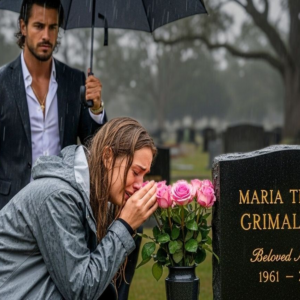
The coffee had gone cold in my travel mug three hours ago, but I kept taking sips anyway. Anything to stay alert. Fourteen hours. That’s how long I’d been at St. Mary’s Hospital, elbows-deep in surgeries and emergency consults. Twenty-nine years old and I couldn’t remember the last time I’d slept more than four hours straight.
The exhaustion lived in my bones now, permanent as the thin scar on my left forearm from a scalpel accident during my residency. It was Tuesday night. Nearly midnight when I finally signed off on my last patient chart and grabbed my jacket from the staff lounge. The hospital always felt different at this hour. Quieter.
The daytime chaos of gurneys rattling down hallways and overhead pages calling for doctors had faded into something almost peaceful. Almost. I pushed through the emergency exit doors into the October night. Boston cold hit my face immediately, that kind of damp chill that seeps through every layer you’re wearing. The parking lot stretched out before me, half-empty under flickering yellow security lights that had needed replacing for months.
I’d parked in the back corner near the maintenance shed because I’d arrived at six that morning when the closer spots were already taken by the night shift nurses. My Honda waited for me in the distance, a faithful companion that had seen better days. The paint was faded, there was a dent in the passenger door from where someone had hit me in a grocery store parking lot two years ago, and the check engine light had been on for three months. But it ran. That was all that mattered.
I made it halfway across the asphalt before I realized I’d forgotten my umbrella in the lounge. Again. I was always forgetting things lately. Keys. My phone. To eat lunch. The small details that normal people remembered without thinking. The sky opened up without warning.
Rain came down in sheets so thick I could barely see ten feet ahead. October in Boston meant weather that changed its mind every five minutes. Sunshine to downpour in the span of a heartbeat. I started running, keys jangling in my jacket pocket, scrubs already soaked through. The fabric clung to my skin, cold and uncomfortable.
Water ran down my neck, into my collar, down my spine. My sneakers slapped against wet pavement. That’s when my shoe caught on something. Maybe a crack in the asphalt. Maybe just my own clumsiness after being on my feet for fourteen straight hours. My ankle twisted. I went down hard. The impact knocked the wind out of me.
My knees slammed into concrete first, then my palms scraped against rough asphalt as I tried to catch myself. Pain shot up my legs, sharp and immediate. My scrubs tore at the knees. I felt skin split. Felt the sting of cuts opening. I stayed there. Kneeling in a puddle in an empty parking lot at midnight, rain pouring down my neck and soaking through my hair.
My hands burned where I’d scraped them. My knees throbbed. And something inside me just broke. Not broke like a bone snapping. Broke like a dam finally giving way after holding back too much pressure for too long. I cried. Not the quiet, dignified kind of crying you do in bathroom stalls between surgeries when you lose a patient.
Not the controlled tears you let slip when you’re alone in your car after a particularly hard day. The ugly kind. The kind that comes from somewhere deep in your chest and claws its way out whether you want it to or not. Sobs that hurt my ribs. Tears that mixed with rain until I couldn’t tell which was which. My whole body shook with it. Two years. It had been two years since I lost her.
Maria Grimaldiro. Sixty-two years old. Scheduled mitral valve repair, routine as these procedures go. I’d done it dozens of times before. The surgical team had gone over every detail that morning. Her charts were perfect. No red flags. No concerning history beyond the valve issue we were there to fix.
Everything went according to plan until it didn’t. Sudden cardiac arrest. No warning. No reason that made sense. Her heart just stopped responding. One moment the monitors were beeping steadily, showing normal rhythm. The next, the flatline scream that every surgeon dreads. I did everything right. I shocked her. Once. Twice. Three times.
Administered every drug in the book. Epinephrine. Atropine. Pushed them myself when the nurses weren’t fast enough. Started chest compressions until my arms burned and sweat dripped into my eyes despite the cold of the operating room. The attending physician took over when I started losing my grip. My hands were shaking too badly. We tried for forty minutes.
Forty minutes of fighting for her life while her body gave up piece by piece. While the color drained from her skin and the monitors kept screaming that awful flatline sound that would haunt me forever. She died on my table. Under my hands. While I was supposed to be saving her. The hospital review board cleared me. Called it an unforeseeable complication.
Acute myocardial infarction secondary to undiagnosed coronary artery disease that hadn’t shown up on any of her pre-surgical scans. Not my fault, they said. Nothing I could have done differently, they assured me. Statistics supported them. Sometimes patients just died. Sometimes hearts gave out for reasons no one could predict.
Sometimes the best surgeon in the world couldn’t save someone whose time had simply come. But that didn’t matter. None of the logic mattered. None of the statistics or review board findings or reassurances from colleagues changed the fundamental truth. I still saw her face every time I closed my eyes. Still felt the weight of her not breathing.
Still heard the flatline in my dreams. Still woke up at three in the morning replaying every decision I’d made in that operating room, searching for the moment I could have done something different. I’d saved forty-three patients since Maria died. Forty-three hearts that kept beating because I knew exactly where to cut, where to stitch, how to repair what was broken.
I’d performed complex procedures that other surgeons wouldn’t attempt. Saved people who shouldn’t have survived. Built a reputation as one of the best cardiothoracic surgeons at St. Mary’s despite being younger than most of my colleagues. But none of that erased her. Maria Grimaldiro. Sixty-two.
Mother. Someone’s whole world. Gone because I couldn’t save her. Eventually the rain slowed. My knees screamed in protest when I finally stood up. Blood seeped through the torn fabric of my scrubs, mixing with rainwater. I limped to my Honda, fumbled with the keys because my hands wouldn’t stop shaking, and collapsed into the driver’s seat.
Water dripped from my hair onto the upholstery. My hands left bloody streaks on the steering wheel. I sat there for a long time, engine off, just breathing. Just trying to remember how to be a person instead of a broken thing kneeling in a parking lot. The drive home took twenty minutes.
I lived in a small apartment in Dorchester, one bedroom, barely furnished. I’d moved there after my parents died in that car accident when I was nineteen. Just me and Tyler now. My little brother. Though at twenty-three, he wasn’t so little anymore. He had his own place near Boston University where he was finishing his economics degree. We talked maybe once a week. Texted more often than that. He was the only family I had left.
The only person in the world who remembered what our mom’s laugh sounded like. Who knew that our dad used to make terrible jokes at the dinner table. Who understood what it felt like to lose everything at once and have to keep living anyway. I parked in my assigned spot, grabbed my purse, trudged up three flights of stairs because the elevator was broken again. My apartment smelled stale when I opened the door.
I’d forgotten to take out the trash before my shift. Had forgotten to open windows. Had forgotten to do a lot of things because my brain was too full of other people’s hearts to remember my own life. I stripped off my wet scrubs in the bathroom, examining my scraped knees in the mirror. They’d need cleaning. Probably bandages.
I stood under a scalding shower until my skin turned pink and the water finally ran clear instead of tinged with blood. Put on an old sweater that had belonged to my dad and leggings that had holes in them. Made chamomile tea that I didn’t drink. It sat on the coffee table, steam rising into the darkness of my living room.
I curled up on my secondhand couch, wrapped in a blanket that smelled like the lavender detergent I always used. Stared at the wall until three in the morning. Sleep wouldn’t come. It never did when the guilt got this bad. At three-fifteen, I gave up. Grabbed my laptop from the coffee table and opened it. The screen’s blue light hurt my eyes in the darkness.
My fingers moved on autopilot, typing the same search I’d typed every week for the past two years. Maria Grimaldiro obituary. The page loaded. I read it again even though I’d memorized every word by now. Every comma. Every capital letter. “Maria Teresa Grimaldiro, 62, of Boston, passed away unexpectedly on October 15th. Beloved mother of Lucas. Devoted friend to many.
Known for her generous spirit and warm heart. Maria spent her life caring for others, volunteering at St. Anthony’s Church and supporting local charities. She will be deeply missed by all who knew her. Services held at St. Anthony’s Church. Burial at Oak Ridge Cemetery.” I’d gone to her funeral.
Stood in the back of the church where no one would recognize me. Watched her family grieve from a distance. Saw her son, a man about my age with dark hair and darker eyes, standing at the front pew with shoulders so rigid they looked like they might snap. He never cried. Just stood there, stone-faced, while person after person came up to offer condolences he clearly didn’t want.
I’d left before the burial. Couldn’t watch them lower her casket into the ground. Couldn’t face what I’d done. But tonight, staring at that obituary for what felt like the hundredth time, something shifted. The address of Oak Ridge Cemetery was listed at the bottom. Forty minutes outside Boston. I’d known it was there all along. But I’d never gone.
The thought formed slowly, like dawn breaking after a long night. I could go. Right now. Before my shift started at eight. I could see where she was buried. Maybe say the apology I should have said two years ago. Maybe find some small piece of peace. I didn’t let myself think about it too long.
Thinking led to talking myself out of things. To finding reasons why it was a bad idea. To staying paralyzed in guilt forever. I changed into jeans and a clean sweater, wincing as the fabric brushed against my scraped knees. Grabbed my jacket, shoved my phone and keys into my purse. Left my apartment without looking back. Boston was quiet at four in the morning.
A different city than the one I knew during daylight hours. Street lights reflected off wet pavement, creating pools of yellow light in the darkness. A few other cars drove past. A man walked his dog on the sidewalk. The world felt suspended, waiting for the sun. I stopped at a twenty-four-hour grocery store on my way out of the city.
The fluorescent lights inside were painfully bright after the darkness. An exhausted cashier barely looked at me as I paid for the first flowers I saw. White lilies. They seemed appropriate. Clean. Respectful. The kind of flowers you brought to someone’s grave when you were the reason they needed a grave in the first place.
The drive to Oak Ridge took exactly thirty-eight minutes. I counted. Watched the city give way to suburbs, then to stretches of road lined with bare trees. October had stripped most of them already. They stood like skeletons against the predawn sky. The cemetery gates were open when I arrived. No one else was there.
Just rows and rows of headstones stretching out under a gray sky that promised more rain later. The grounds were immaculately maintained. Grass cut short. Paths swept clean. Trees planted at regular intervals to provide shade during summer months. I drove slowly through the grounds, searching for the section listed in the obituary.
Found it near a cluster of old oak trees that gave the place its name. Parked my car and got out, clutching the lilies like they might disappear if I didn’t hold on tight. Her headstone was black granite with gold lettering. Simple. Elegant. Maria Teresa Grimaldiro. Beloved Mother. The dates of her birth and death. Nothing about how she died.
Nothing about the surgeon who failed her. Nothing about the forty minutes of chest compressions that weren’t strong enough to bring her back. I knelt in the grass. It was wet and cold, soaking through my jeans immediately. I didn’t care. The pain in my scraped knees flared up again but I ignored it.
“I’m sorry,” I whispered. My voice cracked on the words. “I’m so sorry I couldn’t save you.” The words hung in the air. Inadequate. Pathetic. But they were all I had. I pulled dead leaves away from the base of the headstone. Arranged the lilies carefully in the bronze vase built into the stone.
Traced the letters of her name with my fingertips, feeling the grooves carved into granite. “I don’t know if you can hear me. I don’t know if it matters. But I think about you every day. I’ve saved so many people since you died. Forty-three. But none of them erase what happened. None of them bring you back. And I’m so tired of carrying this.
” I stayed there until the sun started to rise. Until the sky turned from black to gray to pale orange at the edges. Until my knees went numb and my hands were frozen and my tears had dried into salt tracks on my cheeks. When I finally stood to leave, something had loosened in my chest. Not forgiveness.
Not peace. But something close to it. The smallest bit of release. Like a knot that had been pulled tight for two years had finally loosened just enough to let me breathe. I promised her I’d come back. That this wouldn’t be the last time.
That I’d keep her grave clean and bring her fresh flowers and make sure someone remembered her besides just the people who had known her in life. Then I drove back to the hospital and started another shift. Saved three lives that day. Went home. Slept for five hours without dreaming of flatlining monitors. After that first visit, I couldn’t stay away.
The peace I’d felt at Maria’s grave, however fleeting, was the first relief I’d experienced in two years. Something about being there, speaking to her, apologizing out loud instead of just in my head at three in the morning. It mattered. So I went back. Wednesday morning. Six o’clock. Before my shift started at eight.
I drove the thirty-eight minutes to Oak Ridge Cemetery with fresh lilies in the passenger seat. The sun was just starting to rise, painting the sky in shades of pink and gold. Beautiful in a way that made my chest ache. I found her grave easily this time. Knelt in the grass, which was slightly drier than it had been during that first rain-soaked visit.
Removed the wilted flowers from the bronze vase, replaced them with fresh ones. Cleaned the headstone with the sleeve of my jacket until the black granite shone. “I came back,” I told her. My voice sounded small in the vastness of the cemetery. “Like I promised.” I stayed for twenty minutes. Long enough to feel that same loosening in my chest. Then I drove to the hospital and performed two surgeries that day. Both patients survived.
The following Wednesday, I went again. Same time. Six in the morning. This time I brought pink roses because the grocery store had run out of lilies. I told Maria about a particularly difficult surgery I’d done the day before. A seventy-year-old man with triple bypass. He’d made it through. Would probably see his grandchildren graduate high school.
“I wish I could have done that for you,” I whispered. “Wish I could have given you more time.” By the third week, it had become something I needed. A ritual that grounded me. Every Wednesday at dawn, I’d wake before my alarm, shower quickly, grab coffee from the machine in my apartment building’s lobby, and drive.
The forty-minute commute became meditation. Time to breathe before the chaos of the hospital consumed me. I varied the flowers. White lilies. Pink roses. Yellow carnations. Once, purple irises because they reminded me of my mother’s garden when I was a child. I’d clean the headstone, arrange the blooms, talk to Maria about my week.
About patients I’d saved. About the ones I couldn’t. About the exhaustion that never quite left my bones. It helped. More than I’d expected. The guilt didn’t disappear, but it became something I could carry instead of something that crushed me. Megan Foster noticed the change first.
We’d gone through surgical residency together, ended up at St. Mary’s around the same time. She was an orthopedic surgeon, brilliant with bones and joints. We’d grab coffee in the hospital lounge between shifts, decompress together after particularly brutal days. It was during one of those coffee breaks, three weeks after I’d started visiting the cemetery, that she cornered me.
“Okay, what’s going on with you?” Megan set her mug down on the table between us, her dark eyes studying my face with the same intensity she probably used to examine X-rays. I looked up from my phone where I’d been reading through patient notes. “What do you mean?” “You seem different. Less tense.
You’re actually sleeping, I can tell. The circles under your eyes aren’t as dark.” She leaned forward, elbows on the table. “Did you start therapy? New medication? Find religion?” I laughed despite myself. “None of the above.” “Then what? Because whatever it is, keep doing it. You look more like yourself than you have in months.
” I wanted to tell her. Almost did. But how could I explain that I’d been visiting the grave of a patient I’d lost two years ago? That I’d turned it into a weekly ritual? It sounded obsessive. Maybe it was obsessive. But it was helping, so I wasn’t about to stop. “Just working on some stuff,” I said vaguely. “Trying to take better care of myself.
” Megan raised an eyebrow but didn’t push. That was one thing I appreciated about her. She knew when to let things go. “Well, whatever you’re doing, it’s working. You even smiled at that annoying attending yesterday. Thought I was hallucinating.” “Dr. Patterson is not that bad.” “He asked you to re-check sutures on a surgery you’d already done perfectly because he was bored and wanted something to critique. He’s exactly that bad.
” She picked up her mug again, took a long sip. “You coming to the fundraiser gala next month? The hospital’s big donor event?” “Probably not. You know I hate those things.” “Come on, Hannah. Free food. Open bar. You can leave after an hour and no one will notice.” “I’ll think about it.” She gave me a knowing look that said she didn’t believe me for a second, but let it drop.
We finished our coffee, headed back to our respective departments. I had a valve replacement scheduled for two that afternoon. The fourth Wednesday, I brought white roses. It was early November now, cold enough that I could see my breath in the air. I’d worn a heavier jacket, wrapped a scarf around my neck. The cemetery was beautiful in autumn.
Trees ablaze with red and orange leaves. The morning mist hanging low over the grounds. I went through my routine. Removed old flowers. Placed new ones. Wiped down the headstone. Settled into the grass despite the cold seeping through my jeans. “Getting close to the anniversary,” I told Maria. “Two years since you died.
Since I failed you. I don’t know if it gets easier. Everyone says time heals, but I think maybe it just teaches you how to live with the scars.” A bird sang somewhere nearby. The wind rustled through the oak trees. Otherwise, silence. I stayed longer than usual that morning. Almost forty minutes.
Didn’t want to leave. There was something peaceful about this place. Something that let me breathe in a way I couldn’t anywhere else. When I finally stood to go, my legs had gone stiff from sitting in the cold. I stretched, wincing as my knees protested. Turned to walk back to my car. That’s when I saw the SUV.
Black. Expensive-looking. Parked about fifty yards away near another cluster of graves. I hadn’t noticed it when I’d arrived. Must have pulled up while I was lost in conversation with Maria’s headstone. I didn’t think much of it. Other people visited loved ones here.
Of course there would be other cars. I climbed into my Honda, started the engine, let it warm up for a minute before pulling away. The next Wednesday, it rained. Torrential downpour that started the moment I stepped out of my apartment building. I stood there holding my keys, looking up at the dark sky, debating whether to skip my visit for the first time since I’d started.
But I knew I wouldn’t. Couldn’t. Breaking the routine felt wrong. Like I’d be failing Maria all over again. So I grabbed my jacket with the hood, the one that was supposedly waterproof but leaked at the seams, and drove to the cemetery anyway. The rain was so heavy I could barely see the road. Had to slow to thirty miles an hour on the highway.
What should have been a thirty-eight-minute drive took almost an hour. I’d stopped at a different grocery store this time, one that was open early. They didn’t have my usual flowers. I ended up with pink roses, not my first choice but they’d have to do. The cemetery was deserted when I arrived. Of course it was.
Any sane person was home in bed, not driving through a storm to talk to a headstone. But I’d stopped pretending I was sane about this a while ago. I parked close to Maria’s section, killed the engine, sat there for a moment watching rain hammer against my windshield. Took a deep breath. Then I grabbed the roses and got out. The water soaked through my supposedly waterproof jacket within seconds.
Rain ran down my neck, plastered my hair to my skull, turned my jeans heavy and cold. I trudged across the grass, shoes squelching with every step. Maria’s grave looked lonely in the storm. The flowers I’d left last week were beaten down by rain. I knelt in the mud, not caring anymore about staying dry. I was already drenched.
“Sorry about the pink roses,” I said, raising my voice to be heard over the downpour. “They were out of lilies. Seems like everyone’s buying flowers today.” I pulled the dead flowers from the vase, set them aside. Arranged the new roses carefully despite my numb fingers.
Then I just knelt there, rain pouring down, and let myself feel everything I’d been holding back all week. “I’m so tired, Maria. So tired of carrying this. Of feeling like I failed you. I know you probably wouldn’t want me to torture myself like this. But I can’t stop. Can’t let go.” The rain kept falling. Thunder rumbled somewhere in the distance.
I don’t know how long I stayed like that. Long enough for my knees to go numb. Long enough for the cold to seep into my bones. Long enough that when I finally heard footsteps approaching through the mud, I didn’t react at first. Then a shadow fell across me. I looked up slowly, rain dripping into my eyes.
A man stood beside me. Tall. Dark hair slicked back from the rain. Wearing an expensive black suit that somehow still looked immaculate despite the storm. He held a massive umbrella, the kind that could shelter three people, but he wasn’t offering to share it. He was just standing there.
Staring down at me with eyes so dark they were almost black. Intense in a way that made my heart stutter. I froze. My hand was still on Maria’s headstone, fingers pressed against the cold granite. “How did you know her?” His voice was quiet. Controlled. But there was something underneath it. Something sharp. I should have stood up. Should have said something. But my brain had short-circuited.
Because I recognized him. Not his face, exactly. But I knew who he was. The man from her funeral. The one who’d stood at the front pew with shoulders like iron. Her son. “I…” My voice came out as barely a whisper. I cleared my throat, tried again. “I was her doctor.” His expression didn’t change. Just kept looking at me with those dark, unreadable eyes. “Her doctor.
” “Yes.” I finally forced myself to stand, though my legs were shaking. From cold or fear or both. “I was. Her doctor. Before she…” I couldn’t finish the sentence. Before she died. Before I let her die. Before I failed to save her. He studied me for a long moment. Rain continued to pour down around us.
I was shivering now, teeth starting to chatter. But I couldn’t look away from him. “You come here often,” he said. Not a question. A statement. “I…” How did he know that? Had he seen me before? “This is the first time in the rain.” Something flickered in his eyes. Too quick to identify. “You should get out of the storm. You’ll get sick.
” Then he turned and walked away. Just like that. Didn’t introduce himself. Didn’t ask my name. Didn’t demand to know why I’d been visiting his mother’s grave every week for a month. I stood there, frozen, watching him disappear into the rain. Watching him climb into that black SUV I’d seen last week. Watching him drive away without looking back.
My heart was pounding. Hands trembling. And it wasn’t from the cold anymore. I stumbled back to my car, soaked through, started the engine with shaking fingers. Blasted the heat. But I couldn’t stop shivering. He’d known I came here often. Which meant he’d seen me before.
Had he been watching? Following me? Or did he come here too, to visit his mother, and we’d just never crossed paths until today? I should have asked his name. Should have explained myself better. Should have done something other than stand there like an idiot while he looked at me with those dark, knowing eyes. By the time I got back to my apartment, I was shaking so hard I could barely get my key in the lock.
I peeled off my wet clothes, stood under a scalding shower until feeling returned to my fingers. Changed into dry sweats and made tea I actually drank this time. But I couldn’t stop thinking about him. About the way he’d looked at me. About the controlled intensity in his voice when he’d asked how I knew her. About the fact that he’d walked away without demanding answers.
Without accusing me of anything. Without revealing whether he knew what had happened to his mother. I called in sick to the hospital. Told them I had a migraine. Spent the rest of the day on my couch, wrapped in blankets, unable to stop replaying that encounter in my head. The next morning, I woke to my phone buzzing. A text from Megan.
“You okay? HR said you called in sick. That’s not like you.” I stared at the message for a long time before typing back. “Fine. Just needed a day. I’ll be in tomorrow.” She responded immediately. “Want me to bring you soup? I’m off at six.” “I’m good. Thanks though.” I wasn’t good. But I didn’t know how to explain what was wrong.
Didn’t know how to put into words the fear that had settled in my chest. The fear that Maria’s son knew exactly who I was. Knew that I was the surgeon who’d failed to save his mother. And that encounter in the rain wasn’t random at all. I didn’t go back to the cemetery the next Wednesday.
Told myself it was because I had back-to-back surgeries scheduled. Told myself I needed a break from the routine. But the truth was simpler and more pathetic. I was scared. Scared of running into him again. Scared of those dark eyes that seemed to see through me. Scared of what he might know. Megan noticed my distraction during a procedure on Thursday afternoon.
I was assisting her on a complex knee reconstruction, my usual steady hands fumbling with the retractors. “You okay over there?” she asked, glancing at me over her surgical mask. “Fine. Just tired.” “You sure? Because you’ve been spacing out all week. Want to grab dinner after this? Talk about whatever’s going on?” “Can’t. Have an early morning tomorrow.
” It wasn’t a lie. I did have an early surgery scheduled. But I also didn’t want to talk about the man at the cemetery. Didn’t want to explain why I’d been visiting my dead patient’s grave every week. Didn’t want to see the judgment in Megan’s eyes. The following Thursday night, everything changed.
I was finishing up paperwork in the doctors’ lounge when my pager went off. Trauma bay three. Gunshot wound. All hands on deck. I ran. That’s what you do when trauma pages you. You don’t walk. You don’t think. You just run. The emergency department was chaos when I arrived. Paramedics wheeling in a gurney at full speed. Blood everywhere. Nurses shouting. The attending barking orders.
“Male, approximately thirty years old, single GSW to the abdomen, entry wound lower right quadrant, no exit wound, BP dropping, heart rate one-thirty and climbing.” I snapped on gloves, moved to the patient’s side. His face was pale, lips tinged blue. Shock setting in. We needed to move fast. “Get him to OR two, now. Page anesthesia. I need four units of O-negative standing by.
” The surgical team mobilized with practiced efficiency. Within minutes, we had him prepped and under. I made the incision, found the bullet lodged near his liver. Carefully extracted it. Repaired the damage. Sutured bleeding vessels. Worked for three hours straight until his vitals stabilized. He’d live. Barely. But he’d live.
It wasn’t until we’d moved him to the ICU that I looked at his chart. Anthony Pellagrini. Thirty-two years old. No listed next of kin. And a police officer stationed outside his room asking questions about gang affiliations. My stomach dropped. I knew that name meant something. Knew it was connected to organized crime. But I’d done my job.
Saved his life. That’s what I did. I didn’t judge. Didn’t ask questions. I just operated. Three days later, Anthony was stable enough to be moved to a regular room, though still under police custody. I checked on him during rounds, keeping my visits brief and professional. He was healing well. Would probably be discharged within a week.
That afternoon, I finished my last surgery around four. Exhausted. Hungry. Wanting nothing more than to go home and sleep. I trudged to the parking lot, keys already in hand. That’s when I saw it. The black SUV. Parked right next to my Honda. The same one from the cemetery. My heart stopped. Then started pounding double-time.
I slowed my pace, debating whether to turn around and go back inside. Call security. Do something other than walk straight toward the vehicle I knew belonged to him. But then the driver’s side door opened. He stepped out. Same expensive suit. Same dark eyes. Same presence that made the air feel heavier.
“Dr. Collins,” he said. Not a question. He knew my name. I froze five feet away from my car. “How do you know who I am?” “I make it my business to know things.” He closed the distance between us in two strides. Not threatening. Just direct. “We need to talk.” “About what?” “About Anthony. My cousin. The man you operated on three days ago.
” Of course. Of course Anthony was related to him. Because my life had apparently decided to become a series of increasingly uncomfortable coincidences. “Your cousin is doing well. He should make a full recovery.” “I know. I’ve been getting updates from the nursing staff.” He studied my face with that same intensity I remembered from the cemetery. “You saved his life.
” “That’s my job.” “Not all doctors would have worked as hard on someone like Anthony. Someone the police were waiting to arrest the moment he woke up.” “I treat all my patients the same, Mr…” “Grimaldiro. Lucas Grimaldiro.” The name hit me like a physical blow. Maria’s son. I’d known it, of course. But hearing him say it out loud made it real.
“I see you remember,” he said quietly. “Your mother. I was there when she…” I couldn’t finish the sentence. “I know. I looked into it after I saw you at her grave. Found the surgical records. Read the review board findings. Understood what happened.” My throat closed up. He knew.
He knew I was the surgeon who’d failed to save his mother. And now he was standing in front of me in a hospital parking lot talking about how I’d saved his cousin. “I’m sorry,” I whispered. “I’m so sorry about your mother.” “Why do you go there? Every Wednesday morning. Why do you visit her grave?” “Because I failed her.
Because I think about her every single day. Because I need to apologize even if she can’t hear me.” Lucas was quiet for a long moment. Then, unexpectedly, he said, “She didn’t suffer.” “What?” “When she died. You told me that at the cemetery. That it was quick. That she didn’t suffer.” His jaw tightened. “I was in Chicago when it happened. Business trip I couldn’t postpone.
By the time I got back, she was already gone. I never got to say goodbye. Never got to thank her for everything she did for me. I’ve been carrying that guilt for two years.” “That’s not the same as…” “Isn’t it? You blame yourself for not saving her. I blame myself for not being there. We both carry something we can’t fix.
” He pulled something from his jacket pocket. A business card. Black with gold lettering. Just a phone number. “If you ever need anything, Dr. Collins. Anything at all. Call me.” “Why would I need to call you?” “Because you saved my cousin’s life when you didn’t have to. Because you visit my mother’s grave every week and bring her flowers.
Because people who do those things deserve to have someone looking out for them.” He pressed the card into my hand. “Thank you. For trying to save her. For not giving up.” Then he turned and walked back to his SUV. Got in. Drove away. Left me standing there holding a business card and trying to process what had just happened.
He’d thanked me. The son of the woman I’d failed had just thanked me. I got in my car, hands shaking, and just sat there for a long time. The card felt heavy in my palm. I should throw it away. Should want nothing to do with Lucas Grimaldiro or his family or whatever world they operated in that involved cousins getting shot and police custody.
But I didn’t throw it away. I slipped it into my wallet. Told myself it was just because it would be rude to toss it immediately. Told myself I’d never actually call that number. Drove home. Made dinner I didn’t eat. Lay in bed staring at the ceiling until three in the morning.
Finally got up, grabbed my laptop, searched his name properly this time instead of just reading his mother’s obituary. Lucas Grimaldiro. Businessman. Owns several legitimate enterprises. Real estate. Restaurants. Import-export. But underneath the surface, whispers. Connections to organized crime. The Grimaldiro family.
Boston’s Italian mafia. Territory disputes. Violence handled quietly and efficiently. I should have been terrified. Should have reported the encounter to someone. Should have stayed far away from anything connected to that world. Instead, I thought about how he’d looked when he said his mother didn’t suffer.
About the grief in his eyes that matched my own. About the fact that he’d thanked me instead of blamed me. Two days later, I went back to the cemetery. Early morning. Gray sky threatening rain. I brought white roses this time and knelt in front of Maria’s grave like I always did. “Your son came to see me,” I told her. “Lucas. He’s… not what I expected.
He thanked me. Even though I couldn’t save you, he thanked me.” The wind rustled through the oak trees. A bird called somewhere in the distance. “I don’t know what to do with that,” I admitted. “Don’t know what any of this means. But I wanted you to know. Your son is a good man. Despite everything else. He’s good.
” I stayed for twenty minutes. Then drove to the hospital and started another day of surgeries. Saved two lives. Lost none. The card stayed in my wallet. I didn’t call. But I didn’t throw it away either. Lucas called me two days later. I was in the middle of reviewing post-operative reports when my cell phone rang. Unknown number. I almost didn’t answer. But something made me pick up.
“Dr. Collins. It’s Lucas Grimaldiro.” His voice on the phone sounded different. Softer. Less guarded than it had been in the parking lot. “Mr. Grimaldiro.” I set down my pen, heart already racing. “Is something wrong with Anthony?” “Anthony’s fine. Being discharged tomorrow, actually.
Against medical advice, but that’s his choice.” A pause. “I was calling to see if you’d have dinner with me. Tonight, if you’re free.” I should have said no. Should have made an excuse about being on call or too busy or literally anything else. But instead, I heard myself say, “Where?” “There’s a restaurant in the North End. Bella Notte.
Do you know it?” “I can find it.” “Seven o’clock. I’ll have a table reserved under my name.” He hung up before I could change my mind. I sat there staring at my phone, wondering what I’d just agreed to. Megan cornered me in the lounge twenty minutes later. “Okay, you’ve been weird all week and now you’re smiling at your phone.
What’s going on?” “Nothing. Just a dinner.” “A dinner.” She raised both eyebrows. “With who?” “Someone I met recently.” “Hannah Collins has a date. Alert the media.” She grinned. “Good for you. When’s the last time you went on an actual date? Two years?” “It’s not a date. Just dinner.” “Right. Just dinner with someone who makes you smile at your phone.
” She grabbed her coffee. “Wear something nice. And text me when you get home so I know you’re alive.” I didn’t tell her who the dinner was with. Didn’t tell her anything else. Just finished my shift, went home, and stood in front of my closet for twenty minutes trying to decide what to wear. Eventually settled on black pants and a cream sweater. Simple. Professional.
Not trying too hard. I left my hair down, put on minimal makeup, grabbed my jacket and keys. Bella Notte was tucked away on a quiet side street in Boston’s North End, the city’s Italian neighborhood. Small. Elegant. The kind of place that didn’t advertise because they didn’t need to. The host greeted me at the door.
“Dr. Collins. Mr. Grimaldiro is waiting for you.” He led me through the main dining room to a private area in the back. Quieter. More intimate. Lucas stood when he saw me, buttoning his suit jacket in a gesture that seemed automatic. “Thank you for coming.” “Thank you for inviting me.
” I sat in the chair he’d pulled out, feeling awkward. Out of place. “This is a beautiful restaurant.” “My family owns it. Well, my aunt runs it. But the recipes are my mother’s.” He sat across from me, and for the first time I saw something other than intensity in his eyes. Softness. Grief. “She used to cook here on weekends. Said it kept her connected to her roots.
” A waiter appeared with wine, poured two glasses without asking, then disappeared. Lucas raised his glass slightly. “To my mother. And to the doctor who tried to save her.” I didn’t know what to say to that. So I just lifted my glass and took a sip. The wine was rich, smooth. Probably expensive. “Tell me about her,” I said quietly. “Your mother. Not as a patient. As a person.
” Lucas leaned back in his chair, wine glass cradled in one hand. “She was stubborn. Refused to slow down even when her health started declining. Said she had too much to do, too many people who needed her.” He smiled slightly. “She volunteered at the church. Organized food drives for homeless shelters. Made sure every kid in the neighborhood had Christmas presents.
” “She sounds wonderful.” “She was the best person I knew. The only one who could make me feel human despite…” He trailed off, seemed to reconsider his words. “Despite the life I lead.” “What life is that, exactly?” “One you probably shouldn’t be part of, Dr. Collins.” “Hannah. If we’re having dinner, you can call me Hannah.
” “Hannah.” He tested my name, the syllables careful on his tongue. “My family is complicated. Has been for generations. The legitimate businesses are real. The restaurant, the real estate holdings. But there are other enterprises. Ones I inherited when my father died ten years ago.” “You’re talking about organized crime.
” “I’m talking about power. Territory. Obligations I can’t walk away from even if I wanted to.” His dark eyes met mine. “Which is why I shouldn’t have asked you here. Why you should probably finish your wine and leave.” “But you did ask. And I came. So maybe tell me why.” He was quiet for a long moment. The waiter returned with food I didn’t remember ordering.
Pasta with fresh herbs. Bread that smelled like heaven. We both served ourselves in silence. “My mother talked about you,” Lucas finally said. “Not by name. But she mentioned the young female surgeon who was assigned to her case. Said you had kind eyes. That you explained everything carefully. Made her feel safe.
” My throat tightened. “I wish I could have saved her.” “So do I. But that’s not why you’re here.” He set down his fork. “You come to her grave every week. Bring her flowers. Clean the headstone. You saved my cousin when you could have let him die on that operating table and no one would have questioned it. You don’t judge.
Don’t demand anything. You just… care.” “Is that so unusual?” “In my world? Yes.” He picked up his wine glass again. “I haven’t connected with anyone since she died. Haven’t wanted to. But then I saw you kneeling in the rain talking to her grave and something shifted.” ”
Lucas, I don’t know what you’re expecting from this dinner, but I’m not…” “I’m not expecting anything. Just wanted to share a meal with someone who understands what it’s like to carry guilt you can’t put down.” His phone buzzed on the table. He glanced at it, frowned, silenced it. “Tell me about your life, Hannah. Outside the hospital.” So I did. Told him about losing my parents when I was nineteen.
About raising Tyler alongside finishing medical school. About the long hours and the exhaustion and the way my entire identity had become wrapped up in saving people. We talked through dinner, then dessert, then coffee. The conversation flowed easier than it should have. He asked questions that showed he was actually listening. Shared stories about his mother that made me laugh.
Mentioned his aunt who ran the restaurant, his cousin Anthony who was apparently notorious for getting into trouble. “He’s been arrested four times,” Lucas said with something that might have been affection. “Never learns. But he’s family.” “Family means everything to you.” “It’s all I have left.” When the check came, Lucas paid despite my protests.
Walked me to my car like a gentleman from another era. The night air was cold, my breath visible. “Thank you for this,” I said, fumbling with my keys. “For dinner. For talking about your mother. It helped.” “We should do it again. Next week. Same time.” “Lucas, I don’t think…” “Just dinner. Nothing more. I promise.
” He stepped closer, not touching but near enough that I could feel his warmth. “I know this is complicated. Know you shouldn’t be anywhere near me. But I’d like to see you again.” Every rational thought in my head screamed to say no. To walk away from this man and whatever darkness surrounded him.
But standing there in the cold Boston night, looking into eyes that reflected the same grief and loneliness I felt, I couldn’t make myself refuse. “Okay. Next week.” He smiled. Actually smiled. It transformed his face from hard and dangerous to something almost boyish. “Next week, then. Drive safe, Hannah.” I got in my car, started the engine, watched him walk back toward the restaurant in my rearview mirror. My hands were shaking. Not from fear. From anticipation.
I texted Megan when I got home like I’d promised. “Home safe. Dinner was good.” She responded immediately. “Just good? Need details tomorrow.” I didn’t give her details. Didn’t tell her that I’d had dinner with a man connected to organized crime. Didn’t mention that I’d agreed to see him again.
Just went to bed and lay awake thinking about Lucas’s smile and the way he’d said my name. The following Wednesday, I went back to the cemetery. Found Lucas already there, standing beside his mother’s grave with fresh roses. White ones. Same as mine. “We keep meeting here,” he said without turning around. “Seems to be a pattern.
” I knelt beside him, placed my flowers next to his. “Do you come every week too?” “When I can. Business doesn’t always allow it.” He crouched down, traced his mother’s name on the headstone. “Thank you for last night. For listening.” “Thank you for inviting me.” We stayed there together for twenty minutes. Not talking.
Just existing in shared grief. When we finally stood to leave, Lucas caught my hand. “Same restaurant. Same time. This week.” “You’re persistent.” “I know what I want, Hannah. And I want to know you better.” He let go of my hand, walked to his SUV, drove away. Left me standing there with a racing heart and the certain knowledge that I was walking into something I didn’t fully understand.
But I went anyway. That night and the next week and the week after that. Six dinners turned into something I looked forward to more than I wanted to admit. The call came at two in the morning. I was deep in sleep when my phone started vibrating on the nightstand, pulling me out of dreams I wouldn’t remember.
I fumbled for it in the darkness, squinting at the screen. Unknown number. I almost declined. But something made me answer. Maybe instinct. Maybe the part of me that was always a doctor, always on call, always ready for emergencies. “Hello?” “Hannah.” Tyler’s voice. Shaking. Terrified. “Hannah, I need help.
” I sat up so fast my head spun. “Tyler? What’s wrong? Are you hurt?” “I’m at the police station. They’re saying I owe money. A lot of money. These guys, they came to my apartment and they said if I don’t pay twenty thousand dollars by tomorrow they’re going to…” His voice cracked. “Hannah, I’m scared.
” My heart stopped. Twenty thousand dollars. “What did you do?” “It was just a poker game. Some guys from school said it was casual, just for fun. But it wasn’t casual and I kept losing and they said I could pay them back later but now they want it all at once and I don’t have it.
” Words tumbling out in a panicked rush. “I’m so sorry. I’m so sorry. I didn’t mean for this to happen.” I closed my eyes, trying to think through the fear. “Who are these people, Tyler?” “I don’t know. Russians, I think. One of them had an accent. Hannah, what do I do?” Russians.
My mind immediately went to the Bratva, the Russian organized crime network I’d read about when researching Lucas. This was bad. This was very bad. “Okay, listen to me. Did they hurt you?” “No. But they said…” He took a shaky breath. “They said if I don’t have the money by Friday, they’ll break my legs. Maybe worse.” Friday. That gave us forty-eight hours. I had eight thousand dollars in my savings account.
Money I’d been putting aside for years, barely scraping by to save anything at all. The bank wouldn’t give me a loan. I’d already tried for a car loan last year and been denied due to my student debt. I didn’t have family with money. Didn’t have anyone I could ask for help. Except I did. I had Lucas’s card in my wallet. Had kept it there for five weeks now, telling myself I’d never use it.
“Stay at the police station until they kick you out, then go straight home and lock your door. Don’t open it for anyone. I’ll figure something out.” “Hannah, I’m so sorry.” “I know. Just stay safe. I’ll call you in a few hours.” I hung up. Sat there in the darkness of my bedroom with my heart pounding and my hands shaking.
Twenty thousand dollars. Forty-eight hours. My little brother’s legs, maybe his life. I pulled out my wallet. Found Lucas’s business card, black with gold numbers. Stared at it for a long time. It was three in the morning. Insane to call anyone at this hour. But Tyler’s terrified voice kept echoing in my head.
I dialed before I could change my mind. Lucas answered on the second ring. His voice was alert, no trace of sleep. “Hannah.” “I’m sorry to call so late. I need help.” The words came out strangled. “It’s my brother. He’s in trouble.” “Where are you?” “Home. But Tyler’s at the police station in Cambridge.
He got mixed up in a gambling debt with some Russians and they’re threatening to hurt him if he doesn’t pay twenty thousand dollars by Friday.” Silence on the other end. Then, “I’ll be at your apartment in twenty minutes. Text me the address.” “Lucas, I can’t ask you to…” “You’re not asking. I’m offering. Send me the address.
” He hung up. I sat there holding my phone, wondering what I’d just done. But Tyler’s safety mattered more than my pride or my fear of owing Lucas Grimaldiro. I texted him my address, then scrambled to make myself presentable. Changed out of my pajamas into jeans and a sweater. Pulled my hair into a ponytail.
Paced my living room for eighteen minutes until headlights appeared outside my building. The black SUV parked in front. Lucas climbed out, still in a suit despite the hour. I buzzed him up, opened my apartment door before he could knock. “Thank you for coming.” He stepped inside, taking in my small apartment with a single sweeping glance. “Tell me everything.
” So I did. Told him about Tyler’s call, the poker game, the threats. Lucas listened without interrupting, his expression growing darker with each detail. “How much can you cover yourself?” he asked when I finished. “Eight thousand. That’s all I have saved.” “I’ll handle the rest.” “Lucas, I can’t just take twelve thousand dollars from you.
” “You’re not taking it. You’re accepting help.” He pulled out his phone, made a call. Spoke in rapid Italian to whoever answered. Then hung up and looked at me. “The debt will be cleared by noon tomorrow. Tyler’s safe.” I felt my knees go weak. “Just like that?” “Just like that.” He moved closer, close enough that I could see the concern in his dark eyes.
“But Hannah, you need to understand something. These people don’t forget. Even with the debt paid, your brother needs to stay away from any kind of gambling. Anything that could put him back on their radar.” “He will. I’ll make sure of it.” “Good.” Lucas hesitated, then reached out and tucked a strand of hair behind my ear.
The gesture was so gentle it made my breath catch. “You should have called me sooner.” “I didn’t want to owe you anything.” “You don’t owe me. This is what people who care about each other do. They help.” His hand lingered near my face. “But if it makes you feel better, we can call it even for you saving Anthony’s life.
” “This is worth way more than that surgery.” “To me, Anthony’s life is priceless. So yes, we’re even.” He stepped back, professional distance returning. “Get some sleep. Call your brother in the morning and tell him everything’s handled. And Hannah?” “Yes?” “No more poker games. Make sure he understands that.
” “I will. Thank you, Lucas. I don’t know how to…” “You don’t need to thank me. Just let me take you to dinner tomorrow night. Same place, same time.” I nodded, too overwhelmed to speak. He left without another word, his footsteps echoing down the stairwell.
I locked my door and collapsed onto my couch, shaking with relief and something else. Something that felt dangerously close to trust. I called Tyler at seven in the morning. Told him the debt was cleared, that he was safe, that he needed to promise me he’d never gamble again. He cried. Promised. Thanked me over and over. “How did you get the money?” he asked.
“I have a friend who helped.” “What kind of friend has twelve thousand dollars just lying around?” “The kind who owns restaurants and real estate. Don’t worry about it.” “Hannah, I’ll pay you back. I swear. As soon as I graduate and get a job, I’ll pay back every cent.” “Just focus on graduating. And Tyler? Stay away from poker games.
Stay away from anything that even looks like trouble.” “I will. I promise. I love you.” “I love you too.” That night, I met Lucas at Bella Notte as promised. He was already seated when I arrived, wine poured, a slight smile on his face when he saw me. “Tyler’s okay?” he asked as I sat down. “Shaken up but okay. He wants to meet you. To thank you.
” “That’s not necessary.” “It is to him. You saved his life, Lucas. Or at least saved him from having his legs broken.” “I made a phone call. That’s all.” He sipped his wine. “The Bratva won’t bother him again. I made sure of it.” I wanted to ask how.
Wanted to know what kind of power Lucas wielded that he could make Russian mobsters back off with a single phone call. But I was also afraid of the answer. “I need to find a way to pay you back,” I said instead. “No, you don’t.” “Twelve thousand dollars, Lucas. That’s not nothing.” “To me it is.” He leaned forward. “Hannah, I don’t want your money. What I want is for you to stop carrying everything alone.
You take care of everyone. Your patients, your brother. But who takes care of you?” “I manage.” “You shouldn’t have to just manage.” His hand covered mine on the table. Warm. Solid. “Let me help carry some of the weight. That’s all I’m asking.” I looked down at our hands.
At the way his fingers curled around mine like it was the most natural thing in the world. At some point in the past five weeks, this had stopped being just dinners with the son of a patient I’d lost. This had become something else. Something deeper and more complicated. “I’m falling for you,” I whispered. “And I don’t know if that’s a good idea.
” “Probably not.” His thumb traced circles on my palm. “But I’m falling for you too. Have been since I saw you kneeling in the rain at my mother’s grave.” “Lucas, your world is dangerous. I’m a surgeon. I save lives. I don’t know how to exist in a place where people get shot and debts are paid with threats.
” “You don’t have to exist in that world. I keep it separate. Always have.” He squeezed my hand. “But I won’t lie to you, Hannah. Being with me comes with risks. People will know you’re connected to me. That makes you a potential target.” “Then maybe we should stop this. Before it goes any further.
” “Is that what you want?” I looked into his eyes. Saw the same loneliness and grief I carried. Saw someone who understood loss in a way most people couldn’t. Saw a man who’d dropped everything to help my brother in the middle of the night without asking for anything in return. “No,” I admitted. “That’s not what I want.
” “Then let’s stop overthinking this. Let’s just be two people who found each other in a cemetery and decided that maybe grief doesn’t have to be carried alone.” We had dinner. Talked about everything except the debt and the danger. He told me about his aunt’s upcoming birthday party.
I told him about a particularly difficult surgery I had scheduled. We laughed about Anthony’s terrible jokes. Shared dessert. Held hands across the table like teenagers. When he walked me to my car later, he pulled me close and kissed me for the first time. Gentle at first, then deeper. His hands cupped my face like I was something precious. Something worth protecting.
“I’ll keep you safe,” he murmured against my lips. “I promise.” And despite every logical reason not to, I believed him. Five weeks became six, then seven. Our dinners continued twice a week. Wednesday mornings at the cemetery became something we shared, standing side by side in front of Maria’s grave, sometimes talking, sometimes silent.
I met his aunt Rosa, who ran Bella Notte and squeezed my cheeks while declaring I was too skinny. Met more of his family at a birthday party where everyone spoke rapid Italian and no one asked what I did for a living. Megan finally cornered me about it during a particularly long surgery. We were four hours into a triple bypass, the patient stable, our hands moving in practiced synchronization.
“So are you going to tell me about this mystery man you’ve been seeing for two months?” she asked over the beeping monitors. “There’s nothing to tell.” “You’re glowing, Hannah. You smile now. You actually took a personal day last week. That’s not nothing.” “His name is Lucas. We met at a cemetery. He’s… complicated.
” “Complicated how?” “His family is in the import-export business.” Megan snorted. “That’s code for mafia, isn’t it?” My hands paused for a fraction of a second. “What makes you say that?” “Because I have eyes and a brain. The expensive restaurants, the way you’re suddenly very vague about where you spend your time, the fact that your brother’s gambling debt mysteriously disappeared.” She glanced at me over her surgical mask. “I’m not judging. I’m worried.
” “You don’t need to worry.” “Hannah, these people are dangerous.” “He’s not dangerous. Not to me.” “How do you know?” Because he held my hand when I couldn’t sleep. Because he listened when I talked about Maria without judgment.
Because when I’d shown up at his apartment one night after losing a patient, he’d just pulled me into his arms and let me cry without asking questions. “I just do,” I said. We finished the surgery in silence. The patient survived, would probably walk out of the hospital in a week. Another life saved. Another tally mark on my redemption scorecard. But that night, everything changed.
I was leaving the hospital around nine when Lucas called. His voice was different. Tense in a way I’d never heard before. “Hannah, I need you to do something for me. Don’t ask questions. Just do exactly what I say.” My stomach dropped. “What’s wrong?” “There’s been an incident. One of my men was shot.
He can’t go to a hospital without police getting involved. I need your help.” “Lucas, I can’t perform surgery outside a hospital. That’s illegal. I could lose my license.” “I know what I’m asking. And I wouldn’t ask if there was any other option.” His voice cracked slightly. “It’s my aunt’s son. Rosa’s boy.
He’s nineteen, Hannah. If he doesn’t get help in the next hour, he’s going to die.” Rosa. The woman who’d called me too skinny and fed me until I couldn’t move. Whose laugh filled Bella Notte every night. Who’d lost her husband five years ago and lived for her children. “Where are you?” He gave me an address in Quincy.
“Bring whatever medical supplies you can carry. I’ll have everything else you need.” I hung up. Stood in the parking lot trying to decide if I was about to throw away my entire career. My license. My ability to practice medicine. Everything I’d worked for since I was nineteen years old and decided to become a doctor. But Rosa’s face kept appearing in my mind.
Her kindness. The way she’d welcomed me into their family without hesitation. I went back inside. Grabbed supplies from the emergency stock room, filling a surgical kit with everything I might need for a gunshot wound. Antibiotics. Sutures. Local anesthetic. Surgical tools. Anyone who checked would know what I’d taken. But I’d worry about that later.
I used my attending badge to sign out the kit under the trauma cache umbrella—standard in mass-casualty overflow—so if Pharmacy audited the drawers, the pull would read as a legitimate standby restock. It wouldn’t fool a determined investigator forever, but it bought me time and kept the night shift from getting blindsided by missing instruments.
The drive to Quincy took twenty-five minutes. The address was a house on a quiet street, lights on inside, an SUV parked in the driveway. Lucas met me at the door before I could knock. “Thank you for coming.” “Show me the patient.” He led me through a modest living room into what looked like a converted bedroom.
The boy, and he was just a boy despite being nineteen, lay on a table covered in plastic sheets. His face was pale, lips tinged blue. Shock setting in fast. “What’s his name?” I asked, setting down my kit. “Marco. He’s losing a lot of blood.” I moved to Marco’s side, assessed the wound. Entry point in the right lower abdomen, no exit wound.
The bullet was still inside, probably lodged near his liver. This was bad. This was very bad. “I need everyone out except Lucas. And I need better light.” The room cleared. Lucas positioned lamps around the makeshift operating table. I scrubbed my hands in a nearby sink, snapped on gloves, took a steadying breath.
“This is going to be rough. I’ve never operated outside a hospital before. If something goes wrong…” “I trust you,” Lucas said simply. I made the incision. Found the bullet fragment lodged dangerously close to the hepatic artery. Carefully extracted it with forceps, my hands steady despite my racing heart.
Repaired the damage to surrounding tissue. Checked for internal bleeding. Sutured layer by layer. Two hours. It took two hours of the most intense surgical work I’d ever done. When I finally stepped back, Marco’s color had improved. His vitals were stabilizing. “He needs antibiotics. Monitoring.
If he develops a fever or shows any signs of infection, he needs a real hospital.” “He’ll have round-the-clock care. I’ll make sure of it.” Lucas’s hand settled on my shoulder. “You saved his life.” I looked down at my blood-covered hands. At the makeshift operating room. At the illegal surgery I’d just performed. “I violated every ethical code I’ve ever sworn to uphold.
” “You saved a nineteen-year-old kid who made a stupid mistake.” “What mistake? What happened to him?” “Territory dispute. Wrong place, wrong time.” Lucas guided me to a bathroom, helped me wash the blood off. “The people responsible will be dealt with.” “What does that mean?” “It means you don’t need to worry about it.
” His hands were gentle as he cleaned blood from my fingers. “I keep that part of my life away from you. I always will.” “Lucas, I just performed illegal surgery on a gang member. I’m already involved.” “No. You’re a doctor who saved a life. That’s all.” But we both knew it wasn’t that simple. I’d crossed a line tonight.
Used my medical skills to help Lucas’s organization. Became complicit in whatever world he operated in. When we left the house two hours later, after I’d checked on Marco one final time and given detailed care instructions, I was exhausted. Shaking. Lucas drove me back to my car at the hospital, his hand finding mine across the center console.
“I’m sorry I put you in that position,” he said quietly. “Will this happen again?” “I’ll do everything in my power to make sure it doesn’t.” “That’s not a no.” “No. It’s not.” He pulled into the hospital parking lot, killed the engine. Turned to face me.
“Hannah, if you want to walk away from this, from me, I’ll understand. What I’m asking you to be part of is complicated and dangerous and unfair.” I thought about Rosa. About Marco, barely older than Tyler. About Lucas’s hands cleaning blood from mine with such care. About Maria’s grave and shared grief and the way he’d saved my brother without hesitation.
“I’m not walking away,” I heard myself say. “But I need you to promise me something.” “Anything.” “No more lies. If something’s happening, if there’s danger, you tell me. I’m either in this or I’m not. I can’t be half in.” Lucas cupped my face in his hands. Kissed me hard. Desperate. “You’re in. All the way in. And I’ll do everything I can to keep you safe.
” I went home that night and lay in bed until dawn, wondering what I’d gotten myself into. Wondering if saving one life was worth compromising everything else. But when I closed my eyes, all I could see was Marco’s color returning. His breathing stabilizing. His life continuing because I’d been there.
I’d saved him. Whatever else happened, whatever consequences I faced, I’d saved him. And maybe that was all that mattered. The days after Marco’s surgery blurred together. I went through the motions at the hospital, performing surgeries with steady hands while my mind replayed that night over and over.
The blood. The makeshift operating table. The way Lucas had looked at me afterward, like I’d done something heroic instead of something that could cost me my medical license. Megan’s concerns echoed in my head constantly. She wasn’t wrong. This was dangerous. But every time I thought about walking away, I remembered Lucas’s face when he talked about his mother.
The way he’d saved Tyler without hesitation. How he made me feel less alone in my grief. Three days after Marco’s surgery, Lucas showed up at my apartment with takeout from an Italian place I’d never heard of. Not Bella Notte this time. Somewhere quieter. More intimate. “How’s Marco?” I asked as we settled onto my couch with containers of pasta.
“Healing well. No infection. He wants to thank you personally, but I told him that’s not happening.” “Good.” I twirled pasta around my fork. “Lucas, we need to talk about what happened.” “I know.” He set down his food, turned to face me fully. “I put you in an impossible position. Asked you to compromise everything you believe in.
And I’d do it again if it meant saving Rosa’s son, but I understand if that makes you want to walk away.” “I don’t want to walk away. That’s what scares me.” I met his eyes. “I should want to. Should be horrified by what I did. But when I think about Marco dying on that table because I refused to help, I can’t regret it.” “You’re a good person, Hannah. Too good for my world.
” “Stop saying that. I’m not some innocent caught up in your darkness. I made a choice. I chose to save him. I chose you.” I took his hand. “But I need to know what I’m actually choosing. No more keeping me separate from your life. If we’re doing this, I need the truth.” Lucas was quiet for a long moment.
Then he stood, walked to my window, looked out at the dark street below. “My family has been in Boston for four generations. Started with my great-grandfather running protection for Italian businesses in the North End. By the time my grandfather took over, we controlled half the neighborhood. My father expanded into legitimate businesses, but the other side never went away.
” “What other side specifically?” “Gambling, mostly. Some import-export that isn’t always legal. We don’t deal drugs. Don’t traffic people. Those are lines we don’t cross.” He turned back to face me. “But we’re still criminals, Hannah. We still hurt people who cross us. Still operate outside the law.
” “And the shooting? Marco’s shooting?” “Rival organization. Chinese Triad called the Dragon Verde. They’ve been pushing into territory we’ve held for twenty years. There have been… incidents. Marco was in the wrong place at the wrong time.” “Is it going to escalate?” “I’m trying to negotiate a settlement. But these things don’t always end peacefully.
” His jaw tightened. “Which is why I need you to understand the risk. If you’re with me, you become a target. Not immediately, not directly. But people will know you matter to me. That makes you vulnerable.” “What if I’m willing to take that risk?” “Why would you be?” Because when I was with him, the guilt about Maria felt bearable.
Because he looked at me like I was more than just a surgeon who’d failed someone. Because for the first time in two years, I felt like I might be able to breathe again. “Because I’m falling in love with you,” I said quietly. “And I think you’re falling in love with me too.” Lucas crossed the room in three strides, pulled me up from the couch, kissed me like he was drowning and I was air.
When we finally broke apart, both breathing hard, he rested his forehead against mine. “I am. I’m completely in love with you. Have been since I saw you crying in the rain over my mother’s grave.” “Then we figure it out. Together.” He kissed me again. Slower this time. More careful. Like he was memorizing the shape of my mouth. We ended up in my bedroom, a tangle of limbs and whispered confessions.
He told me about the scar on his shoulder from a fight when he was sixteen. I told him about the panic attacks I’d had after Maria died. We mapped each other’s damage and decided it was beautiful anyway. The next few weeks fell into a pattern. I’d spend days at the hospital. Nights with Lucas at his place or mine. Wednesday mornings at the cemetery.
Twice-weekly dinners with his family. Tyler came to visit one weekend, met Lucas, pronounced him “intense but okay” before pulling me aside to ask if I was sure I knew what I was doing. “Not even a little bit,” I admitted. “But I’m doing it anyway.” “Just be careful, Hannah. You’re the only family I have left.” “You too. No more gambling.
” “Haven’t touched a card since that night. Promise.” But the peace didn’t last. It never does in Lucas’s world. I was finishing up paperwork after a long surgery when my phone rang. Lucas’s name on the screen. I answered smiling. “Hey, I was just thinking about you.” “Hannah, listen to me very carefully.” His voice was ice.
“You need to leave the hospital right now. Don’t go to your car. Don’t go home. There’s a coffee shop two blocks west. Go there. My men will meet you.” My blood turned cold. “What’s happening?” “The Triad. They know about us. I have intel they’re planning something. Could be nothing. Could be a threat against you to get to me. I’m not taking chances.
” “Lucas, I can’t just leave. I have patients.” “Hannah.” His voice cracked slightly. “Please. Just do this. For me.” I’d never heard him sound scared before. That more than anything made me move. I grabbed my jacket, told the charge nurse I had a family emergency, practically ran out of the hospital.
The coffee shop was crowded. I found a table in the back, ordered something I didn’t drink, waited. Twenty minutes later, two men in dark suits appeared at my table. “Dr. Collins. We’re here to take you somewhere safe.” I followed them to an SUV. Different from Lucas’s but the same general presence.
They drove me to a building in downtown Boston. Upscale apartment building, the kind with doormen and marble lobbies. Top floor. They led me inside. The apartment was huge. Floor-to-ceiling windows overlooking the city. Sleek modern furniture. And Lucas, pacing near the windows with his phone pressed to his ear, speaking rapid Italian.
He saw me, ended the call immediately, crossed the room to pull me into his arms. “You’re okay.” “I’m fine. What’s going on?” “The Triad made a move against one of my shipments. Three of my men are dead. And they left a message.” He pulled back, his face grim. “They know about you. Sent photos of you leaving the hospital. Said they’d take what matters to me unless I back off their territory.
” My stomach dropped. “They’re threatening to kill me.” “They’re threatening to try. They won’t succeed.” He cupped my face. “You’re staying here until this is resolved. This is my private apartment. No one knows about it except my most trusted people. You’ll be safe.
He’d already looped a friendly detective who only cared that I stayed alive long enough to testify if anything ever touched my side of the line. No threats. No leverage. Just the pragmatic understanding that keeping me breathing served everyone. ” “For how long?” “However long it takes.” “Lucas, I can’t just disappear. I have surgeries scheduled. Patients depending on me.
” “I’ll have Megan Foster notified. We’ll say you had a family emergency. Needed to leave town for a week.” “You can’t just upend my entire life.” “I can and I will if it keeps you alive.” Steel in his voice now. “This is not negotiable, Hannah. You stay here, under guard, until the threat is eliminated.
” “And how do you plan to eliminate it?” His eyes went dark. “However I need to.” I understood what he meant. He was going to kill them. The men threatening me would die, and Lucas would be the one to make it happen. “How many?” I whispered. “How many what?” “How many people are you going to kill?” “As many as it takes.
” I should have been horrified. Should have run screaming. But standing there in his arms, knowing these people wanted to hurt me to hurt him, all I felt was grim acceptance. This was his world. This was the price of loving him. “Promise me something,” I said. “Anything.” “Promise me you’ll come back. That you won’t die trying to protect me.
” “I promise.” He kissed my forehead. “I’ll always come back to you.” He left twenty minutes later with six armed men. Left me in that glass tower with two guards stationed outside and instructions not to leave for any reason. I stood at the windows watching the city lights, wondering how many of those lights would go dark tonight because of me.
The wait was torture. Hours stretched into an eternity. I called Tyler, told him I was fine but couldn’t talk long. Tried to sleep but couldn’t. Just paced the apartment like a caged animal. My phone rang at three in the morning. Lucas’s name. “It’s done,” he said. Exhaustion in every syllable. “You’re safe now.
” “How many?” Silence. Then, “Seven. The Triad leadership is gone. The rest will fall in line or scatter. Either way, they won’t come after you.” Seven people dead. Because of me. Because I’d fallen in love with a man whose world solved problems with bullets. “I’ll be there in twenty minutes,” Lucas said. “Stay put.
” When he arrived, there was blood on his shirt. Not a lot. Just a spatter across the collar that he’d missed when cleaning up. He looked exhausted. Haunted. Like he’d aged ten years in one night. I should have been afraid of him. Should have seen a killer. But all I saw was a man who’d done terrible things to keep me safe.
“Come here,” I said. He came. Let me hold him. Let me clean the blood from his collar with a damp cloth. Let me be the thing that reminded him he was still human. “I’m sorry,” he whispered into my hair. “I’m so sorry you’re part of this now.” “I chose this. Chose you.” I pulled back to look at him.
“But Lucas, we can’t keep doing this. I can’t live waiting for the next threat. The next war. The next time you have to kill people to protect me.” “I know. I’m working on changing things. Making the business more legitimate. It takes time but I’m trying.” “How much time?” “A year. Maybe two. But I’ll get us there. I promise.” His hands framed my face.
“I’ll build us a life where you don’t have to be afraid. Where our children don’t grow up in this world.” Our children. He’d said it so casually. Like it was a given that we had a future. “You think about that?” I asked. “Having kids with me?” “Every day.” I kissed him. Slow and deep and desperate.
Tasting the future he promised. The life we might have if we survived long enough to claim it. We made love in that glass tower as dawn broke over Boston. Gentle and fierce and tinged with the knowledge that we’d crossed another line tonight. Fourteen people dead because of the territory war Lucas fought. And I loved him anyway.
Maybe that made me broken. Maybe it made me complicit. But lying there in his arms as morning light spilled across the floor, all I could think was that I’d choose him again. Every time. Even knowing the cost. Three months after the war with the Triad ended, I moved out of my apartment in Dorchester.
Lucas insisted I stay with him in his mansion in Beacon Hill. The place was enormous, three stories of brick and iron gates and security that made Fort Knox look casual. But it felt like a home. His home. And slowly, mine too. I resigned from St. Mary’s two weeks after moving in.
Couldn’t reconcile the two halves of my life anymore. The doctor who saved everyone and the woman who’d performed illegal surgery on a gang member. Who loved a man responsible for fourteen deaths. Megan tried to talk me out of it over coffee one last time. “You’re throwing away your career,” she said, concern etched across her face. “Everything you worked for since you were nineteen.
” “I’m not throwing it away. I’m redirecting it.” I’d thought about this carefully. “Lucas’s family foundation funds community clinics in the North End. They need a medical director. Someone to oversee operations, hire staff, make sure people who can’t afford regular healthcare get treatment.” “That’s charity work, Hannah. You’re one of the best cardiothoracic surgeons I’ve ever seen.
” “And I’ll still be a surgeon. Just at a clinic instead of a hospital. Still saving lives. Just different ones.” She studied me for a long time. “You love him that much?” “I do. More than I thought I could love anyone.” “Then I hope he deserves you.” She squeezed my hand. “Be happy, Hannah. And call me if you need anything.
I promised I would, and when she texted the next morning—Just checking on you—I answered for once, instead of letting the message sit until the worry turned into silence. Anything at all.” The clinic work turned out to be exactly what I needed. Less pressure. More connection with patients. People who couldn’t afford insurance, who worked three jobs just to feed their families.
I treated everything from minor infections to serious cardiac issues. Set up a program for diabetic patients. Partnered with local hospitals for cases that needed more intensive care. Rosa worked there two days a week, handling administrative tasks and translating for Italian-speaking patients.
Marco, fully recovered from his gunshot wound, started college with plans to become a physician’s assistant. Tyler visited once a month, still uncomfortable with Lucas but grateful for his sister’s happiness. Wednesday mornings at the cemetery continued. Lucas and I would stand at Maria’s grave together, sometimes bringing flowers, sometimes just standing in comfortable silence.
The guilt had softened over the months. Not disappeared. It never would. But it no longer crushed me. One particular Wednesday in late March, unseasonably warm with cherry blossoms starting to bloom across Boston, we stood at Maria’s grave longer than usual. Lucas had been quiet all morning, distracted in a way that wasn’t like him.
“My mother would have loved you,” he said suddenly. “Would have welcomed you into the family with open arms. Probably would have started planning the wedding the moment she met you.” “I wish I could have known her. Really known her. Not just as a patient.” “She was stubborn. Opinionated.
Had very specific ideas about how things should be done.” He smiled slightly. “You remind me of her sometimes. The way you stand your ground. Don’t let anyone push you around.” “Is that a compliment?” “It’s an observation. And yes, a compliment.” He turned to face me fully, taking both my hands in his. “Hannah, I know our relationship started in an unconventional way.
That we’ve been through things most couples don’t experience in a lifetime. But you’ve become everything to me. You make me want to be better. Make me believe I can be more than just the role I inherited.” My heart started racing. “Lucas, what are you saying?” He dropped to one knee right there in front of his mother’s grave.
Pulled a small velvet box from his jacket pocket. Opened it to reveal a ring, simple and elegant, a single diamond that caught the morning light. “I’m saying that I love you more than I thought I was capable of loving anyone. That you saw the worst parts of my world and chose to stay anyway. That I want to spend the rest of my life making you as happy as you’ve made me.
” His voice was steady but his hands trembled slightly. “Hannah Carter Collins, will you marry me?” Tears streamed down my face. I thought about the long path that had led us here. My failure to save his mother. The cemetery visits. The illegal surgery. The violence and danger. The way he’d saved Tyler without hesitation. How he looked at me like I was the only thing that mattered.
“Yes,” I whispered. Then louder, “Yes, I’ll marry you.” He slipped the ring onto my finger, stood, pulled me into a kiss that tasted like promise and redemption. When we finally broke apart, both laughing and crying, I noticed fresh flowers on Maria’s grave that hadn’t been there when we arrived. White lilies. Just like the ones I’d brought that very first time.
“Did you do that?” I asked. “My aunt Rosa. I told her I was proposing today. She wanted to make sure my mother was here for it in spirit.” I looked down at the flowers, at the grave of the woman whose death had brought us together. “Thank you, Maria,” I said quietly. “For everything. For raising him right. For somehow bringing us together. I’ll take care of him. I promise.
” Lucas’s arms came around me from behind, his chin resting on my shoulder. “She knows. Somehow, I think she’s been orchestrating this from the beginning.” We stayed like that for a long time. Then we drove back to the mansion and called everyone we knew. Rosa cried and immediately started planning the wedding.
Anthony congratulated Lucas and made inappropriate jokes about bachelor parties. Tyler flew in from a conference to meet us for dinner, shook Lucas’s hand, and told him not to screw this up. The wedding happened four months later in a small church in the North End, the same one where Maria’s funeral had been held. It felt right.
Like we were closing one chapter and opening another in the same sacred space. I wore a simple white dress. Lucas wore a black suit that made him look like a movie star. Rosa cried through the entire ceremony. Tyler walked me down the aisle with tears in his eyes. Megan stood as my maid of honor, still slightly worried but supportive.
When the priest asked if I took Lucas Grimaldiro to be my husband, in sickness and health, for richer or poorer, I looked into those dark eyes that had seen so much pain and said “I do” without hesitation. And when he kissed me as his wife, the church erupted in applause. The reception was at Bella Notte, the entire restaurant reserved for family and close friends.
There was Italian food that could feed an army, wine that flowed endlessly, music and dancing until two in the morning. Lucas’s aunt danced with him, whispering something in Italian that made him laugh. Tyler got drunk and gave an embarrassing speech about how I’d always been too serious and it was good to see me happy.
At the end of the night, Lucas and I stood on the restaurant’s back terrace, looking out at the Boston skyline. His jacket was draped over my shoulders against the chill. “Any regrets?” he asked quietly. “Not a single one. You?” “Only that my mother isn’t here to see this.” He pulled me closer.
“But I think she’d approve. Think she’d be happy that we found each other.” “I know she would be.” I rested my head on his shoulder. “Lucas, there’s something I need to tell you.” “That sounds ominous.” “It’s not. At least I hope it’s not.” I took a deep breath. “I’m pregnant. Six weeks. I found out three days ago.
” He went completely still. Then he spun me around, hands on my shoulders, eyes wide. “You’re pregnant? We’re having a baby?” “We’re having a baby.” The joy on his face was indescribable. He picked me up, spun me around, kissed me hard. “We’re having a baby,” he repeated, like he couldn’t quite believe it.
“Are you happy?” “Happy doesn’t even begin to cover it.” He set me down gently, one hand moving to rest on my still-flat stomach. “A baby. Our baby.” “I know the timing isn’t perfect. We just got married. The clinic is still getting established…” “The timing is perfect. Everything about this is perfect.” He kissed me again.
“I love you, Hannah Grimaldiro. You and our baby. More than anything in this world.” Six months later, standing in front of Maria’s grave on a Wednesday morning in early autumn, I whispered the news to her. “I’m sorry I couldn’t save you. But I promise I’ll take care of your son and your grandchild.
I’ll make sure they know about you. About your kindness and your strength. You’ll live on through us.” Lucas knelt beside me, his hand covering mine on the headstone. “Thank you, Mama,” he said quietly. “For everything. For teaching me what love looks like. For somehow bringing Hannah into my life. For giving me the chance to be better than I was.
” We stayed until the sun rose higher, until warmth touched our faces, until peace settled over us like a blessing. Then we left the cemetery hand in hand, ready to face whatever came next. Together. Always together. Life wasn’t perfect. Lucas’s world still had dangers.
Still had complications that would never fully go away. But we’d built something real from grief and guilt and second chances. Built a family. Built a future. And standing there with his hand in mine, our child growing inside me, I knew I’d choose this life again. Every single time.






