PART 20:
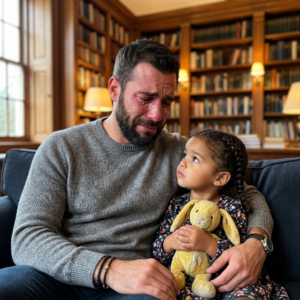
The former Marine who’d been paralyzed in the Chicago highway accident. His testimony was simple and devastating. I was driving my daughter to gymnastics, he said. His voice was quiet but clear. The brakes failed. I tried pumping them. Nothing. We hit the barrier at 60 mph. He paused.
I woke up in the hospital unable to feel anything below my neck. My daughter was in the back seat. She watched the whole thing. He looked at Mercer. The investigators told me it was mechanical failure. Bad luck. But then I saw the news about the recall, about the defective engines, about Daniel Mercer knowing the brakes were faulty and selling the cars anyway.
His hands clenched on the wheelchair arms. My daughter has nightmares about that day. She’s 11 years old and she’s terrified of cars because she watched her father become paralyzed in front of her because Daniel Mercer decided my life was worth less than his profit margin. The courtroom was silent except for someone in the gallery crying softly.
Vance had no questions for Patterson. What could he ask? The man’s paralysis spoke louder than any testimony. The trial lasted 3 weeks. 27 witnesses. Hundreds of pieces of evidence. testimony that ranged from technical engineering analysis to heartbreaking victim impact statements. Marcus Webb’s widow testified about finding out her husband had burned to death because of a fuel line defect Crossline had known about for years.
A mother from Portland described losing her entire family in an accident that could have been prevented with a $50 part. By the end, even some of the jurors were crying. Closing arguments happened on a Friday. Warren was passionate and precise. He connected every piece of evidence into a narrative of conspiracy and greed.
He showed the jury the photo of the executive board meeting with Nathan’s report visible on the table. Played the recorded conversations where Mercer discussed bribing safety inspectors. 10 years. Warren said Daniel Mercer had 10 years to do the right thing, to issue a recall, to fix the defects, to save lives.
He gestured at the gallery where victim’s families sat. Instead, he chose profit, chose silence, chose to let 73 people die because it was cheaper than admitting his company had made a mistake. Warren’s voice dropped. This isn’t a complicated case. It’s not about engineering nuances or corporate complexities. It’s about a man who knew people would die and did nothing to stop it. That’s not negligence.
That’s murder. Vance’s closing was elegant but hollow. He tried to create doubt about the conspiracy, suggested the evidence was circumstantial, painted Mercer as a scapegoat for systemic industry problems. The prosecution wants a villain, Vance said. Someone to blame for tragic accidents that happen in every industry.
But Daniel Mercer is not a villain. He’s a man who made difficult decisions in an imperfect world, and now he’s being sacrificed because people need someone to punish. Nathan watched the jury’s faces. Most of them looked unconvinced. The jury deliberated for 2 days. Nathan spent those days in the garage trying to work and failing.
Every car he started repairing sat unfinished while he paced and checked his phone and tried not to imagine Mercer walking free. Viven was calmer on the surface, but Nathan could see the tension in her shoulders. The way she couldn’t sit still. The way she kept finding small tasks to fill the silence.
Ellie asked every morning if the bad guys were in jail yet. Nathan told her they were still waiting. Waiting is hard. Ellie said seriously. Yeah, baby. It really is. On day two of deliberations, Margaret called. Jury’s back. Nathan and Vivien drove to the courthouse in silence. The drive felt both infinite and too short.
Nathan’s hands were shaking. Viven held one of them the entire way. The courtroom was packed again. Victims families in their usual seats. Media filling every available space. Nathan saw Mrs. web, Robert Patterson. Dozens of faces he’d memorized from newspaper obituaries over the years. They all looked as terrified as he felt. The jury filed in.
Nathan tried to read their expressions and failed. Some looked tired. Some looked grim. None of them would meet Mercer’s eyes. The judge entered. Everyone stood. Nathan’s heart was pounding so hard he could barely hear. Has the jury reached a verdict? The four women stood. She was a middle-aged black woman who’d been an elementary school teacher for 20 years.
During voardier, she’d said she believed in accountability. We have, your honor, on the charge of conspiracy to commit fraud. How do you find? Guilty. The courtroom exhaled. On the charge of criminal negligence resulting in death. Guilty. On the charge of evidence tampering? Guilty. One by one, the four women read through 17 different charges.
Guilty on all of them. Nathan heard it, but couldn’t process it. After 10 years of fighting, after being called a liar and a fraud and a conspiracy theorist, 12 strangers had looked at the evidence and said he’d been right all along. Viven grabbed his hand so tight it hurt. Her eyes were streaming, but she was smiling.
Around them, the courtroom erupted. Victims families crying and hugging. Reporters rushing for the exits to file stories. The judge banging her gavvel for order. Daniel Mercer sat at the defense table, his face completely blank, like he couldn’t quite believe what had happened. Like he genuinely thought money and lawyers could save him.
The judge set sentencing for 2 weeks out. Outside the courthouse, Nathan and Vivien were mobbed by reporters. Cameras flashing, questions shouting over each other. Mr. Keller, how does it feel to finally get justice? Ms. cross. Do you think this verdict will change corporate culture? What do you say to critics who claim this was a personal vendetta? Warren appeared and gently shepherded them through the crowd to a waiting car.
Once they were inside and moving, Nathan finally let himself breathe. We won, Vivien said like she was testing the words. Yeah, we did. I can’t believe we actually did. Nathan laughed, the sound bordering on hysterical. I spent 10 years documenting evidence and I still didn’t think it would work. What happens now? Now we wait for sentencing.
Then we figure out how to live in a world where Daniel Mercer is actually facing consequences. They drove back to Ashton Ridge as the sun set. The town looked exactly the same as when they’d left. Nothing had changed except everything had. Margaret was waiting at the garage with Ellie. The moment Nathan walked in, his daughter launched herself at him.
Did you win? Mrs. Patterson’s mom texted Margaret and said the jury said guilty. Nathan picked her up. Yeah, baby. We won. Ellie squeezed him tight. I knew you would because you’re a superhero. I’m really not. You are to me. Nathan held his daughter and let himself cry for the first time in 10 years. Not sad crying, not frustrated crying, just release.
The weight of a decade finally lifting. Sentencing happened 2 weeks later. The courtroom was quieter this time. No media frenzy, just victims families and the people who’d been there from the beginning. The judge was a woman in her 60s named Sandra Martinez. She’d been stern throughout the trial, but fair. Now she looked at Daniel Mercer with something that might have been discussed.
Mr. Mercer, you’ve been found guilty of 17 counts related to corporate fraud, criminal negligence, and conspiracy. Before I pass sentence, I want to make something clear. She gestured at the gallery. These people trusted your company. They bought vehicles believing Crossline Motors valued their safety. And you betrayed that trust in the most fundamental way possible.
You knew people would die. You had reports, data, and warnings from your own engineers, and you chose profit. Mercer stood there expressionless while the judge spoke. 73 people died because of your decisions. Hundreds more were injured. Thousands of families had their lives destroyed. And you did it knowingly.
deliberately with full awareness of the consequences. Judge Martinez opened a folder. I’ve read impact statements from victims families. A widow who lost her husband, children who lost parents, a former Marine who will never walk again. Her voice hardened. Your actions didn’t just break laws, they broke lives. She looked at Mercer directly.
I’m sentencing you to 30 years in federal prison. No parole eligibility for 20 years. Additionally, you’re ordered to pay $78 million in restitution to victims families, the exact amount you and your fellow executives profited from this conspiracy. The courtroom was silent. 30 years. Mercer was 67 years old. He’d die in prison.
Furthermore, Judge Martinez continued, “I’m recommending that federal investigators pursue charges against the remaining crossline executives involved in this conspiracy, and I’m ordering a complete review of automotive safety oversight to prevent this from happening again.” She banged her gavvel. “Court is adjourned.” Mercer was led away in handcuffs.
He looked smaller, somehow, diminished, like removing the expensive suits and corporate power had revealed how ordinary he actually was. Nathan watched him go and felt nothing. No satisfaction, no vindication, just exhaustion. Outside, victim’s families thanked him, shook his hand, hugged him. Mrs.
Webb cried on his shoulder, and told him her husband would have been grateful someone had fought for him. Robert Patterson wheeled up and extended his hand. Thank you for not forgetting us. I couldn’t have even if I tried, Nathan said honestly. Warren found them before they left. The DOJ is moving forward with charges against the other executives.
Hang’s testimony and your documentation are being used to build cases against all of them. How many? Viven asked. 14. Everyone who attended that conference room meeting, everyone who signed off on hiding the defects. Warren smiled tiredly. You didn’t just take down Mercer, you dismantled the entire conspiracy.
What about Crossline Motors itself? The company’s filing for bankruptcy. Too many lawsuits, too much liability. It’ll probably be acquired by a competitor and restructured. Warren looked at Viven. I know that’s hard. Employees will lose jobs. I know. Viven’s voice was quiet. But it’s the right outcome. The company was built on blood. It needs to die.
They drove back to Ashton Ridge one final time. The trial was over. The verdict was in. Justice had been served as much as justice ever was in a world where the dead stayed dead. Margaret and Ellie were waiting with a cake that said, “Congratulations superheroes in messy frosting.” The town had apparently thrown together an impromptu celebration.
Half of Ashton Ridge was crowded into Nathan’s garage with casserles and cheap champagne and genuine happiness. Mrs. Chen hugged him. Mr. Peterson shook his hand. Tommy’s mom apologized again for ever doubting him. People Nathan barely knew told him they were proud. It was overwhelming and perfect, and Nathan wanted to hide in his office until everyone left.
But Ellie was so happy, dragging him around to show everyone her superhero dad that Nathan stayed and smiled and pretended he was okay with being the center of attention. Later, after everyone had left and Ellie was asleep, Nathan and Vivien sat on the garage roof again. their spot, their quiet place away from verdicts and victims and the wait of 10 years. “What happens now?” Vivian asked.
It was the same question she’d asked after the verdict. But this time, it felt different, like she was really asking about them. “I don’t know,” Nathan admitted. “I’ve spent 10 years fighting this. I don’t know who I am without it. You’re a father, a mechanic, a good person who fought for what was right.
I’m a guy with a failing garage and a daughter who deserves better than mac and cheese four nights a week. Viven was quiet for a moment. There’s a settlement fund. Victims families will get restitution, but there’s also compensation for whistleblowers. You documented this entire conspiracy. You’re entitled to a significant portion. I don’t want their money.
It’s not their money anymore. It’s yours. Money you earned by spending 10 years refusing to be silent. She turned to look at him. You could fix up the garage, expand the business, send Ellie to whatever college she wants, actually live instead of just surviving. Nathan thought about it about 10 years of barely making rent.
About borrowing suits for court. About his daughter wearing handme-downs and acting like it didn’t matter. How much are we talking about? Probably close to 2 million? Nathan laughed. That’s insane. That’s justice. finally paying you back for what they took. They took 10 years. No amount of money returns that. No, but it might make the next 10 years easier.
Nathan pulled Viven closer. And what about you? What happens to the disgraced CEO who blew up her own company? I’ve had offers, corporate consulting, speaking engagements. Apparently, I’m very marketable as a redemption story. She smiled Riley. But I’m not interested in going back to that world. So, what are you interested in? Vivien looked at him for a long moment.
There’s a garage in Ohio that could probably use better management. Maybe expand into teaching auto mechanics to kids who can’t afford trade school. Maybe become something more than just a repair shop. Nathan’s heart did something complicated. You want to stay in Ashton Ridge? I want to stay with you. If Ashton Ridge is where you are, then yeah.
It’s a dying town. There’s nothing here. There’s you. There’s Ellie. There’s a community that came together to support you when it mattered. Vivien gestured at the town spread out below them. That’s more than I ever had in Chicago. Nathan kissed her slow and deliberate under stars that had witnessed 10 years of fighting.
Okay, he said, we build something here. Together. Together, Vivian agreed. 3 months later, Nathan stood in front of his garage watching workers install a new sign. Keller Automotive and Technical Training Center in fresh paint that gleamed in summer sunlight. The garage had been completely renovated, new equipment, expanded workspace, a classroom in back where Vivian was setting up computers for the first cohort of students, local kids who couldn’t afford four-year degrees but wanted to learn a trade.
Ellie was helping by getting in everyone’s way and asking a thousand questions. She’d started second grade two weeks ago and told anyone who would listen that her dad was famous and her not quite stepmom, but kind of, was teaching people how to fix cars. Margaret handled the bookkeeping from a real office instead of a corner desk.
They’d hired two full-time mechanics. Business was actually steady for the first time in years. Nathan walked through the transformed space feeling like he was living someone else’s life. The settlement money had made all of it possible. $2 million that had let him fix the garage, expand the business, set up a college fund for Ellie, and still have enough left over to finally breathe.
But more than the money, the verdict had changed things. People in Ashton Ridge looked at him differently now, with respect instead of pity, like he was someone who’d fought impossible odds and won. Nathan wasn’t sure how he felt about that. He was still the same person, still made mistakes, still had days where he could barely get out of bed because the weight of 10 years hit him all at once.
But he had Viven now, who understood the weight because she carried her own version of it, who woke up some mornings crying because she’d been the face of a company that killed people, who was trying every day to become someone better than who she’d been. They were healing together, slowly, imperfectly, but healing. The doorbell above the garage entrance chimed.
Nathan looked up to see a woman in her 30s standing in the doorway. She looked nervous. “Can I help you?” Nathan asked. “Are you Nathan Keller?” “Yeah,” she took a breath. “My brother died in 2017. Engine fire in his crossline sedan. I saw your name in the trial coverage. You documented his case.” Nathan went still. What was his name? James Chen. He was 28.
worked as a teacher. Nathan remembered engine serial number CX7-338291. Fuel line rupture. The car had burned on I75 outside Detroit. James Chen had been trapped inside. I’m sorry, Nathan said quietly. I documented his accident, tried to I know. I read the trial transcripts. The woman’s eyes were bright with tears.
I just wanted to say thank you. For 10 years, everyone told me it was an accident, that James just had bad luck. But you proved it wasn’t. You proved someone was responsible. I’m sorry I couldn’t save him. You couldn’t. But you remembered him. She wiped her eyes. That matters more than you know. She left after that. And Nathan stood in his renovated garage trying not to fall apart.
Viven found him 20 minutes later still standing there. you okay? James Chen’s sister just came by to thank me for documenting her brother’s death. Viven put her arms around him. That’s the fourth one this month. I know. Families kept showing up. People who’d lost someone in a crossline accident.
Who’d spent years being told it was driver error or bad luck or unavoidable tragedy who’d finally gotten answers because Nathan had refused to forget. It should have felt good, validating. Instead, it just hurt because every grateful family was a reminder of someone Nathan had failed to save. “You can’t carry all of them,” Vivian said gently.
“You did everything you could, more than anyone else would have. It wasn’t enough. It was enough to get justice, to make sure Mercer and the others are paying for what they did.” She pulled back to look at him. “You can’t resurrect the dead, Nathan. You can only make sure they’re not forgotten. And you did that.” Nathan knew she was right, but grief didn’t care about logic.
That night, he sat down with Ellie before bed. Can I ask you something, baby? Sure. Do you understand what Dad was doing with the trial and everything? Ellie thought about it seriously. You were fighting bad guys who hurt people. Yeah, but the people they hurt, I couldn’t save them. They’re still gone. But you made sure the bad guys got in trouble, right? Right.
then you did save people, just not the way superheroes do in movies. Ellie looked at him with wisdom that seemed impossible from a seven-year-old. In movies, superheroes stop the bad thing from happening, but real superheroes make sure bad people don’t get away with it. Nathan pulled her into a hug. When did you get so smart? I’ve always been smart.
You just don’t listen when I explain how blue raspberry is scientifically the best flavor. Nathan laughed and tucked her in, listening to her chatter about school and friends and whether Viven would come to her next soccer game. Downstairs, Viven was grading applications for the training program. She’d been working 12-hour days getting it set up, interviewing students, designing curriculum, pouring herself into creating something that actually helped people instead of just maximizing profit. Nathan sat beside her and looked
at the application she was reviewing. a 17-year-old kid from the next town over whose father had lost his job when the local factory closed. “Are you going to accept him?” Nathan asked. “He’s got good grades, strong work ethic, can’t afford traditional college.” Viven marked the application approved.
“Yeah, I think he deserves a chance.” “You’re good at this.” “At what?” “Seeing potential in people everyone else overlooks,” Vivian smiled. “I learned from the best. You saw something in me when I showed up at your garage. Could have sent me away. Told me to solve my own problems. You were persistent. I was desperate. There’s a difference.
She set down her pen. You gave me a chance to be better than I was. Now I’m trying to do the same for these kids. They worked in comfortable silence. Nathan organizing repair orders, Viven reviewing applications, building something together that was bigger than either of them alone. A year after the trial, Nathan received a letter from the federal prosecutor’s office.
The remaining 14 crossline executives had all been convicted. Sentences ranging from 8 to 25 years, hundreds of millions in restitution ordered. The automotive industry had implemented new safety oversight regulations, mandatory third party testing, whistleblower protections, congressional hearings on corporate accountability.
Nathan’s documentation had become the foundation for industry reform. You changed things, Vivien said, reading the letter over his shoulder. Actually changed how the entire automotive industry operates. I just wrote down what I saw. You documented a decade of corporate murder and refused to be silenced.
That’s more than writing things down. Nathan folded the letter carefully. It still doesn’t bring them back. No, but it might save the next 73 people and the 73 after that. Vivien kissed his cheek. That’s not nothing. She was right, even if Nathan’s heart didn’t fully believe it yet. The training program graduated its first class that spring.
15 students who’d learned automotive repair, business management, and how to run an ethical operation. 10 of them already had job offers. Three were starting their own shops. Nathan stood at the ceremony watching them accept certificates and thought about all the ways life had changed in 2 years. from fighting alone in a garage to building something that helped people build futures.
Ellie sat in the front row wearing a dress she’d insisted on buying herself with allowance money. She clapped louder than anyone when Nathan gave a short speech about integrity and refusing to compromise on what mattered. Afterward, one of the graduates approached him, a 19-year-old named Marcus, whose mother had died in a crossline accident when he was 12.
I wanted to thank you, Marcus said, for documenting my mom’s case, for making sure someone paid for what happened to her. Nathan had heard variations of this speech dozens of times now. It never got easier. I’m sorry I couldn’t save her. You gave me justice. That’s something. Marcus smiled slightly.
And you gave me this, a skill, a career, a way to move forward that isn’t just anger and grief. He shook Nathan’s hand and walked away. And Nathan realized maybe that was enough. Maybe he couldn’t resurrect the dead or undo the past. But he could build a future where their deaths actually meant something. That night, Nathan proposed to Viven on the garage roof under the same stars where they’d spent 2 years healing together.
“I don’t have a ring,” he admitted. “And I’m definitely not good at romantic speeches.” “Then why are you asking?” “Because I love you. because you saw me at my worst and decided to fight beside me anyway. Because I want to build a life with you that isn’t defined by the trial or the past or anything except choosing each other. Vivian was crying.
That was actually a pretty good speech. So, is that a yes? That’s absolutely a yes. They got married 3 months later in a small ceremony in Ashton Ridge. Ellie was the flower girl and took her job very seriously. Margaret officiated. Half the town showed up. It was simple and imperfect and exactly what they both wanted.
During the vows, Nathan promised to be honest even when it was hard. To fight for what was right even when it cost everything. To remember that integrity mattered more than comfort. Viven promised to never stop questioning. To value people over profit, to build things that helped instead of harmed. They both promised to keep healing together.
The reception was in the garage, which had become the center of everything they were building. students, community programs, a place where people came to learn skills and find second chances. Nathan stood watching Ellie dance with Tommy and Vivien talk to students and Margaret lecture someone about proper accounting procedures.
His entire world contained in a renovated garage in a dying Ohio town. It wasn’t the life he’d imagined 10 years ago when he’d started documenting defective engines, but it was the life he had earned by refusing to forget people everyone else wanted buried. Later, after everyone had left and Ellie was asleep upstairs, Nathan and Vivien sat in the quiet garage, surrounded by evidence of a decade of fighting.
“Do you ever regret it?” Vivian asked. Spending 10 years on this instead of just moving on, Nathan thought about Marcus Webb, Robert Patterson. 73 names he’d memorized, 73 families who’d thanked him for not forgetting. “No,” he said honestly. “It nearly destroyed me. cost me everything multiple times. But if I hadn’t fought, Mercer would still be free.
The conspiracy would still be hidden and the next 73 people would be dying right now. So, it was worth it. I don’t know if worth is the right word. It was necessary. Someone had to do it. And I was the one standing there with the ability to document the truth. He pulled Viven closer. I just wish I hadn’t had to do it alone for so long. You’re not alone anymore.
No, I’m really not. They sat in comfortable silence. Two people who’d been broken by the same fight and healed by choosing each other. Outside, Ashton Ridge slept, a dying town that was slowly coming back to life because a mechanic had refused to stay quiet and a CEO had chosen truth over comfort.
Nathan thought about the 17-year-old kid whose application Vivien had approved, about the training program graduates starting their own shops, about students learning that doing the right thing mattered more than doing the profitable thing, about all the ways one person documenting the truth could ripple outward into change.
He’d spent 10 years carrying the weight of 73 deaths. 10 years believing he’d failed because he couldn’t save them. But maybe success wasn’t saving everyone. Maybe it was fighting anyway. documenting anyway, refusing to forget anyway. Maybe it was teaching the next generation that integrity wasn’t weakness, that standing alone was better than compromising with evil.
That truth eventually mattered, even when it took a decade to prove it. Nathan didn’t know if that made him a hero. He still felt like the same broken mechanic who’d started documenting defective engines in a garage nobody cared about. But he’d changed things, actually changed them, and maybe that was enough.