My Mother-in-Law Said I Had to “Earn My Place” Until I Found the Will She Hid From Me
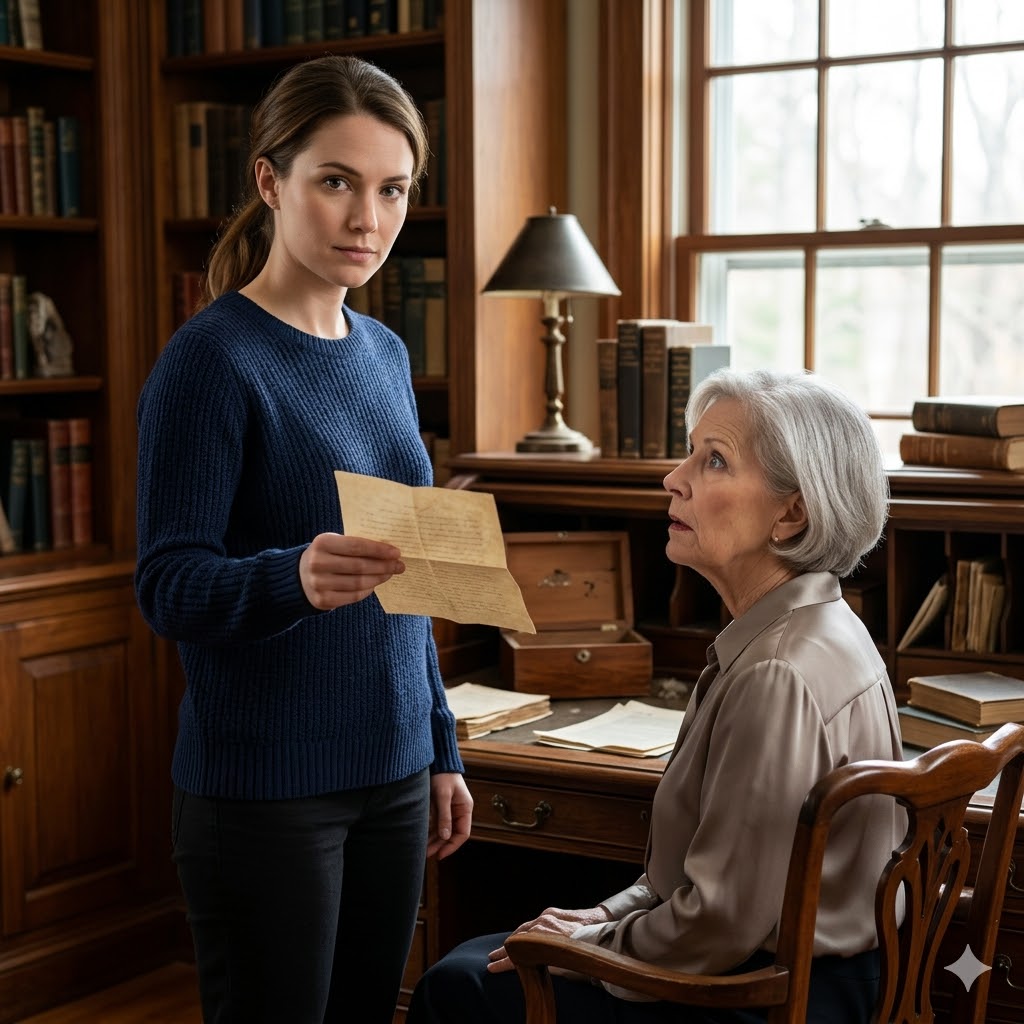
The moment I placed the will on the kitchen table, my mother-in-law’s face went completely white. Her lips parted, but no words came out. For the first time since I moved into that house, she looked at me, not with irritation, not with cold authority, but with something close to fear. And my husband, he wouldn’t even meet my eyes.
That was the moment I realized something I should have understood a long time ago. I was never supposed to find it. 3 months earlier, I stood in that same kitchen scrubbing a pan that wasn’t even dirty anymore. I had already washed it twice. Not because it needed it, but because it gave me something to do, something to focus on other than the tight, quiet pressure building in my chest. If she’s not working, she can take care of the whole house,” my mother-in-law snapped from behind me.
Her voice cut through the room like it always did, sharp, deliberate, impossible to ignore. I didn’t turn around. Not right away. Instead, I rinsed the pan slowly, carefully, watching the water run over my hands like it might somehow wash away the sting of her words. It didn’t. I’m applying, I said, keeping my voice steady. I’ve sent out resumes all week.
No response. Just the faint clink of her coffee cup settling onto the counter. You can apply all you want, she said finally. But until someone actually pays you, you’re not contributing. I swallowed. Not contributing. That was the word she liked to use. As if cooking every meal, cleaning every room, and keeping the entire house running somehow didn’t count. As if I didn’t count. I moved here for Daniel, I said quietly.
We agreed I’d take some time to get settled. A mistake. The second his name left my mouth, I knew it. She let out a soft, humorless laugh. And what exactly has that gotten you? She asked. A roof over your head that you didn’t earn. That one landed. I felt it in my chest, sharp and immediate. Daniel was sitting at the table, scrolling through his phone like none of this had anything to do with him.
He didn’t look up, didn’t say a word, didn’t defend me. That hurt more than anything she could have said. I turned off the faucet and dried my hands slowly, buying myself a few seconds to breathe. I’m doing my best, I said. It sounded smaller out loud than it did in my head. Well, she replied, “Your best isn’t paying the bills.” Silence fell over the room again.
Heavy, familiar. I picked up the dish towel and folded it, carefully, aligning the edges like it mattered. Like anything I did in that house actually mattered. Living there hadn’t been part of the original plan. Daniel and I were supposed to rent a small apartment after the move, something simple, something ours. But then his hours got cut. Then my job offer fell through and suddenly just for a few months turned into moving into his childhood home with his mother.
At first she was polite. Distant but polite. That didn’t last. It started with small comments. You load the dishwasher wrong. You missed a spot. This isn’t how I do things. Then it turned into instructions. Then expectations. Then rules. By the end of the second month, it felt like I wasn’t living in a home anymore. It felt like I was working in one, unpaid, unseen, and constantly reminded of it.
That afternoon, after the kitchen finally fell quiet, I carried a basket of folded laundry down the hallway. The house smelled faintly of lemon cleaner and something older I couldn’t quite place. Daniel had already left for work. His mother was in the living room watching one of her shows. The volume was just loud enough to let me know she didn’t want to talk.
Not that she ever did. As I passed her bedroom, I noticed something I hadn’t seen before. The door was slightly open, just a few inches. Inside, the room was unusually still, neat, controlled, like everything else about her. I hesitated. I didn’t make a habit of going in there. Actually, I never had, but something about that small gap in the door, it felt like an invitation, or maybe a mistake.
Either way, it pulled at my curiosity in a way I couldn’t ignore. I stepped closer, careful not to make a sound. Through the opening, I could see her dresser, perfectly arranged, a jewelry box, a framed photo, a small wooden tray, and next to it, a drawer, slightly open, just enough to reveal the corner of something inside. Paper, not just any paper, thicker, official looking.
My pulse quickened. I told myself to keep walking, to respect boundaries, to stay out of things that weren’t mine. But then her voice echoed in my head. You’re not contributing. My hand moved before I could stop it. Slowly, quietly, I pushed the door open just a little wider and stepped inside.
I stood there for a second, just inside the doorway, listening. The TV murmured from the living room. A laugh track rose and fell. My mother-in-law didn’t move. I stepped farther in. Her room felt different from the rest of the house cooler, almost untouched. The bed was made so tightly it looked like no one ever slept in it. The air carried a faint scent of lavender and something medicinal. I told myself I was only going to close the drawer. That was it.
Nothing more. But when I reached for the handle, my hand didn’t stop. The drawer slid open with a soft wooden sigh. Inside, everything was arranged in neat stacks, receipts, envelopes, a small leather folder. And on top of it all, a thick envelope cream colored with a name typed across the front. My heart started pounding. I shouldn’t. I knew that.
This wasn’t mine. But something about it, the weight, the formality, the way it was tucked just out of sight felt deliberate, hidden. I picked it up. The paper was heavier than anything else in the drawer. Legal paper. My fingers hovered over the seal. I could still walk away. Put it back. Pretend I never saw it. But then I heard her voice again. You’re not contributing.
Something in me tightened. And before I could talk myself out of it, I opened it. The first page hit me like a sudden drop. Last will and testament. I blinked, scanning the lines, trying to make sense of the words that suddenly felt too big, too formal, too real. Names, dates, property descriptions. My breath caught. the house.
This house listed clearly unmistakably. I read faster now, my eyes jumping ahead, searching for something I didn’t even fully understand yet. Then I saw his name, Daniel. Of course, that made sense. I kept reading and that’s when everything stopped because right beneath his name was mine. I froze.
My name spelled correctly, clearly, intentionally, not in passing, not as a witness, not buried somewhere in fine print, but written as someone who had a claim, a right. I flipped the page, my hands starting to shake. There were conditions, details, legal language I didn’t fully understand, but enough to grasp the meaning. If Daniel retained ownership, I was to be recognized as co-resident with protected occupancy.
If anything happened, if anything changed, my position in that house was secured legally, irrevocably. I stepped back, the paper trembling in my hands. This wasn’t just a will. It was protection for me. A sound from the hallway made my heart jump. I turned toward the door, listening. Footsteps slow, passing by, then fading. I let out a breath I didn’t realize I’d been holding.
Carefully, I placed the document back into the envelope, but I didn’t put it away. Not yet. Instead, I pulled out my phone. My hands moved quickly now, almost on instinct. One photo, then another. Every page, every signature, every detail I could capture before I lost my nerve. because something deep in my gut was telling me this mattered more than anything else I’d done since I moved into that house.
When I finished, I slid the papers back into place exactly as I’d found them, aligned, neat, untouched. I closed the drawer gently, stepped back and took one last look around the room. Everything appeared the same, perfect, controlled, like nothing had been disturbed. But I knew better now. I slipped out into the hallway and closed the door softly behind me. The TV was still playing. My mother-in-law was still in her chair. Nothing had changed.
And yet, everything had. I walked back to the kitchen, my mind racing, replaying what I just read over and over again. My name in that will, not as an afterthought, not by accident, but written in a way that meant something, that protected something, protected me, which raised a question I couldn’t ignore.
If this document existed, why had no one ever told me? Why had Daniel stayed silent? And why? Why did his mother act like I didn’t belong there at all? The pieces didn’t fit. Not anymore. Because if what I read was real, then everything I’d been told, every comment, every insult, every moment I was made to feel like I was temporary, it wasn’t just cruel. It was intentional.
That night, I lay in bed next to Daniel, staring up at the ceiling while he slept or pretended to. I couldn’t tell anymore. The soft glow of my phone lit up the room as I opened the photos again. Zoomed in. Read every line slowly. carefully trying to understand what it all meant, what it changed, what it gave me. And one thing became painfully clear.
I wasn’t trapped in that house. I never had been. I had just been made to believe I was. I turned my head slightly, looking at Daniel in the dark. His face was calm. Too calm. And for the first time since we moved in, I didn’t feel small next to him. I felt something else, something steadier, stronger, because now I knew something he didn’t know I knew. And that changed everything. The next morning, I didn’t say a word.
Not to Daniel, not to his mother. I made breakfast like I always did. Eggs, toast, coffee, said exactly the way she liked it. I wiped the counters, folded the dish towel, and moved through the routine so smoothly, it almost felt like nothing had changed. But inside everything had because now every time she spoke to me like I didn’t belong there, I knew she was wrong.
And more importantly, I knew she knew something she wasn’t telling me. Don’t forget the laundry today, she said, not even looking up from her coffee. I won’t, I replied calmly. No tension, no push back. That seemed to throw her off more than any argument ever had. She glanced at me just briefly like she was trying to figure out what was different. I didn’t give her anything. Not yet.
After Daniel left for work, I went into the bedroom and locked the door. My phone was already in my hand. I opened the photos again, zoomed in. This time, I wasn’t just reacting. I was studying. Names, dates, clauses. There was one line that kept pulling my attention back. Protected occupancy rights.
I didn’t fully understand the legal language, but I understood enough. I had rights in that house, real ones, not emotional, not dependent on anyone’s approval. Legal. And that meant one thing. I needed someone who could explain exactly how far those rights went. By noon, I was sitting in a small office across town.
Nothing fancy, just a quiet building with beige walls and a receptionist who spoke softly and didn’t ask too many questions. The attorney, Mr. Collins, looked to be in his late 60s. “Calm, patient, the kind of man who didn’t rush his words.” He adjusted his glasses as he looked over the photos on my phone. “This is a copy?” he asked. “Yes.” “You don’t have the original number?” He nodded slowly, scrolling through each page.
The silence stretched just long enough to make my stomach tighten. Finally, he set the phone down. “Where did you find this?” he asked. I hesitated, then told him the truth. Not every detail, but enough. He didn’t interrupt, didn’t judge, just listened. When I finished, he leaned back slightly in his chair. Well, he said, “This changes things.” My heart skipped.
“How?” He folded his hands together. “Whoever drafted this will made a very deliberate decision to include you,” he said. “That’s not something that happens casually.” So, what does it mean? I asked. It means he replied carefully that your right to live in that home isn’t just based on your relationship.
It’s supported by a legal framework. I let that sink in. You can’t simply be kicked out on a whim, he continued. Not if this document is valid, and from what I can see, it appears to be. A slow, steady warmth spread through my chest. Not relief. Not exactly. Something stronger. Clarity. So, what should I do? I asked. He studied me for a moment.
That depends, he said. Do you want to confront them? I thought about that. About walking into that house, placing the will on the table, and watching everything explode. It would feel good for a moment. But then what? More fighting, more tension, more damage. I shook my head. Not yet, I said. He gave a small nod like he’d expected that answer.
Then you document everything he said. You stay calm. You don’t reveal what you know until you’re ready. And when you do, you do it with control. Control. That word stayed with me because for the first time since I moved into that house. I actually had it. When I got home, nothing looked different.
The same furniture, the same quiet hum of the TV, the same woman sitting in the same chair. But I saw it differently now. Not as a place where I didn’t belong, but as a place where I had been underestimated. Where were you? She asked her tone sharp. Out, I said simply. She didn’t like that answer. I could see it in the way her lips pressed together. But she didn’t push. Not this time. That evening, Daniel came home tired.
Dropped his keys on the counter, loosened his tie. Hey, he said. Hey. We moved around each other like usual. familiar, careful, but something felt off, like there was a layer between us that hadn’t been there before. Or maybe it had, and I was just finally seeing it. At dinner, his mother made a comment about the way I’d cooked the chicken.
Normally, I would have apologized, adjusted. Tried harder. This time, I just nodded and kept eating. Daniel noticed. I saw it in the quick glance he gave me, confused. Curious, but he didn’t ask. He never did. Uh later that night, as I stood in the kitchen alone, I looked around slowly. At the counters, I cleaned every day. At the floor, I swept at the space I’d been told wasn’t mine.
And I realized something that settled deep in my chest. I didn’t need to fight to stay there. I didn’t need to beg. I didn’t need to prove anything to anyone in that house because the truth, the real truth, was already written down, signed, and hidden. And when I decided to bring it into the light, everything was going to change. It happened on a Tuesday.
Nothing special about the day itself, gray skylight drizzle tapping against the windows, the kind of quiet that settles into a house and makes every sound feel sharper. I was standing at the stove, stirring a pot of soup when she walked in. My mother-in-law didn’t greet me. She never did. Instead, she glanced at the counter, then at the clock, then at the sink.
Always scanning, always looking for something to correct. “You’re late with dinner,” she said. I checked the time. “5 minutes early.” “I’ll have it ready soon,” I replied. She let out a soft, disapproving sigh. “That’s not the point,” she said. “Timing matters. Structure matters. That’s something you still don’t seem to understand.” I kept stirring. didn’t respond.
That silence, my silence seemed to irritate her more than any argument ever had. She stepped closer. You know, she continued, I’ve been patient, but this arrangement isn’t working. There it was. The word she liked to use when she was about to draw a line. Arrangement as if I were a temporary inconvenience she had generously allowed.
I turned off the stove slowly, carefully. “What are you saying?” I asked. She crossed her arms. I’m saying she replied that if things don’t improve, we may need to reconsider your place here. My place, the same phrase, the same quiet threat. Only this time, it didn’t land the way she expected. Because this time, I was ready.
I dried my hands on a towel and reached into the drawer beside me, the one where I had placed the printed copy of the will that morning. Not the original, but enough. I turned and walked to the table, set the document down between us. She frowned slightly. What is this? She asked. Take a look, I said. She didn’t move at first, just stared at me as if trying to read something in my face.
Then slowly she stepped forward and picked up the papers. The moment her eyes hit the first page, everything changed. Her posture stiffened. Her lips parted. Color drained from her face. “No,” she whispered. “It wasn’t loud, but it carried something I had never heard from her before. Fear. Real unmistakable fear.
” Behind her, Daniel had just walked in. He stopped in the doorway, glancing between us. “What’s going on?” he asked. No one answered. “Because his mother was still staring at the document like it might disappear if she blinked.” “Where did you get this?” she demanded suddenly, her voice shaking. I didn’t raise mine. I found it, I said. Her head snapped up.
You had no right. I have every right I cut in calm and steady. According to that, I gestured toward the paper in her hands. Daniel stepped closer now, confusion written all over his face. What is it? He asked. His mother didn’t respond. So, I did. It’s the will, I said. The one no one thought I’d ever see. He froze.
And in that moment, that exact moment, I knew he hadn’t known everything. But he had known enough. “Daniel,” I said quietly. “Did you know my name was in it?” “Silence.” He looked at his mother, then back at me. “I I knew there were conditions he admitted, but I didn’t know.” “You didn’t know I had rights?” I asked. “He didn’t answer. Because he didn’t need to.
” his mother let out a sharp breath, folding the papers quickly, as if that could undo what had already been revealed. “This changes nothing,” she said, but her voice lacked conviction. “It changes everything,” I replied. She shook her head. “This house is not yours to control the way you have been,” I said, still calm. “Not completely. Not anymore.” Her eyes flashed.
“You think a piece of paper gives you power?” “No,” I said. “The truth does. That landed. I saw it in the way her shoulders dropped slightly. In the way the fight in her expression flickered just for a second, then she looked away toward Daniel. This was never supposed to happen, she muttered. And there it was. Not denial, not anger, but something closer to regret. The room fell quiet, heavy, different.
Daniel ran a hand through his hair, pacing slightly. Why didn’t you tell me he asked her? She didn’t answer right away. When she finally did, her voice was quieter than I had ever heard it because I needed control, she said. Not defensive, not sharp, just honest. I didn’t trust things to stay stable, she continued. And if I didn’t keep things in order, her voice trailed off.
I watched her carefully. For the first time, I wasn’t looking at someone who was trying to control me. I was looking at someone who had been afraid. afraid of losing something. Afraid of losing everything. I wasn’t trying to hurt you, she said, looking at me now. But you did, I replied. No anger, just truth. She nodded slowly. I know. Another silence.
But this one felt different, less sharp, more open. I didn’t raise my voice, didn’t throw accusations, didn’t demand anything because I didn’t need to. The truth had already done the work for me. And as I stood there looking at both of them, I realized something I hadn’t expected. I didn’t want to win. Not like that. I just wanted things to be honest.
We need to talk, I said finally. Not as a demand, as a decision. And this time, no one argued. We sat at the table for a long time after that. No one rushed to fill the silence. The rain had picked up outside, tapping steadily against the windows like the house itself was holding its breath. For once, the quiet didn’t feel oppressive. It felt necessary.
Daniel sat across from me, his hands clasped tightly together, his eyes moving between me and his mother, like he was trying to piece together something that should have made sense a long time ago. His mother, Margaret, looked smaller somehow. Not physically, but the certainty she carried, the sharpness, the control, it had softened, cracked, even.
I should have told you, Daniel said finally, his voice low. I met his eyes. Yes, I said. No anger. Just truth, he nodded, swallowing hard. I didn’t know everything, he continued, but I knew enough to ask questions, and I didn’t. That’s the part that matters, I said. Because it did. It always had. Margaret shifted in her chair. I wasn’t trying to make you feel like you didn’t belong, she said.
I didn’t respond right away. Because that wasn’t true. Not entirely. You didn’t say it directly, I replied. But you made it clear. She looked down at her hands. I thought if I kept things structured, controlled, nothing would fall apart, she said. Her voice wasn’t sharp anymore. It was tired. I’ve seen what happens when people lose control of a home, she continued.
Finances slip, people leave, things break. I listened. Really listened. Because for the first time, she wasn’t talking at me. She was explaining herself. I was afraid she admitted. And there it was again. Not power, not dominance, fear. I understand being afraid, I said quietly. Both of them looked at me.
But that doesn’t justify making someone feel small, I continued. It doesn’t justify silence or control. Margaret nodded slowly. I know that now, she said. And something in her tone told me she meant it. We talked for hours after that. Not perfectly, not smoothly. There were pauses, tension, moments where no one knew what to say next. But we didn’t stop. We talked about the house, about the will.
about what it actually meant moving forward. Mr. Collins had been right. The document didn’t give me control over everything, but it gave me something just as important. Stability, a voice. A place that couldn’t be taken away on someone else’s terms. I don’t want to fight over this, I said at one point. I don’t either, Daniel replied quickly. Margaret didn’t speak right away.
When she did, her voice was quieter than I’d ever heard it. I don’t want to lose my home, she said. You’re not going to, I told her. That seemed to surprise her. I’m not here to take anything from you, I continued. I just want to be treated like I belong here, too. The words settled over the table. Simple, but heavy. Because that was all it had ever been about.
In the weeks that followed, things didn’t magically become perfect. That’s not how real life works. But they did change gradually, noticeably. Margaret stopped correcting every little thing I did. Not completely, but enough. Enough for the house to feel different, lighter. Daniel started speaking up more. Small things at first, then bigger ones.
Not confrontational, just present. And that made a difference. A real one. As for me, I stopped shrinking. stopped over explaining, stopped trying to earn a place that, as it turned out, had already been mine. Legally, yes. But more importantly, personally, one evening, not long after everything had settled, I found Margaret in the kitchen. She was making tea alone.
She glanced at me when I walked in. You don’t have to do everything you know, she said. It wasn’t sharp. It wasn’t a command, just a statement. I smiled slightly. I know, I replied. And for the first time, she didn’t argue. Looking back now, I realized something I didn’t understand back then. The truth didn’t destroy our family.
It revealed it. All the cracks, all the silence, all the things we had been avoiding. And once those things were out in the open, we had a choice. To walk away or to rebuild. We chose to rebuild slowly, honestly, imperfectly. If there’s one thing this experience taught me, it’s this. Respect isn’t something you earn by making yourself smaller.
And control isn’t the same thing as stability. Sometimes the strongest thing you can do is stand still, tell the truth, and let it change everything. If this story felt familiar to you, if you’ve ever felt unseen, unheard, or like you had to earn your place in your own life, take a moment, reflect on it, share your story if you’re ready, and if you believe in quiet strength in truth and in second chances, stay with us.
Because sometimes the most powerful changes don’t come from fighting louder. They come from finally being heard. The end.






