I Thought I Escaped My Husband… Until I Heard What His Son Was Planning
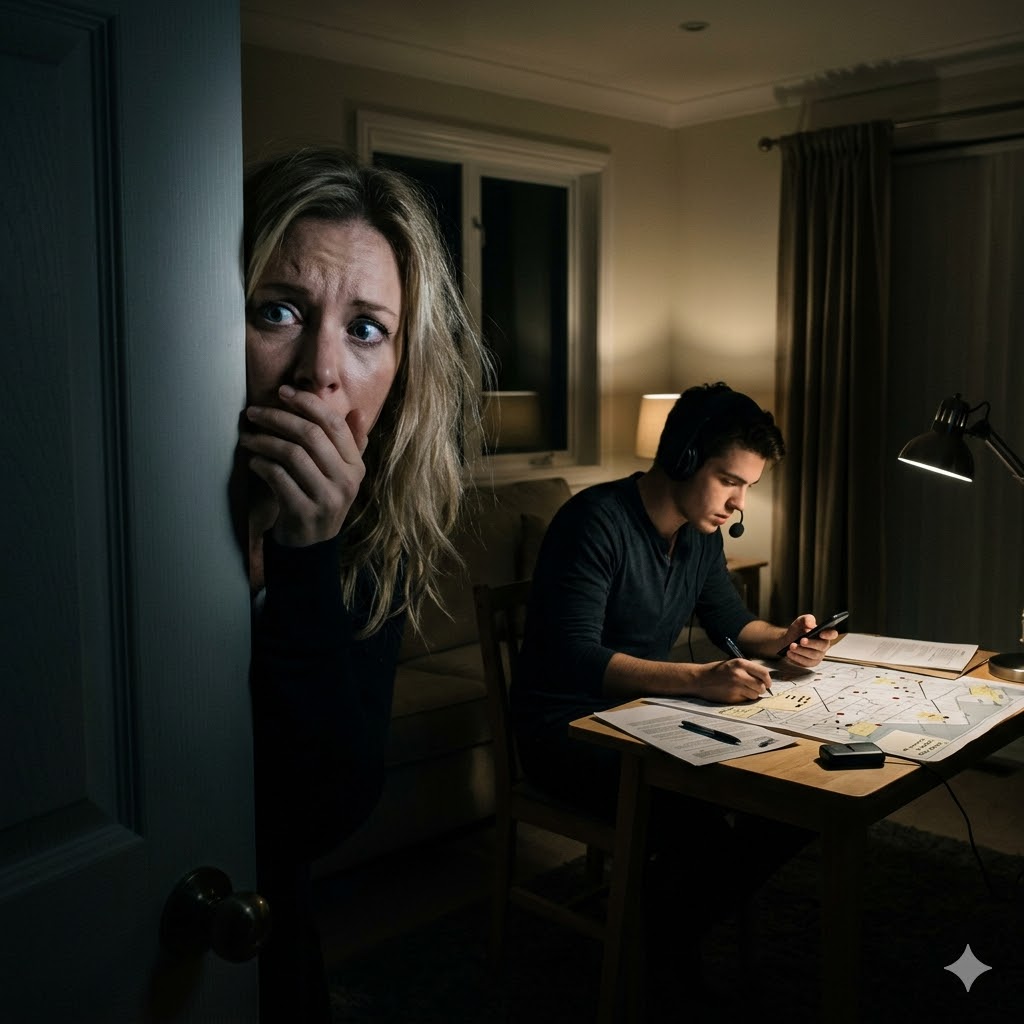
I was standing at the sink, my hands deep in soapy water when I heard his voice say, “Once the papers are signed, she won’t have a say in anything anymore.” I froze. The plate slipped from my fingers, clinking softly against the porcelain basin. But I didn’t move. I didn’t breathe because the second voice, the colder one, replied, “Good.
” The sooner he’s declared unfit, the sooner this house is mine. Something inside me went still. I knew that tone. I had lived with that tone. And in that moment, standing in someone else’s kitchen in a house that didn’t belong to me, I realized I hadn’t escaped anything at all. I had just walked straight into it again. I left my husband in the middle of the night with my daughter and nowhere to go.
There wasn’t a dramatic fight, no broken glass, no shouting loud enough for the neighbors to hear. That would have been easier to explain, easier to justify. Instead, it was quiet. Too quiet. He had always preferred it that way. Control in our house didn’t come with raised voices. It came with lowered ones. Calm, measured, reasonable, the kind that made you question your own memory, your own instincts.
Why are you overreacting? He’d say, “I’m just trying to help you make better decisions. You wouldn’t survive on your own.” That last one, he said it so often, it stopped sounding like an opinion and started sounding like a fact. And for a long time, I believed him. until the night he said it in front of our daughter. She was sitting at the kitchen table, coloring quietly, pretending not to listen.
But I saw the way her small hand paused, the way her shoulders stiffened. “You’d be lost without me,” he said, not even looking at me. “Both of you would.” “Something in my chest cracked open.” “Not loudly, not all at once, just enough.” That night, after he fell asleep, I lay awake staring at the ceiling, listening to the slow rhythm of his breathing beside me. My mind wasn’t racing. It wasn’t panicked. It was clear.
For the first time in years, I got up quietly, packed one small suitcase, grabbed my daughter’s backpack from the hallway. When I touched her shoulder, she woke instantly like she’d been expecting it. “We’re going somewhere,” she whispered. “Yes,” I said softly. She didn’t ask where. “That was the part that stayed with me the most.
Not the leaving, not the fear, but the fact that she didn’t ask. By morning, the adrenaline had worn off. Reality set in somewhere between a gas station coffee and the rising sun through the windshield. I had no plan.
No job, no savings worth mentioning, no family close enough to call without questions I wasn’t ready to answer. Just a tired child in the passenger seat and a decision I couldn’t undo. I parked outside a small diner just off the highway, the kind with faded booths and a flickering open sign. My daughter slept with her head against the window while I sat there staring at my phone. I searched for jobs, anything.
Waitressing, cleaning, babysitting. Most listings wanted experience references, availability. I couldn’t promise. Then I saw it. Housekeeping help needed. Private residence, immediate start. No company name, just a phone number. I hesitated. Something about it felt off, too vague, too urgent. But I didn’t have the luxury of being selective. I called.
A woman answered, “Older, brisk efficient.” She asked a few questions. Could I clean? Could I cook basic meals? Could I start right away? I said yes to all of it. By noon, I was driving through iron gates taller than anything I’d ever seen outside of a movie.
The estate sat behind them, quiet and sprawling, surrounded by manicured lawns that looked untouched by real life. It didn’t feel like a home. It felt like something carefully maintained and carefully watched. A security guard checked my name before letting me through. Another watched as I parked near the side entrance. Inside, everything was polished, silent, controlled. The woman from the phone introduced herself as Mrs. Dal Rimple, the house manager.
She walked quickly, spoke faster, and didn’t waste time on pleasantries. You’ll be helping in the kitchen and general upkeep, she said. Stay out of the east wing unless instructed. Meals are at set times. We expect discretion. Discretion. That word again. I nodded. I needed the job. She showed me a small room off the back hallway where I could keep my things.
It wasn’t much, but it was clean. Safe enough for now. The first few hours passed in a blur of wiping counters, organizing cabinets, and trying not to feel like I didn’t belong because I didn’t. People like me didn’t end up in places like this unless they were invisible. And that was exactly how I intended to be.
Until I heard that conversation, until I stood at that sink, hands trembling in lukewarm water, listening to a man calmly discuss taking everything from someone who trusted him. I dried my hands slowly, my heart pounding in a way I hadn’t felt since the night I left. I told myself it wasn’t my business, that I needed to focus on my daughter, on surviving, on not losing the one chance I had to start over. But the truth settled in anyway.
Heavy, unavoidable. I knew what control sounded like. I knew what it looked like when someone was being quietly erased. And now I knew it was happening again right here in this house. I glanced toward the hallway where their voices had disappeared, my chest tightening. I had just found a way out of my own life.
And somehow I had walked straight into someone else’s prison. Morning came too early in that house. I woke before the alarm, disoriented for a second, unsure where I was. Then I saw the narrow ceiling above me, the small dresser, the folded uniform Mrs. Drimple had left on the chair, and it all came rushing back.
The estate, the job, the voices. My daughter was still asleep beside me, curled into the thin pillow, her face softer than it had been in weeks. That alone was enough to keep me moving. I dressed quietly, tied my hair back, and stepped into the hallway, just as the house was beginning to wake, but not in the way normal homes do.
There was no clatter of breakfast dishes, no television murmuring in the background, no sense of casual life unfolding. Instead, everything moved with quiet precision. Staff appeared and disappeared without conversation. Doors opened and closed with careful restraint. It felt less like a home and more like a system. Mrs.
Dalimprimple was already in the kitchen clipboard in hand. You’re late, she said without looking up. I checked the clock. It was 658. I thought I was early. 2 minutes is late here, she replied. Then finally she looked at me. You’ll adjust. I nodded. Of course I would. That’s what I’d always done. Adjusted.
The kitchen was larger than my entire apartment had been. Stainless steel appliances, marble counters, everything spotless. But there was something strange about it, like it was used just enough to maintain appearances. Breakfast is at 7:30. Mrs. Drimple continued. Mr. Whitaker prefers simple meals. Eggs, toast, coffee, no variations unless requested. Mr.
Whitaker, the owner. I hadn’t seen him yet. And his son, I asked carefully. She paused. Just for a second. Mr. Daniel Whitaker comes and goes, she said. You won’t concern yourself with his schedule. That told me everything I needed to know. I worked in silence for most of the morning.
Washing, prepping, cleaning, keeping my head down the way I always had when things felt uncertain. But my mind kept replaying what I’d heard the night before. declared unfit. “The house is mine.” It wasn’t just business talk. It wasn’t just family disagreement. It was something colder, more deliberate. At 7:28, Mrs. Delrimple gave a small nod. “Bring the tray.
” I carried it carefully down a long hallway lined with framed photographs, awards, formal portraits, moments frozen in time. In every one of them, Mr. Whitaker stood tall, confident, respected. But in the most recent photo, something had changed. His smile didn’t quite reach his eyes. The dining room was quiet. Too quiet. He was already seated at the table when I entered. Mr. Whitaker looked older than I expected.
Not fragile exactly, but slower, like someone who had spent a lifetime moving quickly and was now being forced to adjust. His eyes lifted when I set the tray down. Sharp. Observant. New? He asked. Yes, sir. He studied me for a moment longer than necessary, not in a suspicious way. In a careful one. What’s your name? I hesitated. Just for a second. Emily, he nodded.
Well, Emily, thank you. Simple. Polite. Nothing like the man I had heard being discussed the night before. I stepped back, ready to leave, but something stopped me. A feeling. The same one I had ignored for years in my own home. the sense that something wasn’t right, even when everything looked fine. As I turned to go, the door opened behind me.
Daniel Whitaker walked in without knocking. He was younger than I expected, late 30s, maybe early 40s, well-dressed, confident in the kind of way that didn’t need to be announced, but his presence changed the room instantly. The air tightened. “Dad,” he said casually, taking a seat across from him without waiting. You didn’t tell me we had new staff. Mr. Whitaker didn’t respond right away.
Instead, he took a slow sip of his coffee. I didn’t realize I needed permission. Daniel smiled, but it didn’t reach his eyes. Just keeping things organized, he said. Then his gaze shifted to me. You can go. Not please. Not even a glance of acknowledgement beyond that. Just dismissal.
I left the room, but not before noticing something small. Mr. Whitaker’s hand. It had tightened slightly around the cup. The rest of the day passed under a strange kind of tension. Nothing happened. And yet, everything felt like it was about to. I noticed patterns. Doors that were always locked, rooms that were always avoided, conversations that stopped the moment someone else entered.
and the staff. They didn’t talk much, but when they did, it was careful, measured, like every word had already been weighed before it was spoken. It wasn’t until late afternoon that someone finally said something real. I was folding linens in the laundry room when an older woman stepped in.
She moved slower than the others, her uniform slightly worn, her expression tired in a way that had nothing to do with age. “New girl,” she said quietly. I looked up. Yes. She studied me for a moment. Not unkindly, just knowingly. You got a kid? She added. It wasn’t a question. I nodded. She with you. In the room? The woman exhaled slowly like she had something to say, but wasn’t sure if she should. Then she stepped closer.
“Listen,” she said, her voice low. “This house, it’s not what it looks like.” I felt my chest tighten. I figured. She gave a small humorless smile. Most don’t. Not at first. I hesitated, then asked the question that had been sitting in my chest all day. Mr. Whitaker, is he all right? The woman’s expression shifted. Just slightly, but enough. He used to be, she said. Used to be. That word landed harder than I expected.
And now I asked. She glanced toward the door, then back at me. Now, she said quietly, “You keep your head down.” That wasn’t an answer. But it was the closest I was going to get. That night, after my daughter had fallen asleep, I sat on the edge of the bed, staring at my hands. They were still, but my mind wasn’t. I had come here to start over, to build something safe, to stay out of trouble.
But the truth was, trouble was already here, and I recognized it because I had lived it. Different house, different man, same quiet control, same slow eraser. I leaned back against the wall, closing my eyes, telling myself the same thing I had told myself the night before. It’s not your problem.
You can’t fix everything. You just need to survive. But even as I thought it, I knew somewhere deep down I wasn’t going to be able to walk away from this one. The next morning, I tried to convince myself I had imagined it, that the voices I’d heard, those careful, calculated words had been taken out of context, that I was projecting my own past onto a situation I didn’t understand.
It would have been easier to believe that, safer. But houses like this don’t let you stay neutral for long. They reveal themselves in pieces. By midm morning, I was back at the sink. Same routine, same silence, same careful rhythm of water running and dishes stacking. The kind of repetition that should have been calming.
But every sound felt amplified now. Every footstep, every door closing somewhere deeper in the house. I found myself listening even when I didn’t want to. It happened again just before noon. I wasn’t trying to overhear anything this time. I had learned enough already to know that curiosity came with a price. But their voices carried low, controlled, too controlled. I recognized Daniel’s voice first. We’ve already discussed this. The evaluation is scheduled. A second voice answered.
Male, older, professional. Yes, but competency assessments require. He’s not competent. Daniel cut in sharper now. Let’s not pretend otherwise. My hand stilled in the water. Not competent. The words felt clinical, but the tone behind them wasn’t. I moved slower after that, not because I wanted to hear more, but because something in me needed to understand. The second voice spoke again carefully, choosing his words.
There are procedures, Daniel. Medical documentation, consent. I have what I need, Daniel replied. Once the doctor signs off, we move forward. Power of attorney becomes permanent. The rest is just paperwork. paperwork, like a man’s life could be reduced to that. I stepped back from the sink, my heart beating faster than I wanted to admit. This wasn’t just a family disagreement.
This was strategy, calculated, deliberate, and the worst part. It was being done quietly enough that no one outside this house would ever question it. I didn’t stay to hear the rest. I couldn’t because I already knew enough. Too much. The rest of the day passed in fragments. I cleaned rooms I wasn’t supposed to notice. Past hallways I wasn’t supposed to remember. Kept my eyes down when Daniel walked by, even when I could feel his presence shift the air around me.
But something had changed inside me. The same instinct that had finally pushed me to leave my husband was waking up again. That quiet voice that said, “This isn’t right.” It wasn’t until late afternoon that I saw Mr. Whitaker again. He was in the sitting room this time, sunlight filtering through tall windows behind him. A book rested in his lap, but he wasn’t reading it.
He was staring out the window like he was waiting for something or someone. I hesitated in the doorway, unsure if I should interrupt. Then he spoke without turning. You walked quieter than the others. I blinked. I’m sorry if I disturbed you. You didn’t, he said simply. Then he looked at me. That’s the point.
I wasn’t sure how to respond to that, so I didn’t. He gestured slightly toward the chair across from him. Sit for a moment. I froze. Staff didn’t sit. Not here. Not like that. I should be working, I said carefully. You are, he replied. You’re keeping me company. There was something in his voice. Not authority. Not exactly, but not a request either. I sat slowly. For a moment, neither of us spoke.
The room was quiet, but not in the suffocating way the rest of the house felt. This was different. Lighter. Real. You have a daughter? He said after a while. It wasn’t a question. Yes. How old? Six. He nodded, absorbing that. I had a son once, he said. The past tense caught me off guard. You still do? I said gently. A faint smile touched his lips. “Yes,” he said.
“I suppose I do, but the way he said it, it didn’t sound like certainty.” He leaned back slightly, his gaze drifting again. “They tell me I’m forgetting things,” he continued. “Small things at first, names, dates. I stayed quiet. They say it’s normal,” he added. “At my age, there was no bitterness in his voice. Just observation.
And do you feel like you’re forgetting I asked before I could stop myself? His eyes shifted back to mine. Sharp again. Present. That depends, he said, on who you ask. A silence settled between us. But this one wasn’t uncomfortable. It was honest. And that made it more dangerous than anything else in this house. Because honesty didn’t belong here. Daniel worries. He continued. He thinks I need help managing things. Managing things.
Another careful phrase. Another layer. Do you agree with him?” I asked. The moment the words left my mouth, I regretted them. “But it was too late.” He studied me for a long moment, long enough that I wondered if I had crossed a line I couldn’t come back from. Then quietly, “No,” he said. “It wasn’t loud.
It wasn’t dramatic, but it carried more weight than anything I had heard all day because it wasn’t confusion. It wasn’t hesitation. It was clarity. Before I could respond, footsteps echoed in the hallway. Sharp. Approaching. Mr. Whitaker’s expression shifted almost instantly. Subtle but unmistakable. The door opened. Daniel. Dad.
He said his tone light but controlled. There you are. His eyes moved to me. Paused. Evaluated. You’re needed in the kitchen. He added again. Not a request. I stood quickly. Yes, sir. As I turned to leave, I glanced back once. Mr.
Whitaker had already picked up his book again, but he wasn’t reading, and Daniel wasn’t smiling anymore. That night, I sat on the edge of my bed again. Same position, same silence, but nothing felt the same because now it wasn’t just suspicion. It wasn’t just overheard fragments. It was real, clear, undeniable. He wasn’t confused. He wasn’t incapable. He was being managed, controlled, quietly rewritten.
I looked at my daughter sleeping beside me, her small hand curled near her face. And suddenly, the choice I had been avoiding didn’t feel like a choice anymore. I had walked away once. I had chosen not to stay silent, not to let someone else decide my life for me. And now I was standing in a place where someone else was losing that same right.
slowly, carefully, legally, I lay back staring at the ceiling. The house was quiet again, but I wasn’t because this time I wasn’t just hearing it. I understood it. And once you understand something like that, you don’t get to pretend you don’t. I didn’t act the next day. That might sound surprising, but if there’s one thing I learned from living under quiet control, it’s this. Rushing is how you lose.
People like Daniel don’t make mistakes in public. They don’t shout, don’t threaten in ways you can prove. They move slowly, legally, carefully, until by the time anyone notices, it’s already done. If I was going to do anything, I had to be just as careful. So, I kept working.
Same routine, same silence, same invisible presence. But now, I was paying attention not just to what people said, but to what they avoided saying. The first thing I noticed was the schedule. Mr. Whitaker’s day wasn’t his own. Meals were timed, walks were supervised, even his phone calls were limited. Twice I saw him reach for the phone on the side table only for it to be accidentally moved later. Once I heard him ask Mrs.
Delrimple if he could call an old friend. She hesitated. Just a second too long. I’ll check if that’s a good idea, she said. A good idea? Not, of course. Not whenever you like. Just another quiet gate closing. The second thing I noticed was the paperwork. It started small. Folders left on desks. Documents placed neatly then taken away before anyone else could see them.
But one afternoon while dusting in the study, I saw something that made me stop. A document on the desk. Not hidden, not locked away, just there. Like someone had gotten too comfortable. I told myself not to look. I really did. But something in me had already crossed that line. So I stepped closer carefully, just enough to read the heading. Durable power of attorney. My chest tightened.
I didn’t need to read the rest to understand what it meant, but I did anyway because I had to. The language was formal, legal, clean. It stated that Daniel Whitaker would assume full decision-making authority over his father’s financial and personal matters, effective upon medical confirmation of incapacity. Medical confirmation. The same words I had heard in that conversation. I stepped back immediately, my hands cold.
This wasn’t speculation anymore. It was real. Signed, not yet, but close. Too close. That night, I didn’t sit on the bed. I paced quietly so I wouldn’t wake my daughter, but back and forth over and over trying to think, trying to decide because now I knew exactly what was happening.
And knowing changes everything. I had three options. Ignore it, leave, or get involved. Ignoring it meant keeping the job, keeping stability, keeping my daughter safe. But it also meant watching someone lose everything the same way I almost had. Leaving meant walking away clean. No risk, no consequences, but also no chance to stop it.
No chance to do anything that mattered. And getting involved. That was the dangerous one. Because people like Daniel don’t like interference, especially from people like me. I stopped pacing, looked over at my daughter, still asleep, still trusting me to make the right choice. And that was when it became clear I wasn’t doing this for Mr. Whitaker. Not entirely.
I was doing it because I knew what it felt like to have your life slowly taken out of your hands. To be told you weren’t capable, that someone else knew better, that you should just let go. I had believed that once. I wasn’t going to let someone else be forced into it. The next morning, I started small. Not dramatic, not obvious, just intentional. When I brought Mr.
Whitaker his breakfast, I didn’t leave right away. I set the tray down, then paused. Do you need anything else? I asked. He looked up. Studied me. No, he said. Then after a moment, actually, yes. I waited. Sit for a minute. I did. Same chair as before. Same quiet room. But this time it felt different because I wasn’t just listening anymore.
I was paying attention. They’ve been busy lately, he said almost casually. Yes, I replied. Careful. Neutral. Daniel says it’s for my benefit, he continued, making things easier. I nodded slightly. Do they feel easier? I asked. He didn’t answer right away. Instead, he looked at his hands. Older hands, but steady. I built everything I have, he said slowly.
Every decision, every risk, his eyes lifted to mine. And now I’m told I shouldn’t make them anymore. There it was. Not confusion, not decline. Awareness. That must be difficult, I said quietly. He gave a faint smile. That’s a polite way of putting it. We sat in silence for a moment. Then I spoke again carefully.
Do you trust the people making those decisions for you? This time the answer came faster. Number settled between us. Heavy. Final. That was all I needed. The next step wasn’t in this house. I knew that much because anything done here could be controlled. Redirected. Hidden. So after my shift ended, I did something I hadn’t done in a long time. I asked for help. I found a small office downtown. Nothing fancy, no glass walls or polished floors, just a sign on the door.
Senior advocacy and legal support. I stood outside for a long time before going in. Because asking for help means admitting something is wrong. And I had spent years pretending everything was fine. Inside, a woman greeted me. Kind eyes, steady voice. How can I help you? I hesitated. Ben said it. I think someone is being taken advantage of.
She didn’t interrupt, didn’t rush me, just listened. As I explained what I had seen, what I had heard, what I knew. When I finished, she nodded slowly. You did the right thing coming here, she said. That sentence alone felt unfamiliar. The right thing. We’ll need to be careful, she added. Situations like this, they’re rarely simple. I almost laughed. I know.
But for the first time since I had walked into that house, I didn’t feel alone. That night, as I lay beside my daughter, the weight in my chest hadn’t disappeared, but it had shifted slightly. Because I wasn’t just surviving anymore. I wasn’t just reacting. I was doing something. Quiet, careful, but real. And somewhere deep down, I knew this wasn’t just about stopping Daniel.
It was about something bigger. taking back control, not just for Mr. Whitaker, but for myself. The first sign that something had shifted came quietly. No raised voices, no dramatic confrontation, just a change in the rhythm of the house. And in a place like that, rhythm was everything.
2 days after I visited the advocacy office, a man I didn’t recognize arrived at the estate. He wasn’t dressed like the others who came and went. No tailored suit, no easy confidence, just a simple jacket, a leather folder, and the kind of calm that didn’t need to announce itself. “Mrs. Delrimple met him at the door, her expression tighter than usual.” “I don’t believe you’re expected,” she said. “I’m here regarding Mr. Whitaker,” he replied evenly. “I was invited.” That was the first crack.
Small, but real. Daniel arrived minutes later. fast, controlled, not quite angry, but close enough to feel it in the air. “What’s this about?” he asked, his tone smooth, but sharpened at the edges. The man didn’t flinch. “I’m with senior advocacy and legal support. We received a request to review certain documents and confirm Mr. Whitaker’s wishes.” Daniel’s jaw tightened. “There’s no need for that,” he said.
“Everything is already being handled.” “I’m sure it is,” the man replied. “That’s why this will be quick.” I watched from the hallway, my hands steady, even as my pulse wasn’t. This was it. Not revenge in the way people imagine it. No shouting, no exposure in front of a crowd. Just process.
Truth brought into the light where it couldn’t be quietly rewritten. They moved into the sitting room. The door stayed open. And for the first time since I’d arrived at that house, nothing was being hidden. Mr. Whitaker sat in his usual chair, but something about him looked different, straighter, more present, as if simply being asked what he wanted had reminded him that he still could.
The man introduced himself, then spoke directly to him. “Mr. Whitaker, I’m here to make sure your decisions are your own. No pressure, no assumptions, just clarity.” Simple words, but they carried weight. Daniel stepped forward. “This is unnecessary,” he said. My father’s health has been declining. We’re just making sure things are in order.
The man nodded politely. And we’re here to confirm that. Then he turned back to Mr. Whitaker. Do you understand the documents that have been prepared for you? A pause. Then yes, Mr. Whitaker said. Do you feel pressured to sign them? Another pause. Longer this time. Daniel shifted slightly almost imperceptibly, but I saw it.
And then, no, Mr. Whitaker said. The room stilled. The man didn’t react. Didn’t show surprise. He simply continued. Do you wish to grant full power of attorney at this time? This time the answer came without hesitation. Number. It was a quiet word, but it landed like something breaking open. Daniel exhaled sharply.
This is ridiculous, he said. He doesn’t fully understand. I understand perfectly, Mr. Whitaker interrupted. That was the first time I had heard his voice rise. Not loud, but firm. Certain. The man in the jacket made a note. Thank you, he said calmly. That’s all I needed to hear. What followed wasn’t dramatic.
No threats, no shouting matches, just consequences. The documents were withdrawn. A formal review was initiated. Safeguards were put in place. Independent oversight, medical reassessment, legal protections, everything done by the book. Everything done in a way that couldn’t be undone quietly later.
Daniel didn’t argue much after that. Not because he agreed, but because he couldn’t win this way, not in the open. By the end of the day, the house felt different. still quiet, still controlled, but no longer suffocating, like a window had been opened somewhere, even if just a crack. That evening, as I finished in the kitchen, I felt someone behind me. I turned.
Daniel, for a moment, neither of us spoke. Then he said, “You should be careful.” His voice was calm again. “Too calm. I’m just doing my job,” I replied. He studied me long enough to make most people uncomfortable. But I had lived with that kind of look before. It didn’t have the same power over me anymore.
People who involve themselves in things that don’t concern them, he said slowly usually regret it, I held his gaze. Sometimes, I said, and sometimes they don’t. A flicker of something crossed his expression. Not anger. Not quite. Recognition, he nodded once, then walked away. That night, I expected to feel afraid, but I didn’t. Not in the way I used to because fear changes when you stop running from it. When you face it even once, it loses something.
A few days later, Mr. Whitaker asked to speak with me again. Same room, same chair, but everything felt lighter. They told me what you did, he said. I shook my head slightly. I just made a call. He smiled. Sometimes that’s all it takes. We sat in quiet for a moment. Then he added, “I won’t pretend this didn’t hurt.” I nodded.
“Family is complicated,” I said. He looked out the window again. “Older,” but not diminished. “I still want him in my life,” he said. “But not like this. That was the part people don’t talk about.” “Revenge, real revenge, isn’t about destroying someone. It’s about stopping them.” Drawing a line and deciding what comes after. I think that’s fair, I said. Weeks passed. Things settled.
The house adjusted to a new rhythm, one that felt chosen, not imposed. As for me, I found a small apartment nearby. Nothing fancy, but ours. My daughter started smiling more, sleeping better, asking questions again. Normal questions, the kind I had missed. And me? I stopped looking over my shoulder. One afternoon as I was leaving, Mr. Whitaker said something that stayed with me. You didn’t just help me, he said. You reminded me who I was. I thought about that on the drive home.
About control, about silence. About how easy it is to lose yourself slowly, quietly, without even noticing. And how sometimes it only takes one moment, one decision, one voice to take it back. If this story stayed with you, if you’ve ever seen something that didn’t feel right or felt that quiet voice telling you to speak, don’t ignore it. Share it, talk about it, pass it on.
Because sometimes the smallest act of courage can change someone’s entire life and maybe even your own. The end.