He Thought It Was Just a Blind Date—Until She Said, “You Don’t Remember Me, Do You?”
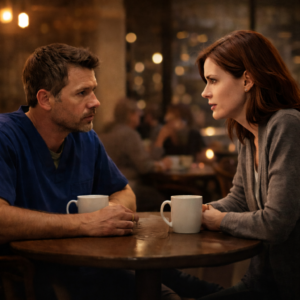
Ethan arrived 10 minutes early. The
habit of punctuality etched into him
after years of hospital shifts and quiet
routines. The cafe sat on a calm corner
of the street. Its windows fogged
slightly from the warmth inside. Soft
yellow lights hung above small wooden
tables, and the low hum of conversations
blended with the faint clinking of cups.
It was the kind of place people chose
when they wanted something simple, safe,
neutral, forgettable if it needed to be.
He checked his phone again. Blind date
set up by Mark. Name: Lily likes coffee.
Hates awkward silences. Ethan exhaled
through his nose and slipped the phone
back into his pocket. Another date.
Another attempt. Since the divorce,
dating had felt more like a
responsibility than a desire. He went
because people insisted he should.
Because being alone, too, long made
others uncomfortable. Most dates blurred
together. Polite laughter, surface level
stories, the unspoken understanding that
neither person would follow up. He told
himself tonight would be no different.
When the cafe door opened, a cool rush
of air swept in. Ethan looked up without
thinking and paused. She stood just
inside the entrance, adjusting her coat,
scanning the room carefully. She wasn’t
trying to draw attention, yet something
about her presence made the space feel
quieter. Her movements were gentle,
deliberate, as if she didn’t want to
disturb anything around her. Then her
eyes met his. A small smile formed on
her lips, not forced, not nervous, but
restrained, almost cautious, she walked
toward him, her footsteps light against
the floor. “Ethan,” she asked. “Yes,” he
replied, standing quickly. “You must be
Lily.” They shook hands. Her touch was
warm, steady, but she didn’t let go
right away. Her gaze lingered on his
face a second longer than necessary, as
though she were comparing him to a
memory only she could see. They sat
down. Coffee was ordered. Conversation
began easily enough. Jobs, traffic, the
city. She listened more than she spoke,
nodding, smiling at the right moments.
But Ethan noticed the small things. The
way her fingers tapped the side of her
cup. The way her smile faded too quickly
after each laugh. There was something
behind her eyes. Expectation or
disappointment. Ethan felt oddly
unsettled. He searched his own memory,
wondering if he’d met her before,
through work, through friends, but found
nothing. Then she went quiet. Really
quiet. She looked at him steadily and
said almost gently, “You really don’t
remember me, do you?” The warmth of the
cafe suddenly felt distant. Ethan let
out a short, uneasy laugh. The kind
people use when they think they’re
missing a joke. He leaned back slightly
in his chair, forcing a casual smile
onto his face. “I’m sorry,” he said,
shaking his head. “Should I?” For a
brief moment, he expected her to smile
to wave it off to say she had mistaken
him for someone else. She didn’t.
Instead, she studied him carefully, as
if confirming a truth she had already
accepted. Her shoulders relaxed, not
with relief, but resignation. “No,” she
said quietly. “That answers it.” The
words settled heavily between them.
“Ethan felt a strange pressure in his
chest, an instinctive sense that this
wasn’t playful confusion.” “I really
would remember,” he added, lowering his
voice. “I’m not great with names, but
faces. I don’t forget faces.” She gave a
faint nod, her eyes dropping briefly to
the table. When she looked back up, her
expression was composed. But something
beneath it trembled. 10 years ago, she
said slowly. Late winter. Community
hospital. The sound of the espresso
machine hissed loudly behind the
counter, but Ethan barely heard it.
Community hospital. The words tugged at
something buried deep in his mind. Long
nights, sleepless mornings, the constant
weight of responsibility. I was 16, she
continued. You were an intern then,
always exhausted, always in a hurry.
Ethan’s posture stiffened, his fingers
curled slightly against his cup. “I
worked nights,” he said automatically,
memory beginning to stir. She nodded.
“My mother was in the ICU, cancer,
aggressive,” his throat tightened. He
remembered that floor, the smell of
disinfectant, the families who waited in
hallways because there was nowhere else
to go. “I stayed there every night,” she
said. “I was terrified. I didn’t know
how to be strong yet. Her voice didn’t
break, but her eyes did. One night, I
couldn’t stop crying. I tried to be
quiet. I didn’t want to bother anyone.
Ethan’s mind searched desperately,
faces, moments, fragments, but came up
empty. I’m sorry, he whispered. You
noticed anyway, she said. You sat beside
me on the floor. You skipped your
rounds. You bought me a sandwich from
the vending machine and told me my mom
wasn’t fighting alone. The words hit him
harder than he expected. He could almost
see it now, himself, younger, tired,
trying to offer comfort with what little
he had left. “I don’t remember,” Ethan
said again, this time ashamed. She met
his gaze, a sad, understanding smile
forming. “I know,” she said softly.
Ethan lowered his eyes to the table, his
reflection faintly visible in the dark
surface of his coffee. The room felt
quieter now, as if the cafe itself were
holding its breath. He pressed his lips
together, searching for words that
didn’t feel hollow. I’m sorry, he said
again more firmly this time. I hate that
I don’t remember. I wish I did. She
watched him carefully as though
measuring the sincerity behind his
apology. Then she shook her head. You
don’t need to, she replied gently. You
gave me what I needed back then, whether
you remember it or not. Ethan looked up,
confusion mixing with a growing ache in
his chest. I didn’t think moments like
that mattered, he admitted. There were
so many nights, so many people. She
inhaled slowly, gathering herself. “My
mother died two weeks later,” she said.
The words landed softly, but carried
weight. Ethan felt his stomach tighten.
“He knew that moment, the sudden
stillness families carried after Hope
was gone. I was 17 by then,” she
continued. “And completely alone.” “But
I remembered what you said, that she
wasn’t fighting alone. That I wasn’t
either.” Her fingers trembled slightly
as she wrapped them around her cup. I
held on to that. It kept me from falling
apart. Ethan’s eyes burned. He blinked,
embarrassed by the sudden emotion. I
spent years thinking my work didn’t
matter anymore, he confessed. That I was
just moving from one shift to the next,
fixing what I could, failing at the
rest. She met his gaze unwavering. “You
mattered to me,” she said simply. The
certainty in her voice struck him harder
than anger ever could. “I became a nurse
because of that night,” she went on. I
wanted to be the person who notices, who
sits down, who doesn’t walk past pain
just because they’re tired. Ethan
exhaled shakily. And I forgot, he said.
Yes, she replied. But forgetting doesn’t
erase what you gave. He nodded slowly,
understanding forming through the guilt.
That night was real, he said. Even if I
lost it in the noise of everything else.
She smiled then, not sad, not hurt, but
lighter, as if something she’d carried
for years had finally been set down. I
didn’t come here for answers, she said.
I came to see if the man I remembered
still existed. Ethan straightened
slightly, and she held his eyes. He
does. They sat in silence after that.
Not the awkward kind that begged to be
filled, but a quiet waited with
understanding. The cafe around them
slowly returned to focus. Soft laughter
from a nearby table. The scrape of a
chair against the floor. The muted
rhythm of rain beginning to tap against
the windows. Ethan felt as though he had
just woken from a long numbing sleep. He
wrapped his hands around his cooling
cup, grounding himself. I’m really glad
you told me,” he said at last. His voice
was steady but honest. “I didn’t
remember that night. But I needed to
remember who I was in it.” She studied
him for a moment, then nodded. “That’s
all I hoped for,” she replied. “I wasn’t
looking for anything else.” They stood
to leave, moving slowly, as if neither
wanted to rush the moment. Outside, the
evening air was cool and fresh, carrying
the scent of wet pavement. The street
lights reflected off the damp ground,
stretching long shadows beside them.
Ethan hesitated near the door, an
unfamiliar nervousness settling in his
chest. “Can I ask you something?” he
said. She turned toward him, her
expression open. “Of course.” He took a
breath. “Would you like to start again?”
She raised an eyebrow slightly, waiting,
not as a blind date, he clarified, and
not as a memory I failed to keep, but as
two people who found each other at the
right moment when we were both ready to
be seen. The rain grew heavier, drumming
softly against the awning above them.
She looked past him for a second, as if
glancing at the version of herself who
had once sat alone in a hospital
hallway. Then she looked back at Ethan,
the man standing in front of her now.
Older, worn, but still capable of
kindness. I spent a long time wondering
if I’d imagined that night, she said
quietly. If the comfort I felt was just
something I made up to survive.
He shook his head. You didn’t imagine
it. She smiled, this time without
sadness, without restraint. I’d like
that, she said. They began walking down
the street together, unhurried, their
steps naturally falling into rhythm.
There was no promise of love, no
dramatic declaration, just the rare
comfort of shared meaning. For the first
time in years, Ethan didn’t feel defined
by what he had forgotten. He felt
defined by what he had once been and
what he could still become.

Related Posts
The Woman Who Saved His Children Took a Bullet—And Stole the Mafia Boss’s Heart
The Woman Who Saved His Children Took a Bullet—And Stole the Mafia Boss’s Heart They told her the job was simple. Watch the kids, keep your head…
Nobody Believed the Little Girl’s Warning… Until the Mafia Boss Checked His Food
Nobody Believed the Little Girl’s Warning… Until the Mafia Boss Checked His Food The restaurant went silent the moment the mafia boss lifted his fork. Sylvio Romano,…
The Hells Angel Was Feared by Everyone—Until a Little Girl Asked One Heartbreaking Favor
The Hells Angel Was Feared by Everyone—Until a Little Girl Asked One Heartbreaking Favor Please, pretend you’re my dad. Those six words cut through the diner like…
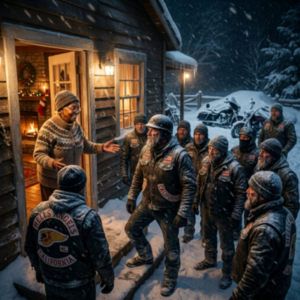
An Elderly Black Grandmother Sheltered 9 Hells Angels During a Blizzard — They Never Forgot Her Kindness
An Elderly Black Grandmother Sheltered 9 Hells Angels During a Blizzard — They Never Forgot Her Kindness The blizzard hit Detroit like a sledgehammer. Through frosted glass,…
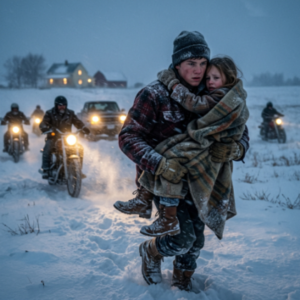
The Biker Chief Thought He’d Lost His Daughter Forever—Then a Farm Boy Appeared
The Biker Chief Thought He’d Lost His Daughter Forever—Then a Farm Boy Appeared The wind screamed like a dying animal across the mountain pass. But inside the…
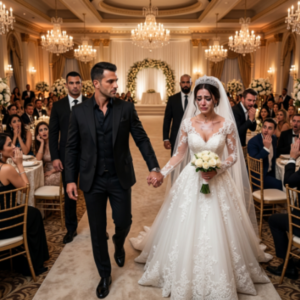
Her Fiancé Humiliated Her in Public—Then the Mafia Boss Claimed Her as His Own
Her Fiancé Humiliated Her in Public—Then the Mafia Boss Claimed Her as His Own One man wouldn’t let me be humiliated anymore. But what was the price?…